AI अनिवार्य क्यों है
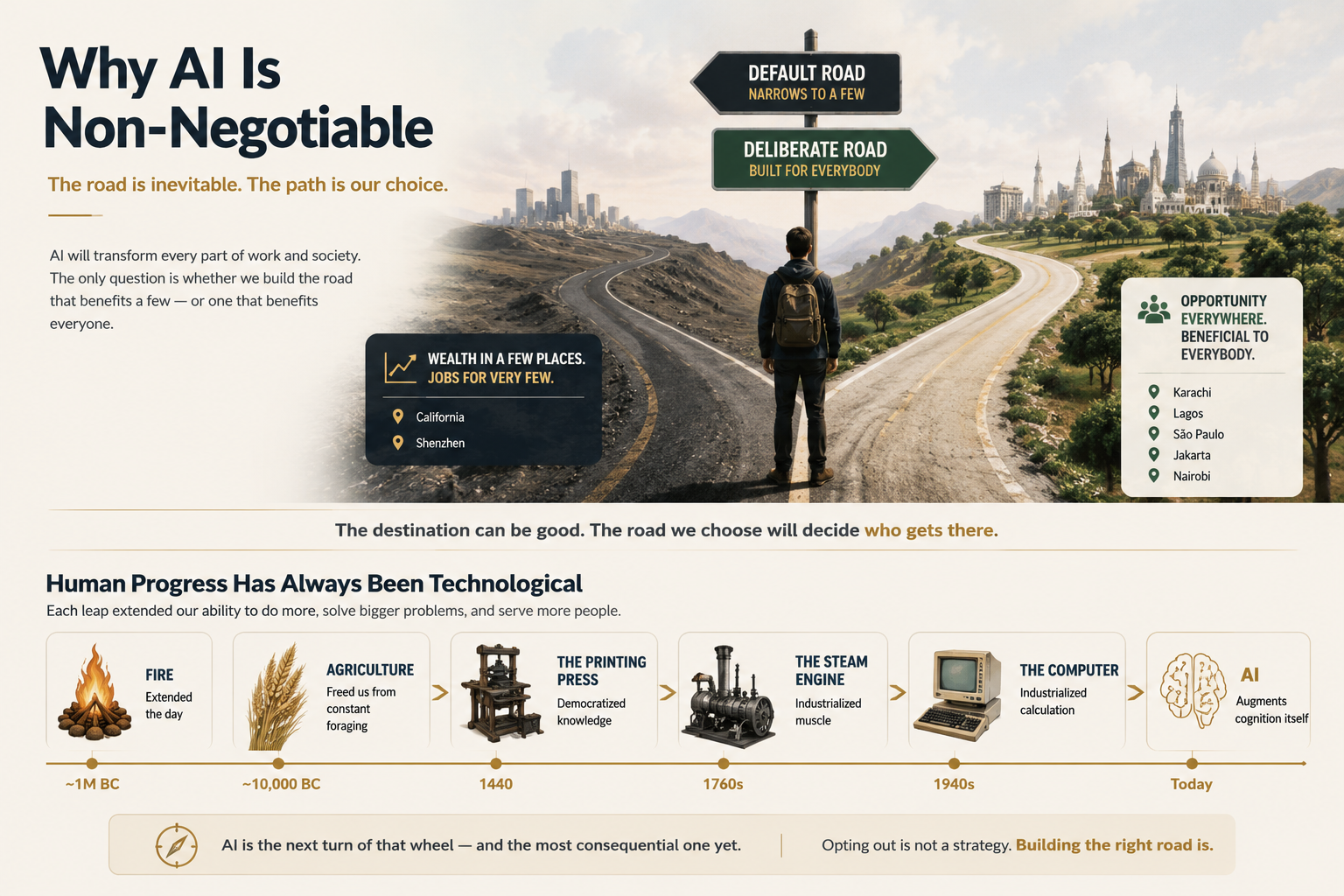
Destination अच्छा हो सकता है। हम कौन-सी road चुनते हैं, उससे तय होता है कि वहाँ कौन पहुँचेगा।
📚 शिक्षण सहायता
इंसान केवल biology के ज़रिए नहीं बदलते। हम अपने बनाए tools के ज़रिए भी बदलते हैं।
Fire ने दिन को लंबा किया। Agriculture ने लोगों को लगातार भोजन खोजने से आज़ाद किया। Printing press ने knowledge फैलाया। Steam engine ने muscle power बढ़ाई। Computer ने calculation बढ़ाई।
इनमें से कोई technology optional नहीं बनी रही। जिन societies ने इन्हें master किया, उन्होंने power और prosperity हासिल की। जिन societies ने विरोध किया, वे अक्सर उन societies से पीछे रह गईं जिन्होंने विरोध नहीं किया।
AI उसी wheel का अगला turn है। यह सबसे महत्वपूर्ण turn भी हो सकता है। पहले के tools ने body को augment किया या routine calculation को automate किया। AI cognition itself को augment करता है: reason करने, information जोड़ने, create करने और decide करने की हमारी क्षमता को।
यह AI को powerful बनाता है। यह AI को dangerous भी बनाता है। Public opinion उन लोगों में बँट गया है जो AI से डरते हैं और उन लोगों में जो इसे prosperity की राह मानते हैं।
डर वास्तविक हैं। वे गंभीर जवाब deserve करते हैं। लेकिन वे ठहर जाने की वजह नहीं हैं।
Destination नहीं, road
Historian Yuval Noah Harari इस chapter का central idea देते हैं।
किसी powerful नए tool की problem शायद ही केवल यह होती है कि वह कहाँ ले जाता है। उस future तक जाने वाली road भी उतनी ही महत्वपूर्ण होती है।
Industrial Revolution ने अंततः उस agrarian economy से कहीं अधिक prosperity बनाई जिसे उसने replace किया। आज ordinary workers भी 2 centuries पहले के ancestors से बेहतर जीते हैं। लेकिन road brutal थी। नई machines आने पर industrial society बनाना किसी को नहीं आता था। शुरुआती industrial powers ने बहुत बड़ी mistakes कीं, फिर बाद में industrialize होने वाले देशों को conquer और exploit करने में एक century लगा दी।
AI वही pattern दोहरा सकता है। यह देशों के अंदर inequality बढ़ा सकता है और देशों के बीच उससे भी बड़ी inequality बना सकता है।
Harari चेतावनी देते हैं कि कुछ देश AI को control कर सकते हैं। इससे "California या Shenzhen में wealth हो सकती है, लेकिन बाकी कहीं बहुत कम jobs।"
इसलिए key question यह नहीं कि AI अच्छी destination तक ले जा सकता है या नहीं। वह ले जा सकता है। Key question यह है कि क्या हम ऐसी road बना सकते हैं जो कुछ देशों के कुछ लोगों के बजाय सभी को benefit दे।
Harari China की tech wealth के symbol के रूप में Shenzhen का उपयोग करते हैं। Symbol काम करता है, लेकिन geography को precision चाहिए।
Shenzhen China की hardware capital है। वहाँ Huawei, Tencent, DJI और एक बड़ी manufacturing supply chain है।
China की AI capital Beijing है। वहाँ Zhongguancun, Tsinghua और Peking University, Beijing Academy of AI, और Baidu, Zhipu AI तथा Moonshot जैसी labs हैं।
Hangzhou, जहाँ DeepSeek और Alibaba की Qwen team है, उभरता हुआ दूसरा hub है।
Chips Shenzhen में assemble होते हैं। Frontier models मुख्य रूप से Beijing और Hangzhou में बनाए जाते हैं।
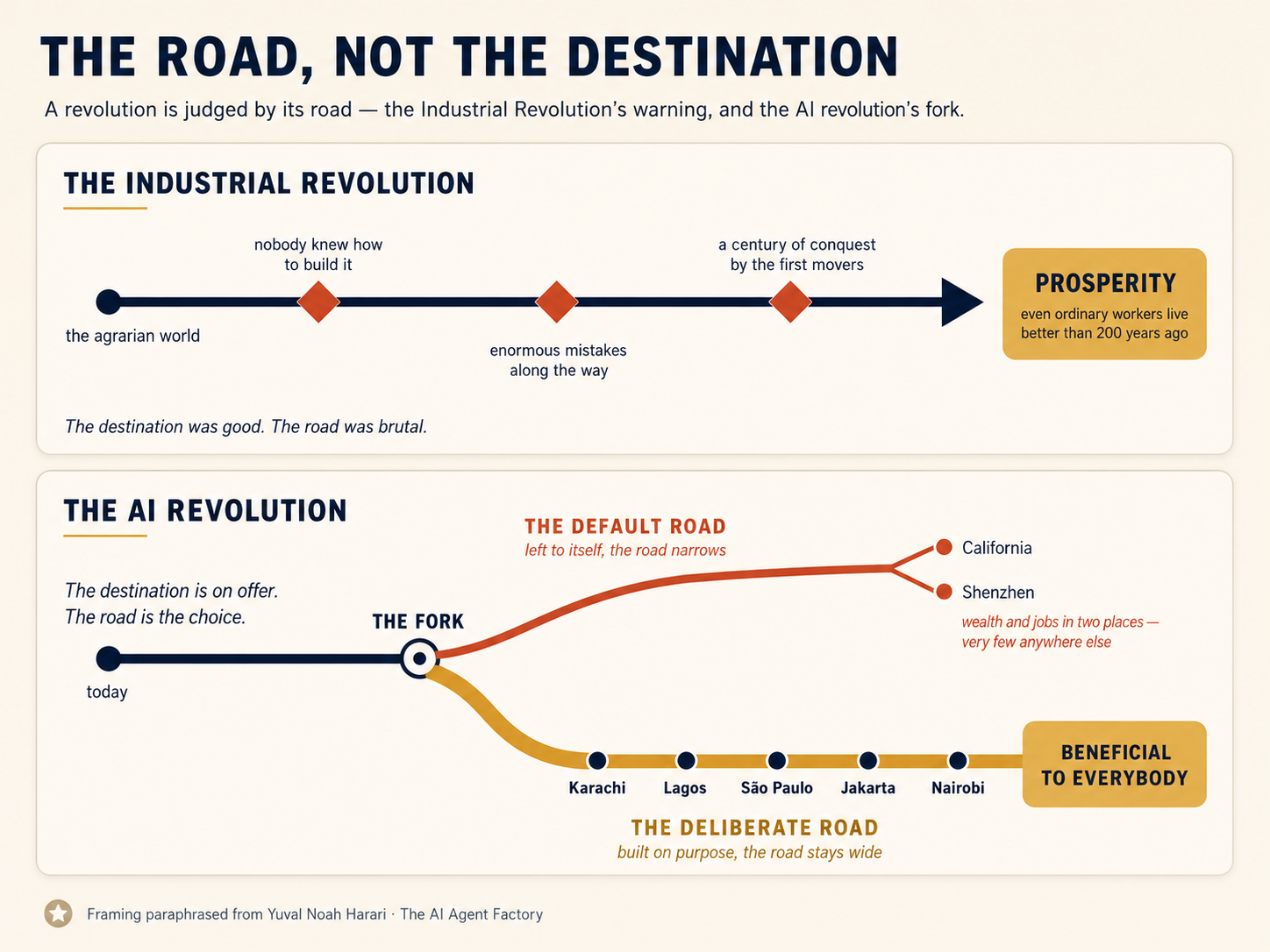
Industrial Revolution ने साबित किया कि destination अच्छी हो सकती है, जबकि road brutal हो। AI future की road अभी बन रही है और उसमें fork है।
नीचे की 9 objections को इसी नज़र से पढ़ें। हर objection एक वास्तविक hazard बताती है। कोई भी हमें journey छोड़ने को नहीं कहती। हर objection हमें road deliberately बनाने को कहती है।
नौ आपत्तियाँ
ये concerns fringe ideas नहीं हैं। वे boardrooms, legislative hearings, research labs और public debate में सामने आते हैं।
Skeptic का case एक sentence में कहा जा सकता है: risks साफ़ हैं, और किसी ने benefit नहीं समझाया।
-
बड़े पैमाने पर बेरोज़गारी। AI लाखों jobs हटा सकता है, entry-level work से शुरू करके law, accounting, content creation और अन्य professional fields तक। Workers को adapt करने का समय या support मिलने से पहले disruption आ सकता है।
-
आम लोगों के लिए साफ़ benefit नहीं। Industry कहती है कि AI "सब कुछ बदल देगा", लेकिन अक्सर यह नहीं समझाती कि daily life कैसे बेहतर होगी। डर concrete है, consumer benefit vague लगता है।
-
Surveillance और authoritarian control। AI governments और corporations को facial recognition, behavioral prediction और automated censorship के powerful tools देता है। बिना limits के इस्तेमाल होने पर ये tools productivity systems को control systems में बदल सकते हैं।
-
Geopolitical arms race। अगर केवल कुछ nations AI intelligence export करें, तो हर दूसरा देश basic services, defense, healthcare, education और economic planning के लिए foreign models पर depend हो सकता है।
-
Reality का erosion। AI-generated text, images और video, truth को fiction से अलग करना कठिन बना सकते हैं। Misinformation एक problem है। Increasingly capable systems पर control खोना गहरा डर है।
-
Existential risk। Stuart Russell, Yoshua Bengio और Geoffrey Hinton सहित गंभीर researchers ने चेतावनी दी है कि highly capable systems human values से conflict करने वाले goals pursue कर सकते हैं। पर्याप्त powerful misaligned system irreversible harm कर सकता है।
-
Environmental cost। Frontier systems को train और run करने के लिए बहुत electricity और water चाहिए। Critics को डर है कि benefits prove होने से पहले AI climate और energy crises को बदतर कर सकता है।
-
Scale पर bias और discrimination। AI historical data के biases सीख सकता है और फिर उन्हें तेज़ी से, व्यापक रूप से apply कर सकता है। Hiring, lending और healthcare में documented failures पहले से मौजूद हैं।
-
अभूतपूर्व wealth concentration। Frontier models को train करने में billions लगते हैं और tens of thousands expensive GPUs चाहिए। अभी केवल थोड़ी American और Chinese organizations उस level पर compete कर सकती हैं। परिणाम wealth और power का बहुत बड़ा concentration हो सकता है।
इनमें से कोई भी रुकने की वजह क्यों नहीं है
हर डर valid है। कोई भी बाहर रहने की वजह नहीं है। जवाब है AI को बेहतर rules, बेहतर incentives, sound engineering और wider access के साथ बनाना।
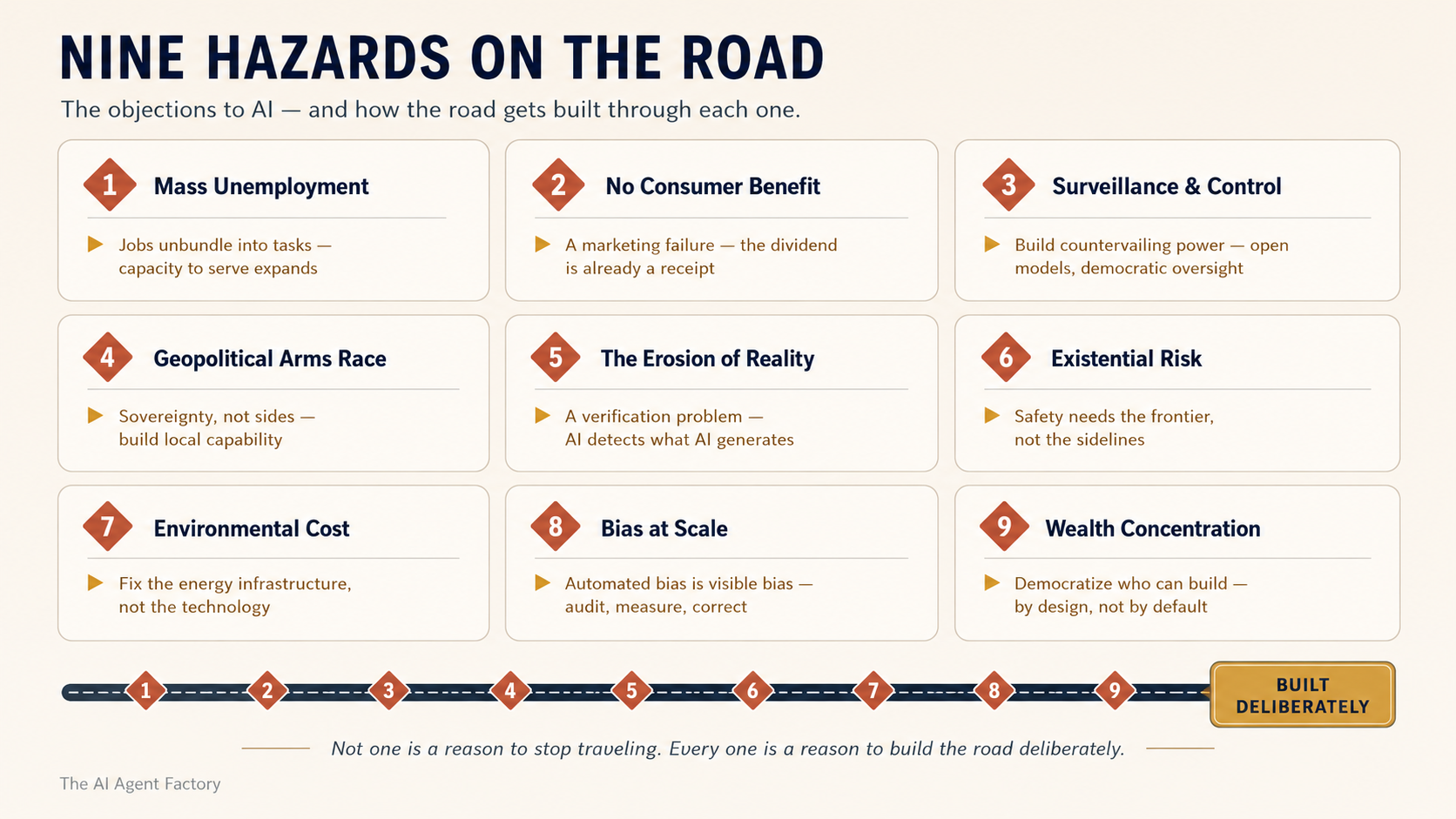
इस chapter का map: 9 hazards और उनसे होकर build करने के 9 तरीके।
1. बड़े पैमाने पर बेरोज़गारी: Jobs बदलती हैं और capacity बढ़ती है
AI किसी job को एक indivisible unit नहीं मानता। वह job को tasks में तोड़ता है।
कुछ tasks automate होंगे। दूसरे नए roles में combine होंगे। Developer बस गायब नहीं होता। Developer ज़्यादा produce कर सकता है।
SaaS era ने cloud architect, growth hacker, DevOps engineer और UX researcher जैसे roles बनाए जिनका बहुत कम लोगों ने अनुमान लगाया था। AI era agent designer, outcome architect, verification specialist और ऐसे domain expert जैसे roles पहले ही बना रहा है जो machines को सिखाता है कि "correct" का अर्थ क्या है।
LinkedIn के 2024 data ने दिखाया कि AI skills माँगने वाली postings wider job market से 3.5 गुना तेज़ बढ़ीं। यह growth केवल tech में नहीं थी। यह healthcare, logistics, education और finance में भी दिखाई दी।
इससे भी बड़ा opportunity है।
अतीत में नए tools ने cost to serve बेहतर किया। उन्होंने एक professional को वही service कम cost पर देने में मदद की।
AI capacity to serve भी बेहतर कर सकता है। यह एक professional को उन लोगों तक पहुँचने में मदद कर सकता है जिन्हें पहले कोई service नहीं मिलती थी।
8 billion लोगों को healthcare, education, legal advice और financial planning चाहिए। उन सभी को serve करने के लिए कभी पर्याप्त professionals नहीं रहे।
Rural India में AI tools उन villages में diabetic retinopathy की screening कर रहे हैं जहाँ कभी ophthalmologist नहीं रहा। Khan Academy का AI tutor Khanmigo उन जगहों पर students को one-to-one instruction के करीब कुछ दे रहा है जहाँ classrooms में 60 learners हो सकते हैं।
AI को doctor या teacher replace नहीं करना है। वह हर village को उनकी access दिलाने में मदद कर सकता है।
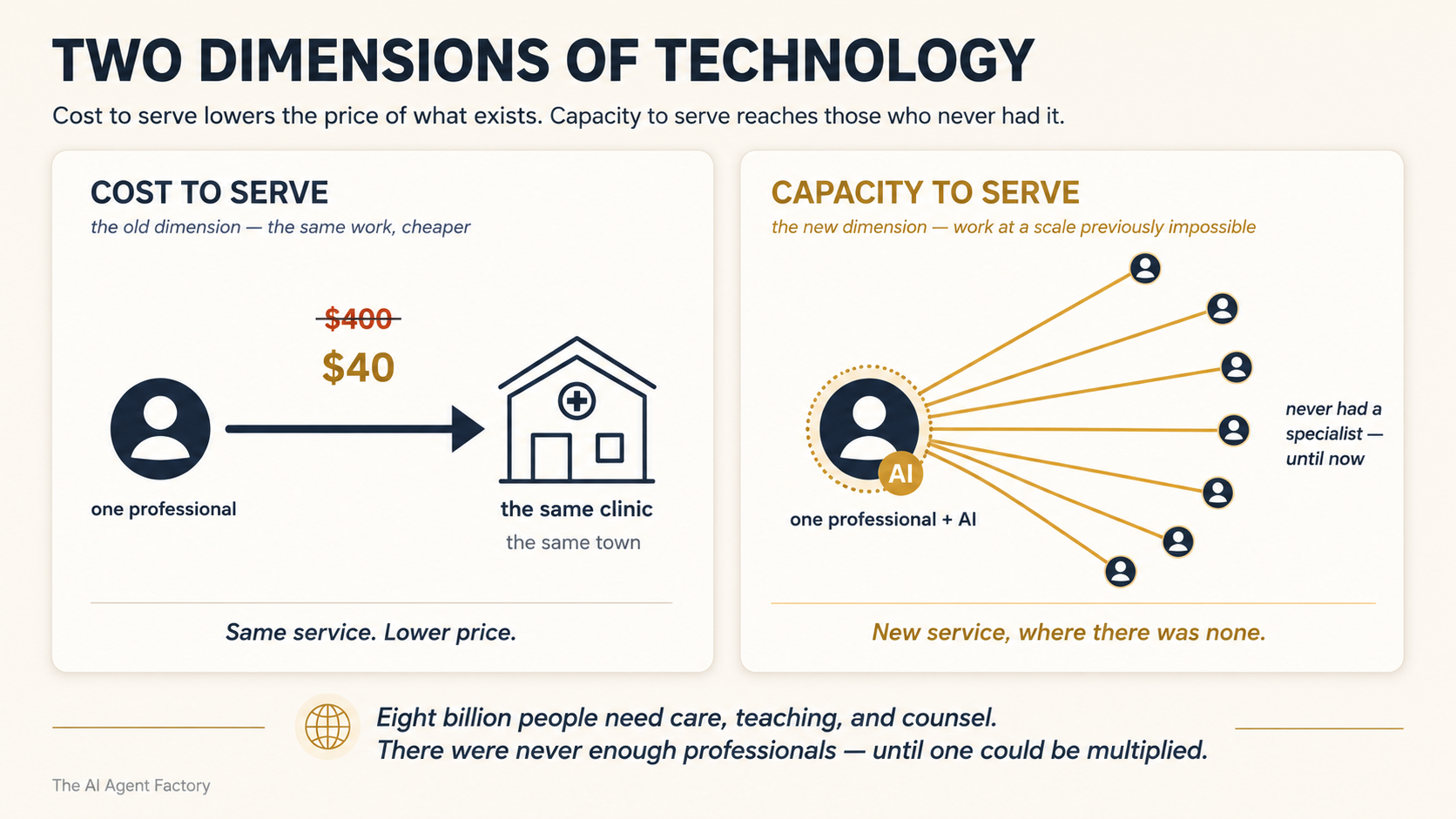
पहले की technologies ने मुख्य रूप से cost घटाई। AI उन लोगों तक service भी बढ़ा सकता है जिन्हें कभी service नहीं मिली।
AI routine work पर फिर भी pressure डालेगा। जो radiologist केवल standard scans पढ़ता है वह pressure महसूस कर सकता है। जो radiologist clinical judgment को AI-assisted pattern detection से जोड़ता है, वह अधिक valuable हो जाएगा।
Dividing line blue-collar और white-collar के बीच नहीं है। वह उन लोगों के बीच है जो सीखना रोक देते हैं और जो grow करते रहते हैं।
सबसे बड़ा personal risk केवल यह नहीं कि AI आपकी job बदल सकता है। वह उन tools को सीखने से इनकार करना है जो उसे बदल रहे हैं।
2. आम लोगों के लिए साफ़ benefit नहीं: Dividend को visible बनाएँ
यह कुछ हद तक communication failure है। Benefits वास्तविक हैं, लेकिन industry ने अक्सर उन्हें खराब ढंग से बताया है।
Ordinary life से शुरू करें।
- Ohio की single mother lease-dispute letter draft करने के लिए AI assistant इस्तेमाल करती है। Lawyer वरना उससे $400 ले सकता था।
- Karachi का shopkeeper बिना middleman या markup के Chinese supplier से सीधे negotiate करने के लिए AI translation इस्तेमाल करता है।
- Rural Mexico का student university entrance exams की तैयारी के लिए AI tutor इस्तेमाल करता है, क्योंकि पास में test-preparation center नहीं है।
Benefits बड़े systems में भी दिखाई देते हैं।
Duolingo ने report किया कि AI ने उसे पिछली cost के एक fraction पर नया course content बनाने में मदद की। AI-assisted drug discovery ने कुछ early-stage timelines को years से months तक घटाया है। Insilico Medicine एक drug candidate को target discovery से Phase I trials तक 30 months से कम में ले गई, जबकि traditional process में 4 से 6 years लगते हैं।
Waymo और Nuro ने logistics pilots report किए हैं जो last-mile delivery costs को 40% या अधिक घटा सकते हैं। AI models breast cancer, lung nodules और cardiac risk की screening भी बेहतर कर रहे हैं।
Problem यह नहीं कि AI कोई benefit नहीं देता। Problem यह है कि industry ने citizens को practical value समझाने के बजाय investors को AGI hype बेचने में years लगाए।
Correction यह measure करना है कि लोग क्या देख सकते हैं:
- diagnosed patients,
- tutored students,
- affordable बनी services,
- बचाया गया समय,
- और verified outcomes।
जब AI clear specifications, continuous checks और measurable results के around बनाया जाता है, तो consumer dividend promise नहीं रहता। वह receipt बन जाता है।
3. Surveillance और control: Power पर checks बनाएँ
यह objection गंभीर है क्योंकि abuse hypothetical नहीं है।
हम risk पहले ही देख चुके हैं। Examples में China के social-credit experiments, United States और United Kingdom में police द्वारा facial recognition का misuse, और Pegasus spyware scandal शामिल हैं।
जवाब build करना रोकना नहीं है। Enforceable limits के तहत build करना है।
San Francisco और अन्य cities ने law enforcement के real-time facial recognition को ban या restrict किया है। EU का AI Act कई surveillance uses को high risk classify करता है और transparency तथा audits require करता है।
ये frameworks अभी young हैं। Paper पर rules enforcement guarantee नहीं करते। लेकिन imperfect regulation भी किसी framework के न होने से बेहतर है।
Technical design भी matter करता है। Open-source models, decentralized infrastructure, federated learning और differential privacy data और power centralize करने की ज़रूरत घटा सकते हैं। वे abuse से freedom guarantee नहीं करते, लेकिन balance shift कर सकते हैं।
हर powerful tool weaponize हो सकता है। Printing press ने democracy और propaganda दोनों enable किए। Encryption privacy को protect करता है और criminals को भी protect करता है।
Lasting answer कभी simple prohibition नहीं रहा। वह power पर checks रहा है: law, transparency, technical safeguards, independent review और democratic oversight।
4. Geopolitical arms race: Dependence नहीं, sovereignty बनाएँ
एक decade के भीतर countries 3 groups में बँट सकती हैं:
- AI intelligence export करने वाले countries,
- अपनी AI capacity बनाए रखने वाले partners,
- और critical work के लिए foreign systems पर depend करने वाले states।
इसीलिए retreat dangerous है।
अगर free societies pause करें और कम accountable actors आगे बढ़ते रहें, तो frontier गायब नहीं होता। वह कम safety commitments और कम public oversight वाले groups के पास चला जाता है।
यह concern superpowers तक सीमित नहीं है। Pakistan, Brazil और Nigeria सहित Global South के countries के सामने basic choice है: domestic capability बनाएँ या किसी और की intelligence के permanent consumers बनें।
Sovereign AI का अर्थ ऐसे models और systems हैं जो local languages समझें, local industries को serve करें और local rules के तहत operate करें।
Open-source foundations इसे अधिक achievable बनाती हैं। Lahore या Lagos की university अब local needs के लिए frontier-class model adapt कर सकती है। कुछ years पहले इसकी कल्पना करना कठिन था।
Real race केवल AI बनाने और न बनाने वाले countries के बीच नहीं है। वह talent और strong systems develop करने वाले countries तथा दोनों को drain होने देने वाले countries के बीच है।
5. Reality का erosion: AI को verify करने के लिए AI इस्तेमाल करें
Shared reality खोना genuine danger है। लेकिन इसे verification problem की तरह समझना बेहतर है।
Printing press ने pamphlets, propaganda और conspiracy tracts के ज़रिए misinformation भी फैलाया। Society ने journalism, peer review, scientific method और libel law बनाए।
AI-generated media को उसी तरह का institutional response अधिक तेज़ी से चाहिए।
AI problem का हिस्सा है, लेकिन solution का भी हिस्सा है। Synthetic media generate करने वाले systems उसे detect करने में भी मदद कर सकते हैं। AI manipulated images पहचान सकता है, suspicious financial documents flag कर सकता है और ऐसे scale पर fraud detect कर सकता है जिसे कोई human team match नहीं कर सकती।
Trustworthy AI को किसी sound system जैसे basic controls चाहिए:
- clear specifications,
- release से पहले checks,
- trace की जा सकने वाली evidence,
- और stakes high होने पर human judgment।
Unreliable AI का जवाब कम design नहीं है। वह बेहतर design है, जिसमें humans system को केवल operate नहीं, supervise करते हैं।
6. Existential risk: Recklessness नहीं, safety accelerate करें
यह objection सबसे अधिक caution deserve करता है।
Alignment problem वास्तविक और unsolved है। हम अभी नहीं जानते कि increasingly capable systems को human flourishing के compatible goals pursue करते रहने की guarantee कैसे दें।
Reckless builder इस concern को dismiss करता है। Serious builder इसे central design problem मानता है।
हालाँकि global pause enforce करना कठिन होगा। AI development governments, companies, universities, open-source communities और independent researchers में distributed है। Safety-conscious groups का pause frontier रोकना ज़रूरी नहीं। वह frontier कम transparency और safeguards वाले actors तक ले जा सकता है।
बेहतर response सही तरह का acceleration है: stronger models पर काम के साथ alignment, model understanding, evaluation और control पर अधिक काम।
Anthropic, DeepMind और university researchers इस problem पर काम कर रहे हैं। वे model behavior, human values को अधिक clear ढंग से state करने और stronger systems को control में रखने के methods study कर रहे हैं।
यह work early है। यह पर्याप्त नहीं है। लेकिन इसे केवल वे लोग कर सकते हैं जो frontier systems को भीतर से समझते हैं।
Humanity ने nuclear systems, engineered pathogens और climate को affect करने वाले industrial systems जैसे अन्य dangerous tools भी manage किए हैं। Record imperfect है, लेकिन pattern साफ़ है। Governance को expertise चाहिए। Dangerous tool से दूर रहने वाली societies उसे govern करने के लिए आवश्यक knowledge खो देती हैं।
Existential risk AI को ignore करने की वजह नहीं है। यह सुनिश्चित करने की वजह है कि सबसे capable builders safety, transparency और public accountability के लिए भी deeply committed हों।
7. Environmental cost: Energy system ठीक करें
AI substantial energy और water इस्तेमाल करता है। इस cost को minimize नहीं करना चाहिए।
Goldman Sachs ने estimate किया कि data-center electricity demand 2030 तक 160% बढ़ सकती है। यह serious technical और policy challenge है।
Context फिर भी matter करता है। AI, cloud computing, streaming और e-commerce सहित global data-center industry अभी global electricity का लगभग 1% से 2% इस्तेमाल करती है। Residential air conditioning अकेले सभी data centers combined से अधिक electricity इस्तेमाल करती है। Fashion industry भी global carbon emissions का significant share produce करती है।
हम clothing, cooling या digital services ban नहीं करते। हम यह बेहतर करते हैं कि वे कैसे produce हों।
AI industry renewable energy और next-generation nuclear power में पहले से invest कर रही है। Mixture-of-experts, distillation और quantization जैसी model techniques given performance के लिए required computation घटाती हैं। New hardware भी प्रति watt अधिक computation देता है।
AI environmental damage घटाने में भी मदद कर सकता है। DeepMind के cooling system ने Google की data-center cooling energy 40% घटाई। AI power-grid management, precision agriculture, climate modeling, battery research, solar materials और carbon-capture optimization support करता है।
सही सवाल यह नहीं कि AI energy इस्तेमाल करता है या नहीं। हर human system energy इस्तेमाल करता है। सवाल यह है कि क्या benefits cost justify कर सकते हैं और क्या AI के पीछे के power systems को clean energy की ओर ले जाया जा सकता है।
AI pause करने से energy crisis solve नहीं होता। Cleaner power systems पर AI बनाना दोनों problems address करने में मदद कर सकता है।
8. Bias और discrimination: Bias को visible और auditable बनाएँ
AI systems ने अपने training data में harmful patterns reproduce किए हैं।
Amazon ने internal hiring tool छोड़ दिया जब पता चला कि वह महिलाओं के résumés downgrade करता था। व्यापक healthcare algorithm ने Black patients को कम resources दिए, क्योंकि उसने healthcare spending को medical need का proxy माना। वह spending पहले से unequal access to care reflect करती थी।
ये structural failures हैं। इनके लिए structural responses चाहिए।
महत्वपूर्ण बात यह है कि underlying bias AI से शुरू नहीं हुआ। Human hiring, lending और medical systems पहले से biased थे। Human decisions को observe, repeat या audit करना अक्सर कठिन था।
AI decision log और measure किया जा सकता है। इससे correction possible होता है, हालाँकि कभी automatic नहीं।
High-risk system को demographic groups में test करना चाहिए। उसके training data को document करना चाहिए। उसके decisions independent review के लिए open होने चाहिए। Regulators performance और fairness की evidence माँग सकें।
EU का AI Act, Algorithmic Justice League और NIST AI Risk Management Framework सभी इस तरह की accountability की ओर इशारा करते हैं।
Unchecked AI discrimination को किसी human institution से तेज़ scale कर सकता है। जवाब यह pretend करना नहीं कि problem खुद solve होगी। जवाब audits, impact assessments, transparent documentation और correction cycles require करना है।
Goal ऐसा AI system नहीं जो human जितना biased हो। Goal ऐसा system है जो measurably कम biased हो और हर audit के साथ improve करे।
9. Wealth concentration: कौन build कर सकता है, इसे democratize करें
Concentration problem वास्तविक है।
Frontier training runs में billions लगते हैं। Labs को tens of thousands high-end GPUs चाहिए, हर GPU की कीमत लगभग $25,000 से $40,000 है। आवश्यक systems बनाने में tens of billions dollars लगते हैं।
इससे companies के छोटे group को enormous power मिलती है। February 2026 में Anthropic की $380 billion valuation, India की 5 largest IT-services companies की combined market capitalization से अधिक थी। वे companies 4 decades में बनीं और millions of people को employ करती हैं।
इसलिए default road abundance produce करते हुए अधिकतर value California और Beijing में concentrate कर सकती है।
Anthropic CEO Dario Amodei ने चेतावनी दी है कि gains top पर concentrated रहें तो AI trillionaires बना सकता है और severe public backlash भड़का सकता है। उन्होंने argue किया कि AI को केवल business opportunity नहीं, civilizational challenge मानना चाहिए। उन्होंने massive wealth creation के era के लिए नए tax rules भी माँगे हैं।
उनकी warning issue को reframe करती है। सवाल यह नहीं कि AI value बनाता है या नहीं। वह बनाता है। सवाल यह है कि governments और markets उस value को public trust और social stability बनाए रखने जितना widely spread कर सकते हैं या नहीं।
जवाब सारी progress cap करना नहीं है। जवाब कौन build कर सकता है और किसे benefit मिलता है democratize करना है। इसके लिए चाहिए:
- open-weight models,
- accessible tools,
- public AI literacy,
- sovereign compute,
- progressive policy,
- और useful AI systems की wider ownership।
Lahore या Lagos की university local needs के लिए strong open models पहले ही adapt कर सकती है। EU, India और Gulf states के sovereign AI programs कुछ foreign providers पर dependence घटाना चाहते हैं।
पहले की tech revolutions ने अंततः gains अधिक widely spread किए। AI में entry cost unusually high होने के कारण यह automatically नहीं होगा। इसे design से democratic बनाना होगा।
अंतिम बात
डर legitimate हैं। हर डर serious engagement deserve करता है।
लेकिन हर डर AI को बेहतर बनाने का argument भी है, field किसी और को छोड़ने का नहीं।
यह किताब अपने framework को Agent Factory कहती है। यह spec-driven और human-supervised process है। Specifications intent define करती हैं। Verification loops errors catch करते हैं। High-stakes decisions पर humans authority रखते हैं। Economic model opacity के बजाय outcomes reward करता है।
हम safety और progress के बीच नहीं चुन रहे। हम AI के develop होते रहने पर उसे shape करने और किसी और को हमारे लिए shape करने देने के बीच चुन रहे हैं।
Karachi के shopkeeper को useful tool चाहिए। Rural Mexico के student को tutor चाहिए। बिना doctor वाले village के patient को care तक access चाहिए। उन्हें AI exist करना चाहिए या नहीं, इस पर abstract debate नहीं चाहिए। उन्हें ऐसे systems चाहिए जो उनके लिए काम करें।
AI अनिवार्य है। इसे हम कैसे बनाते हैं, अब बस यही निर्णय बचता है।