Agent Factory Thesis: सरल भाषा वाला संस्करण
AI में fluent हैं? Professional संस्करण पढ़ें →
यह संस्करण किसके लिए है? यह संस्करण दो तरह के पाठकों के लिए लिखा गया है: वे लोग जो technology और व्यवसाय में नए हैं, और वे लोग जिनकी पहली भाषा English नहीं है। इस संस्करण की भाषा सरल रखी गई है। वाक्य छोटे हैं। हर ज़रूरी शब्द को पहली बार आने पर समझाया गया है। मूल thesis उन पाठकों के लिए भी उपलब्ध है जो ये शब्द पहले से जानते हैं और गहरा संस्करण पढ़ना चाहते हैं। दोनों संस्करण एक ही बात कहते हैं। वे बस वहाँ तक पहुँचने के अलग रास्ते लेते हैं।
इस दस्तावेज़ को पढ़ने के तीन तरीके
10-मिनट वाला रास्ता: सिर्फ़ अगला खंड पढ़ें, "यहाँ से शुरू करें: पूरी thesis 2 पेज में।" इससे ही आपको पूरा तर्क मिल जाता है।
30-मिनट वाला रास्ता: खंड 1, 5, 9, 13, 15, और 17 पढ़ें। आपको मुख्य ideas और एक worked example मिल जाएगा।
पूरा रास्ता: हर खंड को क्रम में पढ़ें। लगभग 60 से 90 मिनट। अगर आपको गहराई, evidence, और कहानियाँ चाहिए, तो यह सबसे अच्छा है।
तीनों रास्ते एक ही जगह खत्म होते हैं। अपने समय के हिसाब से रास्ता चुनें।
यहाँ से शुरू करें: पूरी thesis 2 पेज में
अगर आपके पास सिर्फ़ दस मिनट हैं, तो यह खंड पढ़ें। इसमें पूरा तर्क है। इसके बाद की हर चीज़ वही idea है, बस धीरे-धीरे और ज़्यादा examples के साथ।
बड़ा बदलाव
पिछले बीस सालों में technology कंपनियों ने आपको software बेचा। आपने login किया। काम आपने खुद किया। आपने access के लिए हर महीने पैसे दिए।
अब वही model अकेला model नहीं रहा। उसके साथ एक नया model उभर रहा है। नई कंपनियाँ बन रही हैं जहाँ काम करने वाले लोग नहीं, AI हैं। Tools नहीं। अब आप इन कंपनियों से tool नहीं खरीदते। आप अपना काम करवाने के लिए उनके AI workforce को hire करते हैं।
फ़र्क के बारे में सोचें। Microsoft आपको Word बेचता है, और दस्तावेज़ आप लिखते हैं। नया model आपको पूरा दस्तावेज़ बेचता है: AI worker ने लिखा, quality check हुई, और आपको पहुँचा दिया गया। आपने tool के लिए नहीं, नतीजे के लिए पैसे दिए।
पहले सीखने लायक तीन शब्द
- AI Worker (इसे Digital FTE भी कहा जाता है: software से बना Full-Time Employee): ऐसा AI जिसे एक खास काम करने के लिए बनाया गया हो, जैसे कोई इंसानी कर्मचारी करता है। Customer support, bookkeeping, sales: हर एक job-role जैसा AI है।
- AI-Native Company: ऐसी कंपनी जहाँ ज़्यादातर workers AI होते हैं। कंपनी वही बेचती है जो ये workers बनाते या पूरा करते हैं।
- The Agent Factory: AI workers और उन्हें staff करने वाली कंपनियाँ बनाने की method। यह खरीदने वाला product नहीं है। यह सीखने वाली practice है।
काम कैसे बँटता है
इंसान दिशा तय करते हैं। AI काम करता है। इंसान नतीजे check करते हैं।
यह 10-80-10 rhythm है:
- पहले 10%: इंसान साफ़ plan लिखता है (goal, limits, budget)
- बीच का 80%: AI workers असली काम करते हैं
- आख़िरी 10%: इंसान check करके approve करता है
तीन चीज़ें इंसानों के पास रहती हैं और कभी AI को नहीं जातीं: intent (यह जानना कि आप क्या चाहते हैं), verification (यह जानना कि आपको वही मिला या नहीं), और outcome ownership (नतीजे की ज़िम्मेदारी लेना)।
भविष्य की कंपनी की दो layers
एक इंसान हाथ से बीस AI workers को manage नहीं कर सकता। इसलिए कंपनी की दो layers होती हैं:
- Edge Layer: हर इंसान के पास एक personal AI agent होता है (एक delegate) जो उसे जानता है और उसकी ओर से act करता है।
- AI Workforce Layer: Specialist AI workers असली jobs करते हैं, जिन्हें management layer coordinate करती है।
आप अपने delegate से बात करते हैं। आपका delegate workforce से बात करता है। नतीजे आपके पास वापस आते हैं।
एक ताकतवर AI tool इस्तेमाल करने के दो तरीके
जब आप किसी general AI tool के साथ बैठते हैं, तो आप दो कामों में से एक कर रहे होते हैं:
- Problem-solving: अभी आपके पास एक problem है, आपको पूरा जवाब चाहिए, session खत्म हो जाता है। Bug fix करना। Report analyze करना।
- Manufacturing: आप एक नया AI worker बना रहे हैं जो इस session के बहुत बाद तक चलता रहेगा। Output कोई जवाब नहीं है। यह एक स्थायी worker है जो आगे से जवाब produce करेगा।
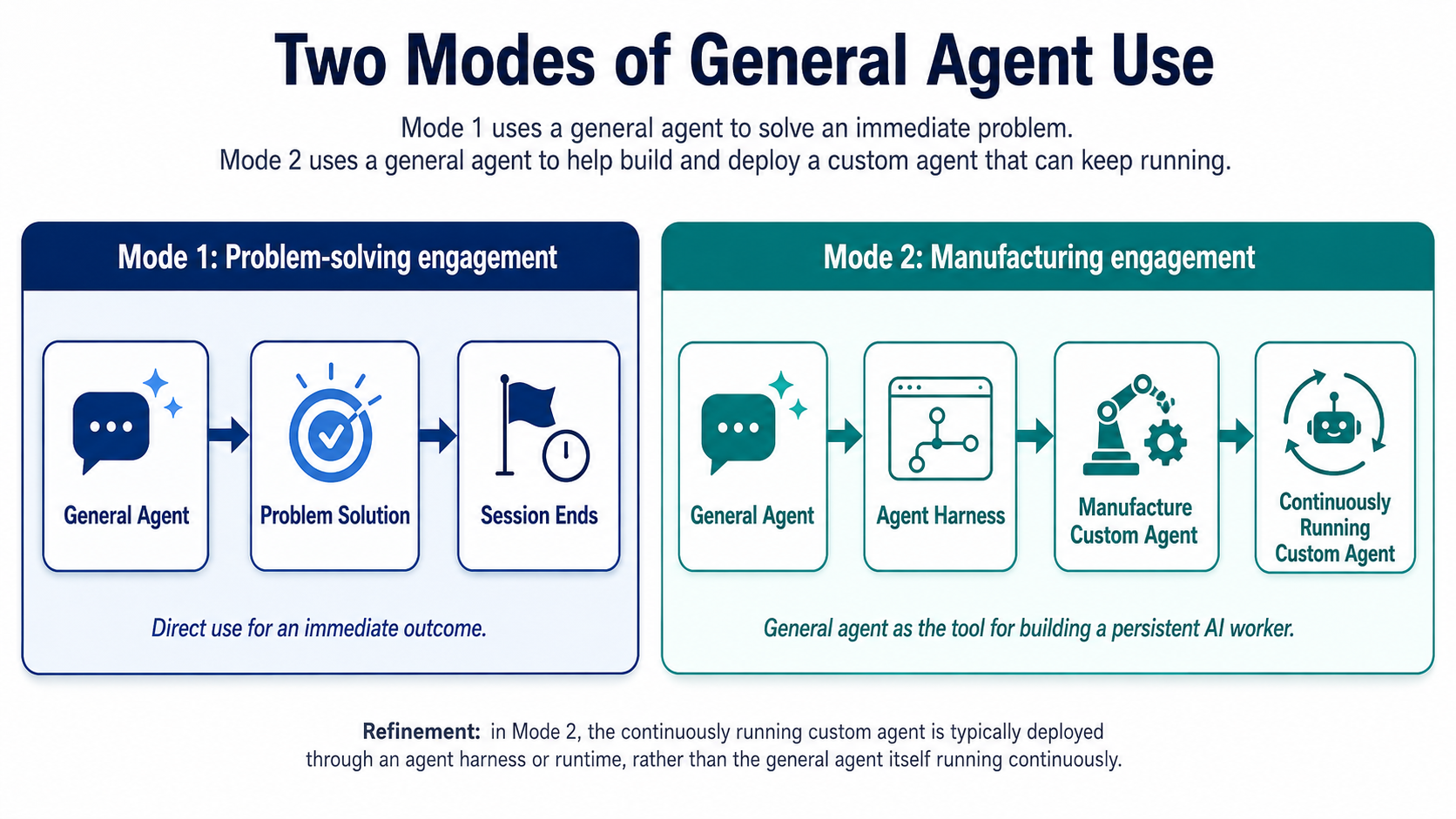
एक mode आज की problem solve करता है। दूसरा mode कल का worker बनाता है।
सात नियम जो नहीं बदलते
किसी भी AI-Native Company की architecture सात नियम मानती है:
- इंसान charge में है। हर action उस इंसान तक trace होता है जिसने दिशा तय की।
- हर इंसान के पास delegate है। एक AI agent आपका प्रतिनिधित्व करता है और आपकी ओर से act करता है।
- Workforce के पास management layer है। यह workers hire करती है, काम assign करती है, budgets control करती है।
- हर worker सही engine इस्तेमाल करता है। ज़रूरी काम के लिए reliable engines। Routine काम के लिए सस्ते engines।
- हर worker system of record इस्तेमाल करता है। AI workers कंपनी की official memory से पढ़ते हैं और उसमें लिखते हैं।
- Workforce rules के अंदर grow कर सकता है। जब gap आता है, system नया worker hire करता है, उन limits के अंदर जो इंसान ने तय की हैं।
- कंपनी nervous system पर चलती है। Events workers के बीच automatically flow करते हैं, crashes survive करते हैं, और traffic control करते हैं।
नियम नहीं बदलते। आज जो specific products इन्हें भरते हैं (OpenClaw, Paperclip, Inngest, और दूसरे) वे बदलेंगे, और यह ठीक है। Tools बदलते हैं। Rules रहते हैं।
यह forecast नहीं, असली क्यों है
यह 2030 की prediction नहीं है। 2026 तक:
- AI agents चार open payment standards (ACP, AP2, x402, MPP) से अपने-आप payments कर सकते हैं।
- कुछ कंपनियाँ, जिनमें इंसानी employees बहुत कम हैं, लगभग पूरी तरह AI workforce के साथ हर साल एक billion dollars revenue report कर रही हैं।
- U.S. history में पहली बार AI workers के workplaces (data centers) बनाने पर human workers के workplaces (offices) से ज़्यादा पैसा खर्च हो रहा है।
- Cursor के अपने product में 35% changes AI agents खुद कर रहे हैं, जहाँ इंसान सिर्फ़ problem set करते हैं और नतीजा जाँचते हैं।
इसका आपके लिए मतलब
- अगर आप developer हैं, तो आप coder से नतीजों के designer बन रहे हैं। आप हर line नहीं लिखते। आप AI workers को पूरे products बनाने की दिशा देते हैं।
- अगर आप business चलाते हैं, तो आप tools खरीदने से कार्यबल hire करने की ओर बढ़ रहे हैं। Pricing की unit "per seat" से "per result" हो जाती है।
- अगर आप पढ़ रहे हैं, तो सबसे valuable skill अब तेज़ typist होना नहीं है। वह है clear specs लिखना, सही system of record चुनना, और quality verify करना।
याद रखने लायक पाँच parts
अगर इस पूरे दस्तावेज़ से आपको और कुछ याद न रहे, तो AI-Native Company के ये पाँच parts याद रखें:
- एक इंसान तय करता है कि क्या होना चाहिए।
- एक personal agent (delegate) इंसान का प्रतिनिधित्व करता है और उसकी authority carry करता है।
- एक management layer AI workers को काम assign करती है और budgets control करती है।
- AI workers असली काम करते हैं, और हर worker किसी job जैसा shaped होता है।
- एक system of record सच को store करता है: कंपनी असल में क्या जानती है।
इस किताब की बाकी हर चीज़ इन पाँच parts के ऊपर detail है। अगर कभी रास्ता खो जाए, तो इस list पर लौट आएँ।
यहाँ से आगे कहाँ जाएँ
अगर यह summary समझ आ गई है और आप depth चाहते हैं, तो हर मुख्य खंड यह जोड़ता है:
- खंड 1: बड़ी तस्वीर: AI-Native Company क्या है और क्या बेचती है
- खंड 5: चार vocabulary words जो हर जगह लौटते हैं
- खंड 9: Production Engine कैसे काम करता है (architecture का heart)
- खंड 13: Two-Layer Model
- खंड 15: Seven Rules detail में
- खंड 17: Worked example: 5 steps में support-ticket AI worker बनाना
ये छह खंड 30-मिनट वाला रास्ता हैं। या हर खंड को क्रम में पढ़ें: हर idea पिछले idea पर बनता है।
यही पूरी thesis है। इसके बाद की हर चीज़ वही idea है, बस ज़्यादा धीरे।
एक नज़र में glossary
इस किताब के सबसे ज़रूरी शब्द ये हैं। हर शब्द दोबारा, ज़्यादा detail में, पहली बार आने पर समझाया जाएगा। अगर बाद में रास्ता खो जाए, तो यहाँ लौट आएँ।
- AI Worker (या Digital FTE): ऐसा AI system जिसे एक खास job करने के लिए बनाया गया हो, जैसे customer support rep या financial analyst। FTE का मतलब Full-Time Employee है।
- AI-Native Company: ऐसी कंपनी जहाँ ज़्यादातर workers AI हैं, इंसान नहीं। इसे Agentic Enterprise भी कहा जाता है।
- Agent Factory: AI-Native Companies बनाने की method। Product नहीं। काम करने का तरीका।
- Delegate: आपका personal AI agent। यह आपको जानता है और आपकी ओर से act करता है। इसे identic AI या personal agent भी कहा जाता है।
- System of Record: कंपनी की official memory। वह जगह जहाँ सच रहता है: customers, orders, पैसा, contracts। AI workers इससे पढ़ते हैं और इसमें लिखते हैं।
- MCP: AI के लिए universal connector। इसका पूरा नाम Model Context Protocol है। USB जैसा, लेकिन AI के लिए। यह किसी भी AI worker को किसी भी tool या data source से एक shared standard के ज़रिए connect करने देता है।
- Spec: साफ़, लिखी हुई instruction जो AI worker को बताती है कि क्या करना है। Casual chat message नहीं, बल्कि ध्यान से लिखा गया plan।
- Skill: छोटा, portable package जो AI worker को एक specific चीज़ अच्छी तरह करना सिखाता है।
- Invariant: ऐसा rule जो नहीं बदलता। Design की structural requirement।
- Reference Implementation: वह specific product जिसे हम आज किसी rule को follow करने के लिए इस्तेमाल करते हैं। कल rule तोड़े बिना बदला जा सकता है।
- Engagement: एक single session जहाँ इंसान general AI agent के साथ काम करता है। दो modes: problem-solving (अभी एक चीज़ solve करें, session खत्म) और manufacturing (कंपनी के लिए permanent AI worker बनाएँ)।
📚 शिक्षण सहायता
इस thesis का slideshow संस्करण भी उपलब्ध है। कुछ पाठक prose की तुलना में slides से बेहतर सीखते हैं। वही ideas, visuals के साथ: Google Slides पर पूरी presentation देखें
1. एक नई तरह की कंपनी जन्म ले रही है
सोचें कि technology कंपनियाँ आज पैसे कैसे कमाती हैं।
Microsoft आपको Word बेचता है। Salesforce आपको customers track करने का tool बेचता है। Zoom आपको video calls बेचता है। आप उन्हें हर महीने पैसे देते हैं। आप login करते हैं। काम आप खुद करते हैं। Software एक tool है। यह useful है, लेकिन तभी जब कोई इंसान buttons दबाए।
Software बेचने के इस तरीके को SaaS कहते हैं। यह शब्द "sass" की तरह बोला जाता है। इसका मतलब Software-as-a-Service है। आप software own नहीं करते। आप उसे rent करते हैं। पिछले बीस सालों से technology में SaaS मुख्य business model रहा है।
अब वही model अकेला model नहीं रहा। उसके साथ एक नया model उभर रहा है।
AI era में सबसे valuable कंपनियाँ आपको tools नहीं बेचेंगी। वे AI workers बनाएँगी और उन workers को आपको rent करेंगी।
इसे धीरे करके समझते हैं।
AI worker ऐसा AI system है जिसे एक specific job करने के लिए बनाया गया है, उसी तरह की job जो कोई human employee करता है। कुछ examples:
- एक AI worker जो customer support संभालता है। वह questions पढ़ता है, customer accounts check करता है, replies लिखता है, और मुश्किल cases इंसान को भेजता है।
- एक AI worker जो bookkeeping करता है। वह expenses sort करता है, accounts check करता है, और monthly reports तैयार करता है।
- एक AI worker जो sales का काम, legal contract review, या data analysis करता है।
हर एक job जैसा shaped AI है। वह instructions लेता है, tools इस्तेमाल करता है, और काम पूरा करता है।
इस किताब में हम इन AI workers को Digital FTEs भी कहते हैं। FTE का मतलब Full-Time Employee है: कंपनियाँ permanent staff को ऐसे count करती हैं। One FTE का मतलब एक full-time job है। इसलिए Digital FTE का मतलब बस इतना है: "इंसान की जगह software से बना full-time employee"। यह 24/7 काम करता है, पूरी role संभालता है, सिर्फ़ एक task में मदद नहीं करता।
इन AI workers के इर्द-गिर्द बनी कंपनी को AI-Native Company कहते हैं। इस कंपनी के अंदर ज़्यादातर workers इंसान नहीं होते। वे AI होते हैं। और कंपनी वही बेचती है जो उसके AI workers produce करते हैं: software, decisions, services, advice, transactions, या किसी भी तरह का finished काम।
बड़ा बदलाव यह है।
आप इन कंपनियों से product नहीं खरीदते। आप अपना काम करवाने के लिए उनके AI कार्यबल को hire करते हैं। यह ऐसा है जैसे आप अपनी books close करवाने के लिए accounting firm hire करें, या contract draft करवाने के लिए law firm। आप tool के लिए पैसे नहीं दे रहे। आप finished काम के लिए पैसे दे रहे हैं।
और आगे इससे भी ज़्यादा आने वाला है। AI workers जल्द ही independent economic actors बनेंगे। इसका मतलब है कि वे:
- अपने-आप services खरीदेंगे।
- उन्हें जिस computing power की ज़रूरत होगी, उसके लिए pay करेंगे।
- उन्हें जिस data की ज़रूरत होगी, वह खरीदेंगे।
- मदद के लिए दूसरे AI workers को pay करेंगे।
यह सब हर छोटी purchase पर human approval के बिना होगा।
यह नए kind के software से बड़ा बदलाव है। यह नई तरह की कंपनी है।
यह किताब बताती है कि ऐसी कंपनी कैसे बनानी है।
Agent Factory इन कंपनियों को बनाने की method है। यह rules, design, और discipline का set है। आप इससे AI workers design करते हैं, उन्हें काम पर लगाते हैं, और उनके इर्द-गिर्द business चलाते हैं। Factory शब्द ज़रूरी है। असली factory cars या phones बनाने के लिए clear, repeatable method follow करती है। Agent Factory AI workers बनाने के लिए clear, repeatable method follow करती है। यह खरीदने वाला product नहीं है। यह काम करने का ऐसा तरीका है जिसे आप सीखते और इस्तेमाल करते हैं।
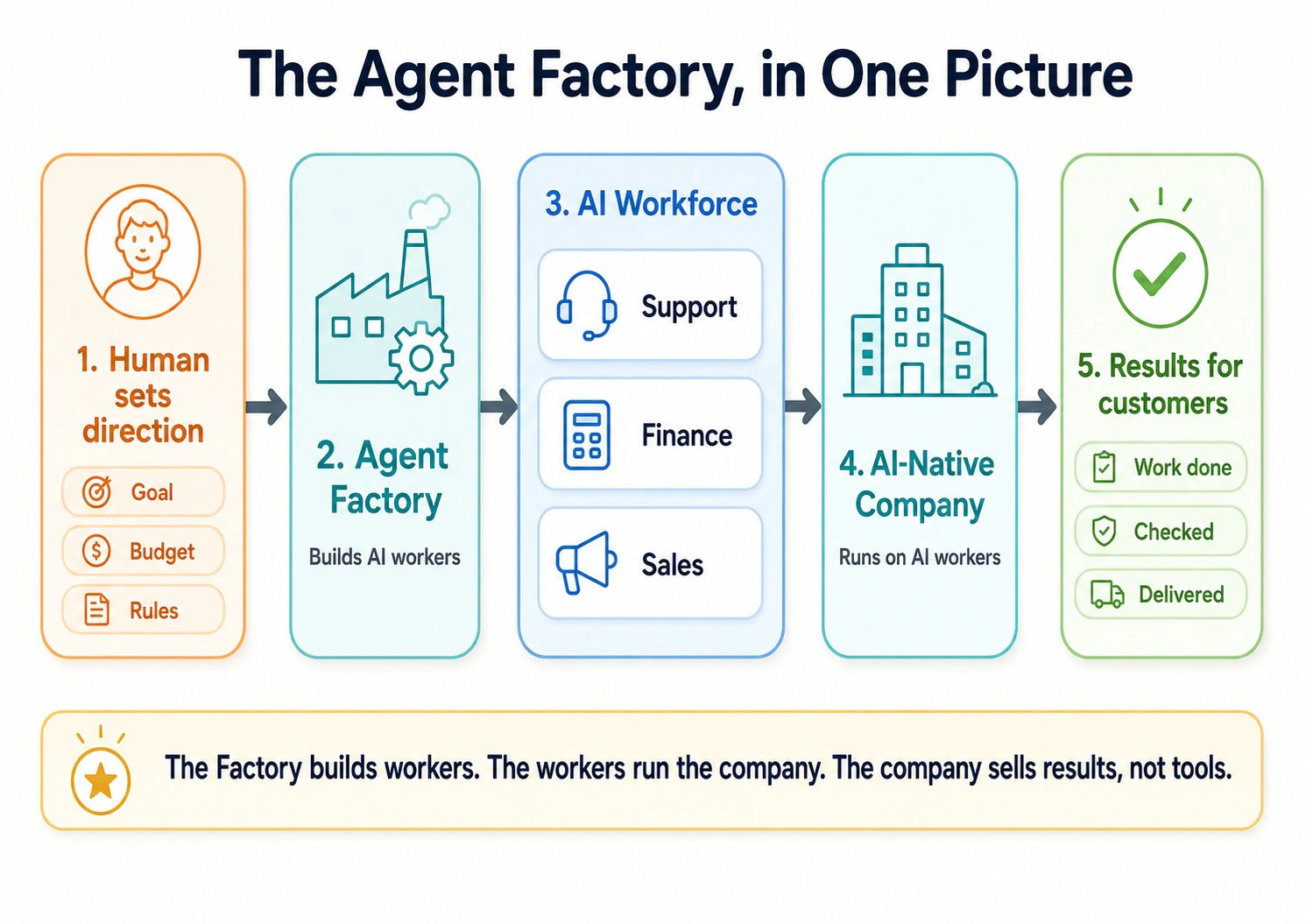
पाँच चरणों में पूरी तस्वीर। (1) इंसान direction set करता है: goal, budget, rules। (2) Agent Factory AI workers बनाती है। (3) Workers अलग departments staff करते हैं: Support, Finance, Sales। (4) वे मिलकर AI-Native Company चलाते हैं। (5) कंपनी customers को finished नतीजे deliver करती है।
2. AI अभी से चीज़ों के लिए pay कर सकता है
जब हम कहते हैं कि AI workers "independent economic actors" बनेंगे, तो यह science fiction जैसा लग सकता है। ऐसा नहीं है। जिन basic systems से AI agents चीज़ों के लिए payment कर सकते हैं, वे 2026 में पहले से काम कर रहे हैं।
यहाँ चार payment systems हैं जो इसलिए बनाए गए हैं कि AI agents इंसानों के लिए खरीद और बेच सकें। आपको इनके names याद रखने की ज़रूरत नहीं। Point यह है: यह आज वास्तविक है।
- ACP: OpenAI (ChatGPT बनाने वाली कंपनी) और Stripe (बड़ी online payment कंपनी) ने बनाया। जब ChatGPT किसी chat के अंदर आपके लिए कुछ खरीदता है, जैसे आपने जिस product के बारे में पूछा उसे order करना, ACP payment handle करता है।
- AP2: Google का संस्करण। 60 से ज़्यादा कंपनियाँ इसे इस्तेमाल करने पर सहमत हुई हैं। यह digital permission slip जैसा काम करता है। इंसान एक slip sign करता है जिसमें लिखा होता है, "यह AI agent इस महीने cloud services पर $500 तक खर्च कर सकता है।" Agent जब pay करने की कोशिश करता है, तो यह slip साथ रखता है। Slip strong digital security से signed होती है, इसलिए कोई इसे fake नहीं कर सकता।
- x402: Cryptocurrency के इर्द-गिर्द बनाया गया payment standard। इसे पहले Coinbase ने बनाया था। 2026 की शुरुआत में Stripe ने इसे normal payment systems से connect किया। अब crypto payments और card payments same agent payment system इस्तेमाल कर सकते हैं।
- MPP: बहुत छोटे, repeated payments के लिए बना system। कल्पना करें कि कोई AI agent एक service stream करता है और हर second एक cent के fraction का payment करता है। Normal credit cards में fees payment खा जाएँगी। MPP ऐसे tiny payment को possible बनाता है।
Plumbing जगह पर है। यह काम की shape बदल देता है।
3. Tools से नतीजों की ओर बदलाव
SaaS subscriptions बेचता था। आपने access के लिए हर महीने पैसे दिए। आपने tool अच्छे से इस्तेमाल किया या खराब, seller को उतना ही payment मिला। Seller ने access दिया। काम आपने किया।
Agent Factory era नतीजे बेचता है। इंसान बताते हैं कि उन्हें क्या चाहिए। AI agents काम करते हैं। इंसान check करते हैं कि नतीजा अच्छा है या नहीं।
बीच वाला step: type करना, click करना, चीज़ों को connect करना, काम करना। यही AI अपने हाथ में लेता है। इंसानों के पास वह काम रहता है जो machines हमारे लिए नहीं कर सकतीं: यह जानना कि हम क्या चाहते हैं, और यह जानना कि हमें वही मिला या नहीं।
तीन चीज़ें इंसानों के हाथ में रहती हैं:
- Intent: यह जानना कि आप क्या चाहते हैं, और उसे साफ़ बोलना।
- Verification: यह check करना कि AI का काम अच्छा और सही है या नहीं।
- Outcome ownership: नतीजे की ज़िम्मेदारी लेने वाला व्यक्ति होना।
आप ये तीन चीज़ें AI को नहीं दे सकते। Judgment, values, "काफी अच्छा" का standard: ये सब इंसान से आने चाहिए। AI बीच वाला हिस्सा करता है।
4. आपका personal AI helper
यहाँ एक problem है। अगर किसी कंपनी में बहुत सारे AI workers बहुत सारे काम कर रहे हैं, तो कोई single इंसान उन्हें हाथ से guide नहीं कर सकता। आप पूरे दिन हर worker को instructions नहीं लिख सकते। तो आप charge में कैसे रहते हैं?
जवाब: आपके पास अपना personal AI agent होता है, जो आपको जानता है, और आप उसी के ज़रिए कार्यबल को direction देते हैं।
इस personal AI agent के अलग names हैं। हम इसे delegate कहते हैं। कुछ लोग इसे personal agent कहते हैं। Business thinker Don Tapscott इसे identic AI कहते हैं। Identic का मतलब है "identity carry करना।" यह agent आपकी identity carry करता है। यह आपका judgment, आपकी preferences, और decisions लेने की आपकी authority जानता है। यह ऐसा general assistant नहीं है जिसे कोई भी इस्तेमाल कर सके। यह आपका representative है। यह आपकी ओर से बोलता है। यह ऐसे choices करता है जो आपकी values से match करते हैं। यह आपके लिए सही AI workers को काम देता है।
इसे ऐसे सोचें जैसे आपका दूसरा रूप आपके साथ parallel में चल रहा हो। उसे पता है कि आप क्या कहेंगे, आप किस चीज़ की परवाह करते हैं, और आप क्या approve करेंगे। जब छोटी चीज़ें आती हैं, जैसे routine reply, scheduling choice, normal yes-or-no, तो वह उन्हें वैसे handle करता है जैसे आप करते। जब कुछ सच में आपको चाहिए होता है, तो वह रुककर पूछता है। आप उसका boss नहीं हैं; busy होने पर वह हल्के रूप में आप ही है।
तो picture यह है:
- Agent Factory किसी कंपनी का AI कार्यबल बनाती है।
- Identic AI (आपका personal agent) वह तरीका है जिससे हर human उस workforce को control करता है।
आप direction set करते हैं। आपका personal agent आपकी direction को specific instructions में बदलता है। AI workforce काम करता है। आप results check करते हैं।
5. वे शब्द जिन्हें जानना ज़रूरी है
आगे बढ़ने से पहले चार important words lock कर लेते हैं। ये similar लगते हैं, लेकिन इनके meaning अलग हैं। इन्हें mix करना confusion की सबसे common वजह है।
The Agent Factory method है। यह AI workers design करने, बनाने, और इस्तेमाल करने का careful तरीका है। Agent Factory वह चीज़ है जिसे आप इस्तेमाल करना सीखते हैं। यह खरीदने वाला product नहीं है। यह अपनाने वाली practice है, जैसे kitchen चलाने का नया तरीका अपनाना या टीम चलाने का नया तरीका अपनाना।
The AI-Native Company output है। यह वह running business है जिसे Agent Factory produce करती है। इसके ज़्यादातर staff AI workers होते हैं। Management layer उन्हें साथ रखती है। इंसान top और edges पर सबको direct करते हैं। AI-Native Company वह है जिसे आप अंत में चलाते हैं। इस किताब में हम इसे Agentic Enterprise भी कहते हैं।
AI Workers workforce हैं। ये AI-Native Company के अंदर role-based AI agents हैं। इन्हें hire किया जाता है, काम दिया जाता है, टीम में रखा जाता है, और role खत्म होने पर retire किया जाता है। हम इन्हें Digital FTEs या Digital Workers भी कहते हैं। ये कंपनी की असली labor हैं।
The system of record foundation है। यह कंपनी की official memory है। यह वह जगह है जहाँ सच रहता है: customer records, money records, stock counts, contracts, support tickets, business के सभी real facts। AI workers इसी जगह से पढ़ते हैं। वे इसी जगह वापस लिखते हैं। इसके बिना AI worker सिर्फ़ बात कर रहा होता है। उसके काम के टिकने की कोई जगह नहीं होती। (एक moment में हम समझाएँगे कि यह इतना मायने क्यों रखता है।)
इसे जोड़कर देखें: Factory कंपनी बनाती है। कंपनी Workers को employ करती है। Workers system of record के against अपना काम करते हैं।
यहाँ एक और word pair introduce करना है, क्योंकि हम इन्हें बार-बार इस्तेमाल करेंगे।
Engagement एक single session है जहाँ human general AI agent के साथ काम करता है। इसके दो types हैं:
- Problem-solving engagement: आप किसी problem को solve करने के लिए AI agent के साथ बैठते हैं। आपको जवाब मिलता है। Example: कोई developer AI coding helper से bug fix करता है। Session शुरू होता है, काम खत्म होता है, session खत्म होता है।
- Manufacturing engagement: आप AI agent के साथ बैठकर नया AI worker बनाते हैं। नया AI worker इस session के खत्म होने के बहुत बाद तक काम करता रहेगा। Example: customer support AI बनाना जो हर दिन tickets answer करता है।
Same tools। Goal अलग। हम इस difference पर फिर लौटेंगे।
6. कभी न बदलने वाले rules बनाम बदलने वाले tools
अगले खंडों में हम AI-Native Company का design describe करेंगे। ऐसा करते हुए आपको दो तरह के statements दिखेंगे। वे similar लगते हैं, लेकिन उनके meaning बहुत अलग हैं।
Invariant ऐसा structural rule है जो हमेशा true होना चाहिए। Invariant बस "ऐसा rule जो नहीं बदलता" के लिए fancy word है। इसे building rule की तरह सोचें, जो कहता है, "हर building में roof को संभालने के लिए strong wall होनी चाहिए।" Rule यह नहीं कहता कि wall किस material की होगी। Brick, concrete, steel: कोई भी काम कर सकता है। लेकिन roof को संभालने के लिए कुछ होना ही चाहिए।
Reference implementation वह specific product है जिसे हम अभी उस rule को follow करने के लिए इस्तेमाल करते हैं। यह आज का best choice है। अगले साल better choice आ सकती है। जब ऐसा हो, तो आप नया product लगा देते हैं, और आपका बाकी system चलता रहता है, क्योंकि आपका system product के around नहीं, rule के around बना था।
इस किताब में जब हम कोई product name करते हैं, जैसे "हम OpenClaw को personal agent के रूप में इस्तेमाल करते हैं", तो वह product reference implementation है। Rule है "हर इंसान को personal agent चाहिए।" OpenClaw rule follow करने का एक तरीका है। अगले साल बेहतर personal agent आ सकता है। आप बाकी सब तोड़े बिना उस पर switch कर सकते हैं।
यह important है। Technology तेज़ी से बदलती है। जो products आप आज इस्तेमाल करते हैं, वे दो साल में exist न भी करें। लेकिन rules बहुत धीरे बदलते हैं। Building खड़ी रहती है, furniture बदलता रहता है।
जब हम products के names लें, तो उन्हें 2026 का best choice मानें। Rule itself नहीं।
इस किताब को पढ़ने की simple guideline: product names याद न करें। हर product जो job करता है, वह याद करें। Job रहती है। Product बदलता है।
7. पुरानी दुनिया बनाम नई दुनिया
यह side-by-side comparison दिखाता है कि पहले चीज़ें कैसे काम करती थीं और Agent Factory era में कैसे काम करती हैं।
एक तस्वीर में shift। पुराना model: आप software rent करते हैं और काम खुद करते हैं। नया model: आप AI workers hire करते हैं और वे आपको finished नतीजे deliver करते हैं। नीचे की table पूरा breakdown दिखाती है।
| सवाल | SaaS Era (Tools) | Agent Factory Era (Labor) |
|---|---|---|
| क्या बेचा जाता है? | Software tools | AI workers |
| कीमत कैसे तय होती है? | Monthly fee, अक्सर per user ("per seat") | Delivered नतीजे के हिसाब से |
| काम कौन करता है? | इंसान, tool इस्तेमाल करके | AI, human supervision के साथ |
| काम को जिन चीज़ों की ज़रूरत है, उन्हें कौन खरीदता है? | Humans tools और services खरीदते हैं | AI agents अपने-आप compute, data, और services खरीदते हैं |
| Human की job क्या है? | Operator: buttons दबाने वाला | Supervisor: direction set करने और quality check करने वाला |
| Tools कैसे connect होते हैं? | One-by-one custom connections | MCP नाम का universal connector (नीचे समझाया गया है) |
| Focus | काम कैसे होता है | काम होता है और सही होता है |
"Per seat" से "per result" की ओर shift सबसे बड़े बदलावों में से एक है। आज कंपनी हर employee के लिए tool इस्तेमाल करने पर $30 per month देती है। नई दुनिया में कंपनी नतीजों के लिए pay करती है: हर closed support ticket के लिए $5, हर good sales lead के लिए $50, हर finished monthly close के लिए $200। आप जिस चीज़ के लिए pay करते हैं, वह आपको मिलने वाली चीज़ से match करती है।
8. तीन layers: Intent, Engine, Result
Agent Factory की तीन high-level layers हैं।
- Intent: plan। आप क्या करवाना चाहते हैं? Goals क्या हैं? Limits क्या हैं? Budget क्या है? क्या allowed है?
- The Production Engine: वह system जो intent को नतीजे में बदलता है। हम इसे अगले खंड में समझाएँगे।
- Result: finished काम, जो आपको deliver होता है, correctness के लिए check होता है, और feedback से समय के साथ improve होता है।
आप intent लिखते हैं। Engine नतीजा produce करता है। इंसान check और improve करते हैं। यही loop है।
9. Production Engine कैसे काम करता है
Production engine इस पूरी किताब का सबसे important idea है। यह वह system है जो आपकी चाहत को आपके मिलने वाले नतीजे में बदलता है। आपकी instruction और final result के बीच जो कुछ होता है, वह इस engine के अंदर रहता है।
यह download करने वाली app नहीं है। यह software का single piece नहीं है। यह design है। यह plan है, साथ में rules का set, उन systems को बनाने के लिए जहाँ AI workers create, combine, और काम पर लगाए जाते हैं।
Car factory example। एक car factory की picture बनाएँ। Raw materials: steel, rubber, glass, एक end से अंदर आते हैं। Steel welding station तक जाता है। वहाँ workers उसे frame में shape करते हैं। Frame paint station तक जाता है। वहाँ उसे color मिलता है। फिर वह assembly station तक जाता है। वहाँ engine, seats, tires, और electronics add होते हैं। Line के end पर finished car बाहर आती है। उसे check किया जाता है और वह drive के लिए ready होती है।
Agent Factory भी ऐसे ही काम करती है। बस differences ये हैं:
- Raw material आपका intent है: आप क्या करवाना चाहते हैं।
- Stations AI workers हैं: हर worker job का एक हिस्सा handle करता है।
- Finished product checked result है: असली जवाब, जिसके सही होने की confirmation हो चुकी है।
चार चीज़ें इस factory को power देती हैं।
Specs लिखी हुई instructions हैं। वे AI workers को बताती हैं कि क्या करना है: goal, limits, success के rules। Spec casual chat message नहीं है। यह careful written plan है, वैसा जैसा project manager human team के लिए लिखता है। अच्छे specs लिखने की skill को spec-driven development कहते हैं।
Skills वे abilities हैं जिन्हें हर AI worker job में लाता है। Skill छोटा, portable package है। यह AI worker को एक specific चीज़ अच्छी तरह करना सिखाता है। Examples: "professional email कैसे लिखें" या "sales contract कैसे पढ़ें"। Skills Agent Skills format नाम के open standard को follow करते हैं। Anthropic (Claude AI बनाने वाली कंपनी) ने यह standard बनाया। अब पूरी industry इसे इस्तेमाल करती है। क्योंकि skills shared format follow करते हैं, आप उन्हें अलग AI systems के बीच move कर सकते हैं। जैसे USB stick किसी भी laptop में काम करती है।
Feedback loops से system सीखता है। हर नतीजा deliver होने के बाद नतीजा review होता है। जो सीखा जाता है, वह वापस system में feed होता है। Mistakes fix होती हैं। अच्छे patterns रखे जाते हैं। Factory समय के साथ बेहतर होती है।
MCP universal connector है। MCP letters का मतलब Model Context Protocol है। MCP समझने का सबसे आसान तरीका: इसे AI के लिए USB समझें। USB से पहले हर device की अपनी special cable थी। Printers की एक type। Mice की दूसरी। Cameras की तीसरी। Mess था। USB ने इसे fix किया। अब हर device same cable इस्तेमाल करता है। MCP AI के लिए यही काम करता है। यह किसी भी AI worker को किसी भी tool या किसी भी data source से एक shared standard के ज़रिए connect करने देता है। MCP के बिना हर AI worker को हर tool के लिए custom connection चाहिए होता। MCP के साथ हर important data store उस AI worker की reach में आ सकता है जिसके पास permission है।
साथ में: Skills AI workers को abilities देते हैं। MCP उन्हें connections देता है। ये दो open standards factory की floor हैं।
सबके नीचे system of record बैठता है: कंपनी की official memory, जिसके बारे में हमने पहले बात की। AI worker का हर action या तो इस memory से पढ़ता है या इसमें लिखता है। System of record business का सच है।
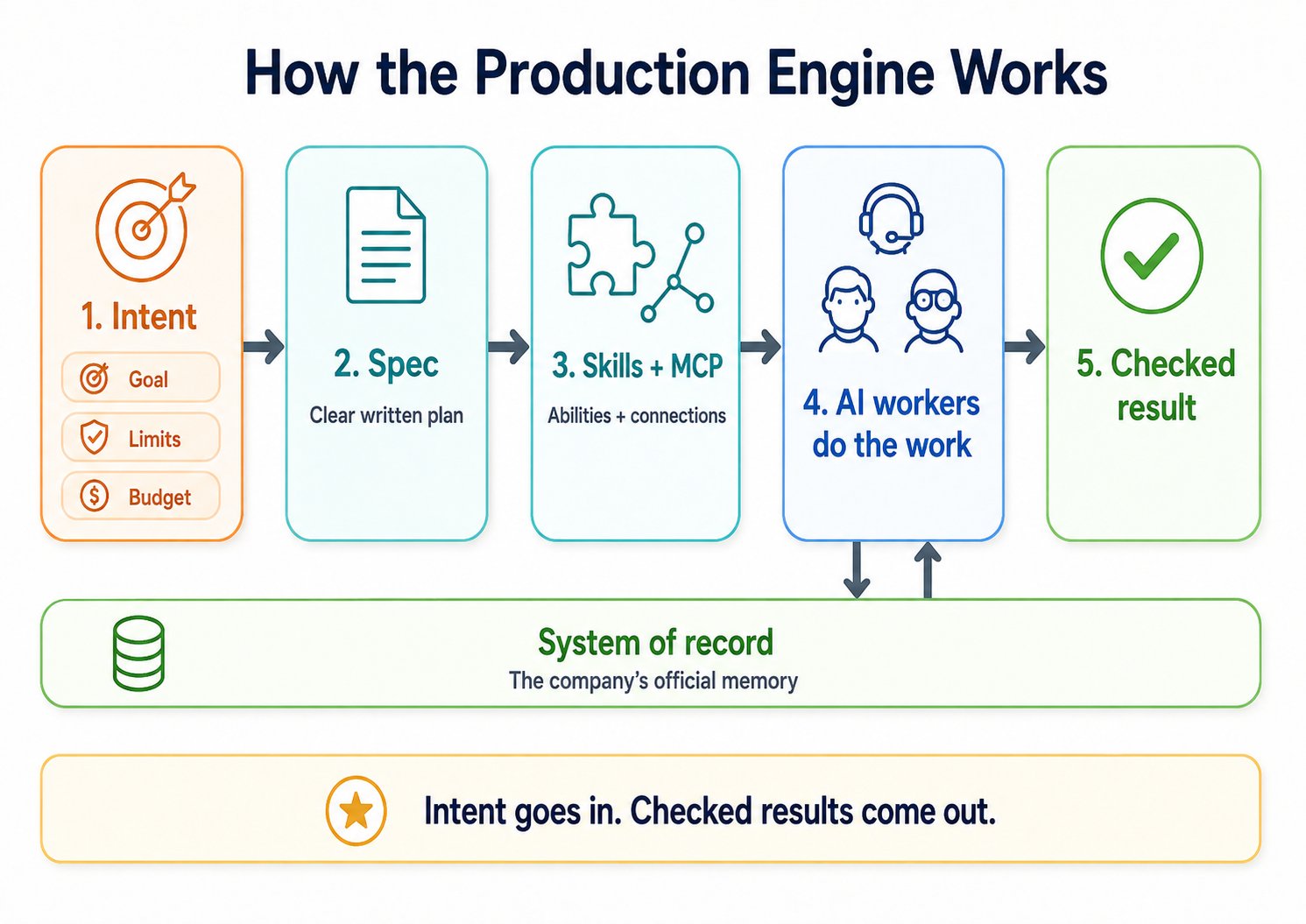
Production engine एक picture में। Intent (goal, limits, budget के साथ) left से अंदर जाता है। यह spec से होकर, फिर skills और MCP से होकर, फिर AI workers से होकर flow करता है। Checked result right से बाहर आता है। पूरा engine system of record के ऊपर बैठता है: company की official memory।
10. AI agents जो चीज़ें खरीद सकते हैं
हमने इसे पहले छुआ था। अब थोड़ा गहरा चलते हैं। यह economics बदल देता है।
आज के AI agents tasks करते हैं। कल के AI agents markets में हिस्सा लेंगे। बदलाव "AI as a tool" से "AI as a buyer" का है।
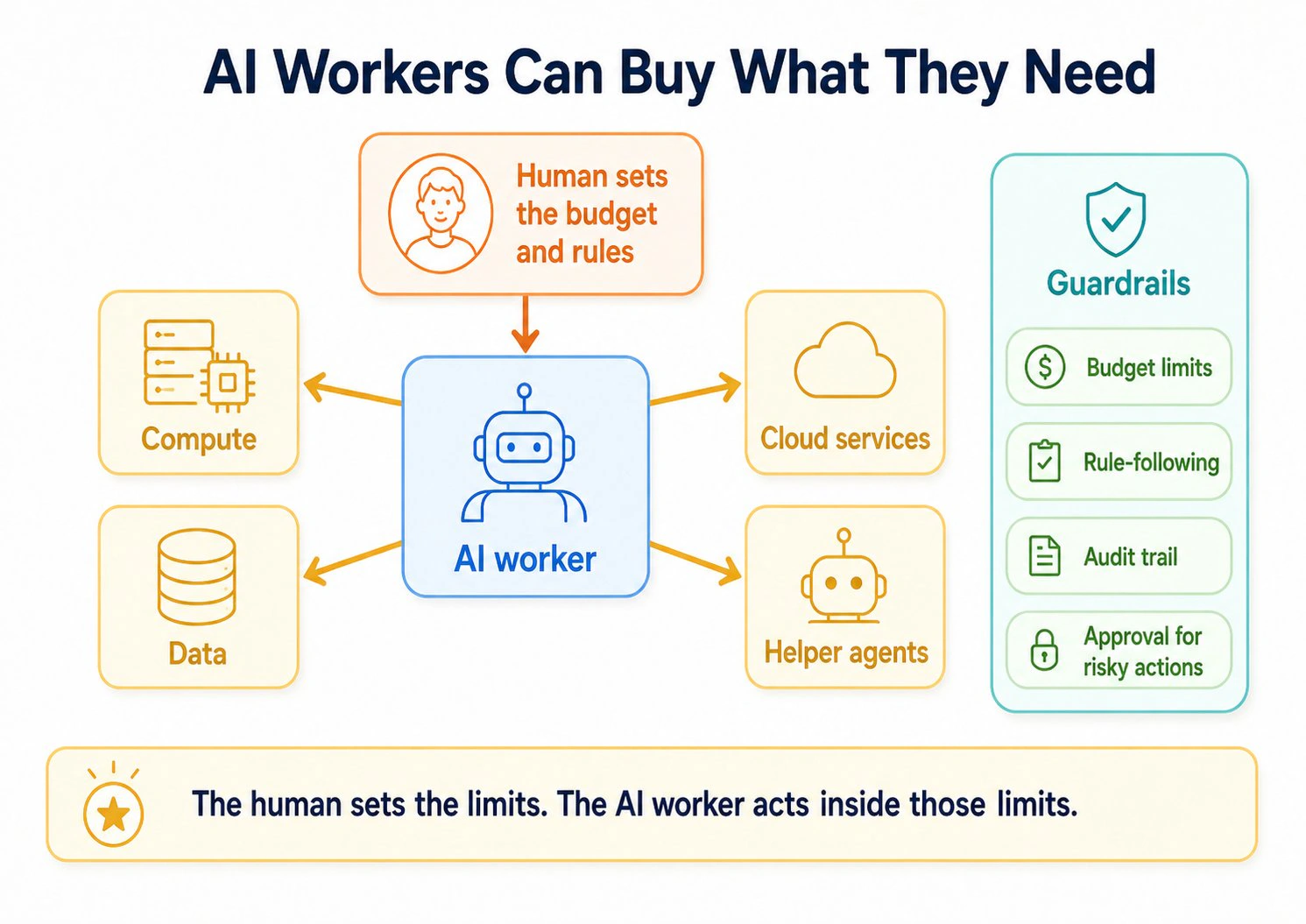
AI workers economic actors के रूप में। AI worker compute, data, cloud services, और दूसरे AI workers से मदद तक खरीद सकता है। लेकिन सिर्फ़ उन guardrails के अंदर जो human ने set किए हैं: budget limits, rule-following, हर action का audit trail, और risky decisions के लिए approval gates।
एक AI worker की कल्पना करें जिसका goal है: "Customer churn को 15% कम करना।" (Churn का मतलब वह rate है जिस पर customers business छोड़ते हैं।) इस goal तक पहुँचने के लिए AI worker को शायद यह करना पड़े:
- ऐसा model train करने के लिए computing power खरीदना जो predict करे कि कौन से customers छोड़ सकते हैं।
- Data provider से richer customer data के लिए pay करना।
- Solution run करने के लिए cloud services setup करके pay करना।
यह सब human supervisor के पहले set किए budget और rules के अंदर।
ध्यान दें कि AI worker क्या नहीं कर रहा। वह हर small decision पर human approval नहीं माँग रहा। Human ने budget और rules set कर दिए। उन rules के अंदर AI worker अपने-आप act करता है।
यहाँ hard problem ability नहीं है। AI पहले से काम कर सकता है। Hard problem trust है: यह पक्का करना कि AI rules के अंदर रहे। इसलिए focus अब ऐसी चीज़ों पर जा रहा है:
- Rule-following: यह पक्का करना कि agent human द्वारा set की गई limits के अंदर रहे।
- Audit trails: agent ने जो हर choice और हर transaction किया, उसका complete record रखना, ताकि बाद में check किया जा सके।
- Liability: जब कुछ गलत हो जाए, तो legally responsible कौन है, यह तय करना।
जब AI workers चीज़ें खरीद सकते हैं, तो AI-Native Company का money side गहराई से बदलता है। कंपनी सिर्फ़ वे resources इस्तेमाल नहीं करती जो इंसानों ने दिए हों। वह अपने resources खुद खोजती है। वह देखती है कि उसे क्या चाहिए। Options compare करती है। Real time में खरीदती है। कंपनी ऐसा system बन जाती है जो अपनी needs खुद संभालता है।
Builders के लिए lesson: अपने AI agents और systems को पहले दिन से buying और selling के लिए design करें। Agents को सिर्फ़ permissions नहीं, budgets चाहिए। उन्हें सिर्फ़ access keys नहीं, नतीजों के लिए contracts चाहिए। जो कंपनियाँ यह सही करेंगी, वे value की अगली wave capture करेंगी, ठीक जैसे subscriptions से result-based pricing पर जाने वाली कंपनियाँ यह wave capture कर रही हैं।
11. Humans replace नहीं होते, promote होते हैं
एक common fear है: AI agents लोगों को replace कर देंगे।
Evidence उल्टा दिखाता है। लगभग हर तरह के task में, AI के साथ काम करने वाला human अकेले human या अकेले AI, दोनों से बेहतर करता है। Agent Factory human को हटाती नहीं। उसे promote करती है।
- Operator से supervisor।
- Typist से editor।
- Coder से नतीजों के designer।
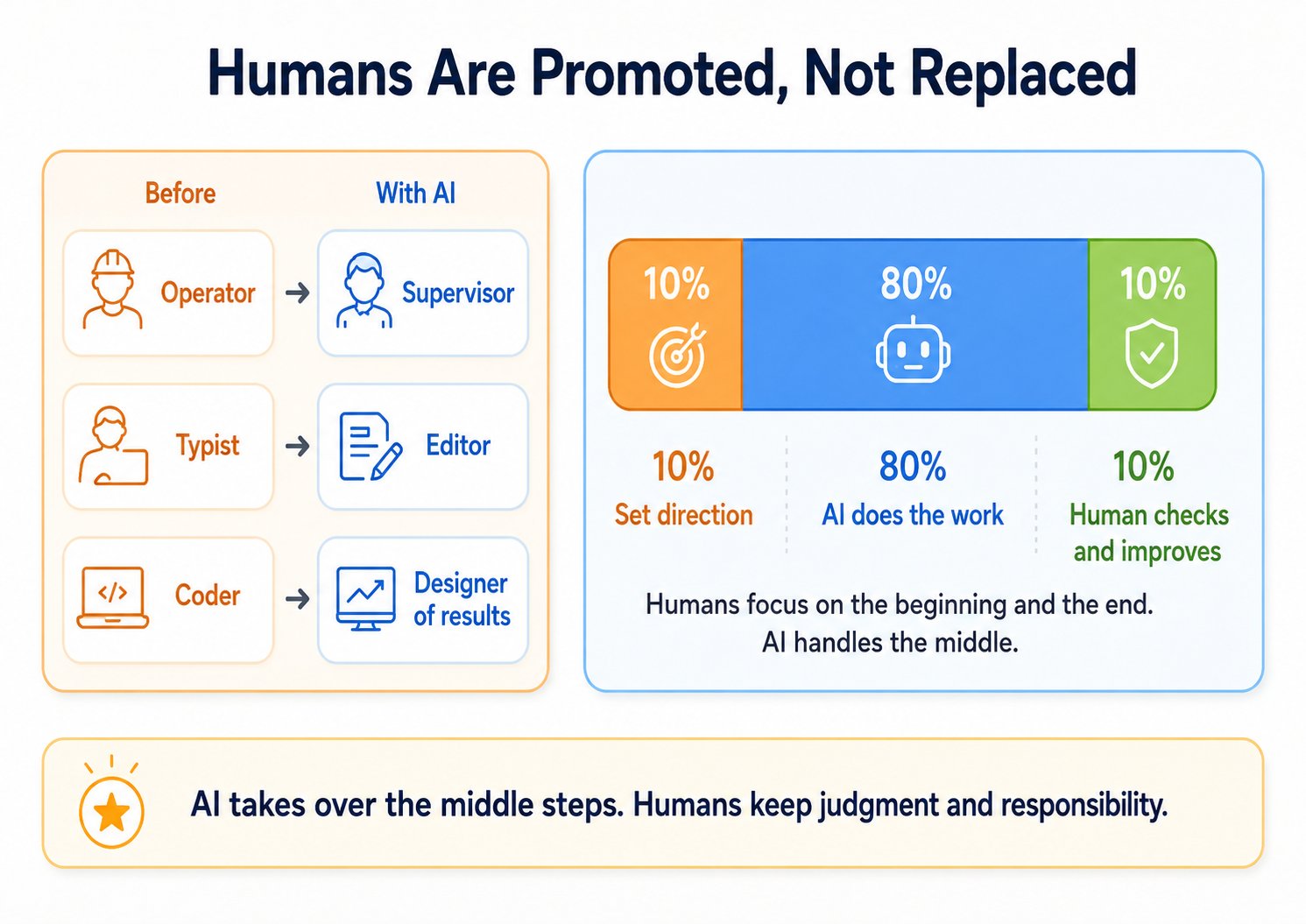
इंसान replace नहीं, promote होते हैं। इंसान higher role में जाता है। AI middle steps अपने हाथ में लेता है। इंसान शुरुआत (direction) और अंत (judgment और responsibility) रखता है।
यह "tech professional" होने का मतलब बदल देता है। Web developer या mobile developer सिर्फ़ वह व्यक्ति नहीं है जो किसी specific language में code लिखता है। वह technology expert है। वह systems समझता है। वह समझता है कि data कैसे flow करता है। वह समझता है कि apps एक-दूसरे से कैसे connect होती हैं। वह समझता है कि users को असल में क्या चाहिए। Agent Factory era में यह expertise बहुत ज़्यादा valuable हो जाती है। अब यह एक-एक button लिखने में खर्च नहीं होती। यह पूरे products deliver करने वाले AI workers को design, deploy, और supervise करने में खर्च होती है।
Developer गायब नहीं होता। Developer ज़्यादा करता है।
Steve Jobs ने कई साल पहले, humans को lead करते हुए, इस working rhythm को समझ लिया था। हम इसे सीधे borrow कर सकते हैं।
12. 10-80-10 working rhythm
Steve Jobs ने वह follow किया जिसे अब 10-80-10 rule कहा जाता है:
- अपने time का पहला 10% vision set करने में लगाएँ।
- Middle 80% में अपनी टीम को काम करने दें।
- Final 10% में polish, improve, और approve करने के लिए लौटें।
Business teacher Dan Martell इसे ऐसे ही समझाते हैं: 10% ideas के लिए, 80% काम करने के लिए, 10% refine करने के लिए।
Jobs ने शुरुआत से ऐसा नहीं किया। अपने career के शुरुआती दिनों में वे हर छोटी detail control करने के लिए मशहूर थे। उन्होंने एक बार टीम को ठीक-ठीक बताया कि Macintosh calculator का हर pixel कैसा दिखना चाहिए। समय के साथ वे बदले। उन्होंने अच्छे लोगों पर middle 80% में trust करना सीखा। Apple दुनिया की सबसे valuable कंपनियों में से एक partly इसी change की वजह से बनी।
अब "good people" की जगह "AI workers" रखें, और आपके पास Agent Factory का working rhythm है।
| Step | Jobs at Apple | Agent Factory |
|---|---|---|
| पहला 10%: Intent | Jobs vision और limits set करते हैं | Human spec लिखता है: goals, limits, budget, rules |
| Middle 80%: Work | Apple की teams product बनाती हैं | AI workers काम करते हैं: tools इस्तेमाल करते हैं, काम दूसरे AI workers को hand off करते हैं, नतीजे deliver करते हैं |
| Final 10%: Check | Jobs polish करते हैं और "ship it" कहते हैं | इंसान checked result review, improve, और approve करता है |
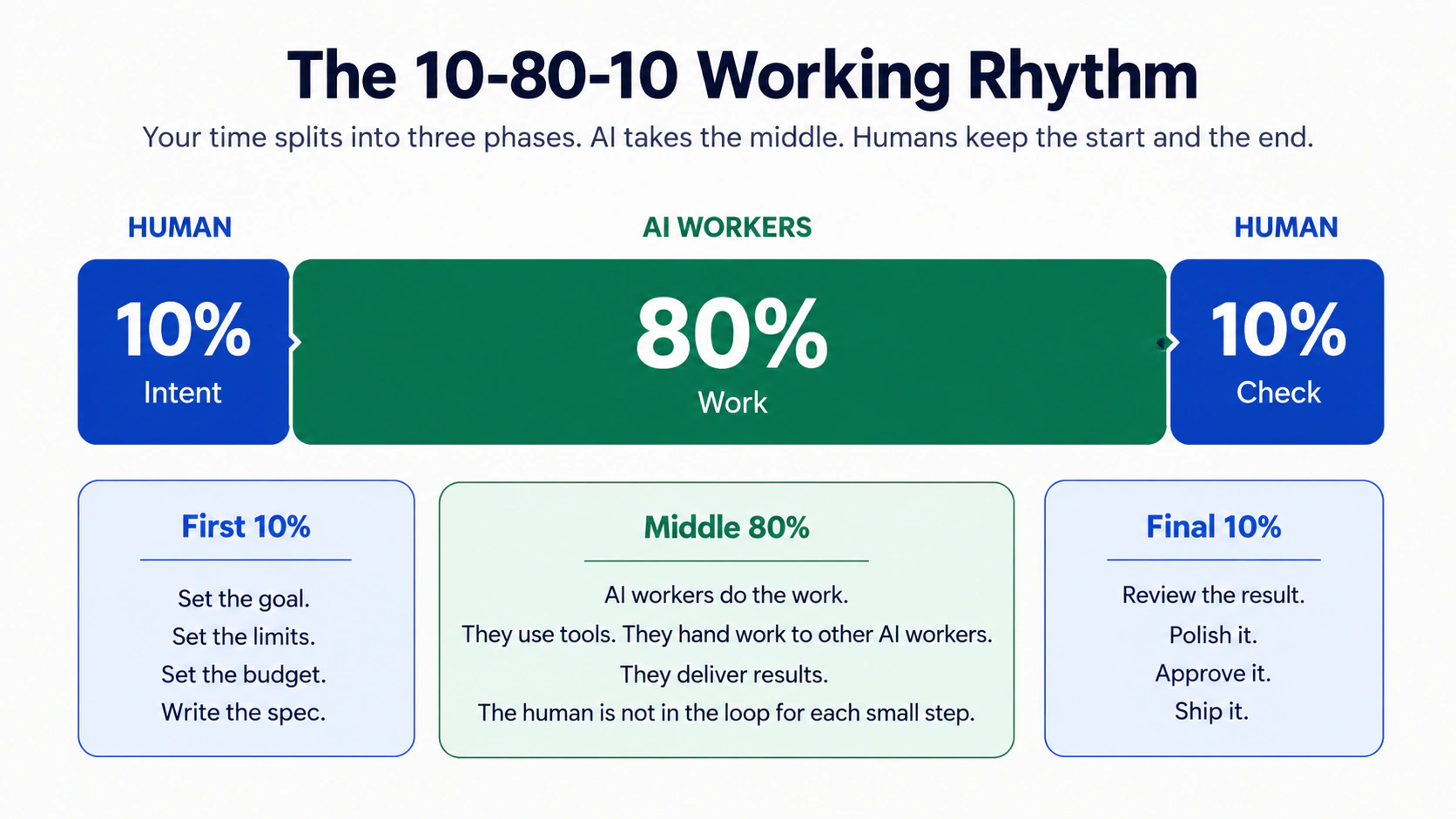
10-80-10 working rhythm। पहला 10% human direction है। Middle 80% AI worker है। Final 10% human checking है।
2026 की शुरुआत में AI coding कंपनी Cursor ने report किया कि उसके अपने product में जो changes add हुए, उनमें 35% AI agents ने cloud computers पर अपने-आप किए। इंसानी developers ने problem set करके और finished काम review करके agents को guide किया। उन्होंने code को line by line guide नहीं किया। Cursor के CEO Michael Truell को उम्मीद है कि एक साल के अंदर ज़्यादातर software development ऐसा दिखेगा।
10-80-10 rhythm अब prediction नहीं है। यह measurement है कि leading companies पहले से कहाँ काम कर रही हैं।
इंसान क्या check करता है, यह भी बदल रहा है। पहले developer code line by line review करता था। अब AI agents cloud computers पर घंटों काम करते हैं। वे क्या किया उसका short video, clickable working previews, और easy-to-read logs लौटाते हैं। आप अब code line by line नहीं पढ़ेंगे। काम check करने के लिए आप short video देखेंगे या preview में click करके घूमेंगे। यह matter करता है: इंसान एक साथ code changes के बारह sets नहीं पढ़ सकता। लेकिन इंसान एक साथ बारह previews scan कर सकता है। यही कई AI agents को parallel में काम करने देता है।
यह rhythm सिर्फ़ coding के लिए नहीं है। यह हर kind के professional job के लिए काम करता है। पहला 10%: clear thinking, context set करना, careful prompting: सिर्फ़ humans के लिए है। Middle 80%: summarize करना, generate करना, analyze करना, format करना, draft करना: AI अपने हाथ में लेता है। Final 10%: judgment, refinement, quality control: फिर सिर्फ़ humans के लिए है।
आप अपने time का 80% काम करने में खर्च करना बंद करते हैं। आप अपना 100% attention उस 20% पर लगाना शुरू करते हैं जो सिर्फ़ human कर सकता है: शुरुआत में direction set करना, और अंत में quality अच्छी है यह पक्का करना।
13. दो layers: Personal और Workforce
अब हम future कंपनी की पूरी तस्वीर draw कर सकते हैं।
AI workers से काम होता है। लेकिन humans AI workers से सीधे बात नहीं करते। इसे manage करना बहुत hard होगा। इसके बजाय, humans अपने personal AI agent से बात करते हैं (पहले वाला delegate या identic AI)। Personal agent human intent को workforce के लिए instructions में बदलता है।
इससे हमें Two-Layer Model मिलता है:
| Layer | इसमें क्या होता है | किसकी सेवा करता है | क्या करता है |
|---|---|---|---|
| Edge Layer | आपका personal AI agent (आपका delegate) | Individual human | आपके intent को instructions में बदलता है, काम AI workers को देता है, आपके लिए choices करता है |
| AI Workforce Layer | Role-based AI workers | कंपनी | Tasks करता है, workflows run करता है, checked नतीजे deliver करता है |
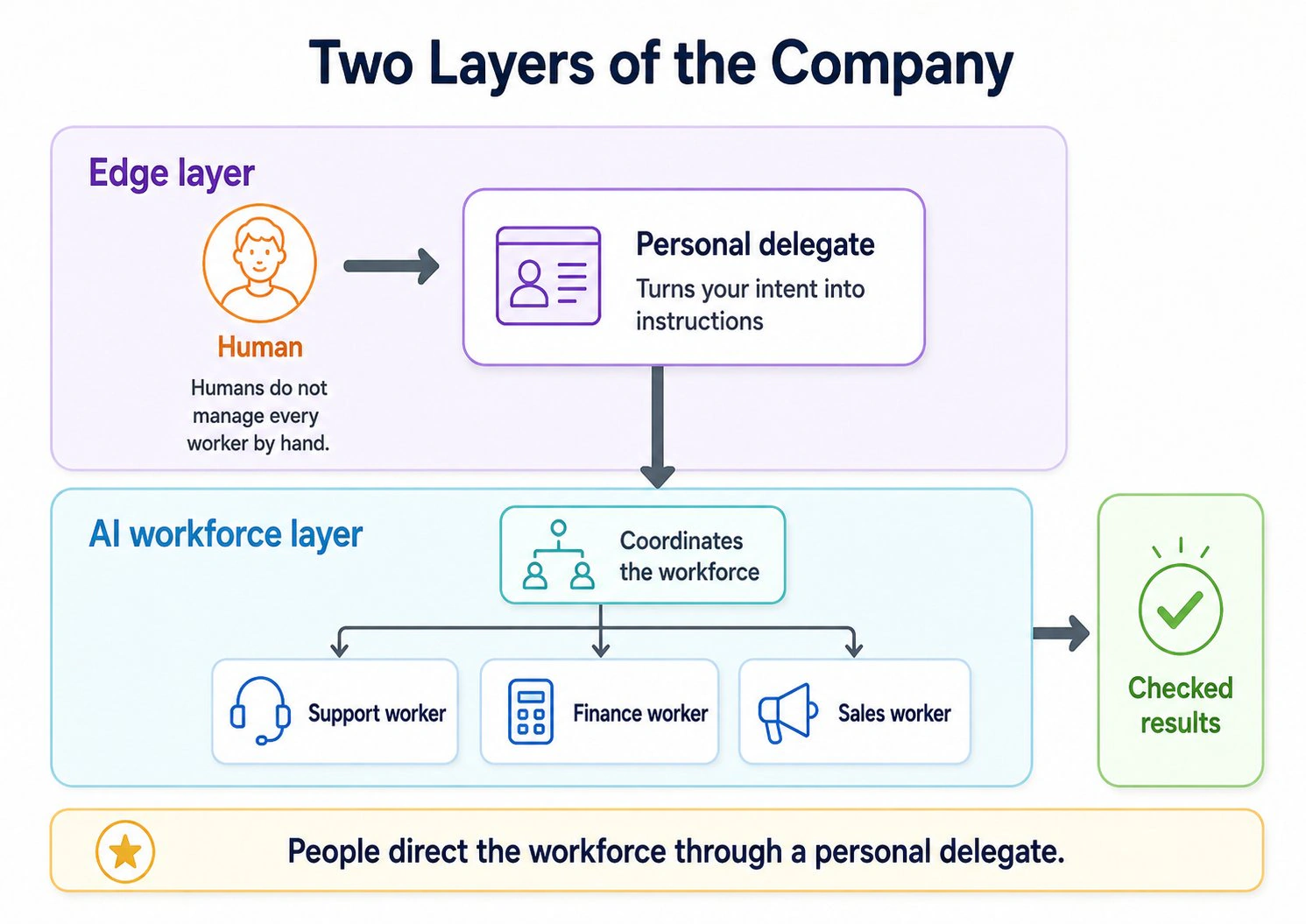
Two-Layer Model motion में। Intent नीचे flow करता है: आप → आपका personal delegate → workforce coordinator → AI workers। Results वापस ऊपर आपके पास आते हैं, पहले से checked। आप हर worker को हाथ से manage नहीं करते। आप अपने delegate के ज़रिए workforce को direct करते हैं।
दोनों layers ज़रूरी हैं।
- उसके पीछे AI workforce न हो, तो personal agent सिर्फ़ chatbot है जिसके पास orders देने के लिए कोई नहीं।
- Edge पर personal agents न हों, तो workforce idle बैठा रहता है, humans का इंतज़ार करता है कि वे one at a time instructions लिखें। यही वही problem है जिसे solve करने के लिए Agent Factory बनाई गई थी।
Two-Layer Model picture पूरा करता है। कंपनी के बीच में industrial-style कार्यबल। Edge पर human control। उनके बीच की language के रूप में clear written specs।
14. General AI agent इस्तेमाल करने के दो modes
पहले हमने कहा था कि engagements दो तरह के होते हैं। अब हम उन्हें सही जगह रख सकते हैं।
General AI agent powerful AI tool है जिसे इंसान directly इस्तेमाल करते हैं। कुछ engineers के लिए बने हैं: examples हैं Claude Code और OpenCode। ये AI tools हैं जिन्हें engineers terminal में इस्तेमाल करते हैं (developers जिस text-only screen में काम करते हैं)। कुछ non-engineers के लिए बने हैं: examples हैं Claude Cowork और OpenWork। ये finance analysts, lawyers, marketers, और writers जैसे knowledge workers के लिए AI tools हैं।
इंसान इन general agents को दो अलग modes में इस्तेमाल करते हैं।
| Mode | कौन इसे किसके साथ इस्तेमाल करता है | अंत में क्या deliver होता है | किससे governed |
|---|---|---|---|
| Problem-solving engagement | Engineers Claude Code या OpenCode इस्तेमाल करते हैं। Domain experts (non-engineers) Claude Cowork या OpenWork इस्तेमाल करते हैं। | इंसान के लिए finished result | Seven Principles |
| Manufacturing engagement | कोई भी व्यक्ति, हमेशा Claude Code या OpenCode के साथ | Workforce में join करने वाला नया AI worker | Seven Invariants |
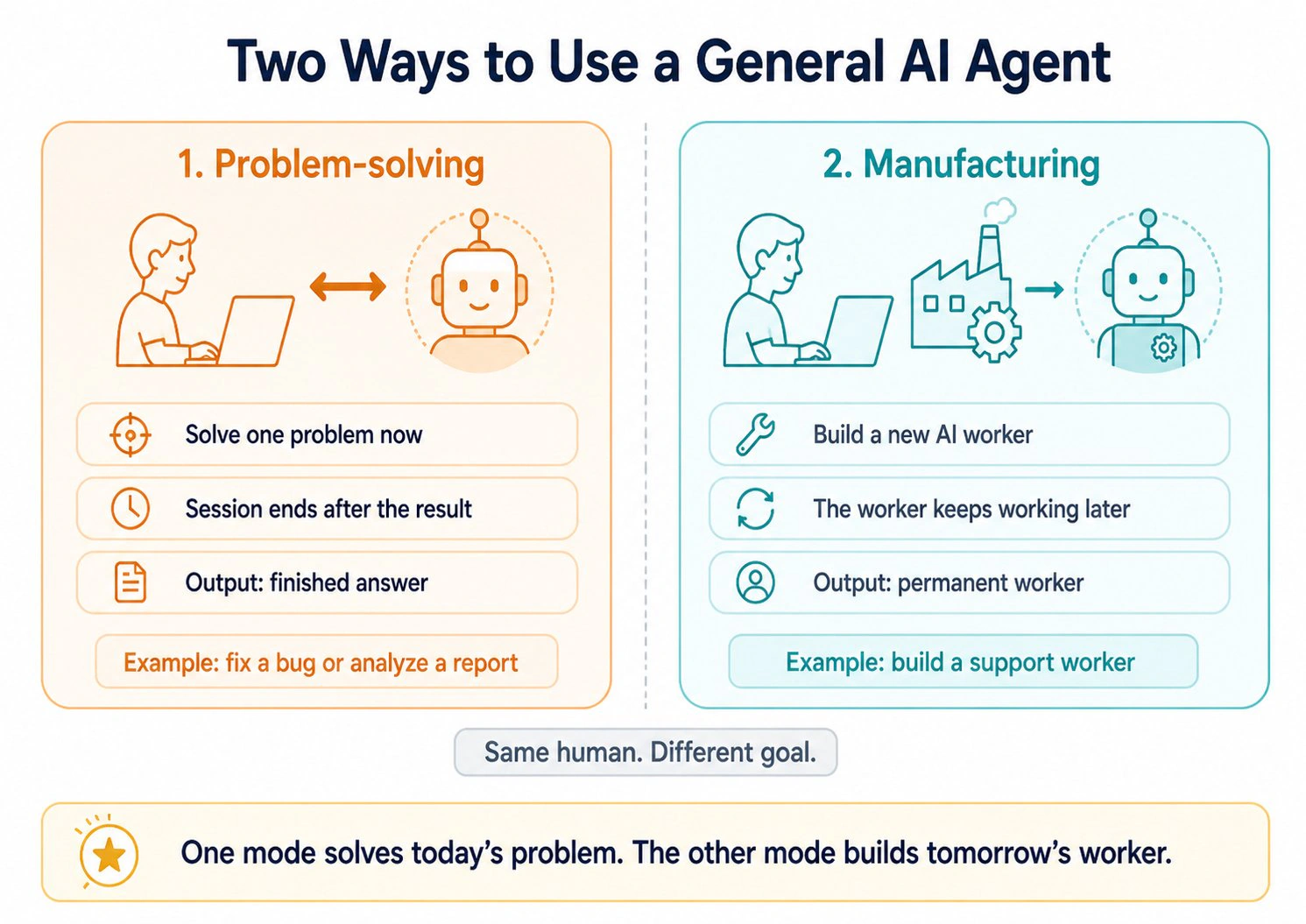
दो modes, एक core difference। Mode 1 conversation है: आप AI से बात करते हैं, आपको finished नतीजा मिलता है, session खत्म। Mode 2 production line है: आप AI से नया AI worker बनाते हैं जो इस session के बाद भी चलता रहता है। एक mode आज की problem solve करता है। दूसरा mode कल का worker बनाता है।
Mode 1: Problem-solving। Developer Claude Code खोलता है और software का एक हिस्सा improve करता है। Finance analyst Claude Cowork खोलता है और monthly financial close rebuild करता है। Session शुरू होता है। काम खत्म होता है। Session खत्म होता है। कोई नया permanent AI worker नहीं बनता। General agent खुद उस session के लिए काम करता है। जब session खत्म होता है, तो वह खत्म हो जाता है।
Problem-solving engagements audience के हिसाब से split होते हैं। Engineers Claude Code या OpenCode की ओर जाते हैं: terminal-native tools जो code, infrastructure, और systems work के लिए tuned हैं। Domain experts Claude Cowork या OpenWork की ओर जाते हैं: knowledge-work tools जो documents, spreadsheets, briefs, और reviews के लिए tuned हैं। Same engagement mode। Same rules। दो interface families।
यह mode Seven Principles of General Agent Problem Solving से governed है। ये अच्छी problem-solving session के सात rules हैं। ये हजारों sessions देखकर आए हैं: successful और failed, coding, contract review, financial models, hiring, और research work में। Same सात rules चारों tools पर apply होते हैं। सिर्फ़ surface बदलती है।
-
Bash is the Key: AI को सिर्फ़ बात नहीं, act करने दें। General AI agent तब सबसे useful होता है जब वह सच में चीज़ें कर सके: commands run करना, files पढ़ना, काम save करना। (Bash text-based command system है जिससे computer directly commands run कर सकता है।) पक्का करें कि आपका AI वास्तविक commands run कर सकता है। उसे सिर्फ़ यह describe करने तक सीमित न रखें कि वह क्या करेगा।
-
Code as Universal Interface: precision चाहिए तो structure इस्तेमाल करें। जब आपको precise result चाहिए, तो AI से structured format माँगें: table, list, code block, checklist, fixed outline। Paragraph न माँगें। Structure result को sharper बनाता है। Mistakes ढूँढना भी आसान बनाता है।
-
Verification as Core Step: काम हमेशा check करें। हर result को check चाहिए। Code पर tests run करें। Memos को clear standard के against score करें। दूसरे AI से पहले AI का काम review करवाएँ। "यह सही लग रहा है" काफी नहीं है। Confident-looking output फिर भी गलत हो सकता है।
-
Small, Reversible Decomposition: छोटे steps लें जिन्हें undo किया जा सके। काम को छोटे pieces में break करें। अगले पर जाने से पहले हर piece save करें। AI को save point के बिना एक घंटे तक run न करने दें। कुछ गलत होने पर एक बड़ा change घंटों का काम मिटा सकता है।
-
Persisting State in Files: files ही memory हैं। Chat history temporary है। वह गायब हो जाती है। Files permanent हैं। Sessions के बीच जो भी याद रखना worth है: decisions, plans, conventions, customer details, उसे file में लिखें। अगला session उसे पढ़ेगा।
-
Constraints and Safety: AI को सिर्फ़ उतना access दें जितना चाहिए। Limited access से शुरू करें। पहले read-only। पहले approve-each-step। देखें AI कैसे behave करता है। Tight limits के अंदर सही काम करते देखने के बाद ही उसे ज़्यादा access दें। Day one से AI को broad access न दें।
-
Observability: देखें AI क्या करता है। अगर आप नहीं देख सकते कि AI क्या कर रहा है, तो आप उस पर trust नहीं कर सकते। हर action visible होना चाहिए: logs, step-by-step view, short video, या clickable preview के ज़रिए। अगर आप work देख नहीं सकते, तो आप उसे check नहीं कर सकते।
साथ में, ये सात rules powerful AI tool को clever toy से वास्तविक काम release करने वाली चीज़ में बदलते हैं। पहले पाँच rules: act, structure, verify, small steps, files as memory: daily discipline हैं। आख़िरी दो: constraints और observability: पहले पाँच को safe रखते हैं।
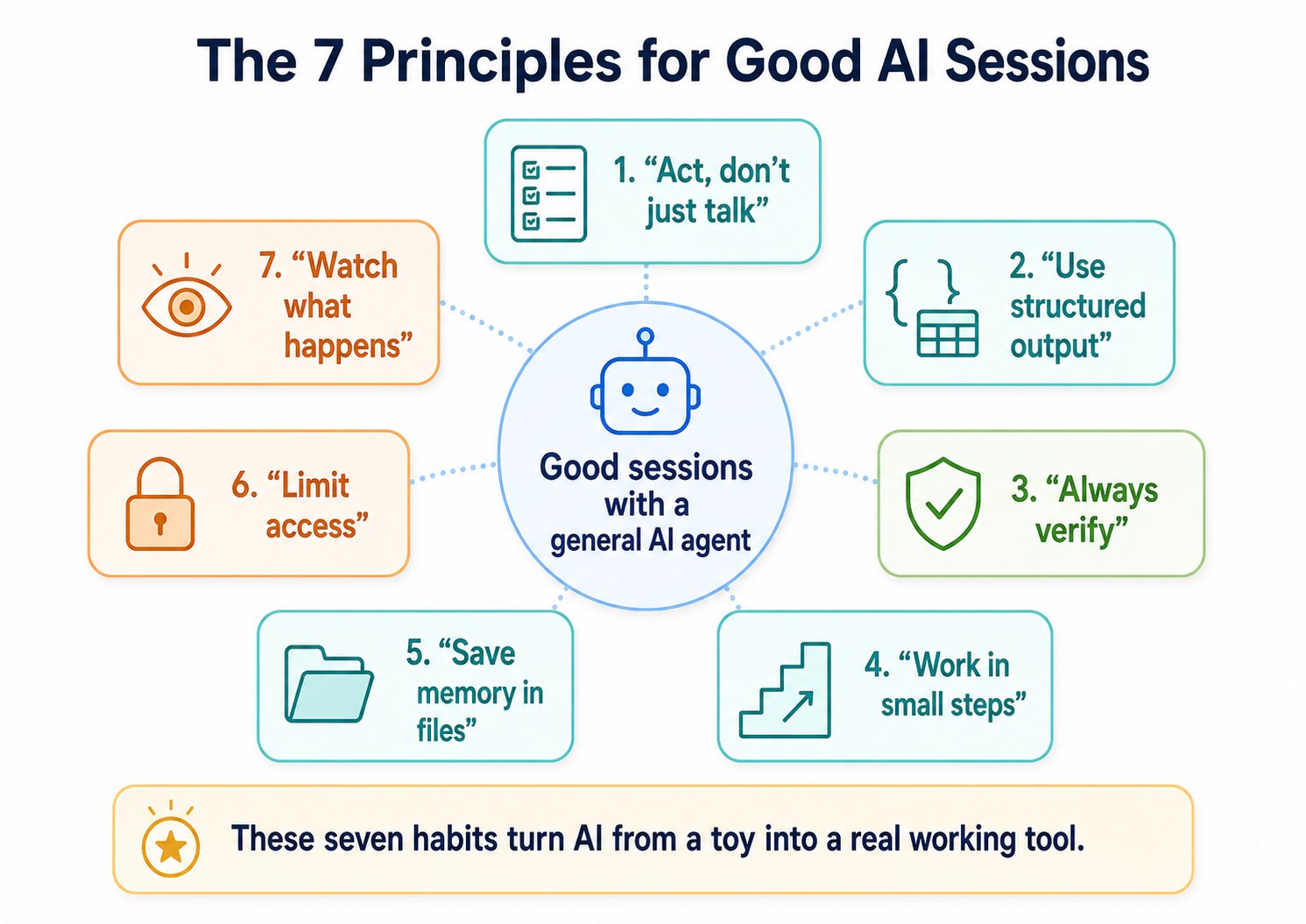
General AI agent के साथ अच्छे sessions के सात habits। पहले पाँच daily working rules हैं। आख़िरी दो: access limit करना और क्या हो रहा है देखना, work को safe रखते हैं।
Mode 2: Manufacturing। यह तब है जब goal ऐसी चीज़ बनाना है जो टिके: नया AI worker जो इस session के बाद भी चलता रहेगा। Manufacturing हमेशा engineering tools (Claude Code या OpenCode) इस्तेमाल करती है। Human finance analyst हो या marketer, इससे फर्क नहीं पड़ता। AI worker बनाना mostly coding task है। Same developer Claude Code से code review करने वाला AI worker design, build, और deploy कर सकता है। Finance analyst, अक्सर engineer के साथ काम करते हुए, Claude Code से ऐसा AI worker बना सकता है जो हर महीने monthly close करता है। Output problem का जवाब नहीं है। Output वह worker है जो अब से बार-बार जवाब produce करेगा। यह mode Seven Invariants से governed है: किसी भी AI-Native Company के design rules। हम इन्हें अगले खंड में cover करते हैं।
Principles session को guide करते हैं। Invariants design को guide करते हैं। Problem-solving engagement principles से guided होता है क्योंकि यह ऐसा result produce करता है जो session के साथ खत्म हो जाता है: obey करने के लिए कोई lasting structure नहीं। Manufacturing engagement invariants से guided होता है क्योंकि उसके output को ऐसे workforce में fit होना चाहिए जो कई sessions, कई agents, और कई product cycles में साथ बना रहे।
दोनों modes में 10-80-10 rhythm apply होता है। आप AI से अपनी problem solve करवा रहे हों या ऐसा worker बना रहे हों जो आपके लिए उसे solve करेगा, आपका time फिर भी intent, काम, और checking में split होता है।
15. सात rules जो नहीं बदलते (Seven Invariants)
अब हम किताब के heart पर आते हैं: सात design rules जिन्हें कोई भी AI-Native Company follow करेगी, चाहे उन्हें follow करने के लिए कौन से products इस्तेमाल हों।
Difference याद रखें। Invariant ऐसा rule है जो हमेशा true होना चाहिए। Reference implementation वह product है जिसे हम 2026 में उस rule को follow करने के लिए इस्तेमाल करते हैं। Rule main idea है। Product एक option है।
सात rules में जाने से पहले players के names रख लेते हैं। AI-Native Company में:
- आप leader और owner हैं। आप direction set करते हैं।
- Delegate आपका personal assistant है: वह एक AI agent जो आपका context जानता है और आपकी ओर से बोलता है।
- Management layer कंपनी का operating system है। यह AI workers hire करती है, उन्हें काम देती है, budgets control करती है, तय करती है कि हर worker क्या कर सकता है, records रखती है, और role खत्म होने पर workers retire करती है।
- AI workers वह staff हैं जो नतीजे deliver करते हैं।
- Runtime engines वे machines हैं जिन पर हर worker सच में run करता है। Different workers अलग engines पर run कर सकते हैं, job के हिसाब से। हम इसे समझाएँगे।
- Nervous system workers के बीच messages carry करता है, crash होने पर भी कंपनी चलाए रखता है, और traffic control करता है ताकि heavy load में भी कार्यबल काम करता रहे।
नीचे का हर rule इस बारे में है कि यह कंपनी कैसे run करती है। हर named product एक option है जिसे replace किया जा सकता है।
Rule 1: Human principal है
Rule। कंपनी में हर action किसी इंसान से शुरू होता है। इंसान principal है: goal set करने वाला, budget देने वाला, AI क्या कर सकता है इसकी line draw करने वाला, और result own करने वाला। कोई exception नहीं। यह हिस्सा AI को कभी नहीं दिया जाता।
यह क्यों ज़रूरी है। Direction अपने-आप नहीं आती। Judgment, values, पैसा खर्च करने का right, और नतीजों की responsibility: इनमें से कोई भी machine को नहीं दिया जा सकता। Human in charge के बिना act करने वाला system independent नहीं है। वह unowned है। और unowned systems ऐसे नतीजे बनाते हैं जिनके लिए कोई जवाबदेह नहीं होता।
इसके बिना क्या गलत होता है। कोई responsible नहीं होता। ऐसा कोई नहीं होता जिसकी values system follow करे। Budget किसी का नहीं होता। Result का कोई judge नहीं होता।
आज यह कैसे काम करता है। Written specs, approval points, declared budgets, और check steps के ज़रिए। कोई भी method जो human intent, authority, और responsibility capture करती है और उसे बाकी system तक hand down करती है, rule follow करती है।
Rule 2: हर human को delegate चाहिए
Rule। इंसान दर्जनों AI workers को हाथ से personally direct नहीं कर सकता। हर इंसान को personal AI agent चाहिए। यह agent उसका context hold करता है, उसकी ओर से बोलता है, उसकी authority carry करता है, और उसके लिए सही जगहों पर काम देता है।
यह क्यों ज़रूरी है। एक व्यक्ति एक साथ बीस AI workers को direct नहीं कर सकता। इतने hours नहीं होते। और humans AI के काम करने की speed से बहुत धीमे type करते हैं। Delegate के बिना human फिर हाथ से instructions देने पर मजबूर हो जाता है, और यही वही problem है जिसे solve करने के लिए Agent Factory बनाई गई थी।
इसके बिना क्या गलत होता है। Human slow point बन जाता है। AI workforce instructions का इंतज़ार करता है। पूरा system human typing speed तक slow हो जाता है।
आज यह कैसे काम करता है। इस किताब में हम OpenClaw को personal agent के रूप में इस्तेमाल करते हैं। कोई भी personal agent जो आपकी identity, आपका context, और आपकी authority hold कर सके, और काम management layer को pass कर सके, rule follow करता है।
Rule 3: Workforce को management layer चाहिए
Rule। AI workers का group कंपनी नहीं होता। Workforce को ऐसी layer चाहिए जो उन्हें coordinate करे। यह layer कंपनी का operating system है। यह workers hire करती है। काम assign करती है। Budgets control करती है। Risky choices approve करती है। तय करती है कि हर worker क्या कर सकता है। Record रखती है कि किसने क्या, किस cost पर किया। Role खत्म होने पर workers retire करती है।
यह क्यों ज़रूरी है। Coordination, responsibility, और cost control अपने-आप नहीं आते। उन्हें ऐसी layer चाहिए जो जानती हो कि कौन क्या कर रहा है, उसका cost क्या है, क्या allowed है, क्या बना, और कुछ गलत होने पर क्या हुआ। AI workers workforce के रूप में तभी controllable बनते हैं जब single layer उन्हें visible बनाती है: ability, cost, speed, और result की units के रूप में। और वे affordable तभी रहते हैं जब वही layer उन्हें बंद कर सकती है जब उनकी ज़रूरत न रहे।
इसके बिना क्या गलत होता है। Workers वही काम दो बार करते हैं। Budgets leak होते हैं। Records टूटकर अलग हो जाते हैं। Finance जवाब नहीं दे पाता कि workforce का cost क्या था। Operations जवाब नहीं दे पाता कि workforce ने क्या बनाया। Retired workers चलते रहते हैं क्योंकि उन्हें रोकने के लिए कोई responsible नहीं।
आज यह कैसे काम करता है। हम Paperclip को management layer के रूप में इस्तेमाल करते हैं। इसे AI-Native Company के operating system के रूप में बनाया गया है। कोई भी system जो correct authority के तहत workers को hire, assign, govern, observe, और retire कर सके, rule follow करता है।
Rule 4: हर worker अपना engine चुनता है
Rule। हर AI worker को किसी engine पर run करना होता है: वह software जो उसका काम सच में चलाता है। Engine per worker चुना जाता है, per company नहीं। Different workers अलग engines इस्तेमाल कर सकते हैं, इस हिसाब से कि हर job को सच में क्या चाहिए।
यह क्यों ज़रूरी है। कुछ काम बहुत important होता है: वह silently fail नहीं हो सकता या data lose नहीं कर सकता। ऐसे काम को strong, reliable engine चाहिए। दूसरा काम routine होता है और छोटे failures survive कर सकता है। वह सस्ता, हल्का engine इस्तेमाल कर सकता है। हर worker को एक ही engine पर force करने का मतलब है कि या तो आप उस reliability के लिए बहुत ज़्यादा pay करते हैं जिसकी job को ज़रूरत नहीं, या उस reliability के लिए कम pay करते हैं जिसकी job को ज़रूरत है। दोनों खराब हैं।
इसके बिना क्या गलत होता है। One engine का मतलब one set of trade-offs। कंपनी या तो reliable workers afford नहीं कर सकती या cheap workers पर trust नहीं कर सकती।
आज यह कैसे काम करता है। हम job के हिसाब से कई engines इस्तेमाल करते हैं: Dapr Agents, Claude Managed Agents, OpenAI Agents SDK, Cursor SDK, और OpenClaw-native। अभी names matter नहीं करते। Rule matter करता है: engine को job के fit के लिए चुनें।
Rule 5: हर worker system of record के against run करता है
Rule। Engines वे हैं जिन पर हर worker run करता है। System of record वह है जिसके against हर worker run करता है। हर AI worker official memory store से पढ़ता और उसमें लिखता है। यह company का lasting record है कि वह सच में क्या जानती है: customers, orders, stock, contracts, money entries, support tickets, business के real facts।
यह क्यों ज़रूरी है। AI की short-term memory (जिसे context window कहा जाता है) temporary है। Session खत्म होते ही वह गायब हो जाती है। System of record permanent है। Official store of truth के बिना AI agents facts invent करने लगते हैं, same transaction दो बार save करते हैं, sessions के बीच work lose करते हैं, और ऐसे results produce करते हैं जिन्हें बाद में कोई check नहीं कर सकता। System of record real work को confident-sounding made-up answers से अलग रखता है। यह workforce को बाद में readable भी बनाता है: worker का हर action ऐसे system में record छोड़ता है जो worker का session खत्म होने के बाद भी रहता है।
इसके बिना क्या गलत होता है। नतीजे असल जिंदगी से drift कर जाते हैं। दो workers same customer को दो अलग बातें बताते हैं क्योंकि उनकी short-term memories disagree करती हैं। Responsibility trace नहीं होती। कंपनी confident-sounding output की maker बन जाती है जिसके नीचे real basis नहीं होता।
आज यह कैसे काम करता है। कंपनी के existing databases और operational systems system of record का काम करते हैं: CRM (customer database), ERP (कंपनी operations चलाने वाला system), support ticket system, data warehouse, financial ledger। MCP (universal connector जिसका हमने पहले ज़िक्र किया) AI workers को वहाँ पहुँचाता है। कोई भी lasting, reachable, governed store जिसे कार्यबल पढ़ और लिख सके, rule follow करता है।
एक database, पाँच नहीं
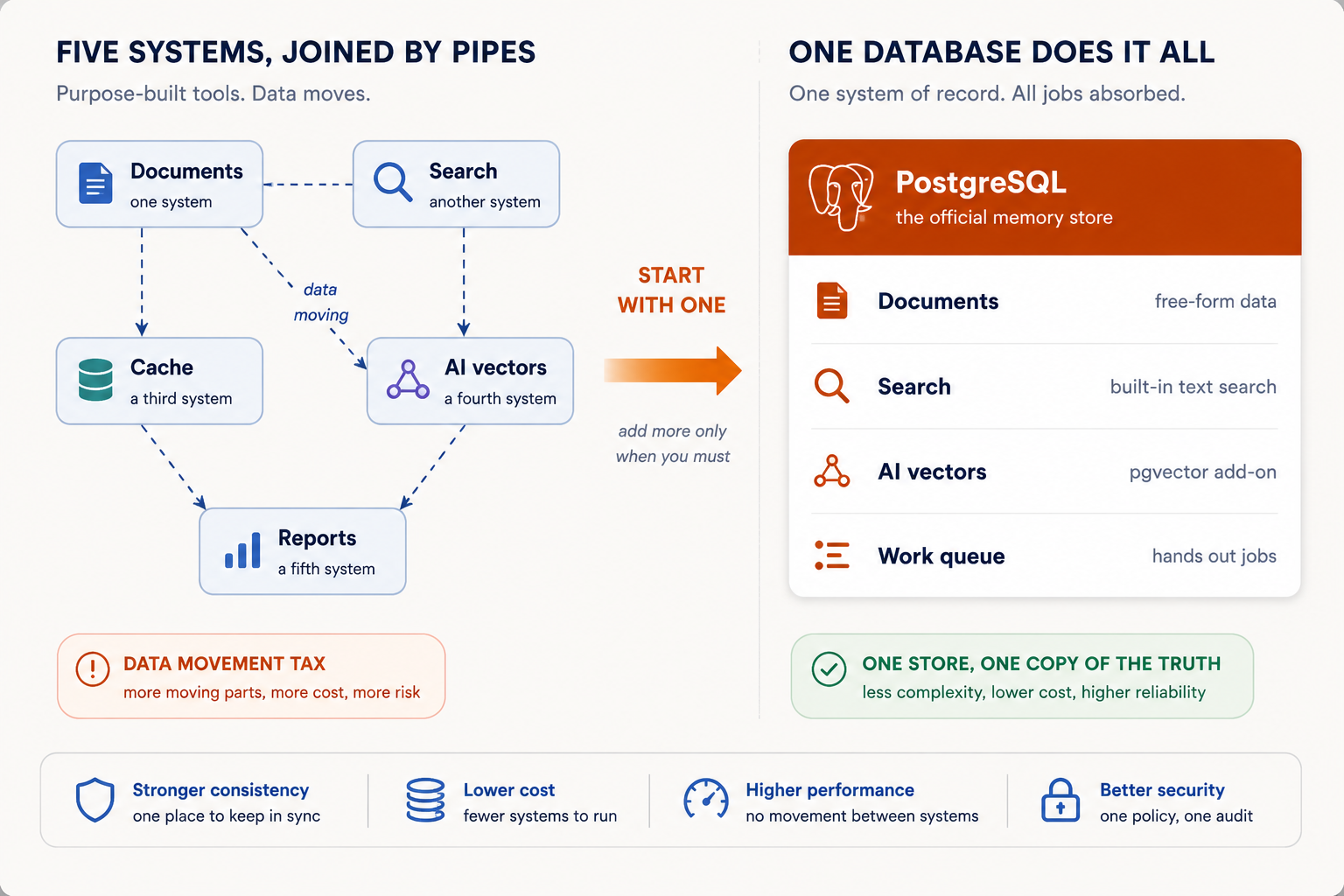
Rule 5 कहता है कि worker को official memory store चाहिए। यह नहीं कहता कौन सा। यह note उस store को खुद build करते समय क्या use करना है, इस पर है, बजाय पहले से मौजूद store को connect करने के।
काफी समय तक habit simple थी: नया kind of data मतलब नया database। Documents एक system में जाते थे। Search दूसरे में। Cache तीसरे में। AI vectors चौथे में। Reports पाँचवें में। हर choice अपने-आप में ठीक लगती थी।
Problem यह है कि साथ मिलकर वे क्या cost करती हैं। हर extra system एक और pipe है जो data को अगले तक ले जाता है। हर pipe पीछे रह सकता है, sync से बाहर हो सकता है, या ऐसी जगह टूट सकता है जिसे आप देख नहीं सकते। यही data movement tax है। Real cost extra hosting bill नहीं है। यह है कि आपकी आधी team product build करने के बजाय pipes fix करने लगती है।
Agent Factory उल्टा करती है। Rule है एक से शुरू करें, और ज़्यादा तभी add करें जब मजबूरी हो। एक database, PostgreSQL (अक्सर बस Postgres कहा जाता है), ज्यादातर लोगों की उम्मीद से कहीं ज़्यादा कर सकता है। यह रख सकता है:
- Documents: flexible, free-form data, अलग document system नहीं चाहिए।
- Search: built-in text search, अलग search system नहीं चाहिए।
- AI vectors: number-lists जिन्हें AI meaning-based search के लिए use करता है, उन्हीं data के पास store होते हैं जिन्हें वे describe करते हैं; यही pgvector add-on है।
- Work queue: एक ordinary table कई Workers को एक साथ safely jobs hand out कर सकता है।
AI vectors को real data के साथ same place में रखना सिर्फ tidy नहीं है। यह problem की पूरी class हटाता है। Separate vector store को real data के साथ step में रखना पड़ता है, और यही "step में रखना" टूटता है। One store मतलब truth की one copy, जो worker को read करनी चाहिए।
एक real example, service बेचने वाली company ने बताया है, इसलिए इसे example की तरह पढ़ें, proof की तरह नहीं: Apollo Hospitals, India के सबसे बड़े hospital groups में से एक, अपने records को पुराने system पर, reports को दूसरे system पर, और cache तथा search को अन्य systems पर चला रहा था। छह महीने study करने के बाद team ने सब कुछ single Postgres platform पर move किया। उनका main reason था कि एक engine उनके सारे data types, records, documents, text search, और AI vectors, को साथ handle कर सकता था। इससे duplication और pipe-fixing हटे, और team patient care पर काम कर सकी।
इसका मतलब यह नहीं कि Postgres हमेशा जीतता है। Special-purpose system तब use करें जब आपके अपने work पर test दिखाए कि Postgres वह target hit नहीं कर सकता जिसकी आपको सच में ज़रूरत है। ये cases real हैं, लेकिन rare हैं। गलती यह है कि tutorial या headline ने कहा इसलिए special tool पहले उठा लें। One store से शुरू करें। दूसरा तभी add करें जब evidence कहे।
पूरा build crash course Give Your AI Searchable Context में है।
Rule 6: Workforce rules के अंदर अपने-आप grow कर सकता है
Rule। Management layer को new AI workers automatically hire करने में सक्षम होना चाहिए। जब gap आता है: customer ऐसी language में लिखता है जिसे कोई current worker नहीं बोलता, या new kind of work आता है जिसे कोई current worker नहीं कर सकता, तो authorized agent को नए worker के लिए spec लिखना, उसे setup करना, management layer में register करना, और काम पर लगाना आना चाहिए। सब human द्वारा set rules के अंदर।
यह क्यों ज़रूरी है। Fixed workers की list changing problem के साथ keep up नहीं कर सकती। अगर हर new gap पर इंसान को manually नया worker बनाना पड़े, तो system slow हो जाता है। Workforce को अपने-आप grow करना चाहिए, लेकिन हमेशा इंसान द्वारा set limits के अंदर, कभी बाहर नहीं।
इसके बिना क्या गलत होता है। Workers की list frozen रहती है। हर new kind की problem को इंसान चाहिए। कंपनी उतनी ही तेज़ grow कर सकती है जितनी तेज़ उसके इंसान manually नए workers बना सकते हैं।
आज यह कैसे काम करता है। इसके लिए हम Claude Managed Agents technology इस्तेमाल करते हैं। कोई भी system जो runtime पर new AI workers create कर सके और उनका environment setup कर सके, इंसान द्वारा set rules के अंदर रहते हुए, rule follow करता है।
Rule 7: Workforce nervous system पर चलता है
Rule। काम अपने-आप आता है। यह workers के बीच flow करता है, बिना इंसान के हर step route किए। Scheduled time आता है। Customer web form fill करता है और छोटा message fire होता है। एक worker task finish करके next worker को pass करता है। यह सब single event system से carry होता है, कंपनी के nervous system की तरह। जब workers के लिए कुछ करना होता है, तो यह उन्हें wake करता है। काम के middle में crashes survive करता है। Traffic control करता है ताकि एक busy customer बाकी सबको block न करे।
यह क्यों ज़रूरी है। Workforce को हर step पर human के बिना operate करने के लिए चार चीज़ें true होनी चाहिए:
- External triggers। System को अपने-आप wake होना चाहिए: जब scheduled time आए, जब webhook fire हो (webhook एक छोटा message है जो कुछ होने पर एक system से दूसरे system को भेजा जाता है), या जब customer request भेजे।
- Internal handoffs। Workers को हर handoff में इंसान route किए बिना काम दूसरे workers को pass कर पाना चाहिए।
- Durability। Multi-step काम को middle में crash survive करना चाहिए। यह क्यों matter करता है: हर step के fail होने की छोटी chance होती है। जब आप लगातार छह steps chain करते हैं, तो छोटी chances multiply हो जाती हैं। अगर हर step 95% समय काम करता है, तो छह steps लगातार सिर्फ़ 95% × 95% × 95% × 95% × 95% × 95% ≈ 74% समय काम करते हैं। इसका मतलब है हर चार runs में से एक silently fail होगा। Proper durability के साथ (जहाँ system याद रखता है कि क्या done है और सिर्फ़ failed part retry करता है), वही task लगभग 99.7% समय finish होता है। यही deliver करने वाले कार्यबल और quietly हर चार jobs में से एक गिराने वाले कार्यबल का difference है।
- Flow control। अगर एक customer अचानक thousand requests भेज दे, तो system को वह spike handle करना चाहिए बिना बाकी customers को हमेशा wait करवाए।
इसके बिना क्या गलत होता है। External triggers के बिना system तभी move करता है जब human prompt करे, और economics वापस chatbot economics में गिर जाती है। Internal handoffs के बिना workers बीच में human के बिना coordinate नहीं कर सकते। Durability के बिना reliability multi-step runs में खराब होती जाती है। Flow control के बिना एक busy customer बाकी सबको block कर देता है।
आज यह कैसे काम करता है। हम Inngest को nervous system के रूप में इस्तेमाल करते हैं: एक system जो ये चारों features एक साथ carry करता है। Day AI, एक real कंपनी जो AI-native CRM (customer database) बना रही है, अपने Inngest layer को बिल्कुल इन्हीं terms में describe करती है। Founding engineer Erik Munson ने इसे product का "nervous system" कहा। यह language real market के real builder से आती है, textbook से नहीं।
16. पूरा design एक picture में
यहाँ सात-rule design एक table में है।
| Rule | क्या चाहिए | 2026 में हम क्या इस्तेमाल करते हैं | क्या replace कर सकता है |
|---|---|---|---|
| Principal | ऐसा human जो intent, budget, authority, responsibility set करे | लागू नहीं | लागू नहीं |
| Delegate | Personal agent जो आपका context और authority hold करे | OpenClaw | कोई भी MCP-speaking personal agent |
| Management layer | Workforce operating system: hire, assign, govern, observe, retire | Paperclip | कोई भी system जो management contract meet करे |
| Engine | Per-worker runtime जो job से match करे | Dapr / Claude Managed Agents / OpenAI SDK / Cursor / OpenClaw-native | कोई भी runtime जो job की reliability needs meet करे |
| System of record | Official store जिसे workforce पढ़ता और लिखता है | Existing databases, workflows, MCP-exposed platforms | कोई भी lasting, reachable, governed store |
| Workforce growth | Rules के अंदर on demand नए workers hire करने की ability | Claude Managed Agents | कोई भी system जो runtime पर new agents create कर सके |
| Nervous system | Authority के तहत events, durability, और traffic control | Inngest (workforce); Claude Code Routines (coding agents के लिए) | कोई भी system जो durability और flow control के साथ events carry करे |
सात rules। एक chain। आप middle column का कोई भी product कल swap कर सकते हैं, और design फिर भी काम करेगा, क्योंकि design कभी products नहीं था। वह rules था।
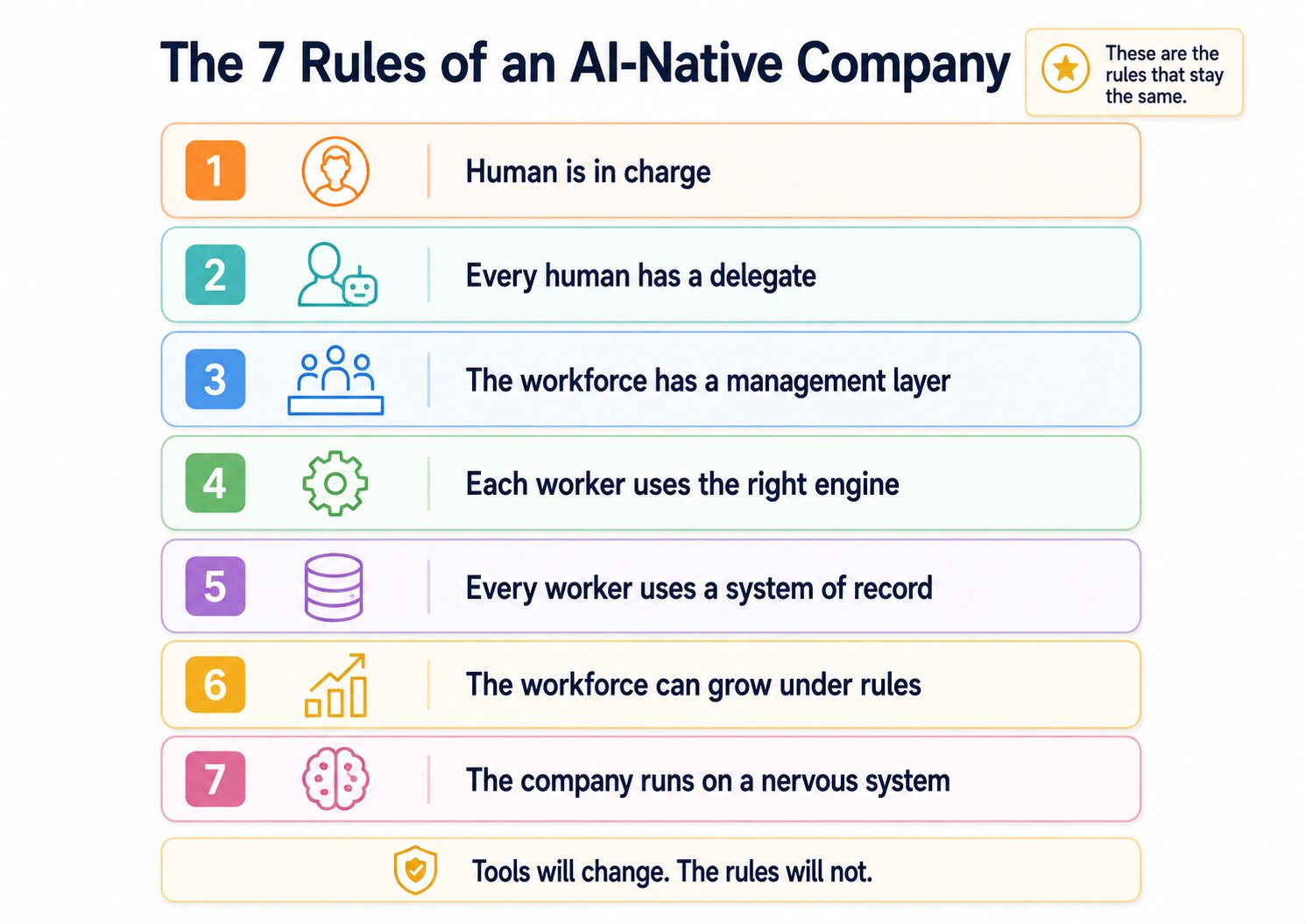
AI-Native Company के सात rules, एक view में। ये वे rules हैं जो नहीं बदलते। Specific tools (OpenClaw, Paperclip, Dapr, Inngest) replace हो सकते हैं। Rules रहते हैं।
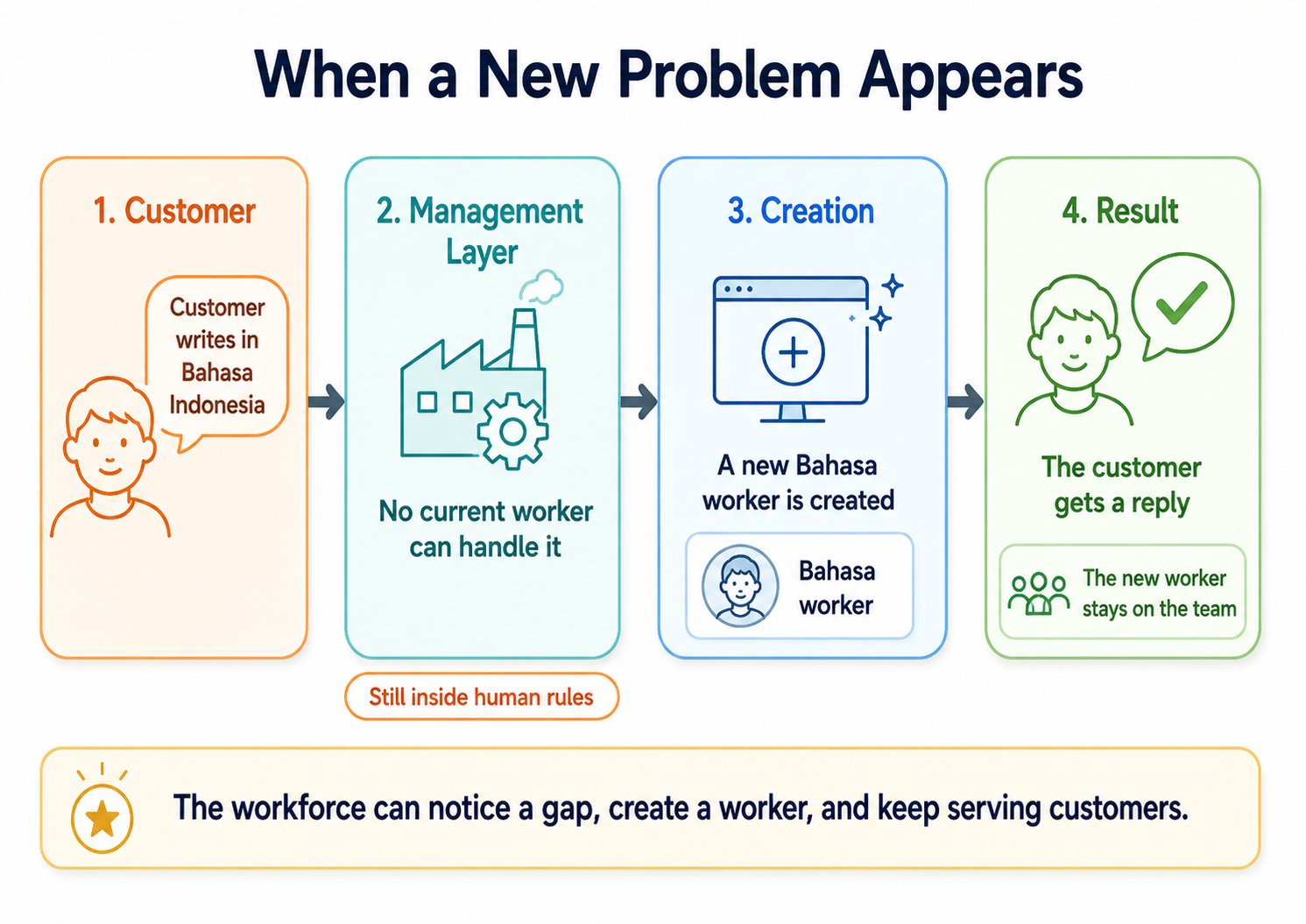
असल जिंदगी में यह कैसा दिखता है। कल्पना करें कि customer Bahasa Indonesia में support message लिखता है, और कोई current AI worker वह language नहीं बोलता। यह होता है:
- Customer का message nervous system (Inngest) से आता है।
- Management layer (Paperclip) देखती है कि कोई current worker language नहीं बोलता। Gap है।
- Paperclip, human द्वारा set rules के अंदर act करते हुए, नए Bahasa-speaking worker बनाने के लिए अपने hiring system (Claude Managed Agents) को call करता है।
- नया worker system of record से customer history पढ़ता है, reply लिखता है, conversation को system of record में वापस save करता है, और reply भेजता है।
- Reply उसी chain से customer तक पहुँचता है।
- नया worker टीम पर रहता है, future Bahasa-speaking customers के लिए ready।
किसी इंसान को जगाया नहीं गया। कंपनी ने new situation handle की, rules के अंदर अपना कार्यबल expand किया, customer को serve किया, और बाद में checking के लिए पूरी event record की। यही सात rules possible बनाते हैं।
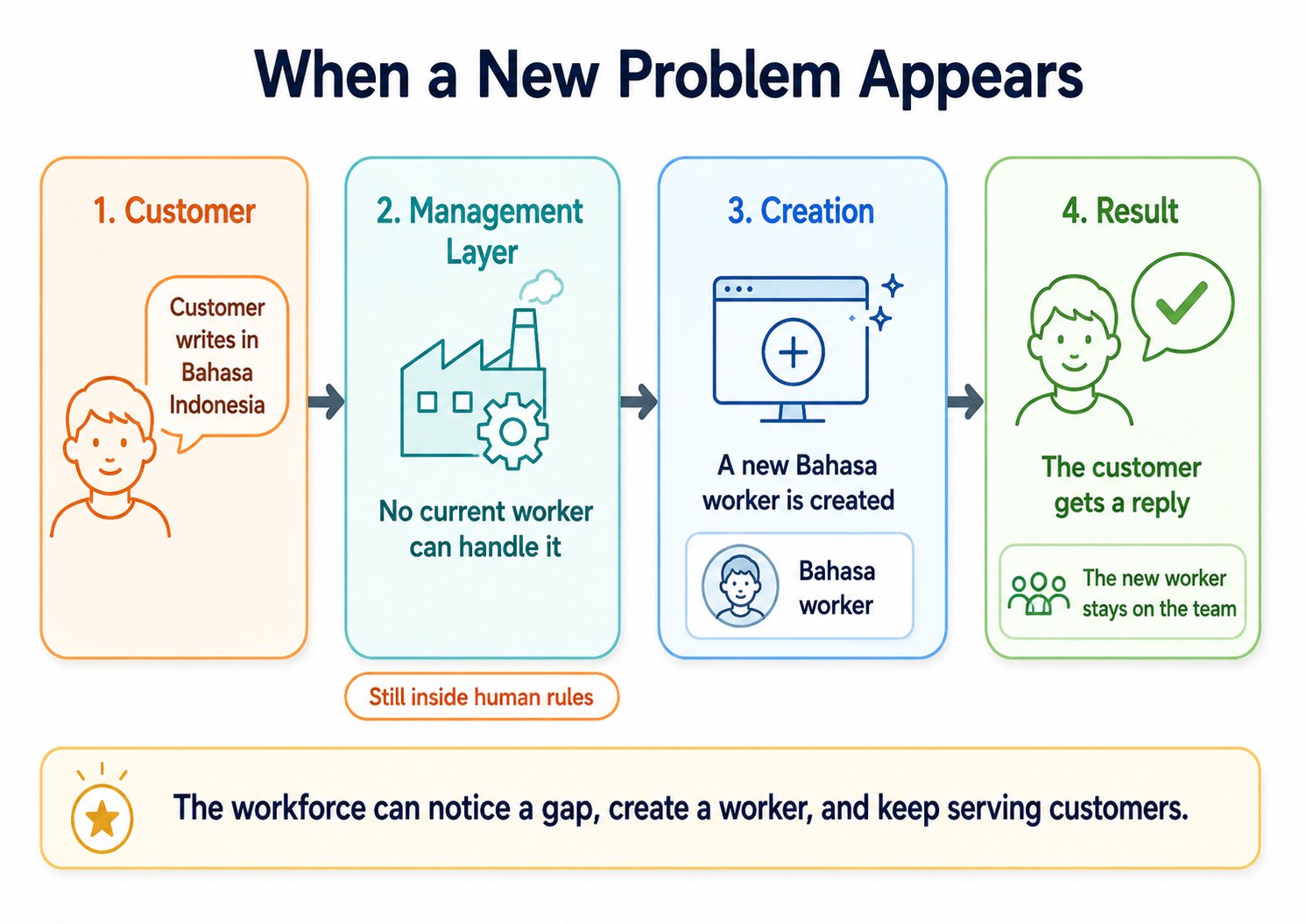
Customer new language में लिखता है। Workforce gap notice करता है। New worker create होता है: human द्वारा set rules के अंदर। Customer को reply मिलता है। New worker अगली बार के लिए team पर रहता है।
17. Worked example: 5 steps में support-ticket AI worker बनाएँ
अब तक यह किताब ideas के बारे में थी। अब इसे concrete बनाते हैं।
कल्पना करें कि आप Mehndi Mart नाम के small online store के लिए customer support चलाते हैं (दुनिया भर के customers को henna products बेचने वाली fictional shop)। आप support tickets में डूब रहे हैं: refund requests, shipping questions, product inquiries। आप हर ticket पर first response handle करने के लिए AI worker बनाने का decide करते हैं।
खंड 15 के सात rules और खंड 14 के सात principles इस्तेमाल करके आप इसे ऐसे करेंगे।
Step 1: spec लिखें (Rule 1: human charge में है)
आप Claude Code या OpenCode खोलते हैं (engineering tool: खंड 14, Mode 2 देखें)। आप worker के लिए spec लिखते हैं। Spec बस written plan है। यह कुछ ऐसा दिख सकता है:
WORKER: First-Response Support Agent for Mehndi Mart

GOAL:
- Read every incoming customer ticket
- Classify it: refund, shipping question, product question, or other
- Write a first draft reply
- Hand off to a human if the case is complex or angry

LIMITS:
- May not promise refunds above $100 without human approval
- May not commit to delivery dates not in the shipping system
- May not respond in any language the worker is not trained for

BUDGET:
- Maximum $200/month in compute costs
- Maximum 30 seconds per ticket

SUCCESS LOOKS LIKE:
- 80% of tickets get a useful first reply within 5 minutes
- Less than 5% of replies need human correction before sending
- All tickets are recorded in the support system of record
यह spec आपका intent, आपका budget, और आपकी limits capture करता है। अब आप इस worker के principal हैं। आप इसके results own करते हैं।
Step 2: system of record चुनें (Rule 5)
Worker को आपकी कंपनी की official memory से पढ़ना और उसमें लिखना होगा। Support worker के लिए इसका मतलब तीन जगहें हैं:
- Customer records (आपका CRM: जैसे HubSpot या Salesforce)
- Order records (आपका e-commerce platform: जैसे Shopify)
- Support history (आपका ticket system: जैसे Zendesk या Freshdesk)
आप इन systems को MCP के ज़रिए अपने AI worker से connect करते हैं (universal connector: AI के लिए USB जैसा, Section 9 से)। हर system MCP server के रूप में expose होता है। अब worker permission होने पर इनमें से किसी को query कर सकता है।
आप तय करते हैं: यह worker तीनों systems से read कर सकता है और ticket system में write कर सकता है। यह customer या order records में write नहीं कर सकता। उन changes को अभी भी इंसान चाहिए।
Step 3: worker को ज़रूरी skills attach करें
Skill छोटा, portable package है जो worker को एक specific चीज़ अच्छी तरह करना सिखाता है (खंड 9)। इस support worker के लिए, आप ऐसी skills attach करते हैं:
- "Professional support reply कैसे लिखें": tone, structure, signoff
- "Support ticket classify कैसे करें": ticket types की list और उन्हें अलग पहचानने का तरीका
- "Order record कैसे पढ़ें": कौन से fields matter करते हैं, उनका मतलब क्या है
- "Human को कब escalate करें": anger, legal threats, complex refunds जैसे triggers
Skills किसी skills library से download की जा सकती हैं या आप और आपकी टीम लिख सकते हैं। वे open Agent Skills format follow करती हैं, इसलिए किसी भी AI system में काम करती हैं।
Step 4: engine चुनें और guardrails set करें (Rules 3, 4, 6)
आप तय करते हैं कि worker कहाँ run करेगा। Support worker के लिए, जहाँ reliability matter करती है लेकिन cost भी matter करता है, आप middle-tier engine चुनते हैं। (आप इसे बाद में बदल सकते हैं। Rule 4 कहता है कि हर worker अपना engine चुनता है।)
फिर आप management layer के ज़रिए guardrails set करते हैं (Paperclip, या जो भी management layer आप इस्तेमाल करते हैं):
- Budget cap: $200/month, hard stop
- Approval gate: $100 से ऊपर किसी भी refund के लिए reply भेजने से पहले human "yes" चाहिए
- Audit trail: worker जिस हर ticket को touch करता है, वह worker के actions, cost, और time taken के साथ logged होता है
- Rate limit: maximum 50 tickets per minute (ताकि messages की flood पाँच मिनट में budget exhaust न करे)
अब worker साफ़ envelope के अंदर exist करता है: वह क्या कर सकता है और क्या नहीं।
Step 5: verify और deploy करें (Rule 7 + Seven Principles)
Worker को real customers handle करने देने से पहले आप उसे verify करते हैं। आप उसे past tickets के sample पर run करते हैं, मान लें 100 historical tickets, और replies check करते हैं। क्या वह उन्हें सही classify करता है? क्या replies professional हैं? क्या वह right cases escalate करता है?
आप worker का हर action देखते हैं: वह जो हर file खोलता है, हर step run करता है, हर decision लेता है। यही observability है: worker का कुछ भी आपसे hidden नहीं। आप mistakes पकड़ते हैं। Spec adjust करते हैं। Retest करते हैं।
जब आप satisfied हों, तो deploy करते हैं। Nervous system (Inngest, या जो भी event system आप इस्तेमाल करते हैं) real tickets आते ही worker को feed करना शुरू करता है। Worker उन्हें handle करता है। इंसान हर दिन छोटा sample review करता है। समय के साथ, आप spec refine करते हैं और skills add करते हैं, और worker बेहतर होता जाता है।
अभी क्या हुआ
आपने spec लिखा। System of record connect किया। Skills attach कीं। Guardrails set किए। Verify और deploy किया। आपने अभी Digital FTE बना लिया।
Worker अब आपके set rules के अंदर 24 hours a day, 7 days a week चलता है। जब आपका business grow करता है, तो आप tickets triage करने के लिए और इंसान hire करके scale नहीं करते। आप spec tight करते हैं और skills add करते हैं। आपकी टीम के इंसान value chain में ऊपर जाते हैं: complex cases, customer relationships, product feedback, strategy।
Agent Factory यही करती है। एक worker at a time।
आपका first-worker checklist
आप जो भी AI worker बनाएँ, उसे release करने से पहले इस list से गुजरें। अगर हर box checked है, तो आपके पास ऐसा worker है जो Seven Invariants satisfy करता है और deploy के लिए ready है।
- Spec written: clear goal, clear limits, clear budget, success की clear definition
- Principal named: एक specific इंसान इस worker को own करता है और इसके results के लिए accountable है
- System of record chosen: worker जानता है कि कंपनी truth कहाँ से पढ़ना है और कहाँ वापस लिखना है
- MCP connections set: worker उन systems तक पहुँच सकता है जिनकी उसे ज़रूरत है, और सिर्फ़ उन्हीं तक
- Skills attached: worker को जिन abilities की ज़रूरत है, वे portable skill packages के रूप में loaded हैं
- Engine picked: runtime job की reliability और cost needs से match करता है
- Budget cap set: monthly spend पर hard limit है, management layer से enforced
- Audit trail enabled: हर action logged, inspectable, और replayable है
- Approval gates set: risky actions होने से पहले human "yes" चाहिए
- Verification plan ready: आप जानते हैं कि worker के पहले 100 outputs कैसे check करेंगे
अगर आप हर box tick कर सकते हैं, तो आपका worker अब clever toy नहीं है। यह Digital FTE है।
18. क्या same रहता है बनाम क्या बदलेगा
यह table दिखाती है कि इस design के कौन से parts permanent rules हैं (left column: main idea) और कौन से parts इस साल के specific tools हैं (right column: 2026)।
| Stable (rule, invariant) | बदलेगा (specific tool, implementation) |
|---|---|
| Clear authority वाला human principal | Authoring tools, approval screens, spec formats |
| Edge पर personal delegate | Delegate products और उनके बाद आने वाली चीज़ें |
| Full workforce control वाली management layer | Management-layer products और उनके बाद आने वाली चीज़ें |
| Per-worker engine choice | SDKs, runtimes, agents run करने वाले platforms |
| Official store जिसके against workforce run करता है | Database engines, CRM/ERP/ticketing products, MCP server lists |
| Rules के अंदर grow करने वाला workforce | Managed-agent APIs, setup systems |
| Authority के तहत events, durability, और flow | Schedulers, webhook frameworks, durable-execution platforms |
| काम की spec-driven definition | Spec languages, formats, tools |
| General agents इस्तेमाल करने के लिए seven operator principles | Specific agent products, command-line tools, prompt patterns |
| Result-based money model | Pricing units, contract formats |
| Economic actors के रूप में agents | Payment systems, liability frameworks |
| Observable, audit-able runs | Tracing systems, log formats |
| Layers के बीच clean joints, ताकि vendor lock-in design तोड़े बिना shift हो सके | कौन सी layer lock-in carry करती है: 2024 में AI model, 2026 में "harness" layer (AI के around software), next orchestrator |
| Workforce जिसे cost, speed, result के रूप में measure किया जा सके | Finance systems, ledger implementations |
| Portable skills के रूप में packaged abilities | Skill formats, registries, distribution platforms |
Left column main idea है। Right column 2026 है।
अगर आप left column के हिसाब से बनाते हैं, तो आपकी कंपनी right column के changes survive करती है। अगर आप left को समझे बिना right column के हिसाब से बनाते हैं, तो आपको हर दो साल में rebuild करना पड़ेगा।
19. आज हम जो specific tools इस्तेमाल करते हैं
Completeness के लिए, यहाँ उन products की list है जिन्हें हम 2026 में हर rule follow करने के लिए इस्तेमाल करते हैं। ये reference implementations हैं। ये बदलेंगे। Rules नहीं बदलेंगे। याद रखें: product names याद न करें। हर product जो job करता है, उसे याद करें।
- Delegate: OpenClaw (open-source personal AI agent)
- Management layer: Paperclip (AI-native कंपनी operating system; यह hire, assign, govern, observe, और retire को functions के रूप में expose करता है जिन्हें दूसरे systems call कर सकते हैं)
- Engines: Dapr Agents, Claude Managed Agents, OpenAI Agents SDK, Cursor SDK, और OpenClaw-native (हर एक अलग job profiles के लिए suited)
- Skills: agentskills.io का Agent Skills format (AI abilities package करने के लिए portable folder format)
- Nervous system: Inngest (कंपनी का main event system) और Claude Code Routines (coding agents के लिए specialist trigger)
Rule 6 के लिए (workforce अपने-आप grow कर सकता है), हम Claude Managed Agents इस्तेमाल करते हैं। वही technology जो engine options में से एक के रूप में serve करती है, hiring system के रूप में भी serve करती है, क्योंकि runtime पर new agents create करने की उसकी ability ही "hiring as a callable function" possible बनाती है।
Real-world support। यह सिर्फ़ theory नहीं है। February 2026 में Cursor के CEO ने अपनी कंपनी के shift को AI coding tool से "agent factory" बनने तक ऐसे शब्दों में describe किया जो इस किताब से बहुत मिलते हैं: AI agents के groups teammates की तरह काम करते हैं, इंसान problems define करते हैं और finished काम review करते हैं, agents line by line guided होने के बजाय cloud computers पर parallel में काम करते हैं। May 2026 में The New Stack ने same pattern को Anthropic, OpenAI, Google, Microsoft, और Cursor में industry-wide pattern के रूप में report किया।
2026 में leading view sharp है: AI model commodity बन रहा है (commodity वह चीज़ है जिसके अच्छे versions कई companies बनाती हैं, इसलिए वे interchangeable हो जाती हैं: sugar या wheat की तरह)। अब कई companies अच्छे AI models बनाती हैं, और एक model को दूसरे से swap किया जा सकता है। Valuable बन रहा है "harness": model के around software wrapper जो उसे safely, reliably, और scale पर act करने देता है। Google के senior leader ने openly कहा कि company को अब इस बात की परवाह नहीं कि developers कौन सा AI coding tool चुनते हैं। Model layer अब competition की जगह नहीं रही। यह किताब जिन joints को name करती है: human, delegate, management layer, engine, system of record, और nervous system के बीच, वे अब large scale पर real production systems में build हो रहे हैं।
Rules forecast नहीं हैं। वे picture हैं कि leading edge पहले से कहाँ रहता है।
Words पर छोटी note। इस किताब में system का हर part technically agent है: OpenClaw agent है, Paperclip agent है, AI workers agents हैं। लेकिन सिर्फ़ AI workers workforce हैं: वही hire होते हैं, काम पाते हैं, टीम में रखे जाते हैं, और retire होते हैं। OpenClaw और Paperclip कंपनी के permanent parts हैं, workforce नहीं। इसलिए जब यह किताब AI Worker कहती है, तो उसका मतलब workforce है। जब यह agent कहती है, तो उसका मतलब कंपनी में कोई भी है: permanent part या workforce।
20. Workforce opportunity
AI jobs को individual tasks में break apart करेगा। उनमें से कुछ tasks पूरी तरह machines करेंगी। लेकिन jobs को break apart करना नए combinations भी बनाता है: new roles, new businesses, new markets, जो तब exist नहीं करते थे जब work fixed job titles के अंदर locked था।
Future workforce को fixed career paths पर rely करने के बजाय flexible skill sets बनाने होंगे। जो professionals AI के साथ सोचना सीखेंगे, AI tools रोज़ इस्तेमाल करेंगे, और AI को digital teammate की तरह treat करेंगे, वे change को सिर्फ़ survive नहीं करेंगे। वे उसमें अच्छा करेंगे।
SaaS era ने developers, designers, और product managers के लिए millions of jobs बनाए। Agent Factory era millions more बनाएगा: agent designers, result architects, verification specialists, और domain experts के लिए जो machines को सिखाते हैं कि उनके field में "correct" कैसा दिखता है।
यह history की सबसे बड़ी worker training opportunities में से एक भी है। 2030 तक, World Economic Forum estimate करता है कि दुनिया के हर 100 workers में से 59 को new technologies और working के new ways के साथ keep up करने के लिए new training चाहिए होगी।
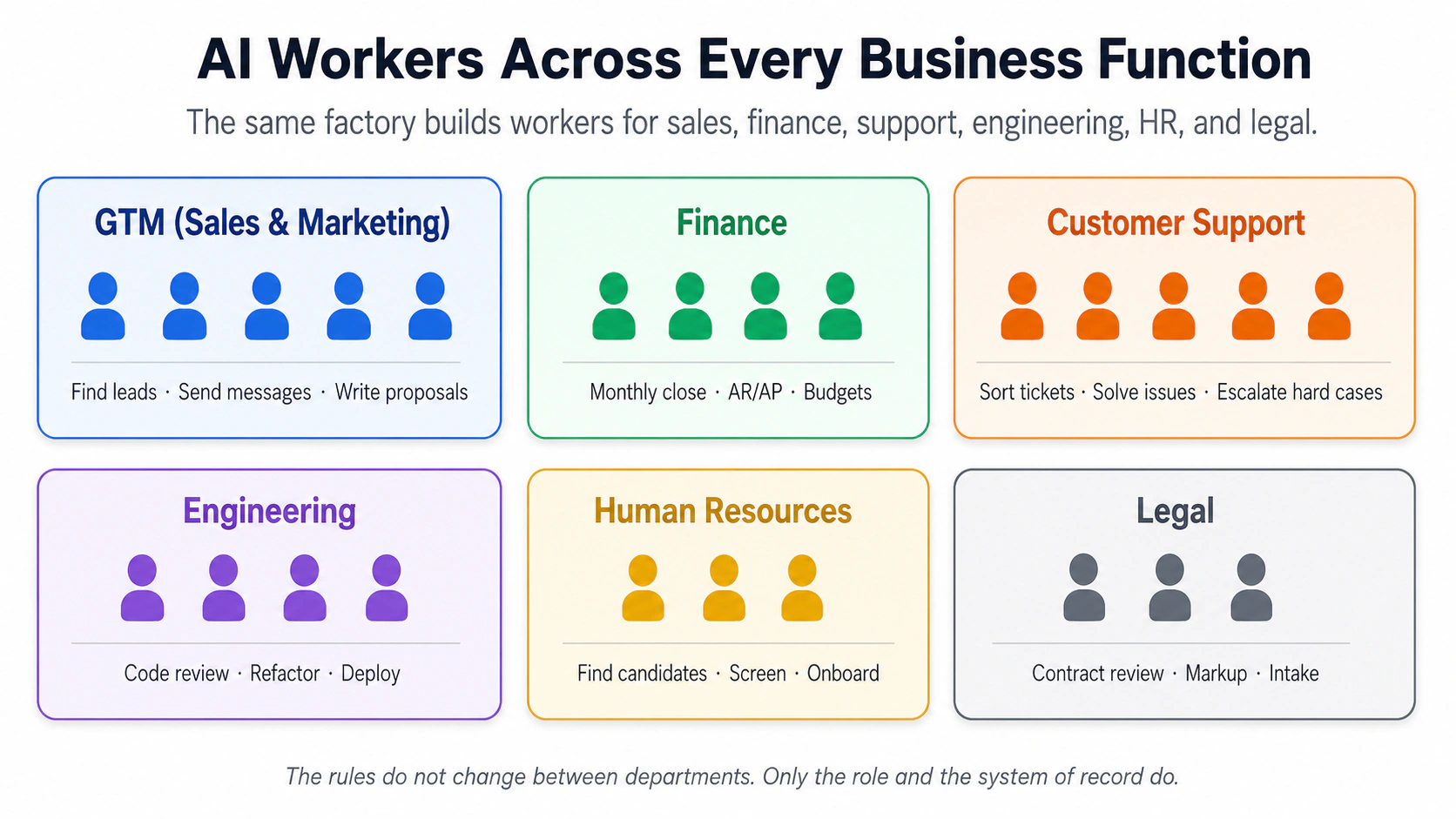
Workforce opportunity। Same Agent Factory हर business function में specialist AI workers बनाती है: sales, finance, support, engineering, HR, legal। Departments के बीच rules नहीं बदलते। सिर्फ़ role और system of record बदलते हैं।
Same factory हर business function में specialist workers बनाती है:
-
GTM में (इसका मतलब Go-To-Market है: combined sales, marketing, और revenue work जो possible buyers को paying customers में बदलता है)। AI workers का group यहाँ कई tasks handle करता है:
- New leads खोजना।
- Outreach messages भेजना।
- Customer database साफ़ रखना।
- Sales pipeline analyze करना।
- Proposals लिखना।
- Demos customize करना।
SaaS era में जो काम हाथ से किया जाता था, वह अब AI workers के रूप में बनता है और human GTM lead की supervision में होता है।
-
Finance में: monthly close (हर महीने के end पर books prepare करना), AR/AP (जिसका मतलब accounts receivable है: company को मिलने वाला पैसा, और accounts payable है: company को दूसरों को देना पैसा), और FP&A (जिसका मतलब financial planning and analysis है: budgets और forecasts बनाने वाली team)।
-
Customer Support में: tickets sort करना, issues solve करना, hard cases escalate करना।
-
Engineering में: code review, refactoring (existing code improve करना), deployment।
-
Human Resources में: candidates खोजना, screen करना, new hires onboard करना।
-
Legal में: contract review, changes mark up करना, new matters की intake।
हर AI worker Paperclip के through hire होता है, सही department में human द्वारा supervised होता है, और उस department के system of record के against run करता है: sales के लिए CRM, finance के लिए general ledger, support के लिए ticket system, engineering के लिए code storage। Departments के बीच rules नहीं बदलते। सिर्फ़ role definitions और systems of record बदलते हैं।
Opportunity छोटी नहीं है। यह wider है। और यह adapt करने वालों को reward करती है।
21. पैसा पहले से खर्च हो रहा है
अगर आपको यकीन नहीं कि यह change वास्तविक है, तो देखें कि पैसा कहाँ जा रहा है।
January 2026 तक, US data center construction $42 billion per year तक grow हो चुका था, जबकि office construction अपने peak से 35% गिर चुका था।
History में पहली बार, America अब AI workers के workplaces (data centers) बनाने पर human workers के workplaces (offices) से ज़्यादा पैसा खर्च करता है।
Data centers copper और electricity को industrial scale पर इस्तेमाल कर रहे हैं। एक single बहुत बड़ा AI data center 50,000 tons तक copper माँग सकता है: normal data center से लगभग दस गुना। Meta, Google, Amazon, और Microsoft साथ मिलकर सिर्फ़ 2026 में AI infrastructure पर $600 billion से ज़्यादा खर्च करने की planning कर रहे हैं।
AI age की factories सिर्फ़ idea नहीं हैं। वे अभी बन रही हैं।
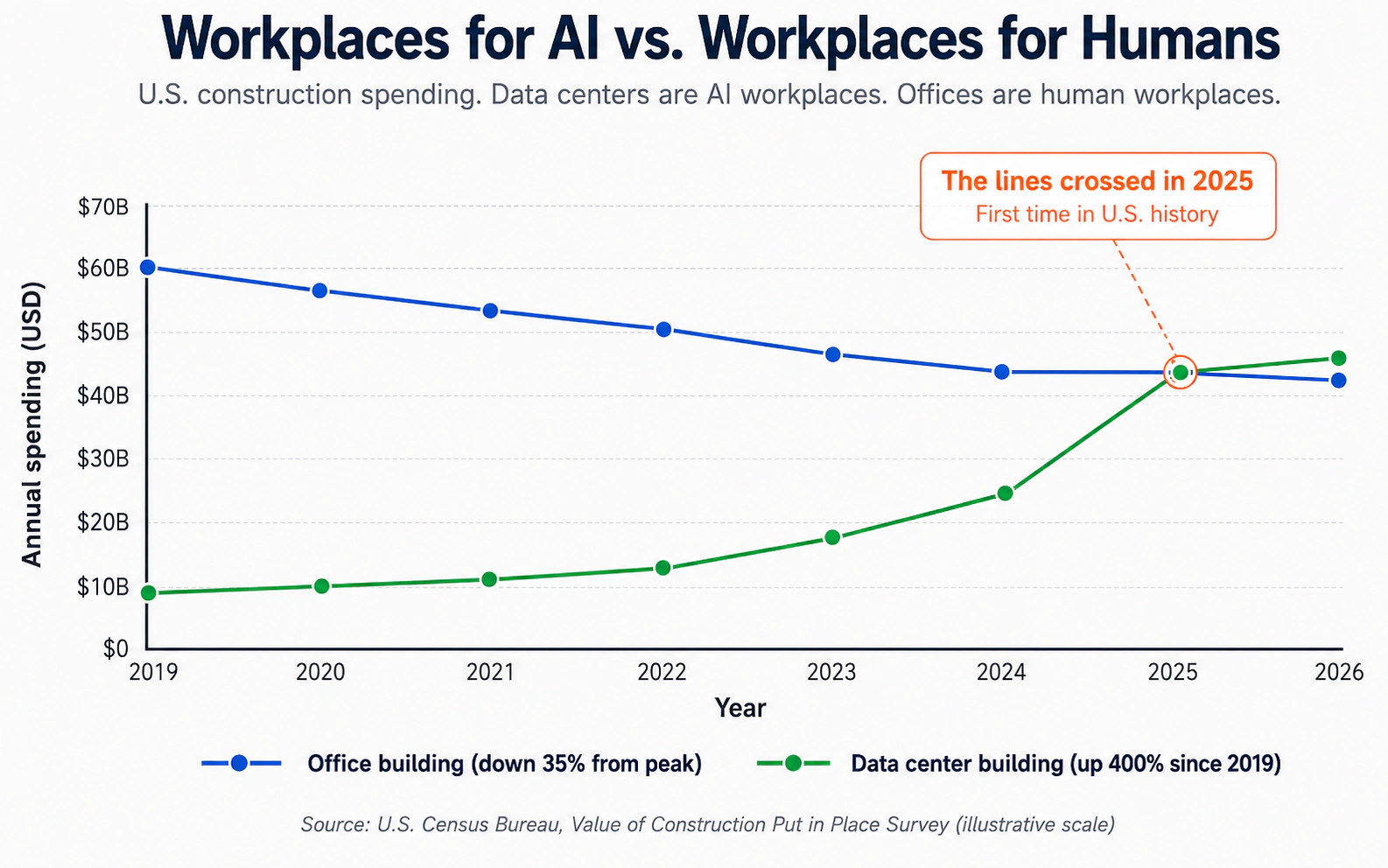
U.S. construction spending। Office building (human workers का workplace) नीचे जा रहा है। Data center building (AI workers का workplace) ऊपर जा रहा है। दोनों lines 2025 में crossed हुईं। Source: U.S. Census Bureau, Value of Construction Put in Place Survey।
Winners को इस बात से measure नहीं किया जाएगा कि उन्होंने कितने software subscriptions बेचे। उन्हें इस बात से measure किया जाएगा कि उन्होंने कितने results deliver किए।
22. यह सब कहाँ इशारा करता है
Closing से पहले, यह mark करना worth है कि यह thesis पहले से कहाँ खड़ी है। AI-Native Company अब future idea नहीं रही। Mid-2026 तक, single-digit human headcounts वाली firms AI-operated workforces के साथ हर साल billion dollars revenue report कर रही थीं: company की ऐसी category जो तीन साल पहले किसी meaningful रूप में exist नहीं करती थी। कुछ specific companies succeed करेंगी। कुछ fail होंगी। कुछ regulator problems face करेंगी। लेकिन category रहेगी। Thesis ने company की shape predict की थी। Company आ चुकी है।
यह thesis defend करती है कि Agent Factory आज और near future में क्या बनाती है: software AI workers, AI-Native Companies में organized, human business के edges पर working। यही इस किताब का earned scope है।
लेकिन design आगे तक extend होता है। तीन directions name करने लायक हैं।
Physical AI workers। वही factory design जो software AI workers बनाता है, physical workers तक extend होता है: robots। Warehouse work करने वाला robot। Packages अपने-आप deliver करने वाला vehicle। Factory floor पर machine। इनमें से हर एक same rules के तहत AI worker है, same management layer के through hire होता है, ऐसे engine पर run करता है जो software calls की जगह physical parts move करता है। Rules नहीं बदलते। Computer को बस body मिल जाती है। जैसे physical AI mature होगा, AI-Native Company का workforce सिर्फ़ digital नहीं रहेगा। इसमें same method से built physical workers भी होंगे, same design से controlled, same rules के प्रति responsible।
Fully independent economic agents। इस thesis की opening ने इस direction को name किया था। जैसे-जैसे AI workers lasting identities, payment systems, reputations, और contracts में enter करने की legal ability gain करते हैं, वे अपनी कंपनी द्वारा इस्तेमाल किए जाने वाले tools रहना बंद करते हैं। वे अपने right में economic actors बन जाते हैं: दूसरी कंपनियों के AI workers से services खरीदना, जरूरतमंद कंपनियों को capacity बेचना, capital बनाना, हर transaction पर human approval के बिना contracts में enter करना। Agent Factory same रहती है। जो बदलता है वह यह कि इसके built workers कितने independent बनते हैं। इससे जो सवाल उठते हैं: legal status, responsibility, taxes, antitrust (वे laws जो कंपनियों को बहुत powerful बनने या fair competition को harm करने से रोकते हैं), वे design questions नहीं हैं, लेकिन urgent होंगे, और design को उनके लिए ready होना होगा।
कंपनियों के बीच move करते AI workers। आज, AI worker एक कंपनी द्वारा built होता है और सिर्फ़ उसी कंपनी के लिए काम करता है। जैसे manufacturing layer mature होगी, AI workers portable बनेंगे: एक कंपनी में hire होंगे, फिर दूसरी में transfer होंगे, या कई कंपनियों के लिए same time पर काम करेंगे। Hiring system inside-the-company से between-companies तक grow होगा। Different कंपनियों के authority rules same AI worker पर meet करेंगे, contract से controlled। AI workers का labor market real market बनेगा: rates, reputations, specialties, और turnover के साथ। Agent Factory worker ship करती है। Market उसे route करता है।
ये तीन directions: physical workers, full independence, और worker mobility, design की extensions हैं, उससे departures नहीं।
Closing में
Rules टिके रहते हैं। Tools बदलते हैं। Thesis कायम रहती है।
नई तरह की कंपनी बन रही है: AI workers से staffed, management layer से coordinated, इंसानों द्वारा personal agents के through directed। इसे बनाने की method Agent Factory है। इससे जो कंपनी बनती है वह AI-Native Company है। जो workers यह employ करती है वे Digital FTEs हैं। जिस truth के against वे run करते हैं वह system of record है। जिन rules को वे follow करते हैं वे Seven Invariants हैं। जो products आज उन rules को follow करते हैं वे बदलेंगे। Rules नहीं बदलेंगे।
अगर आप इस सब में नए हैं, तो यही पूरी thesis एक paragraph में है। इस किताब का बाकी हिस्सा इसे बनाने का design, practice, और काम है।
Notes and Sources
-
Don Tapscott, interview on HBR IdeaCast, "With Rise of Agents, We Are Entering the World of Identic AI", Harvard Business Review, February 17, 2026.
-
World Economic Forum, Future of Jobs Report 2025, January 2025.
-
Michael Truell, "The third era of AI software development", Cursor Blog, February 26, 2026.
-
Matthew Burns, "Cursor's $60 billion bet is on the harness, not the model", The New Stack, May 1, 2026.
-
Erik Munson, Founding Engineer, Day AI, quoted in "Day AI – Customer Story", Inngest, accessed May 2026.
-
Jodie Cook, "The 2-Person $1 Billion Company Is The Real Business Goal — And How To Do It", Forbes, May 10, 2026.
यह Agent Factory Thesis का beginner-friendly संस्करण है, सरल Hindi में। Original technical संस्करण agentfactory.panaversity.org पर उपलब्ध है। दोनों संस्करण same design के पक्ष में argument करते हैं और same conclusions तक पहुँचते हैं। यह संस्करण आसान शब्द और छोटे वाक्य इस्तेमाल करता है। Original industry words और लंबे sentences इस्तेमाल करता है। अभी आप जहाँ हैं, उसके हिसाब से जो fit हो वह पढ़ें, और ready होने पर switch करें।