Agent Factory थीसिस
AI में नए हैं? सरल अंग्रेज़ी संस्करण पढ़ें →
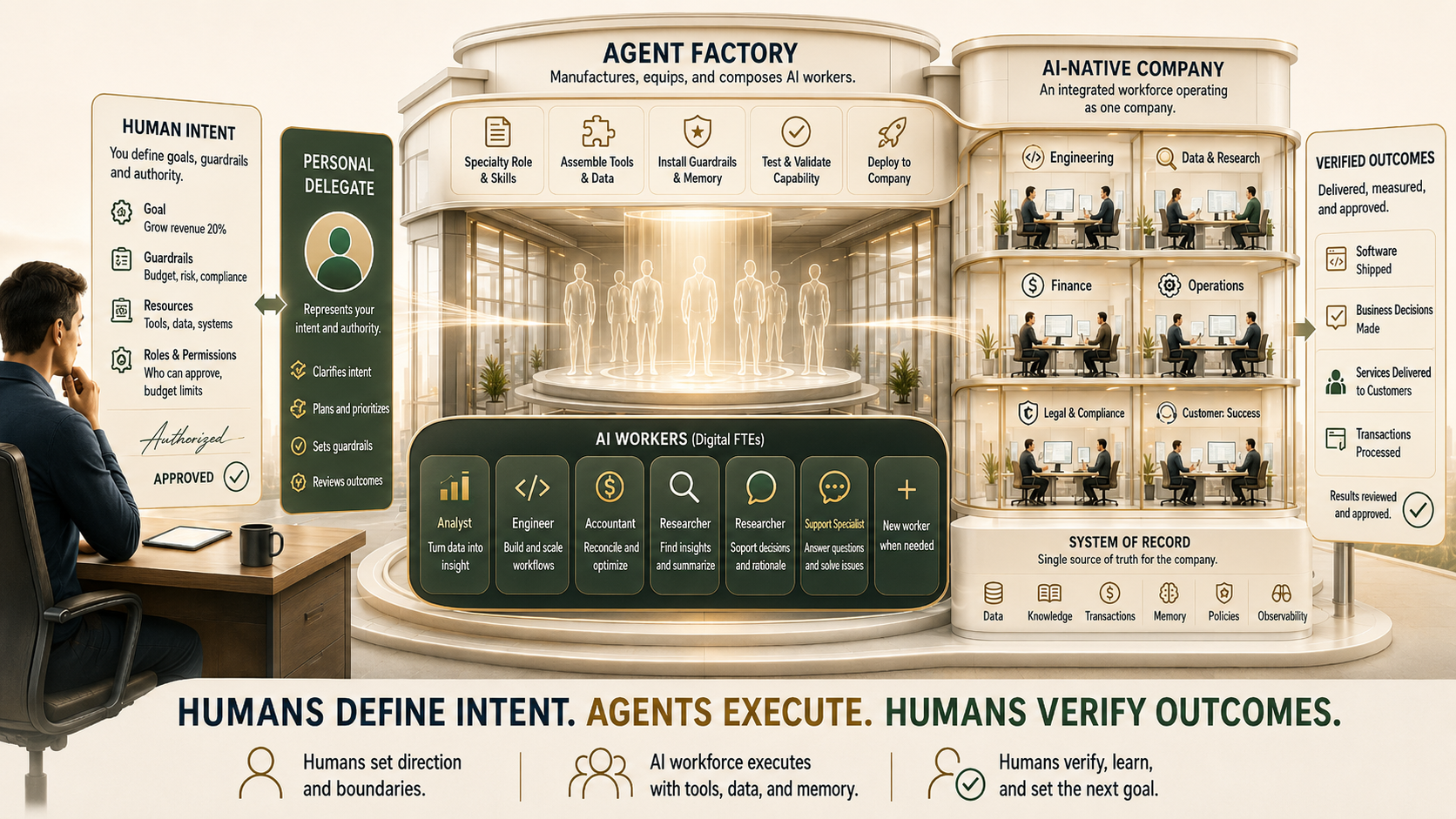
AI era में सबसे मूल्यवान कंपनियाँ software नहीं बेचेंगी; वे AI employees (Digital FTEs) बनाएँगी: role-based systems जो tools compose करते हैं, specialist agents spawn करते हैं, और scale पर outcomes देते हैं। ये AI employees AI-Native companies का operating substrate हैं, जहाँ workforce ज़्यादातर AI है और product line वही है जो यह workforce भेजता है: software, decisions, services, और transactions। आप इन कंपनियों से खरीदते नहीं हैं। आप उन्हें hire करते हैं। दिशा इससे भी आगे जाती है: AI employees अब अपने आप में economic actors बनने के करीब हैं, जो अपने tasks पूरे करने के लिए autonomously services खरीदते हैं, compute procure करते हैं, और data acquire करते हैं। यह अब tool category नहीं है। यह कंपनी की category है। Agent Factory वह process है जो ये कंपनियाँ बनाता है।
Economic-actor trajectory 2030 की prediction नहीं है; इसे संभव बनाने वाले payment rails already production में live हैं। 2025-2026 में जारी हो रहे चार open protocols AI agents को हर step पर इंसान के बिना payments authorize करने, checkout करने, और transactions settle करने की क्षमता देते हैं।
- ACP (OpenAI + Stripe): ChatGPT के Instant Checkout को power देता है। जब agent chat के अंदर आपके लिए कुछ खरीदता है, तो ACP transaction authorize और clear करता है।
- AP2 (Google): 60+ कंपनियों द्वारा backed cross-vendor standard, जो cryptographically signed mandates के इर्द-गिर्द बना है। Agent अपने साथ digitally signed permission slip रखता है, जो साबित करती है कि इंसान ने उसे एक specified category की चीज़ पर specified amount तक spend करने की अनुमति दी है।
- x402 (Coinbase): crypto-native payment protocol। Version 2 late 2025 में launch हुआ; Stripe ने early 2026 में Coinbase की Base blockchain पर इसके साथ integration किया, जिससे protocol crypto-native commerce से mainstream payment flows तक पहुँचा।
- MPP (Stripe / Tempo): micropayments के लिए बनाया गया। कोई AI agent streaming service के दौरान preset cap के तहत pennies per second pay कर सकता है, जिससे consumption-based commerce संभव होता है जो human-mediated transactions के लिए uneconomical था।
Plumbing तैयार है। यह काम के आकार को ही बदल देता है।
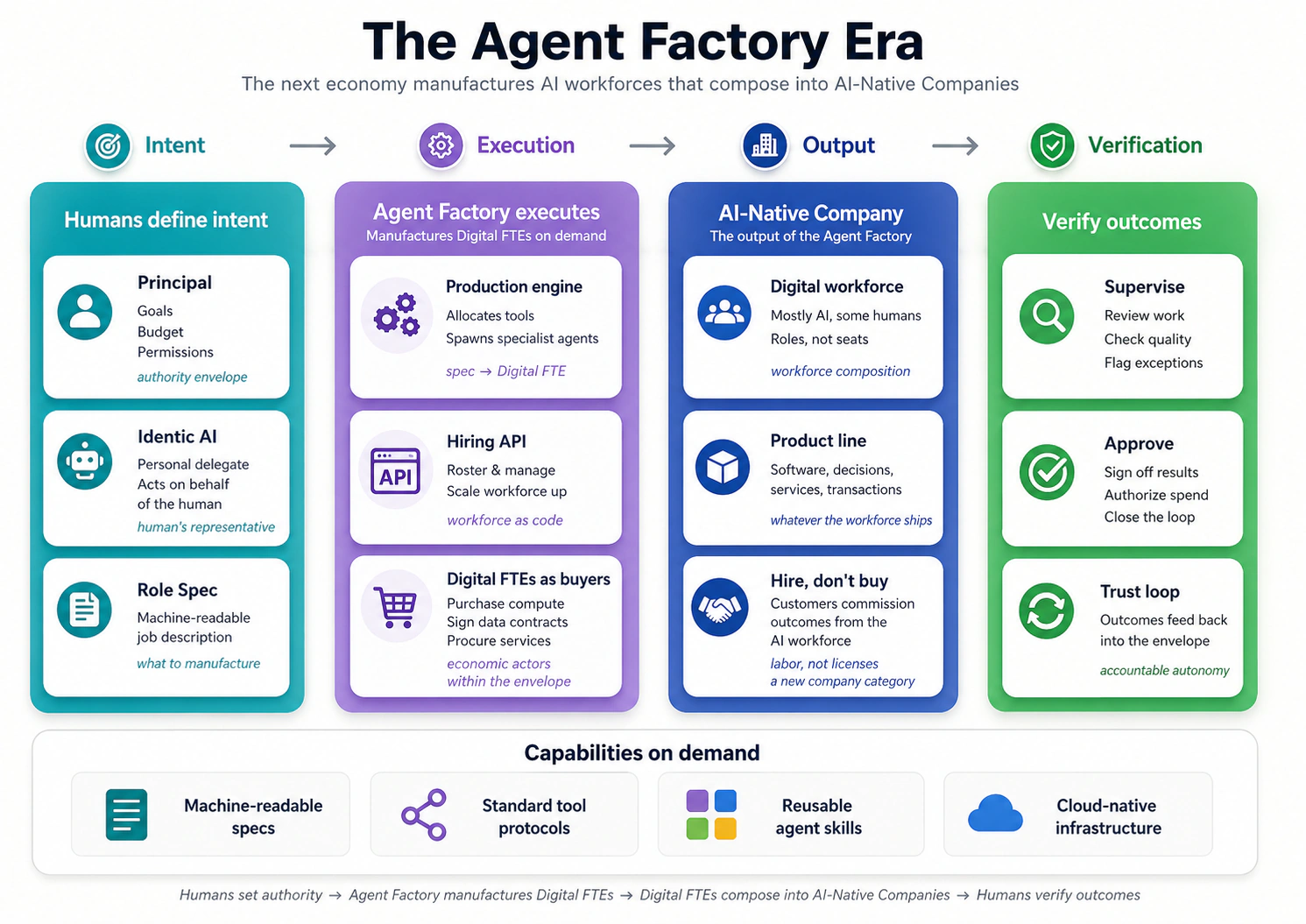
SaaS era ने subscriptions बेचीं। Agent Factory era results बेचता है। इंसान intent define करते हैं। Agents execute करते हैं। इंसान outcomes verify करते हैं। बीच का step: typing, clicking, integrating, executing; यही AI absorb करता है। इंसानों के लिए वह काम बचता है जो machines हमारे लिए नहीं कर सकतीं: यह जानना कि हम असल में क्या चाहते हैं, और यह पहचानना कि हमें वह मिला या नहीं।
जो बचता है: Intent. Verification. Outcome.
Intent अपने आप spec में type नहीं होता। यह किसी इंसान से आता है: उसका judgment, domain knowledge, और values। लेकिन जैसे-जैसे AI employees बढ़ते हैं, कोई भी professional उन्हें हाथ से orchestrate नहीं कर सकता। वे एक personal agent के ज़रिए काम करेंगे जो उनके judgment को reflect करता है और उनकी तरफ़ से delegate करता है: ऐसा chief of staff जो आपको जानता है, आपकी ओर से बोलता है, और काम को सही जगह hand off करता है। Don Tapscott (एक जाने-माने business/tech thinker) इसे identic AI कहते हैं।¹ "Identic" इसलिए, क्योंकि यह agent आपकी identity carry करता है: आपका judgment, आपकी preferences, आपकी authority। यह generic assistant नहीं है। यह आपका representative है। Agent Factory AI-Native Company का workforce manufacture करती है; identic AI वह तरीका है जिससे हर इंसान उसे command करता है।
Vocabulary पर एक नोट
इस thesis में तीन terms बहुत इस्तेमाल होते हैं। ये एक-दूसरे के बदले इस्तेमाल नहीं किए जा सकते।
Agent Factory process है। यह spec-driven, human-supervised, agent-tool-powered method (Claude Code/OpenCode) है जिसके ज़रिए AI Workers design, manufacture, और deploy किए जाते हैं। Agent Factory वह है जिसे operate करना आप सीखते हैं। यह कोई product नहीं है जिसे आप खरीदते हैं; यह एक practice है जिसे आप अपनाते हैं।
AI-Native Company output है। यह वह running enterprise है जिसे Agent Factory बनाती है: ऐसी firm जिसमें AI Workers staff होते हैं, management layer उन्हें coordinate करती है, और किनारे पर इंसान direction देते हैं। AI-Native Company वह है जिसे अंत में आप चलाते हैं। किताब में इसे Agentic Enterprise भी कहा गया है।
AI Workers workforce हैं। ये AI-Native Company के अंदर role-based agents हैं: जिन्हें hire, assign, roster, और retire किया जाता है। किताब में इन्हें Digital FTEs या Digital Workers कहा गया है। Delegate और Paperclip कंपनी के permanent fixtures हैं; AI Workers वह workforce हैं जिन्हें इनके ज़रिए hire और retire किया जाता है। Runtime engines वह चीज़ हैं जिन पर workforce चलता है; वे खुद staff नहीं हैं।
System of record substrate है। यह authoritative state है जिसके against AI Workforce चलता है: databases, ledgers, और platforms जो AI-Native Company की सच्चाई hold करते हैं।
Engagement किसी इंसान और general agent के बीच एक bounded interaction है। Problem-solving engagements outcome सीधे इंसान को deliver करते हैं और Seven Principles (Chapter 18) से govern होते हैं; engineers problem-solving के लिए Claude Code या OpenCode इस्तेमाल करते हैं, domain experts Claude Cowork या OpenWork इस्तेमाल करते हैं। Manufacturing engagements AI-Native Company के लिए AI Worker बनाते हैं और Seven Invariants (इस thesis का अगला section) से govern होते हैं; manufacturing हमेशा Claude Code या OpenCode इस्तेमाल करती है, audience कोई भी हो, क्योंकि Worker बनाना मूल रूप से coding task है।
दूसरे शब्दों में: Factory Company बनाती है; Company Workers employ करती है; Workers system of record के against चलते हैं।
आगे आने वाली बातों पर एक नोट। यह thesis architectural invariants और reference implementations में फर्क करती है। Invariant वह structural requirement है जो system के हर version में true रहती है, चाहे कौन सा specific product उसे realize करे। इसे ऐसे समझें: ऐसा rule जो कभी नहीं बदलता। यह structural requirement है जो system के काम करने के लिए हमेशा true होना चाहिए। Reference implementation वह concrete product है जिसे 2026 में किसी invariant को realize करने के लिए इस्तेमाल किया गया है। यह वही specific product है जो अभी उस rule को fulfill कर रहा है। यह आज की best choice है, लेकिन कल इसे बदला जा सकता है। नीचे के sections में जब किसी product का नाम आता है, तो invariant thesis है; product इस साल का best fit है। Furniture बदल जाए, building खड़ी रहती है। कुछ architectural boundaries, जैसे control plane और execution plane की separation, खुद invariants हैं, भले ही उन्हें realize करने वाले specific providers हर साल बदल जाएँ।
📚 शिक्षण सहायता
पूरी presentation देखें: Agent Factory Thesis
Paradigm shift
| Feature | SaaS era (Tools) | Agent Factory era (Labor) |
|---|---|---|
| Product | Software tools | AI employees |
| Value Metric | Per-seat subscriptions | Per-outcome results |
| Execution Model | Manual और visible | Automated और industrialized |
| Resource Acquisition | इंसान tools और services procure करते हैं | Agents compute, data और services autonomously खरीदते हैं |
| Human Role | Operator | Supervisor और verifier |
| Integration | Rigid, point-to-point APIs | Model Context Protocol (MCP) |
| Focus | काम कैसे किया जाता है | कि काम हुआ: verifiably correct |
यह shift business change है, technology change नहीं
Table की हर row business decision है, procurement decision नहीं। ज़्यादातर AI adoption इसी distinction पर fail होता है।
July 2026 में PwC के US CEO Paul Griggs ने failure mode साफ़ बताया। Business Insider के interview में उन्होंने कहा कि AI को technology transformation मानने वाली companies काम को CIO या CTO तक सीमित कर देती हैं और पूरा opportunity miss कर देती हैं। उनका prescription software rollout के उलट है। यह large-scale business transformation और company के सभी लोगों व processes में change-management exercise है। उनका दूसरा warning इस book के लिए और अहम है। Inefficient process के ऊपर AI layer करने से process fix नहीं होता। वह और complicated हो जाता है, साथ में एक report मिलती है कि process हमेशा से कितना खराब था।
Numbers बताते हैं कि यही norm है, exception नहीं। PwC के 2026 Global CEO Survey में 56% CEOs ने AI से कोई financial return report नहीं किया और सिर्फ़ करीब 12% ने revenue और cost दोनों benefits report किए। PwC के global chairman Mohamed Kande इस gap का कारण models नहीं, बल्कि छोड़ी गई fundamentals मानते हैं: clean data, sound processes और governance। Bottleneck capability नहीं, company है।
यह thesis उसी जवाब की architecture है। AI को CIO तक सीमित करना emerging workforce को software मानना है, और Two-Layer Model इसी category error को reject करता है: principal business function में है, IT में नहीं। Messy-process warning बाहर से कही गई Invariant 5 है। जिस process की authoritative truth कहीं लिखी नहीं है, उस पर AI Worker bolt नहीं किया जा सकता। Authoritative state के बिना चलने वाला Worker mess साफ़ नहीं करता; उसे तेज़ी से inherit करता है।
सबसे मजबूत evidence PwC की बात नहीं, बल्कि वह है जो PwC अपने साथ कर रहा है। Financial Times ने March 2026 में report किया कि firm billable hour से हट रही है और tax तथा consulting practice के हिस्सों को ऐसे AI-powered tools में बदल रही है जिन्हें clients PwC person के बिना use कर सकते हैं, संभवतः annual subscription पर। यह announced intention नहीं है। Platform PwC One के रूप में ship हुआ और 6 automated services के साथ खुला, जिनमें M&A due diligence से tax rules तक का काम शामिल है। आने वाले महीनों के लिए और services promised थीं। यह ऊपर की table की Value Metric row है, उस firm द्वारा execute की गई जिसकी पूरी economics पुरानी row पर टिकी थी।
Griggs shift के दूसरी तरफ़ का trap भी बताते हैं। उनके अनुसार AI dividend का lazy use उसे सीधे bottom line में डालना है। कठिन सवाल यह है कि business में growth सच में कहाँ है और firm उस dividend को वहाँ spend करने को तैयार है या नहीं। Paradigm Shift table structural answer देती है: cost savings tool return करता है और outcomes workforce produce करती है।
यह table software का forecast नहीं, firms का forecast है।
Industrialized stack
- Intent: High-level blueprint: goals, constraints, budgets, और permissions.
- Production Engine: Intent को outcomes में बदलता है। नीचे विस्तार से बताया गया है।
- Outcome: High-fidelity actions और artifacts: demand पर deliver, accuracy के लिए verify, और feedback loops से लगातार improve।
Production Engine: Intent से outcome तक
Production engine इस पूरी thesis का सबसे अहम idea है। यह वह system है जो आपकी चाहत को आपके मिलने वाले result में बदलता है। इसे अपनी instruction और final result के बीच होने वाली सारी चीज़ों की तरह समझें। यह कोई app नहीं है जिसे आप download करते हैं, या software का कोई single piece नहीं है जिसे आप install करते हैं। यह architecture है: systems बनाने के लिए blueprint और design principles का set, जहाँ AI Workers बनाए जाते हैं, combine किए जाते हैं, और काम पर लगाए जाते हैं, ठीक वैसे जैसे असल factory assembly line पर products manufacture करती है।
Analogy ऐसे काम करती है: एक car factory imagine करें। शुरुआत में steel, rubber, और glass जैसे raw materials load होते हैं। Steel welding station पर जाता है जहाँ body frame shape होती है। फिर वह painting station पर जाता है जहाँ color मिलता है। फिर assembly station पर engine, seats, tires, और electronics install होते हैं। Line के end पर finished car निकलती है: inspect की हुई और drive करने के लिए ready। Agent Factory बिल्कुल यही pattern follow करती है; फर्क इतना है कि raw material आपका intent है (आप क्या करवाना चाहते हैं), specialized stations AI Workers हैं (हर कोई job का एक specific हिस्सा संभालता है), और finished product verified outcome है (actual result, checked और confirmed)।
तीन चीज़ें इस factory को power देती हैं। Specs वे written instructions हैं जो AI Workers को बताती हैं कि क्या करना है। Skills वे packaged abilities हैं जो हर AI Worker job में लाता है: portable, version-controlled folders के रूप में, open Agent Skills format (agentskills.io) follow करते हुए, जिसे originally Anthropic ने release किया और अब agent ecosystem में अपनाया जा रहा है। Feedback loops वह तरीका हैं जिससे system अपने results से सीखता है और समय के साथ better होता है। और इन सबको जोड़ता है MCP: universal standard जो हर AI Worker को हर tool से बात करने देता है, ठीक वैसे जैसे असल factory में हर device एक ही type के power outlet में plug होता है। Together, Skills और MCP वे दो open standards हैं जिन पर factory floor चलता है: capability के लिए Skills, connectivity के लिए MCP। और इन सबके नीचे system of record है: कंपनी की authoritative state, वह truth जिसे हर Worker काम करते हुए पढ़ता और लिखता है।
Agents as economic actors
आज के agents tasks execute करते हैं। कल के agents markets में participate करेंगे। Thesis इसी claim से खुलती है क्योंकि यह अगले बड़े inflection को दिखाता है: agent-as-tool से agent-as-buyer तक का shift।
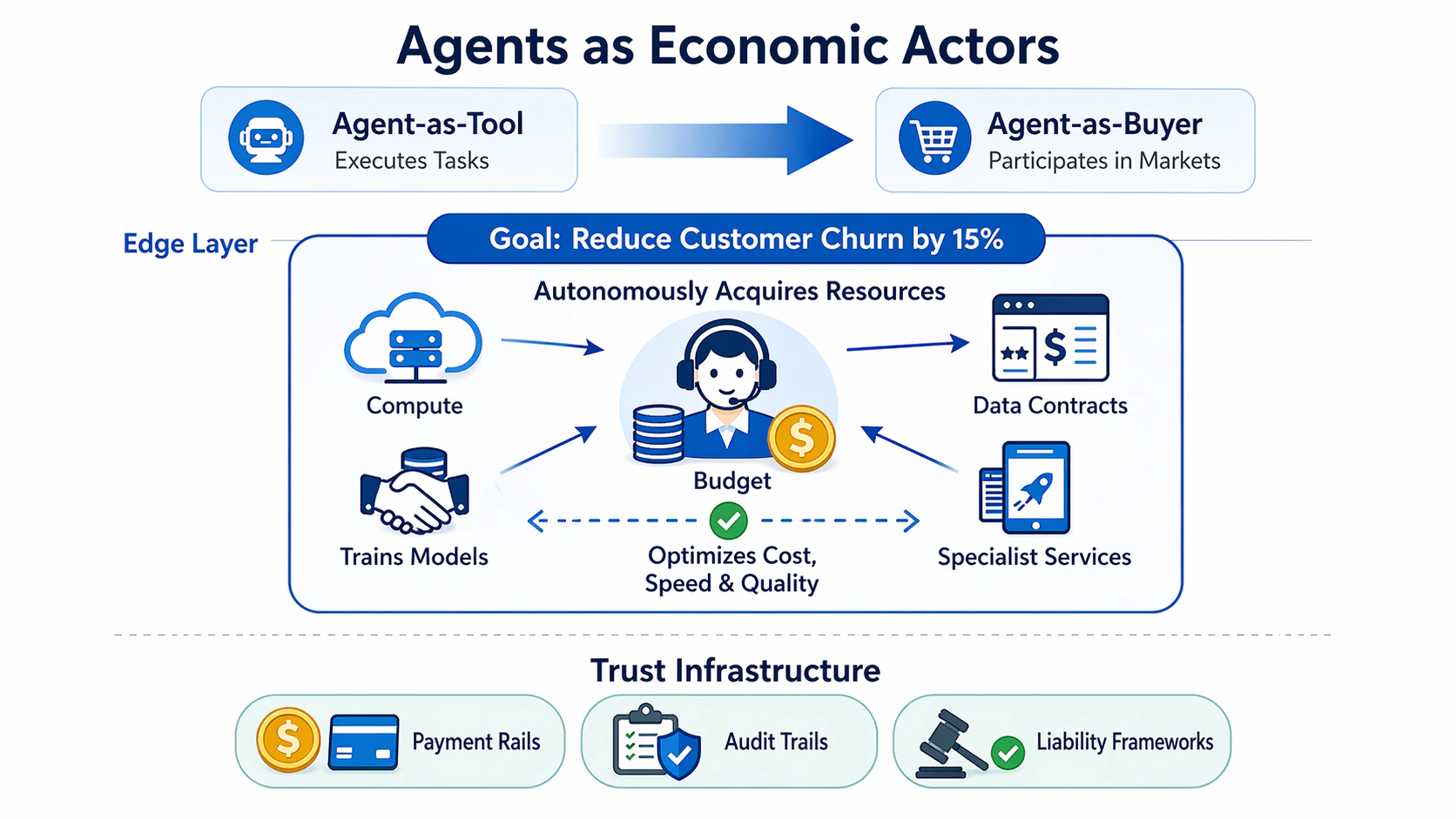
किसी agent को high-level goal दिया गया है: "customer churn को 15% कम करें।" वह model train करने के लिए compute autonomously खरीदेगा, enrichment data के लिए API contract negotiate करेगा, और solution deploy करने के लिए cloud services provision करेगा। यह सब उसके human supervisor द्वारा set किए गए budget और permission envelope के भीतर होगा। Action अब trust layer में है: mandate enforcement (यह ensure करना कि agent इंसान द्वारा set rules के भीतर रहे), audit trails (agent द्वारा किए गए हर decision और transaction का पूरा record), और liability (कुछ गलत होने पर legally responsible कौन है)। Capability bottleneck नहीं है, क्योंकि agent already काम कर सकता है; असली challenge यह ensure करना है कि जब वह काम करे तो हम उस पर भरोसा कर सकें।
जब AI Workers buyers बनते हैं, तो AI-Native Company की economics मूल रूप से बदल जाती है। कंपनी अब सिर्फ़ इंसानों द्वारा allocate किए गए resources consume नहीं करती; वह उन्हें dynamically source करती है। Compute, data, और specialist services ऐसे inputs बन जाते हैं जिन्हें AI Workers real time में discover, evaluate, और acquire करते हैं। इससे कंपनी self-provisioning system बन जाती है जो सिर्फ़ task completion के लिए नहीं, बल्कि cost, speed, और quality तीनों के लिए simultaneously optimize करती है।
Builders के लिए implication: अपने agents और infrastructure को day one से economic participation के लिए design करें। Agents को सिर्फ़ permissions नहीं, budgets चाहिए। सिर्फ़ API keys नहीं, outcome contracts चाहिए। और जो organizations इस shift को master करेंगी, वे value की अगली wave capture करेंगी, ठीक जैसे SaaS subscriptions से outcome-based pricing की ओर जाने वाली companies यह wave capture कर रही हैं।
Human in the loop
एक आम डर है: agents लोगों को replace कर देंगे। Evidence इसके उलट कहता है। ज़्यादातर tasks में AI और human की जोड़ी, दोनों में से किसी एक के अकेले काम करने से बेहतर perform करती है। Agent Factory इंसान को हटाती नहीं; उसे promote करती है। Operator से supervisor। Typist से editor। Coder से outcomes का architect।
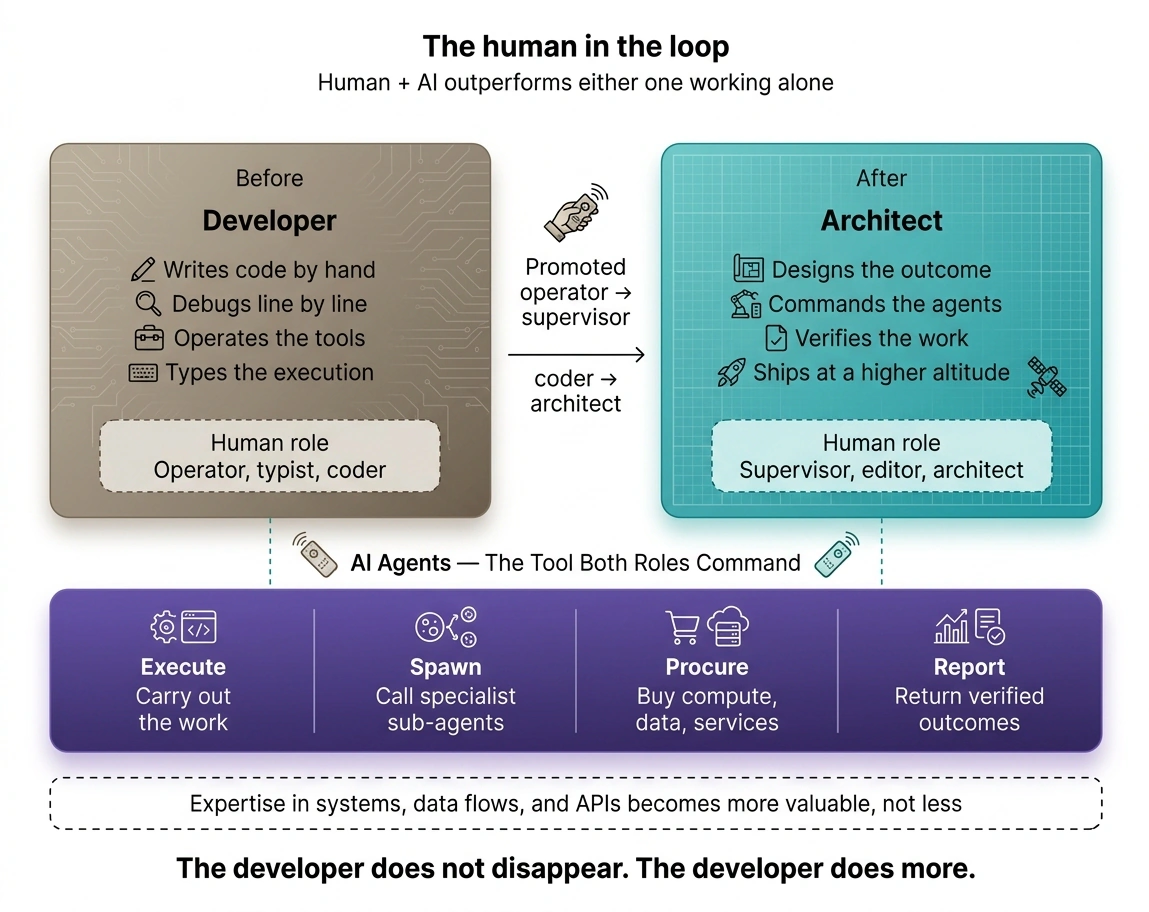
इससे "tech professional" होने का मतलब बदलता है। Web developer या mobile developer सिर्फ़ वह व्यक्ति नहीं है जो React या Swift लिखता है। वह technology expert है: ऐसा व्यक्ति जो systems, data flows, APIs, और user needs समझता है। Agent Factory era में यह expertise कहीं ज़्यादा valuable हो जाती है, क्योंकि यह अब screens hand-code करने में खर्च नहीं होती। यह पूरे products deliver करने वाले AI Workers को design, deploy, और supervise करने में खर्च होती है।
Developer गायब नहीं होता। Developer ज़्यादा करता है।
Steve Jobs ने यह operating rhythm दशकों पहले समझ लिया था, भले ही वह agents नहीं, humans manage कर रहे थे।
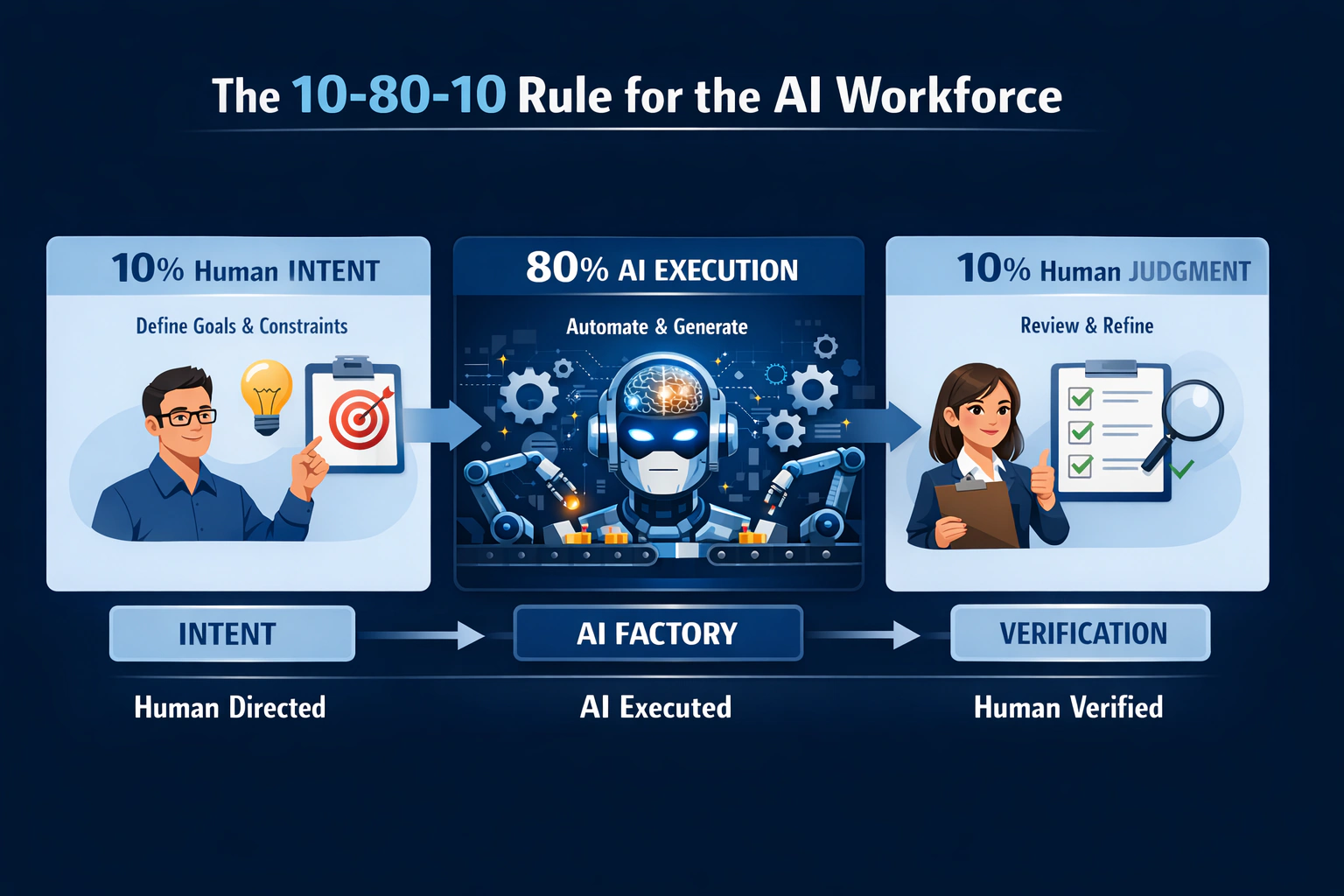
10-80-10 rule: AI Workforce की operating rhythm
Steve Jobs ने famously 10-80-10 rule follow किया: अपने time का 10% vision set करने में लगाएँ, टीम को 80% execute करने दें, फिर final 10% में polish और perfect करने के लिए लौटें। Tech entrepreneur Dan Martell इसे 10% ideation, 80% execution, और 10% refinement और integration के रूप में breakdown करते हैं। Jobs Mac के calculator के हर pixel को personally dictate करने वाले micromanager से ऐसे leader बने जिसने middle 80% के लिए talented लोगों पर भरोसा किया; और इसी shift की वजह से Apple धरती की सबसे valuable कंपनी बनी।
अब "talented people" को "AI employees" से replace करें, और आपके पास Agent Factory की operating rhythm है:
| Phase | Jobs की Apple | Agent Factory |
|---|---|---|
| First 10%: Intent | Jobs vision और constraints set करते हैं | Human spec define करता है: goals, constraints, budget, permissions |
| Middle 80%: Execution | Apple की teams product बनाती हैं | AI Workers execute करते हैं: tools compose, sub-agents spawn, outcomes deliver |
| Final 10%: Verification | Jobs polish करके release approve करते हैं | Human verified outcome review, refine, और approve करता है |
February 2026 तक, Cursor report करता है कि उसके अपने product में merge हुए 35% pull requests autonomous agents द्वारा produce किए जाते हैं जो cloud VMs पर run कर रहे हैं। Company के developers उन्हें line by line guide करने के बजाय problems define करके और artifacts review करके direct करते हैं। Cursor के CEO Michael Truell project करते हैं कि एक साल के भीतर development work का बहुत बड़ा हिस्सा ऐसा दिखेगा।³ 10-80-10 rhythm अब prediction नहीं है। यह measurement है कि frontier already कहाँ operate करता है।
Anthropic की अपनी Claude Code retrospective individual scale पर वही measurement देती है: इसके creator के account के अनुसार, tool February 2025 में उसके code का लगभग 10 percent लिख रहा था, May तक 30-40 percent, और उस winter तक all of it; उसका working day अब direction set करने और results review करने में जाता है जबकि agents execute करते हैं। एक datapoint organization को measure करता है, दूसरा person को। दोनों same rhythm describe करते हैं।
Verification surface खुद बदल रही है। Synchronous-agent era में humans code editor में diffs review करते थे। अब आ रहे cloud-agent era में agents dedicated VMs पर घंटों काम करते हैं और line-level changes के बजाय ऐसे artifacts लौटाते हैं जिन्हें जल्दी review किया जा सकता है: logs, video recordings, और live previews। यही parallel work को practical बनाता है: इंसान एक साथ twelve diffs नहीं पढ़ सकता, लेकिन twelve previews scan कर सकता है। Rhythm का final 10% diff नहीं, artifact के around redesign हो रहा है।
यह coincidence नहीं है। Pattern इसलिए काम करता है क्योंकि यह human attention को वहाँ allocate करता है जहाँ वह irreplaceable है: boundaries पर; और execution को bottlenecks के बिना scale होने देता है। First 10% वह जगह है जहाँ critical thinking, context setting, और clear prompting matter करते हैं। Middle 80% heavy lifting है: summarizing, generating, analyzing, formatting। Final 10% वह जगह है जहाँ human expertise output को sharp, usable, और high-quality बनाती है।
Agent Factory thesis पहले ही कहती है: "Humans define intent. Agents execute. Humans verify outcomes." 10-80-10 rule उस sentence का quantified version है। यह हर professional को बताता है कि उनका दिन कैसे बदलता है: आप अपना 80% time execution पर खर्च करना बंद करते हैं और अपना 100% attention उस 20% पर लगाते हैं जो सिर्फ़ human कर सकता है: direction set करना और quality guarantee करना।
जो leaders इस shift को internalize करेंगे, वे सिर्फ़ AI employees manage नहीं करेंगे। वे उन्हें वैसे manage करेंगे जैसे Jobs ने Apple की best teams को manage किया: शुरुआत में clear spec, बीच में trust, और end पर uncompromising standards।
Notes
³ Michael Truell, "The third era of AI software development", Cursor Blog, February 26, 2026.
Personal agents और enterprise interface
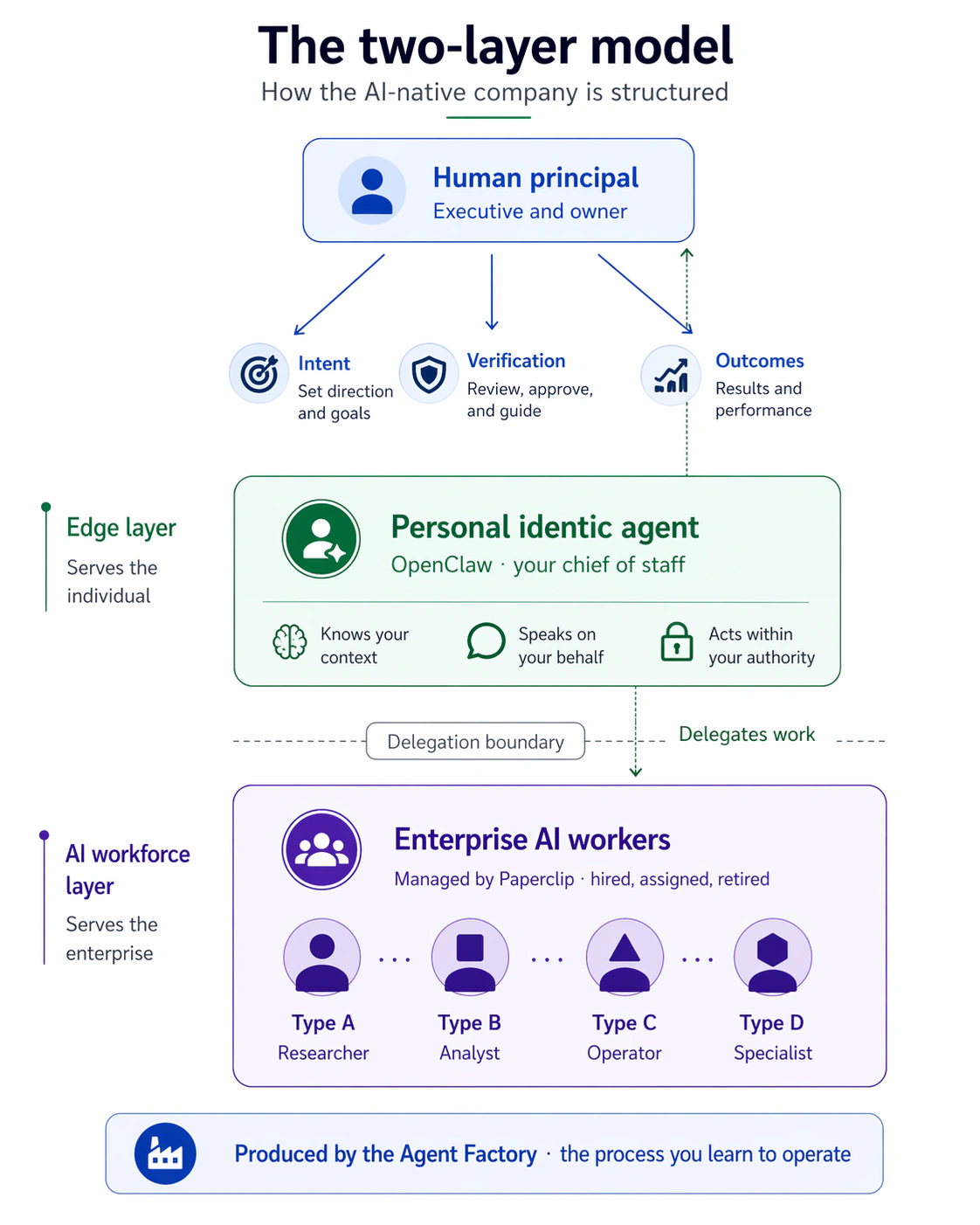
AI Workers बताते हैं कि काम कैसे होता है। Identic AI बताता है कि humans अपनी ओर से इस workforce को कैसे increasingly direct, govern, और interface करेंगे। Agent Factory role-based AI Workers manufacture करती है जो tasks execute करते हैं, workflows coordinate करते हैं, और scale पर verified outcomes deliver करते हैं, लेकिन human वही principal रहता है जो purpose, values, constraints, और accountability define करता है। Identic AI एक नया personal layer जोड़ता है: self-sovereign agent, जो platform का नहीं, individual का owned होता है, individual का context, judgment, और preferences समझता है, और human intent को enterprise के across delegated action में translate कर सकता है।¹ इस model में AI workforce execution fabric है, जबकि identic AI human का representative और orchestration layer है, जिससे लोग routine execution खुद करने के बजाय direction supervise करते हैं। Future firm इसलिए दो connected layers पर operate करेगी: AI Workforce Layer के अंदर AI Workers, और Edge Layer पर personal agents, जहाँ humans दोनों के across intent set करते हैं और outcomes verify करते हैं।
हम इसे Two-Layer Model कहते हैं:
| Layer | यह क्या है | किसकी service करता है | यह क्या करता है |
|---|---|---|---|
| Edge Layer | Personal identic agents | Individual | Human intent translate करता है, AI Workers को delegate करता है, principal की ओर से govern करता है |
| AI Workforce Layer | Role-based AI Workers | Enterprise | Tasks execute करता है, workflows coordinate करता है, verified outcomes deliver करता है |
कोई भी layer अकेले काम नहीं करता। अपने पीछे industrialized workforce के बिना personal agents ऐसे digital assistants हैं जिनके command करने के लिए कोई नहीं है। Edge पर personal agents के बिना AI Workforce Layer humans को वापस manual orchestration में धकेल देता है। Two-Layer Model Agent Factory thesis को complete बनाता है: core में industrialized workforce, edge पर human sovereignty, और दोनों के बीच contract language के रूप में specs।
Thesis यह जवाब देती है कि काम कौन करता है और workforce कैसे बनती है। इसका companion यह जवाब देता है कि अब काम कहाँ होता है: जैसे-जैसे agents operation संभालते हैं, हाथ से चलाया जाने वाला app-on-OS model agent operating layer को जगह देता है; SaaS, desktop, और PC, जिस तरह आप उन्हें operate करते थे, dissolve होने लगते हैं। देखें The Operating Layer: The Interface Argument.
Notes
¹ Don Tapscott, interview on HBR IdeaCast, “With Rise of Agents, We Are Entering the World of Identic AI”, Harvard Business Review, February 17, 2026.
General agent इस्तेमाल के दो modes
अब तक thesis ने general agents: Claude Code, OpenCode, Claude Cowork, OpenWork; को Agent Factory के manufacturing tools की तरह treat किया है: वे instruments जिनसे humans AI Workers design और build करते हैं। यह एक important mode है। लेकिन यह अकेला mode नहीं है।
General agents को दो बहुत अलग तरीकों से इस्तेमाल किया जा सकता है।
पहले mode में, human immediate problem solve करने के लिए general agent इस्तेमाल करता है। Agent session के अंदर reason, write, code, analyze, plan या outcome produce करने में मदद करता है। Problem solve होते ही session खत्म हो जाता है। ज़रूरी नहीं कि कोई permanent चीज़ manufacture हुई हो।
दूसरे mode में, human general agent की मदद से ऐसी चीज़ build करता है जो session के बाद भी survive करे: agent harness, workflow, tool-using system या custom AI Worker। General agent final worker नहीं होता। वह manufacturing instrument है जिससे worker design, assemble, test और deploy होता है। Deploy होने के बाद custom agent अपने harness या runtime के अंदर चलता रह सकता है।
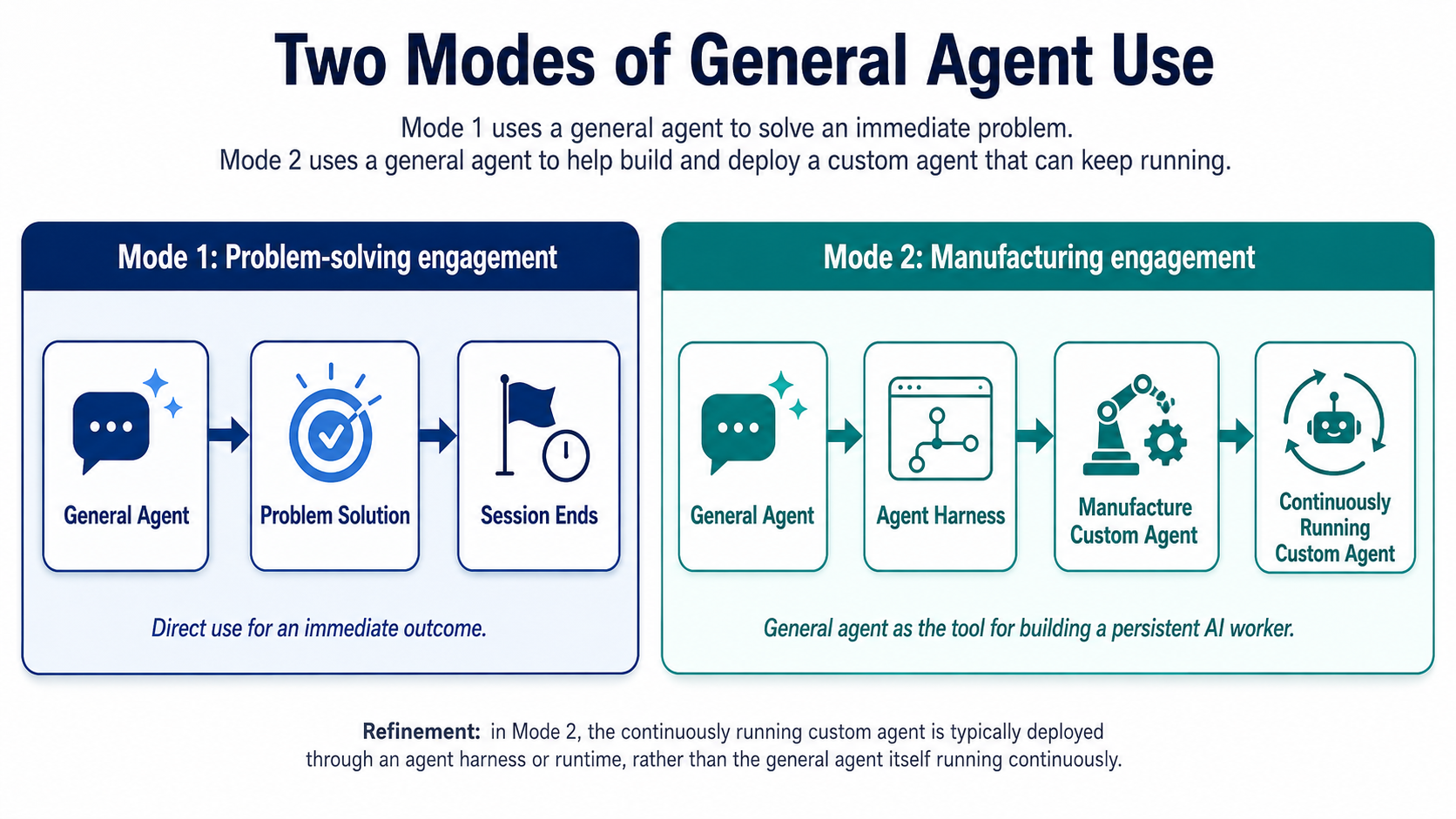
Mode 1 session के अंदर problem solve करने के लिए general agent इस्तेमाल करता है। Mode 2 custom AI Worker manufacture करने में general agent की मदद लेता है, ताकि वह Worker session खत्म होने के बाद भी चलता रहे।
ज़्यादातर professionals Worker ship करने से बहुत पहले पहले mode में live करेंगे। वे persistent AI labor के manufacturing tool की तरह general agents इस्तेमाल करने से पहले, direct problem-solving के लिए उन्हें इस्तेमाल करेंगे।
| Mode | Audience और tools | End में क्या निकलता है | किससे governed |
|---|---|---|---|
| Problem-solving engagement | Engineer with Claude Code or OpenCode Domain expert with Claude Cowork or OpenWork | Immediate outcome | Seven Principles |
| Manufacturing engagement | कोई भी, हमेशा Claude Code या OpenCode के साथ | Workforce का एक piece | Seven Invariants |
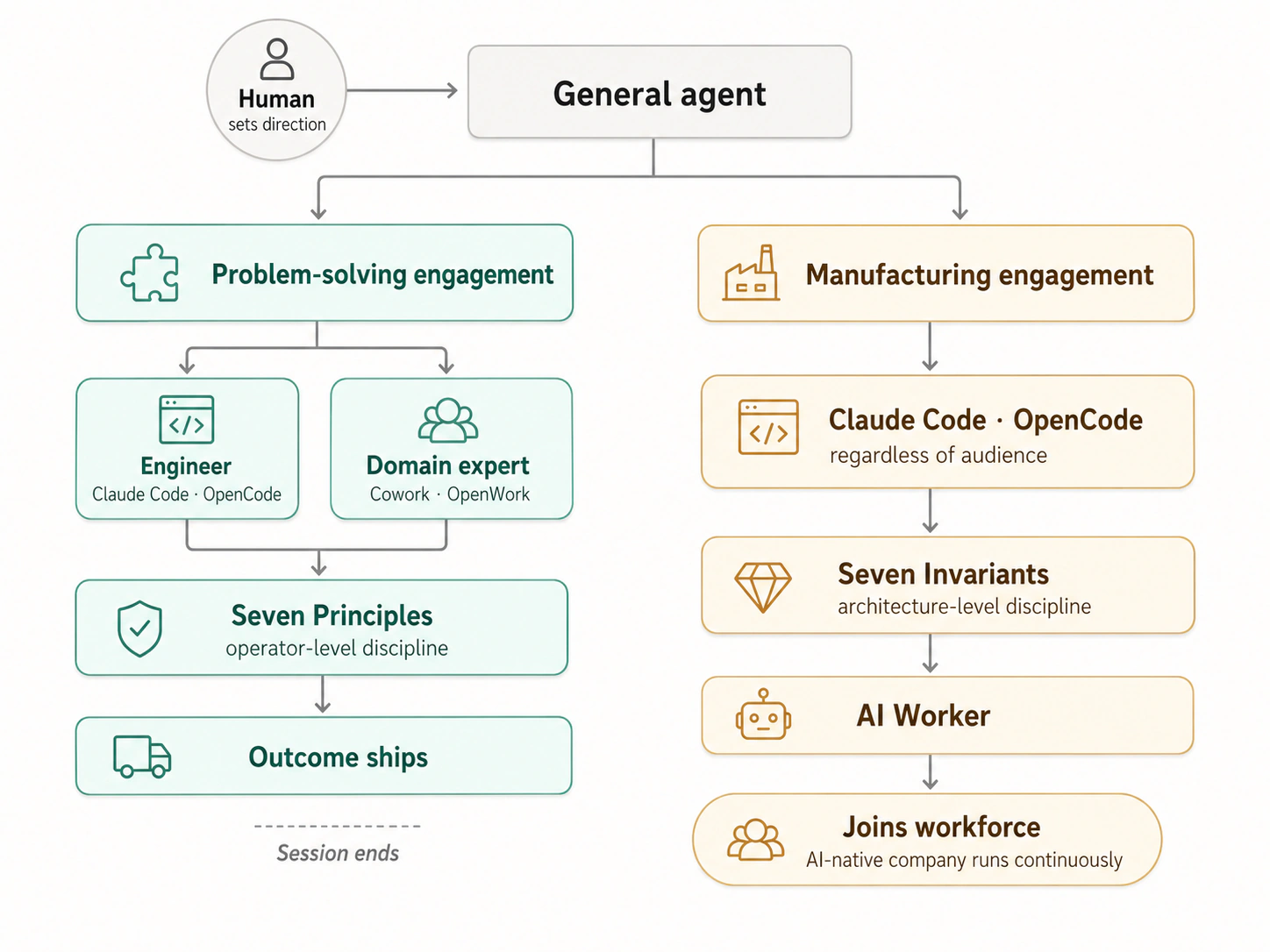
General agent को direct करता human हर engagement का common starting point है। Engagement दो modes में split होता है। Problem-solving branch audience के हिसाब से split होती है: engineers Claude Code या OpenCode चुनते हैं, domain experts Claude Cowork या OpenWork चुनते हैं; लेकिन दोनों flavors same discipline (Seven Principles) पर converge करते हैं और session close करने वाला outcome ship करते हैं। Manufacturing branch single-tooled है: वह हमेशा Claude Code या OpenCode use करती है, चाहे operator कोई भी हो, क्योंकि AI Worker बनाना fundamentally coding task है। यह Seven Invariants से governed है, और इसका output, यानी AI Worker, continuously चलने वाली AI-Native Company की workforce में शामिल होता है।
Mode 1: Problem-solving engagement. Developer Claude Code खोलता है और service refactor करता है। Finance analyst Claude Cowork खोलता है और quarterly close model rebuild करता है। Engagement शुरू होता है, काम भेजा जाता है, engagement end होता है। कोई specialized AI Worker manufacture नहीं होता। उस engagement के लिए general agent ही worker है। Outcome सीधे human को deliver होता है।
Problem-solving engagements audience के हिसाब से split होते हैं। Engineers Claude Code या OpenCode चुनते हैं: terminal-native tools जो code, infrastructure, और systems work के लिए tuned हैं। Domain experts Claude Cowork या OpenWork चुनते हैं: knowledge-work tools जो documents, spreadsheets, briefs, और reviews के लिए tuned हैं। Same engagement mode, same governance, दो interface families। यह mode Seven Principles of General Agent Problem Solving से governed है:
- Bash is the Key. Agent act कर सकता है, सिर्फ़ describe नहीं।
- Code as Universal Interface. Precision structured formats से आती है: schemas, tables, code blocks; prose से नहीं।
- Verification as Core Step. हर meaningful output भेजे जाने से पहले check होता है। "सही लग रहा है" failure mode है।
- Small, Reversible Decomposition. काम atomic steps में चलता है; हर step undo किया जा सकता है।
- Persisting State in Files. Conversation volatile है; filesystem durable है। जो matter करता था, वह file में रहता है।
- Constraints and Safety. Explicit permissions, explicit scope। Autonomy task type के हिसाब से earn होती है, default से grant नहीं।
- Observability. आप देख सकते हैं कि agent ने क्या किया। No black boxes, no surprises.
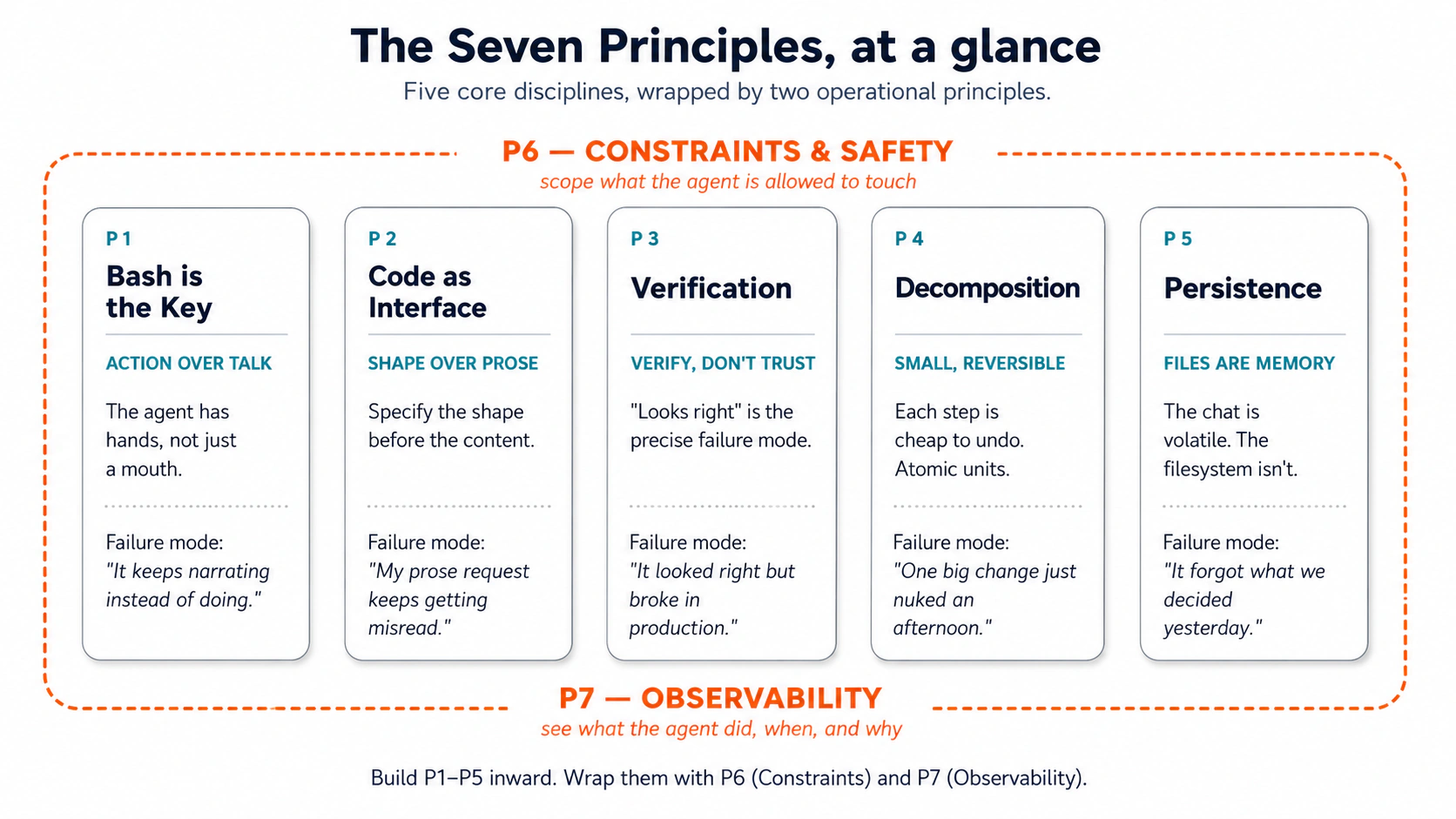
Seven Principles एक नज़र में। Session की working disciplines के रूप में P1-P5 को inward बनाएँ। उन्हें P6 (Constraints): agent किसे touch कर सकता है; और P7 (Observability): उसने असल में क्या किया; से wrap करें। Depth treatment Chapter 18 में है।
Principles session की operating discipline हैं।
Mode 2: Manufacturing engagement. Manufacturing हमेशा engineering tools से anchor होती है: Claude Code या OpenCode, हर बार, चाहे human कोई भी हो। AI Worker बनाना fundamentally coding task है, भले ही Worker का working domain finance, marketing, या law हो। वही developer Claude Code से code-reviewing AI Worker spec बनाता, build करता, और deploy करता है। Finance analyst, अक्सर engineer के साथ, Claude Code से close-process Worker spec और deploy करता है जो हर month-end run करता है। General agent का output outcome नहीं है; वह worker है जो outcome produce करता है। यह mode Seven Invariants of the Agent Factory (अगला भाग) से governed है: structural rules जिन्हें manufactured workforce को coherent, governable, और durable रहने के लिए follow करना होता है। Invariants कंपनी की architectural discipline हैं।
Principles session govern करते हैं। Invariants architecture govern करते हैं। Principles conduct हैं। Invariants constitution हैं। Problem-solving engagement principle-governed है क्योंकि उसका output ऐसा outcome है जो भेजे जाने के बाद end हो जाता है; comply करने के लिए कोई continuing architecture नहीं है। Manufacturing engagement invariant-governed है क्योंकि उसका output ऐसे workforce में अपनी जगह लेता है जो sessions, agents, और product cycles के across साथ बना रहता है।
इसीलिए 10-80-10 rule दोनों modes पर equally apply करता है: चाहे आप अपने problem को solve करने के लिए general agent direct कर रहे हों या अपने लिए उसे solve करने वाला Worker बना रहे हों, human का time फिर भी intent, execution, और verification में split होता है।
दोनों modes उस person को भी name करते हैं जिसे यह book graduate करती है। यह book उस person को train करती है जिसे market अब Forward Deployed Engineer कहता है: vendor-neutral, पूरा pipeline carry करने वाला, जो Digital FTEs manufacture करता है और उन्हें AI-Native Companies में assemble करता है। Person, unit, enterprise: आप कौन बनते हैं, क्या build करते हैं, और built चीज़ें मिलकर क्या बनती हैं। FDE Mode 2 embodied है: एक engineer जो पूरा manufacturing engagement चलाता है, spec से production तक, ऐसी organization के अंदर जिसे workforce built चाहिए। और market का title address है, person नहीं: client की company के अंदर deployed हो तो market इस engineer को FDE कहता है; directly hired हो तो वही engineer AI-Native Company Architect है। Book person को train करती है। Market name देता है। उस role का पूरा map, उसके पीछे की demand, जिस vendor lock-in से वह escape करता है, और उसके साथ हर role, The Roles This Book Trains में है।
Agent Factory के Seven Invariants
सात rules जो नहीं बदलते।
यह भाग AI-Native Company के runtime को specify करता है: वह architecture जिसे Agent Factory produce करती है। Seven invariants Two-Layer Model को ऐसे system में बदलते हैं जिसे आप बना सकते हैं, और action की ऐसी chain में जो end to end fire कर सकती है।
Architecture के बिना thesis metaphor है। लेकिन product names में लिखी architecture pitch है। नीचे के seven invariants ही thesis हैं। जिन named products से वे अभी realize होते हैं, वे सिर्फ़ एक instance हैं, definition नहीं।
इसे ऐसे सोचें। Agent Factory वह process है जो कंपनी बनाता है। दूसरे end पर AI-Native Company निकलती है जहाँ आप executive और owner हैं, delegate आपका chief of staff है: वह one agent जो आपको represent करता है, आपका context जानता है, और आपकी तरफ़ से बोलता है; और management layer वह operating system है जिस पर कंपनी चलती है: यह workforce hire करता है, काम assign करता है, budget enforce करता है, govern करता है कि हर Worker क्या कर सकता है, और roles end होने पर Workers retire करता है। AI Workers वे employees हैं जो outcome deliver करते हैं। Runtime engines वह हैं जिन पर हर employee चलता है। Nervous system Workers के बीच events carry करता है, crashes survive करता है, और traffic shape करता है ताकि load के नीचे भी workforce खड़ा रहे।
आगे आने वाला हर invariant यह rule है कि यह कंपनी कैसे चलती है। हर named product replaceable choice है।
Invariant 1: Human principal है.
Claim. हर legitimate chain of action ऐसे human से originate होती है जो intent set करता है, budget define करता है, authority envelope draw करता है, और outcome own करता है। कोई exception नहीं। इस layer की कोई delegation नहीं।
यह क्यों ज़रूरी है। Intent खुद generate नहीं होता। Judgment, values, budget authority, और outcome accountability non-transferable हैं। Human principal के बिना act करने वाला system autonomous नहीं है; वह unowned है।
Absent होने पर failure। Unowned systems unaccountable outcomes produce करते हैं। Liability evaporate हो जाती है। Alignment impossible हो जाता है क्योंकि कोई party ही नहीं रहती जिसकी alignment preserve की जा रही हो। Budget का owner नहीं होता। Outcome का judge नहीं होता।
Current realization। Authored specs, approval gates, budget declarations, और verification checkpoints आज principal layer define करते हैं। कोई भी mechanism जो intent, authority, और accountability को ऐसे form में capture करता है जिसके against downstream system execute कर सके, invariant satisfy करता है।
Invariant 2: हर human को delegate चाहिए.
Claim. Human अपने intent को हाथ से पूरे workforce में scale नहीं कर सकता। उसे personal agent चाहिए जो उसका context hold करे, उसके judgment को represent करे, उसका authority envelope carry करे, और उसकी ओर से सारे downstream work broker करे।
यह क्यों ज़रूरी है। एक person दर्जनों AI Workers को directly orchestrate नहीं कर सकता। Delegate के बिना Principal manual orchestration में वापस forced होता है, जो वही failure mode है जिसे eliminate करने के लिए Agent Factory मौजूद है।
Absent होने पर failure। Human bottleneck बन जाता है। AI Workforce Layer instructions का इंतज़ार करता रहता है जिन्हें human पर्याप्त तेज़ी से issue नहीं कर सकता। Scale human typing speed तक collapse हो जाता है।
Current realization। OpenClaw वह delegate है जिसे हम उपलब्ध कराते हैं। कोई भी personal agent जो identity, context, और authority envelope hold करता है, और management layer को काम broker कर सकता है, invariant satisfy करता है।
Invariant 3: Workforce को management layer चाहिए.
Claim. AI Workers का ढेर कंपनी नहीं है। Workforce को management layer चाहिए: AI-Native Company का operating system, जो Workers hire करता है, काम assign करता है, budgets enforce करता है, risk approve करता है, govern करता है कि हर Worker क्या कर सकता है, ledger रखता है कि किसने क्या किया और किस cost पर, और roles end होने पर Workers retire करता है। Hiring कई verbs में से एक है; layer का काम workforce का full lifecycle है।
यह क्यों ज़रूरी है। Coordination, accountability, और economic discipline individual agents की emergent properties नहीं हैं। इनके लिए ऐसी layer चाहिए जो जानती हो कि कौन क्या कर रहा है, उसकी cost क्या है, क्या allowed है, क्या produce हुआ, और गलत होने पर क्या हुआ। AI Workers workforce के रूप में तभी governable बनते हैं जब single layer उन्हें capability, cost, latency, और outcome की units के रूप में legible बनाती है। और वे economical तभी बनते हैं जब वही layer उन्हें demand पर retire कर सकती है। यह layer AI-Native Company के लिए वैसी है जैसे processes की fleet के लिए operating system: उन्हें compose करती है, schedule करती है, account करती है, और policy पर terminate करती है।
Absent होने पर failure। Workers collide करते हैं। Budgets leak होते हैं। Audit trail fracture हो जाता है। Finance जवाब नहीं दे पाता कि workforce की cost क्या थी। Operations जवाब नहीं दे पाता कि workforce ने क्या produce किया। Retired Workers चलते रहते हैं क्योंकि उन्हें stop करने के लिए कोई responsible layer नहीं है। कोई नहीं बता सकता कि क्या हुआ या क्यों हुआ।
Current realization। Paperclip वह management layer है जिसे हम उपलब्ध कराते हैं: AI-native company operating system। कोई भी control plane जो authority envelope के under workforce compose करता है: hire, assign, govern, observe, retire; और हर verb को callable capability के रूप में expose करता है, invariant satisfy करता है।
Invariant 4: हर Worker अपना engine चुनता है.
Claim. हर AI Worker किसी execution engine पर चलता है। Choice per Worker होती है, per कंपनी नहीं; specific job की demands के साथ reliability, cost, और operational burden match करते हुए।
यह क्यों ज़रूरी है। Mission-critical काम को durable execution चाहिए जो silently न टूटे। Routine काम को नहीं। पूरे workforce को एक engine पर force करना या तो उस reliability के लिए overpay कराता है जिसकी job को ज़रूरत नहीं, या उस reliability के लिए underpay कराता है जिसकी job को ज़रूरत है। दोनों नाकाम होते हैं।
Absent होने पर failure। Uniform engine choice uniform trade-offs guarantee करता है। कंपनी या तो अपने reliable workers afford नहीं कर सकती, या अपने cheap workers पर भरोसा नहीं कर सकती।
Current realization। हम current engine set के रूप में Dapr Agents, Claude Managed Agents, OpenAI Agents SDK, Cursor SDK, और OpenClaw-native उपलब्ध कराते हैं। कोई भी engine जो job के reliability, cost, और operational contract को meet करता है, invariant satisfy करता है।
Invariant 5: हर Worker system of record के against चलता है.
Claim. Engine वह है जिस पर हर Worker run करता है; system of record वह है जिसके against हर Worker run करता है। हर AI Worker state के authoritative store से पढ़ता और उसमें लिखता है: durable record कि कंपनी असल में क्या जानती है: customers, orders, inventory, contracts, ledger entries, tickets, operational truth। Workers इसके against execute करते हैं। वे सिर्फ़ context से दुनिया invent नहीं करते।
यह क्यों ज़रूरी है। Context window transient है। System of record permanent है। Authoritative store के बिना agents facts hallucinate करते हैं, transactions double-write करते हैं, sessions के बीच work lose करते हैं, और ऐसे artifacts produce करते हैं जिन्हें कोई auditor reconstruct नहीं कर सकता। System of record execution को plausible-sounding fiction से अलग करता है। यही workforce को बाद में legible बनाता है: Worker द्वारा लिया गया हर action ऐसे store में trace छोड़ता है जो agent session के बाद भी survive करता है और inspect, replay, और trust किया जा सकता है।
Absent होने पर failure। Outputs reality से drift करते हैं। दो Workers same customer को अलग-अलग बातें बताते हैं क्योंकि उनकी context windows disagree करती थीं। Liability untraceable हो जाती है क्योंकि truth सिर्फ़ उन tokens में था जो अब discard हो चुके हैं। AI-Native Company नीचे operational substrate के बिना confident artifacts generate करने वाले system में degrade हो जाती है।
Current realization। AI-Native Company के existing databases, workflows, और operational platforms: CRMs, ERPs, ticketing systems, data warehouses, ledgers; system of record की तरह serve करते हैं। MCP वह तरीका है जिससे workforce उन तक पहुँचता है: हर authoritative store policy के under MCP server के ज़रिए किसी भी Worker के लिए addressable बनता है। कोई भी durable, addressable, governed store जिसे workforce पढ़ और लिख सके, invariant satisfy करता है।
Operational center of gravity के रूप में Postgres
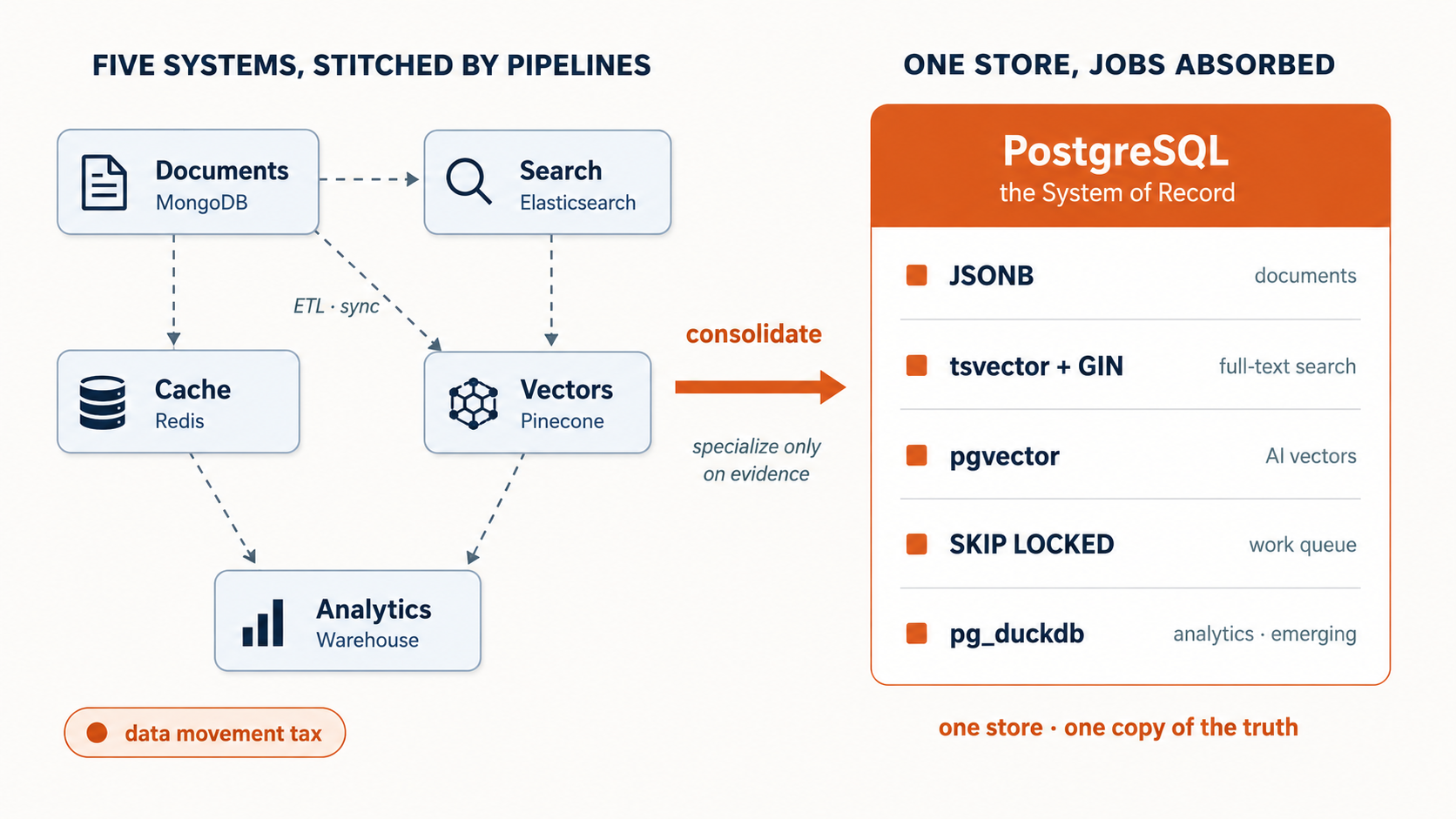
Data movement tax, picture में: pipelines से सिले हुए पाँच specialized systems जो drift कर सकते हैं, बनाम एक Postgres जो वही jobs absorb कर लेता है। Default रूप से consolidate करें; specialize तभी करें जब आपके अपने workload पर benchmark कहे कि ज़रूरत है।
Invariant 5 कहता है कि Worker को authoritative store चाहिए, लेकिन कौन सा store, यह नहीं कहता। यह implementation note है: अगर आप existing CRM या ERP में plug करने के बजाय वह store खुद build करते हैं, तो book का default यह है। Postgres इस साल का choice है, rule खुद नहीं।
पिछले decade में instinct simple था: नया data type, नया database। Documents Mongo में जाते थे। Search Elasticsearch में। Cache Redis में। Vectors Pinecone में। Analytics warehouse में। हर choice अपने-आप में ठीक लगती थी।
Problem यह है कि साथ मिलकर वे क्या cost करती हैं। हर system जो आप add करते हैं, अगले system तक data ले जाने वाली एक और pipeline है; और हर pipeline पीछे रह सकती है, sync से drift कर सकती है, या ऐसी जगह टूट सकती है जिसे आप देख नहीं पाते। आप data movement tax pay करते हैं: extra hosting bill नहीं, बल्कि आपकी आधी team plumbing maintain करने में लग जाती है, features build करने में नहीं। (Exact figures को vendor estimates समझें, direction बताते हैं, gospel नहीं; लेकिन जिसने fragmented stack run किया है, वह feeling जानता है।)
Agent Factory उल्टा करती है। Rule है default रूप से consolidate करें, deliberate रूप से specialize करें: एक database से शुरू करें और दूसरा तभी add करें जब आपने prove कर दिया हो कि उसकी ज़रूरत है। एक Postgres instance System of Record है, और यह लोगों की उम्मीद से कहीं ज़्यादा कर सकता है:
- Documents: JSONB semi-structured data store करता है, अलग document database नहीं चाहिए।
- Search: built-in full-text search (
tsvector+ GIN index) keyword lookup cover करता है। - AI vectors: pgvector embeddings को उन्हीं rows के पास store करता है जिनका वे वर्णन करते हैं।
- Work queue:
SELECT … FOR UPDATE SKIP LOCKEDordinary table को safe queue बना देता है जिससे कई Workers एक साथ pull कर सकते हैं। - Analytics:
pg_duckdbजैसे नए extensions, जो अभी emerging हैं, reporting queries को जगह पर ही run कर देते हैं, warehouse में copy करने की step के बिना।
Vectors को उनके source data के पास रखना सिर्फ tidy नहीं है। यह bug की पूरी class हटा देता है: separate vector store को real data के साथ sync रखना पड़ता है, और वही sync drift करता है। एक store, truth की एक copy, यही वह चीज़ है जिससे Worker को read करना चाहिए।
यहाँ एक real case है, vendor ने बताया है, इसलिए इसे example की तरह पढ़ें, proof की तरह नहीं। Apollo Hospitals, India के सबसे बड़े providers में से एक, transactions पुराने Oracle पर, analytics separate warehouse में, और cache और search अलग systems पर चला रहा था। Six-month review के बाद team ने सब कुछ single Postgres platform पर move कर दिया। उनका stated reason extensibility था: एक engine relational data, documents, full-text और pgvector को साथ handle कर रहा था। इससे duplication और pipeline upkeep कम हुई, और team plumbing के बजाय product पर काम कर सकी।
इसका मतलब यह नहीं कि Postgres हमेशा जीतता है। Specialized system तब चुनें जब आपके अपने workload पर test दिखाए कि Postgres सच में कम पड़ रहा है: billion-scale throughput, strict latency target, या managed service जिसे operate करने के बजाय rent करना बेहतर है। ये cases real हैं, बस rare हैं। Mistake यह है कि tutorial या headline कहे इसलिए specialized tool पहले उठा लें।
Center of gravity से शुरू करें। Evidence कहे तो उससे move करें। पूरा build, schema, embedding worker, indexing, और वह read-only tool जिसे Worker call करता है, Give Your AI Searchable Context में है।
Invariant 6: Workforce policy के under expandable है.
Claim. Meta-layer hiring को callable capability के रूप में expose करता है। Authorized agent prompt generate कर सकता है, runtime provision कर सकता है, new AI Worker को management layer के साथ register कर सकता है, और यह सब authority envelope के अंदर कर सकता है, बिना human को जगाए।
यह क्यों ज़रूरी है। Fixed roster moving problem fit नहीं कर सकता। जब capability gap आता है: customer ऐसी language में लिखता है जो workforce नहीं बोलता, workflow को ऐसा specialist चाहिए जो अभी exist नहीं करता; workforce को Principal द्वारा set policy के भीतर demand पर staff up कर पाना चाहिए। वरना हर gap ticket बन जाता है और system रुक जाता है। Policy के बिना expansion runaway है। Expansion के बिना policy frozen roster है। दोनों नाकाम होते हैं।
Absent होने पर failure। Roster frozen रहता है। हर novel problem को human चाहिए। Scale org chart जहाँ रुकता है, वहीं रुक जाता है।
Current realization। Claude Managed Agents वह hiring substrate है जिसे हम उपलब्ध कराते हैं। कोई भी managed-agent API जो runtime पर agent generate और environment provision कर सके, authority envelope से bounded हो, invariant satisfy करता है।
Invariant 7: Workforce nervous system पर चलता है (events, durability, और envelope के under flow).
Claim. Work अपने आप आता है और Workers के बीच propagate होता है, बिना human routing के। Schedule due होता है, webhook fire होता है, customer आता है, एक Worker finish करके next को hand off करता है: यह सब single event substrate पर carried होता है जो authority envelope के अंदर Workers को wake करता है, mid-flow crashes survive करता है, और traffic shape करता है ताकि एक customer की spike बाकी सबको starve न कर दे। Workforce के पास nervous system है: external triggers उसे wake करते हैं, internal events उसे coordinate करते हैं, durability उसे preserve करती है, flow control उसे protect करता है।
यह क्यों ज़रूरी है। जो कंपनी सिर्फ़ तब move करती है जब human prompt करता है, वह कंपनी नहीं; assistant है। ऐसा workforce जिसके Workers human को बीच में लाए बिना hand off नहीं कर सकते, workforce नहीं; roster है। ऐसा workforce जिसके multi-step runs single crash से काम lose कर देते हैं, production नहीं; demo है। 95% per-step reliability वाला six-step Worker durable execution के बिना सिर्फ़ 74% runs complete करता है और step memoization व selective retry के साथ ~99.7%: यही फर्क है ऐसे workforce के बीच जो काम पूरा करता है और ऐसे workforce के बीच जो हर चार में से एक run floor पर गिरा देता है।
Absent होने पर failure। External triggers के बिना system human-typing speed पर चलता है और AI-Native Company की economics copilot की economics में collapse हो जाती है। Internal events के बिना Workers हर handoff को human route किए बिना coordinate नहीं कर सकते। Durability के बिना reliability आपके against compound होती है। Flow control के बिना एक customer का traffic बाकी सबको drown कर देता है। Four failure modes, one missing substrate.
Current realization। Inngest वह nervous system है जिसे हम उपलब्ध कराते हैं: one substrate जो external triggers (schedules, webhooks, inbound API calls), internal events (Worker-to-Worker handoff), durable execution (step memoization, retry, replay), और flow control (concurrency caps, throttling, batching) carry करता है। Day AI, एक production AI-native CRM, अपने Inngest layer को बिल्कुल इन्हीं terms में describe करता है: founding engineer Erik Munson इसे product का "the nervous system" कहते हैं; यह market में कंपनी की production language है, curriculum से borrowed framing नहीं।⁶ Claude Code Routines coding-agent automation के लिए specialist trigger रहता है, same substrate को front करते हुए जब event code-shaped हो। कोई भी substrate जो authority envelope के under external और internal events carry करता है, और जिसमें durability और flow control layer-native हों, invariant satisfy करता है।
Reference stack एक नज़र में
| Invariant | इसके लिए क्या चाहिए | हम क्या उपलब्ध कराते हैं | इसे क्या replace कर सकता है |
|---|---|---|---|
| Principal | Human intent, budget, envelope, accountability | लागू नहीं | लागू नहीं |
| Delegate | Context और authority hold करने वाला personal agent | OpenClaw | कोई भी MCP-speaking personal agent |
| Management layer | Hire, assign, govern, observe, retire: workforce OS | Paperclip | Management contract meet करने वाला कोई भी control plane |
| Engine | Job से matched per-Worker runtime | Dapr / Managed / OpenAI SDK / Cursor / native | Job का reliability contract meet करने वाला कोई भी runtime |
| System of Record | Authoritative store जिससे workforce पढ़ता और लिखता है | Existing databases, workflows, MCP-exposed platforms | कोई भी durable, addressable, policy-governed store |
| Meta | Policy के under callable capability के रूप में hiring | Claude Managed Agents | Runtime provisioning वाला कोई भी managed-agent API |
| Nervous system | Envelope के under events, durability, और flow | Inngest (workforce substrate); Routines (coding-agent trigger) | Envelope के under events carry करने वाला कोई भी substrate, durability और flow control के साथ |
Seven invariants. One chain. Middle column में किसी भी named product को कल swap कर दें और architecture फिर भी खड़ी रहती है, क्योंकि architecture कभी products नहीं थी। वह invariants थी।
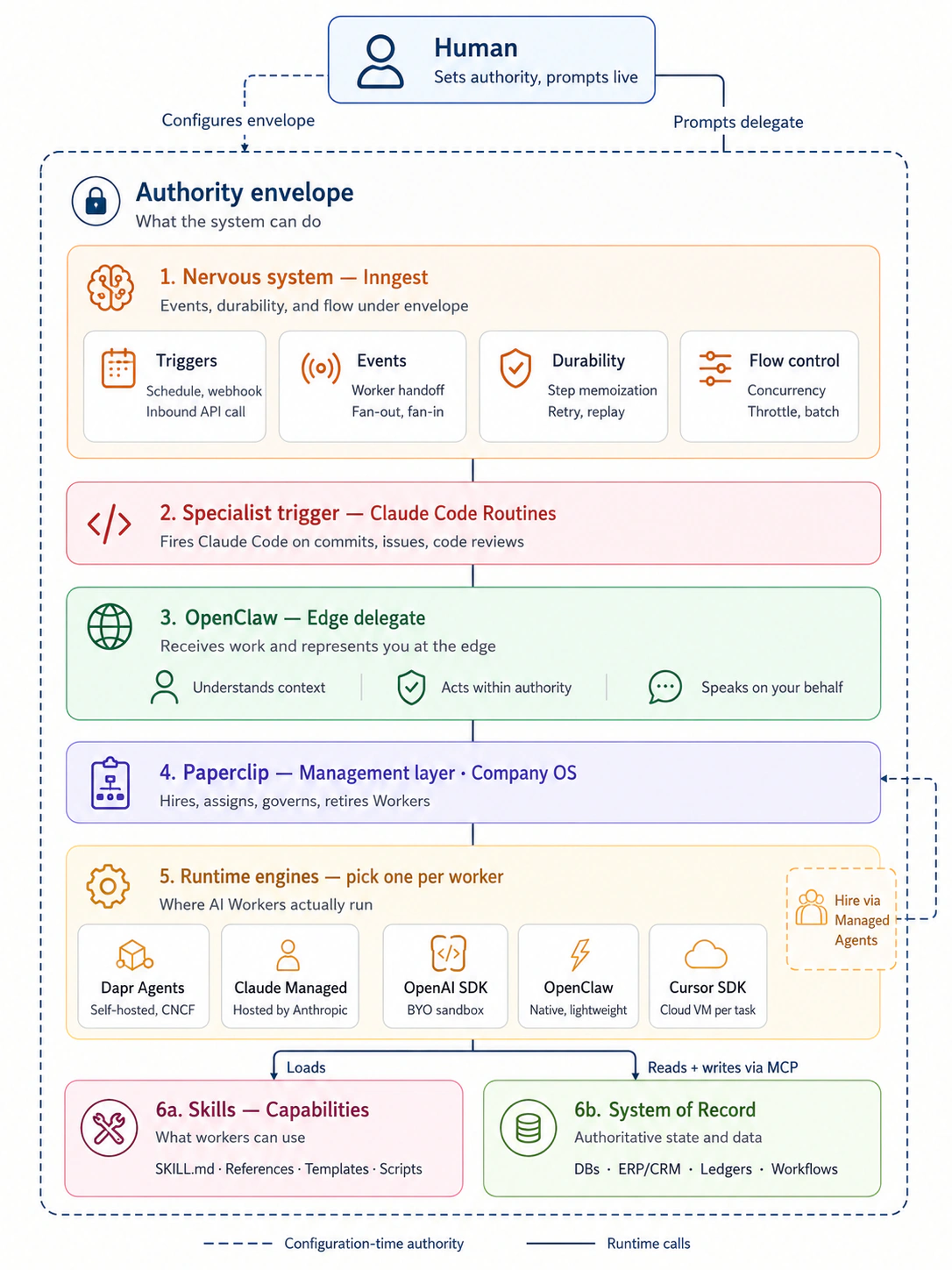
Seven-invariant runtime stack। Human authority envelope set करता है और delegate को directly prompt कर सकता है; nervous system उस envelope के भीतर delegate को wake करता है। OpenClaw काम को Paperclip तक carry करता है, जो appropriate runtime engine पर Workers hire, assign, और govern करता है। Workers MCP के ज़रिए System of Record से read और write करते हैं। Envelope से authorized कोई भी agent Paperclip को call करके workforce expand कर सकता है। कोई भी delegate, management layer, engine, event substrate, या store swap करें; chain hold करती है।
Structural diagram layers दिखाता है। नीचे का trace उन्हें motion में दिखाता है: एक customer, एक missing capability, एक new AI Worker on the spot manufacture हुआ।
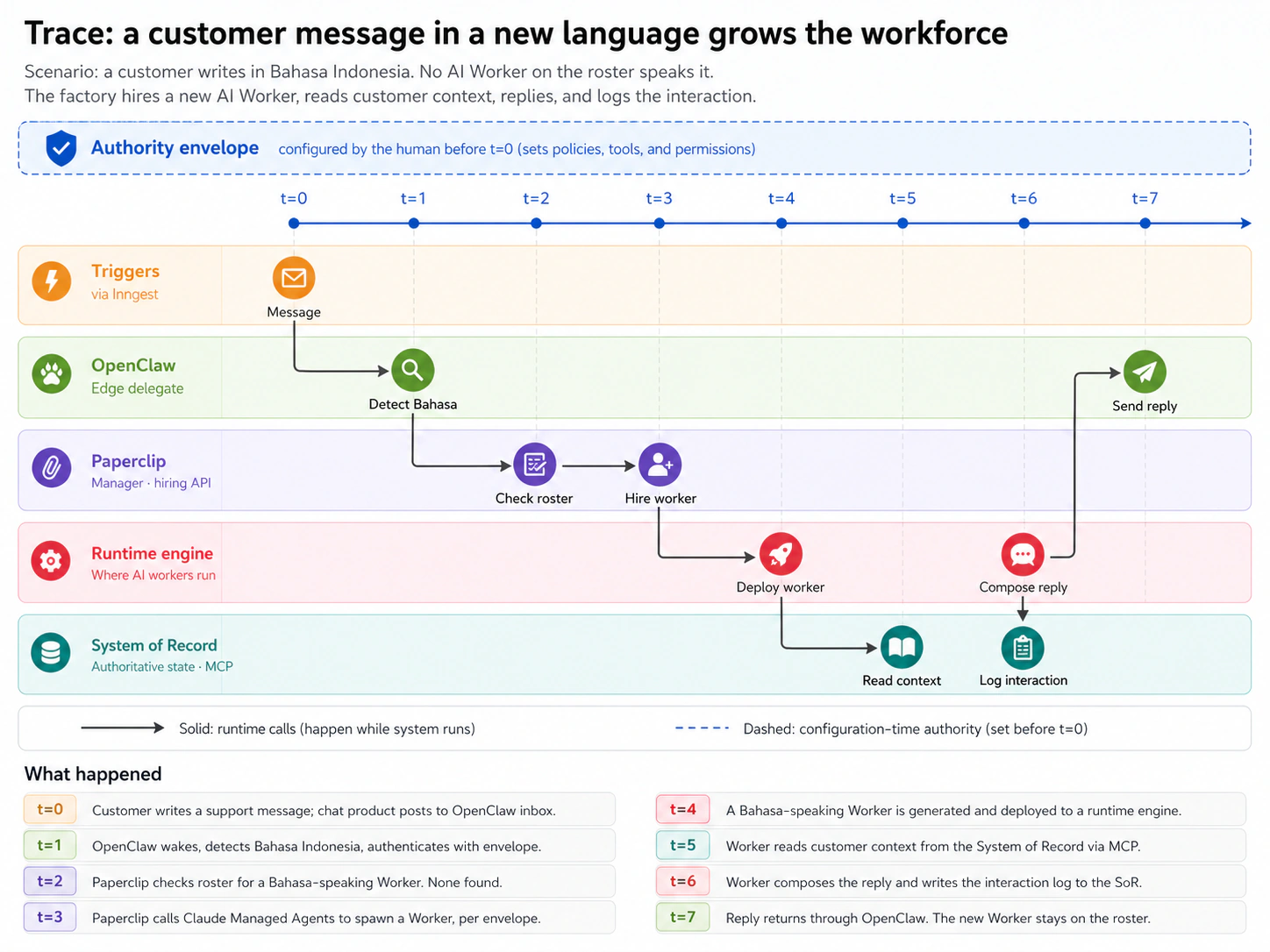
Worked trace। Customer Bahasa Indonesia में लिखता है। Roster पर कोई AI Worker वह भाषा नहीं बोलता। Paperclip capability gap देखता है और authority envelope के भीतर अपनी hiring API call करता है। नया Bahasa-speaking AI Worker manufacture और deploy होता है। वह System of Record से customer context पढ़ता है, reply compose करता है, interaction log वापस लिखता है, और OpenClaw के ज़रिए reply customer तक hand off करता है। कोई human wake नहीं हुआ। नया AI Worker roster पर रहता है, और interaction अब कंपनी की authoritative state का हिस्सा है।
क्या stable है और क्या बदलेगा
| Stable (invariant) | बदलेगा (implementation) |
|---|---|
| Explicit authority वाला human principal | Authoring tools, approval UIs, spec formats |
| Edge पर personal delegate | Delegate products और उनके successors |
| Full workforce lifecycle वाली management layer | Management-layer products और उनके successors |
| Per-Worker engine choice | SDKs, runtimes, execution substrates |
| Authoritative state जिसके against workforce चलता है | Database engines, ERP/CRM/ticketing products, MCP server registries |
| Policy के under expandable workforce | Managed-agent APIs, provisioning systems |
| Envelope के under events, durability, और flow | Routines, schedulers, webhook frameworks, durable-execution platforms |
| Spec-driven work definition | Spec languages, notation, tooling |
| Engagement में general agents direct करने के Seven operator principles | Specific agent products, CLI tools, prompt patterns, IDE integrations |
| Outcome-based economic model | Pricing units, contract formats |
| Economic actors के रूप में agents | Payment rails, liability frameworks |
| Observable, auditable execution | Tracing backends, log formats |
| Layers के बीच clean seams, ताकि vendor lock architecture तोड़े बिना move कर सके | Lock कौन सी layer carry करती है: 2024 में model layer, 2026 में harness layer, next orchestrator layer |
| Cost, latency, outcome के रूप में legible workforce | Finance systems, ledger implementations |
| Portable skills के रूप में packaged capability | Skill formats, registries, distribution platforms |
Left column thesis है। Right column 2026 है।
Named engines की तुलना.
ये चार mutually exclusive नहीं हैं। Serious Agent Factory शायद सभी का इस्तेमाल करे: अलग Workers के लिए अलग engines, जैसा Invariant 4 permit करता है। ये competing products नहीं हैं; ये अलग theories हैं कि agent कहाँ end होता है और infrastructure कहाँ शुरू होता है।
| Dimension | OpenAI Agents SDK | Claude Managed Agents | Dapr Agents | Cursor SDK |
|---|---|---|---|---|
| Primary axis | Model-native harness | Fully managed runtime | Durable distributed agents | Harness-first cloud agent platform |
| Compute plane | BYO sandbox; 7 partner integrations | Anthropic-hosted | आपका Kubernetes cluster | Cursor Cloud VMs (or local) |
| Vendor lock-in | High (harness OpenAI models के लिए tuned) | Total (harness, runtime, और model) | None (Apache 2.0, CNCF) | Harness पर high; नीचे model-agnostic |
| Languages | Python; TypeScript in progress | Any (HTTP/SDK) | Python; others TBD | TypeScript (npm install @cursor/sdk) |
| Durability model | Sandbox snapshot और rehydrate | Server-side session persistence | Dapr Workflow checkpointing | Cloud VM persistence per task |
| Multi-agent | Handoffs, subagents | Research preview | Deterministic workflows + pub/sub | Parallel cloud agents, subagents, artifact handoff |
अपना engine चुनना
Invariant 4 कहता है कि हर Worker अपना engine चुनता है। Practice में दो axes choice drive करते हैं: failure कितना खराब होगा, और infrastructure कौन run करता है।
| Job profile | Engine | क्यों |
|---|---|---|
| Failure मंज़ूर नहीं | Dapr Agents wrapping an SDK | Durable execution, auto-recovery, full observability |
| Failure नहीं होनी चाहिए, operate नहीं करना चाहते | Claude Managed Agents | आपके लिए hosted और operated |
| Failure नहीं होनी चाहिए, portability चाहिए | OpenAI Agents SDK | Production-grade, self-hosted, vendor-flexible |
| चल जाए तो अच्छा | OpenClaw-native | Lightweight, deploy करने में तेज़, routine tasks के लिए अच्छा |
| Engineering fleet, parallel cloud agents | Cursor SDK | Parallel coding agents के लिए purpose-built harness, model-agnostic, Cursor की अपनी engineering पर scale-proven |
| Already have one | Any Paperclip-compatible runtime | जो आपके पास है उसे plug in करें |
Harness और compute पर एक बात। हर engine के दो planes होते हैं। Harness control plane है: agent loop, model calls, tool routing, approvals, tracing, recovery। Compute execution plane है: sandbox जहाँ model-directed code files पढ़ता है, commands run करता है, और artifacts लिखता है। कुछ engines इन्हें fuse करते हैं: Claude Managed Agents दोनों को one API के पीछे bundle करता है। कुछ harness देते हैं और compute आपसे लाने देते हैं: OpenAI Agents SDK E2B, Cloudflare, Daytona, Modal, Runloop, Vercel, और Blaxel के साथ integrate करता है; या आपके deploy किए किसी भी container के साथ। कुछ मानते हैं कि compute plane Kubernetes है: Dapr Agents। Split matter करता है: credentials harness में रहते हैं जबकि untrusted, model-generated code sandbox में रहता है; और compute plane agent rewrite किए बिना swap किया जा सकता है।
Triggers orthogonal choice हैं। Worker जिस भी engine पर run करता हो, Claude Code Routines और Inngest उसे schedule, webhook, या inbound API call से fire कर सकते हैं; rewiring की ज़रूरत नहीं।
Sandboxes भी orthogonal हैं। Worker जिस भी engine पर run करता हो, compute plane swap किया जा सकता है: E2B, Cloudflare, Daytona, Modal, आपका अपना Kubernetes; agent rewrite किए बिना।
Engines बताते हैं कि Workers कैसे run करते हैं। वे किसके against run करते हैं, यानी कंपनी की authoritative state, Invariant 5 का subject है।
2026 में reference implementation
इस भाग में named products वही हैं जिन्हें हम उपलब्ध कराते हैं। Thesis उन्हें require नहीं करती। जब better implementations आएँगे, यह subsection बदलेगा। ऊपर के invariants नहीं बदलेंगे।
- Delegate: OpenClaw
- Management layer: Paperclip (full workforce lifecycle: hire, assign, govern, observe, retire; को callable APIs के रूप में expose करता है)
- Engines: Dapr Agents, Claude Managed Agents, OpenAI Agents SDK, Cursor SDK, OpenClaw-native। Engines increasingly durability natively absorb कर रहे हैं: Dapr Agents workflow checkpointing से, Claude Managed Agents server-side sessions से, OpenAI Agents SDK stateful workflows से, Cursor SDK per task cloud-VM persistence से। Thesis इसे engine-internal evolution treat करती है, separate invariant नहीं।
- Skills: Agent Skills format (agentskills.io), जहाँ skill folders SKILL.md + optional scripts/references/assets follow करते हैं और progressive disclosure से loaded होते हैं।
- Nervous system: Inngest workforce के event substrate के रूप में: external triggers (schedules, webhooks, inbound API calls), internal events (Worker-to-Worker handoff), durable execution (step memoization, retry, replay), और flow control (concurrency, throttling, batching) one operational envelope के under। Claude Code Routines coding-agent automation के specialist trigger के रूप में: code-related events होने पर Claude Code fire करता है। दोनों coexist करते हैं: Inngest workforce को front करता है, Routines coding agent को front करता है।
Hiring Claude Managed Agents पर run करती है: वही technology जो एक engine विकल्प के रूप में serve करती है, meta-layer के रूप में भी serve करती है, क्योंकि runtime पर agents और environments create करने की उसकी ability ही workforce expansion को callable capability बनाती है।
Industry corroboration। February 2026 में Cursor के CEO ने कंपनी के IDE से factory की ओर pivot को ऐसे terms में describe किया जो इस thesis की architecture के बहुत करीब हैं: teammates की तरह काम करती agents की fleets, humans problems define करते और artifacts review करते हुए, line-by-line guidance की जगह parallel cloud agents।⁴ May 2026 में The New Stack ने Anthropic, OpenAI, Google, Microsoft, और Cursor के across same pattern को industry-wide consensus के रूप में document किया: model commodity बन रहा है, और harness product बन रहा है। Google Cloud के Chief Evangelist ने खुलकर माना कि कंपनी अब यह care नहीं करती कि developers कौन सा coding tool चुनते हैं।⁵ दोनों pieces evidence हैं कि यह thesis जिन architectural seams को name करती है: principal, delegate, management layer, engine, system of record, और nervous system के बीच; वे अब production में scale पर carve out हो रहे हैं। Truell third era को ऐसे autonomous agents के रूप में describe करते हैं जो cloud VMs पर घंटों काम करते हैं, जहाँ humans problems define करते और artifacts review करते हैं। Agent Factory उस era को चाहिए architecture specify करती है, और उससे आगे point करती है: ऐसा workforce जो अपने specialists hire करता है, external triggers के under खुद wake होता है, और economic actor की तरह transact करता है, जहाँ humans हर agent cycle के बजाय authority envelope को bookend करते हैं। Invariants forecast नहीं हैं। वे snapshot हैं कि frontier already कहाँ रहता है।
First-party genealogy। Mid-2026 में Anthropic ने Claude Code origins की oral history publish की, और वह इस thesis के central distinction, invariant और implementation, पर controlled experiment जैसी पढ़ती है।⁷ Form factor model ready होने से पहले try हो चुका था: clide नाम का internal terminal agent launch से काफ़ी पहले substantially same shape रखता था, और team उसे ahead of its time लेकिन matter करने के लिए too unreliable बताती है। जब models capability threshold cross कर गए, वही shape succeed हुई; researcher Dawn Drain के शब्दों में, "once you cross the model capability threshold, the form factor kind of reveals itself." Team के अंदर यह hindsight से पहले doctrine था: product incubate करने वाली Labs team lead करने वाले Ben Mann deliberately ऐसी चीज़ें build करने का वर्णन करते हैं जो 20 या 30 percent time work करती हैं ताकि next model उन्हें 80 percent work करा दे, यानी coming model के लिए design करना, existing model के लिए नहीं। यही इस thesis की reference-implementation philosophy product practice में कही गई है: invariant के लिए build करो, realization को catch up करने दो। Retrospective genealogy भी confirm करती है जिसे invariants assume करते हैं: जो agentic pattern वे describe करते हैं, shell, harness, durable execution वाला model, Anthropic के reinforcement-learning और safety research में 2021-22 तक carve out हो रहा था, और team note करती है कि 2026 के infrastructure problems (secure code execution, environment management, harness design) 2022 के problems ही थे। Architecture उस product से पहले आती है जिसने उसे famous किया।
Language पर एक बात। System का हर component agent है या agents की layer है। OpenClaw agent है। Paperclip management layer implement करने वाला agent है। AI Workers agents हैं। सिर्फ़ AI Workers workforce हैं: वे जिन्हें hire, assign, roster, और retire किया जाता है। OpenClaw और Paperclip कंपनी के permanent fixtures हैं; AI Workers वह workforce हैं जिसे वे coordinate करते हैं। Runtime engines staff नहीं हैं; वे वह हैं जिन पर workforce run करता है। जब यह thesis AI Worker कहती है, तो इसका मतलब workforce है। जब यह agent कहती है, तो मतलब building में कोई भी: fixture या workforce दोनों।
Agent Factory के enduring invariants establish करने के बाद, thesis अब workforce opportunity की ओर मुड़ती है जिसे ये invariants unlock करते हैं।
Notes
⁴ See note 3 above. ⁵ Matthew Burns, "Cursor's $60 billion bet is on the harness, not the model", The New Stack, May 1, 2026. ⁶ Erik Munson, Founding Engineer, Day AI, quoted in "Day AI – Customer Story", Inngest, accessed May 2026. ⁷ Anthropic, "The Making of Claude Code", oral-history feature, 2026. Interviews recorded February-May 2026.
Workforce opportunity
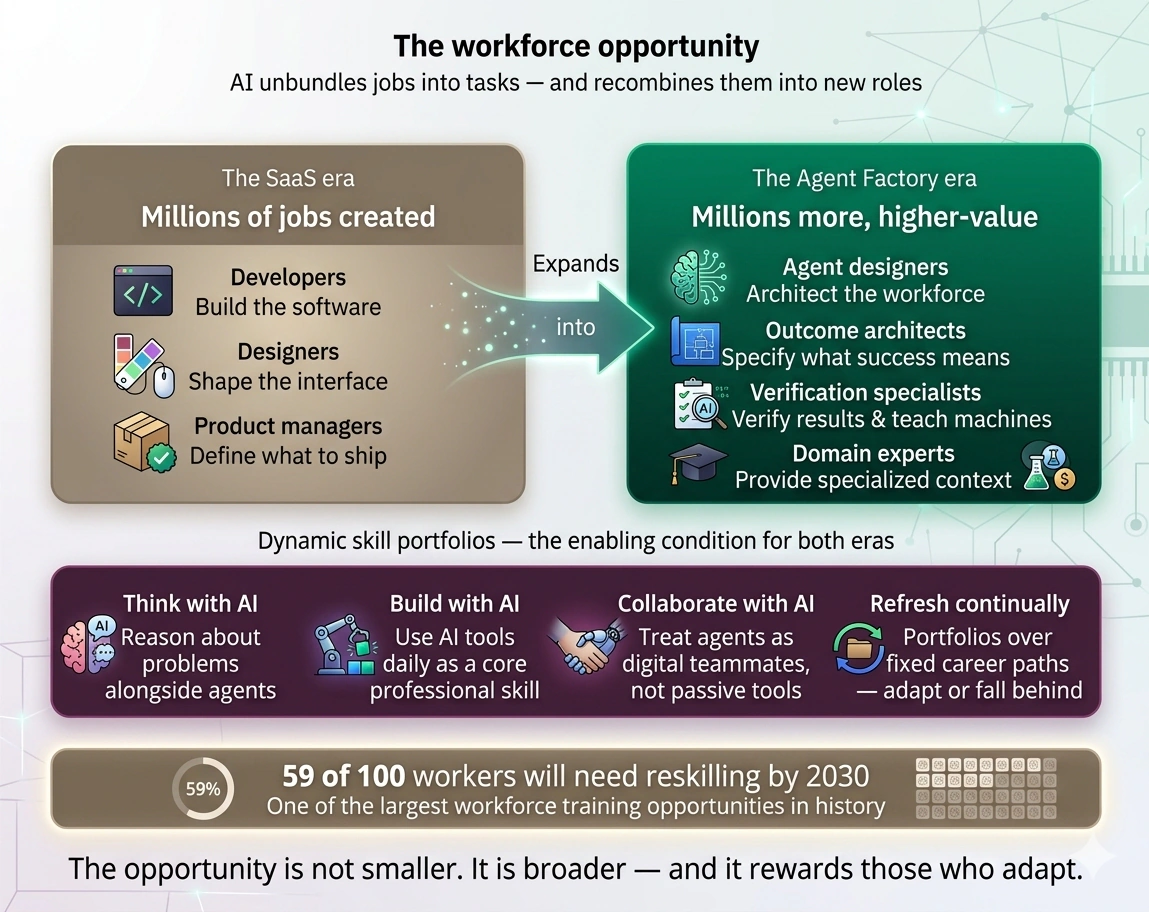
AI jobs को tasks में unbundle करेगा। इनमें से कुछ tasks पूरी तरह automate हो जाएँगे। लेकिन unbundling नए combinations भी बनाती है: नए roles, नए businesses, नए markets जो तब exist नहीं करते थे जब काम rigid job titles के अंदर locked था।
Future workforce को fixed career paths पर rely करने के बजाय dynamic skill portfolios बनाने होंगे। जो professionals AI के साथ सोचना सीखते हैं, AI tools से daily बनाते हैं, और AI को digital teammate की तरह collaborate करते हैं, वे transition में सिर्फ़ survive नहीं करेंगे; वे thrive करेंगे।
SaaS era ने developers, designers, और product managers के लिए millions jobs create किए। Agent Factory era millions और create करेगा: agent designers, outcome architects, verification specialists, और domain experts के लिए जो machines को सिखाते हैं कि उनके क्षेत्र में "correct" कैसा दिखता है। यह history की सबसे बड़ी workforce training opportunities में से एक भी है: 2030 तक globally हर 100 workers में से 59 को new technologies और ways of working के साथ adapt करने के लिए reskilling या upskilling की ज़रूरत expected है।²
Same factory हर business function में specialist Workers produce करती है। GTM (Go-To-Market: combined sales, marketing, और revenue motion जो prospects को paying customers में बदलता है) में Worker fleet lead enrichment, outreach sequencing, CRM hygiene, pipeline analysis, proposal generation, और demo customization संभालती है। SaaS era में human "GTM Engineers" जो काम हाथ से करते थे, अब वह Workers के रूप में manufactured होता है और human GTM lead supervise करता है। Same pattern Finance (close, AR/AP, FP&A), Support (triage, resolution, escalation), Engineering (review, refactor, deploy), HR (sourcing, screening, onboarding), और Legal (review, redline, intake) में repeat होता है। हर Worker Paperclip के ज़रिए hire होता है, relevant function में human द्वारा supervise होता है, और उस function के system of record के against run करता है: GTM के लिए CRM, Finance के लिए general ledger, Support के लिए ticketing system, Engineering के लिए code repository। Verticals के across invariants नहीं बदलते। सिर्फ़ role definitions और systems of record बदलते हैं।
Opportunity छोटी नहीं है। यह broader है, और adapt करने वालों को reward करती है।
² World Economic Forum, Future of Jobs Report 2025, January 2025. https://www.weforum.org/press/2025/01/future-of-jobs-report-2025-78-million-new-job-opportunities-by-2030-but-urgent-upskilling-needed-to-prepare-workforces/
January 2026 तक, US data center construction $42 billion annualized तक पहुँच चुकी थी, जबकि office construction अपने peak से 35% गिर गई थी। Lines cross हो चुकी हैं: America अब human workers के workplaces बनाने से ज़्यादा digital workers के workplaces बनाने पर खर्च करता है।
Data centers industrial scale पर copper और electricity consume कर रहे हैं: एक single hyperscale AI facility को up to 50,000 tons copper चाहिए, जो conventional data center की ज़रूरत से up to ten times है। Meta, Google, Amazon, और Microsoft अकेले 2026 के लिए AI infrastructure spending में $600 billion से ज़्यादा project करते हैं।
Agent era की factories hypothetical नहीं हैं। वे बन रही हैं।
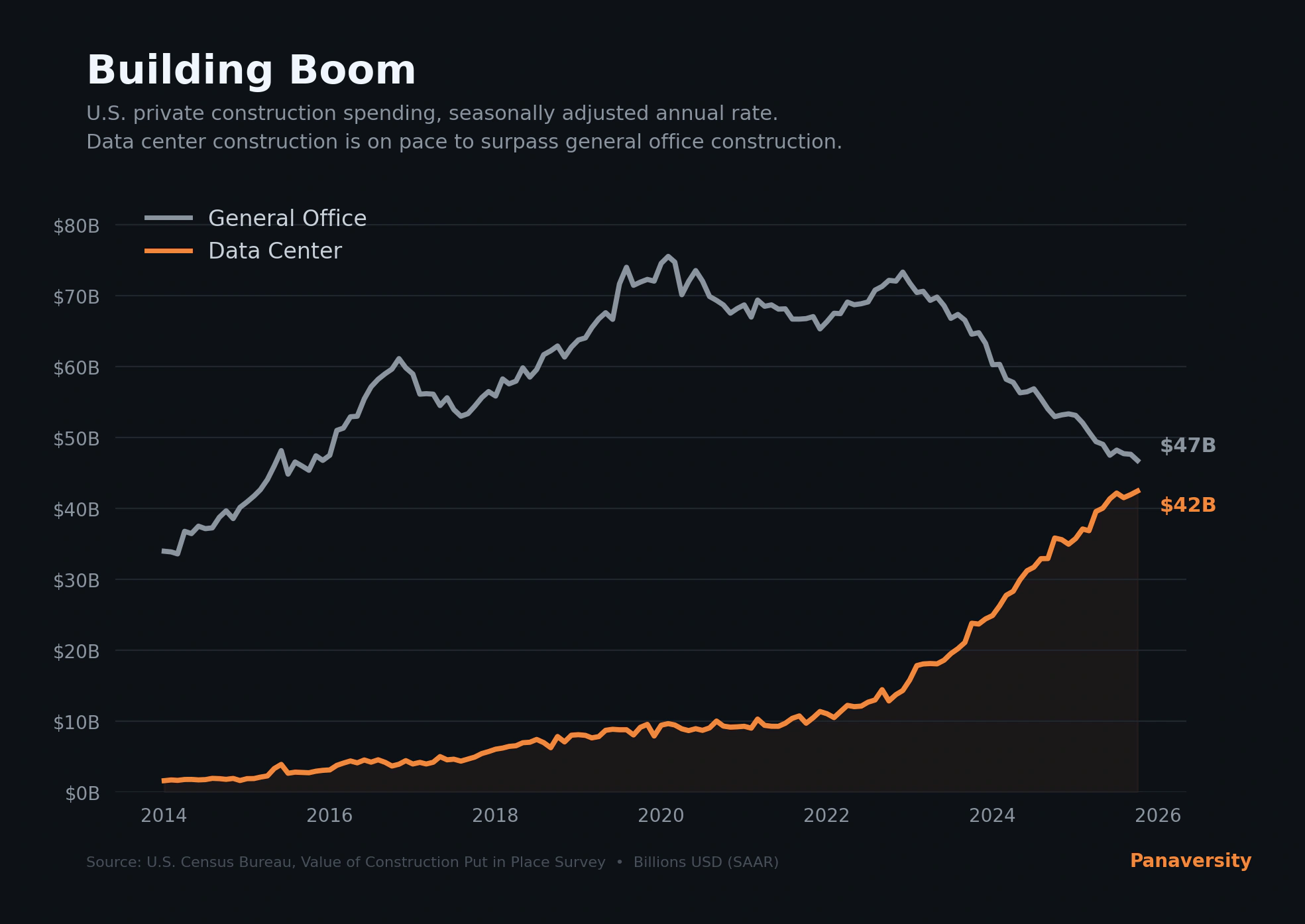
स्रोत: U.S. Census Bureau, Value of Construction Put in Place Survey (SAAR)
यह सिर्फ़ American story नहीं है। दुनिया भर में capital केवल economy की digital foundation में flow नहीं हो रहा; वहाँ पहुँचने के लिए बाकी जगहों से खिंच रहा है। UNCTAD की World Investment Report 2026 के अनुसार strategic sectors, यानी data centers और दूसरी AI infrastructure, semiconductors, critical minerals और energy-transition technology, ने 2025 में global greenfield FDI project value का 44% लिया, जो 2020 में 16% था। दूसरे शब्दों में, 2020 में नए cross-border investment के हर dollar में 16 cents strategic sectors को गए थे। 2025 तक 44 cents जाने लगे। इनमें सबसे बड़ा strategic sector data centers था, जिसने उन 44 cents में अकेले 21 लिए। पहली बार data-center-driven telecom investment ने renewable energy को value में पीछे छोड़ा। पीछे छूटे sectors मामूली नहीं हैं: renewable-energy greenfield values 28% गिरीं, international infrastructure investment 10% गिरा, और पिछली globalization era को define करने वाली global value-chain industries, textiles, electronics और machinery, में project counts 25% घटे। Agent era में दुनिया सिर्फ़ ज़्यादा spend नहीं कर रही; capital को इसमें reallocate कर रही है।
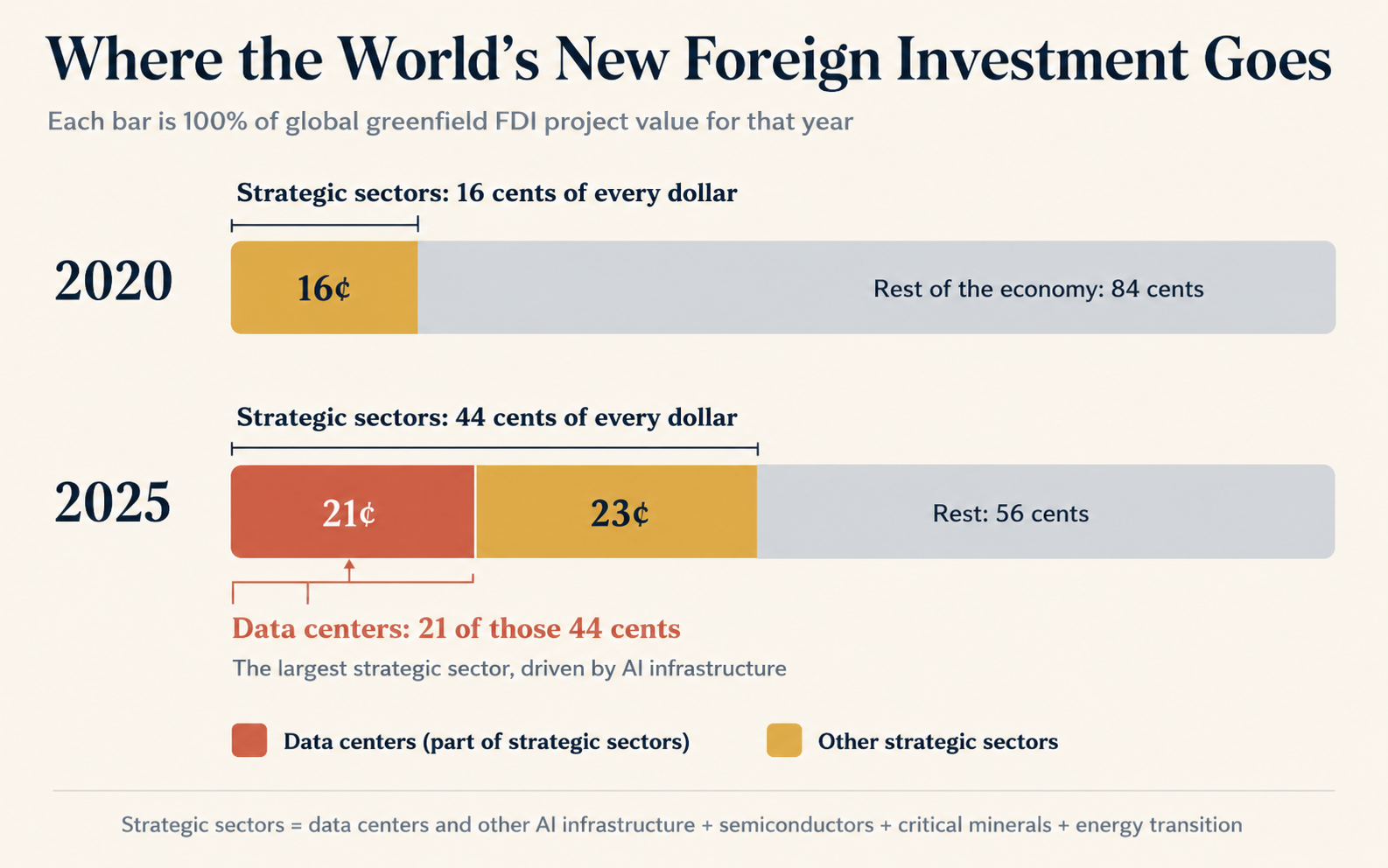
Global greenfield FDI के हर dollar में strategic sectors का हिस्सा 2020 के 16 cents से बढ़कर 2025 में 44 cents हुआ, जिनमें data centers ने अकेले 21 लिए। Source: UNCTAD, World Investment Report 2026.
यह reallocation balance sheets में भी दिखता है। 15 साल तक hyperscalers capitalism की सबसे pure cash machines थे: asset-light platforms जो हर साल $250 billion free cash flow generate करते थे। AI buildout ने इसे उलट दिया है। Wall Street के forward estimates अब Amazon, Google, Meta, Microsoft और Oracle का combined free cash flow record में पहली बार negative होता दिखाते हैं, जबकि उनकी purchase orders के दूसरे छोर पर chipmakers, Nvidia, Micron, Broadcom और Applied Materials, $400 billion पार कर रहे हैं। Underlying actuals भी यही बताते हैं: Alphabet का Q1 2026 free cash flow year over year 47% गिरा, और चार सबसे बड़े hyperscalers का combined 2026 capital spending करीब $725 billion पहुँच गया, जो 2025 से 77% अधिक है। Cash गायब नहीं हो रहा। वह supply chain में नीचे जा रहा है, Agent era की infrastructure खरीदने वाली companies से उसे बेचने वाली companies तक। पहली बार buyers build करते रहने के लिए borrow कर रहे हैं: BofA का forecast है कि 2026 में hyperscaler debt issuance $175 billion तक पहुँचेगा, पिछले 5 साल के annual average से 6 गुना से अधिक। जिन companies ने 2 decades की growth अपने cash generation से fund की, वे अब buildout को debt से finance कर रही हैं।
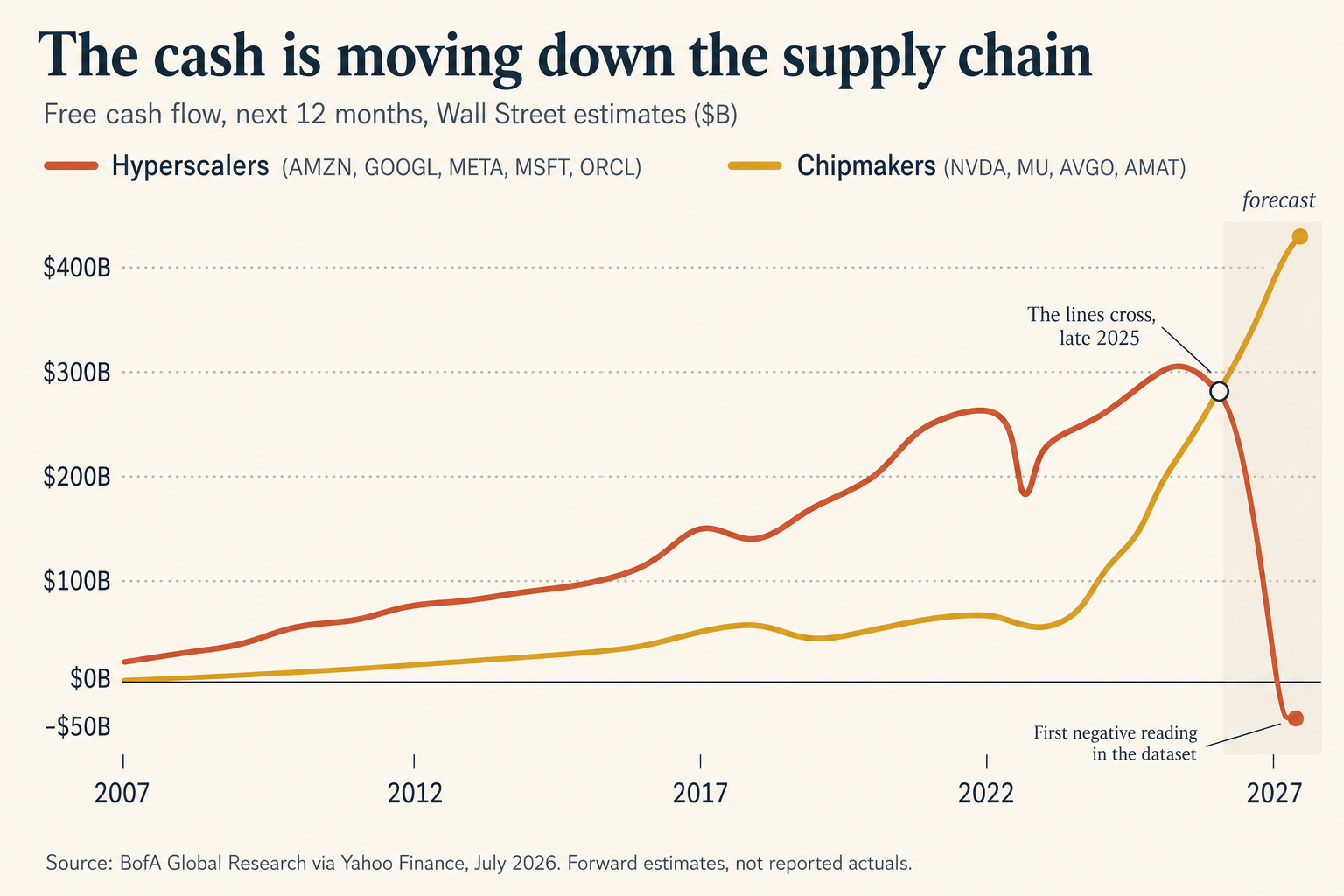
Forward 12-month free cash flow, Wall Street estimates। AI capital spending के supply chain में नीचे chipmakers तक transfer होने से hyperscaler cash generation dataset में पहली बार negative होने का projection है। Shaded region forecast है, measurement नहीं। Source: BofA Global Research via Yahoo Finance, July 2026.
विजेताओं को sold seats से measure नहीं किया जाएगा। उन्हें guaranteed outcomes से measure किया जाएगा.
यह कहाँ point करता है
आगे क्या आता है, उसे name करने से पहले यह mark करना ज़रूरी है कि thesis already कहाँ खड़ी है। AI-Native Company अब forward-looking abstraction नहीं है। Mid-2026 तक, single-digit-headcount firms AI-operated workforces के साथ billion-dollar annualized revenue report कर रही थीं: कंपनी की ऐसी category जो तीन साल पहले meaningful रूप में exist नहीं करती थी।⁸ Individual cases अपनी merits पर succeed और fail होंगे, और कुछ regulatory scrutiny survive नहीं करेंगे। Category survive करेगी। Thesis ने firm का shape predict किया था; firm आ चुकी है।
Thesis defend करती है कि Agent Factory आज और immediate future में क्या बनाती है: software AI Workers, जो AI-Native Companies में compose होते हैं, और human-mediated commerce के edges पर transact करते हैं। यही इस document का earned scope है। लेकिन architecture scope से आगे extend करती है, और close करने से पहले तीन trajectories name करने लायक हैं।
Physical AI Workers. Same factory architecture जो software AI Workers बनाती है, embodied ones तक extend करती है। Warehouse में काम करता robot, autonomous courier की तरह operate करता vehicle, factory floor पर machine: हर एक same authority envelope के under AI Worker है, same management layer से hired है, runtime engine पर run करता है जो API calls के बजाय actuators drive करता है। Invariants नहीं बदलते। Compute layer body add करती है। जैसे-जैसे embodied AI mature होगा, AI-Native Company का workforce exclusively digital नहीं रहेगा; इसमें same process से manufactured, same architecture से governed, और same envelope के प्रति accountable physical workers शामिल होंगे।
Fully autonomous economic agents. इस thesis की opening इस trajectory को name करती है; यह भाग उसे earn करता है। जैसे-जैसे AI Workers durable identity, payment rails, reputation, और contractual capacity gain करते हैं, वे अपनी कंपनी द्वारा operated tools होना बंद करके अपने आप में economic actors बनना शुरू करते हैं: दूसरी कंपनियों के AI Workers से services खरीदना, ज़रूरतमंद Workers को capacity बेचना, capital accumulate करना, और हर transaction के लिए human in the loop के बिना agreements enter करना। Agent Factory manufacturing process बनी रहती है। जो बदलता है, वह manufactured चीज़ का autonomy level है। इससे उठने वाले सवाल: legal personhood, liability, taxation, antitrust; architectural questions नहीं हैं, लेकिन वे urgent होंगे, और architecture को उनके आने पर जवाब देने के लिए ready होना होगा।
Cross-company workforce mobility. आज AI Worker एक कंपनी द्वारा बनाया और deploy किया जाता है। Manufacturing layer mature होने पर AI Workers portable बनते हैं: एक कंपनी में hired, दूसरी में transferred, और शायद कई के लिए simultaneously working। Paperclip की hiring API intra-company से cross-company तक generalize होती है। अलग-अलग कंपनियों के authority envelopes same AI Worker पर overlap करते हैं, contract द्वारा governed। AI Workers के लिए labor market असली market बन जाता है: rates, reputations, specializations, और turnover के साथ। Agent Factory unit भेजती है; market उसे route करता है।
ये तीन trajectories: embodiment, autonomy, और mobility; architecture के extensions हैं, departures नहीं।
Notes
⁸ Jodie Cook, "2-person $1 billion company ही real business goal है: और इसे कैसे करें", Forbes, May 10, 2026.
Invariants hold करते हैं। Realizations evolve करती हैं। Thesis stand करती है.