The AI Agent Factory: Agent era के लिए definitive book और ecosystem
The AI Agent Factory
AI Tools के Third Era के लिए एक canonical source, जिसे four-channel ecosystem से deliver किया गया है: book, AI tutor, AI building partner और specialized derivative books का बढ़ता परिवार.
AI-Native Companies बनाने का spec-driven, human-supervised method. Engineers, domain experts और enterprise leaders के लिए, जो Agent era की workforce बना रहे हैं, और इसके सबसे in-demand role का training ground: vendor-neutral Forward Deployed Engineer (FDE). यह book build करना और उससे earn करना, दोनों सिखाती है। इससे paid कैसे हों, इसका अपना अलग series है।
Agent era में survive करने की चार skills
AI अब desk work के ज़्यादा से ज़्यादा हिस्सों में human intelligence से आगे निकल रही है। यह prediction नहीं है। यह current state है, और trend line सिर्फ़ एक direction दिखाती है। इसलिए honest question अब "मैं AI से smarter कैसे रहूँ?" नहीं है। वह race शुरू होने से पहले खत्म हो चुकी है। सवाल यह है: जब intelligence खुद cheap हो जाए, तब भी आपको क्या चाहिए?
हम मानते हैं कि answer चार skills हैं। ये चार ही क्यों, कोई और क्यों नहीं? क्योंकि हर skill वही test pass करती है: intelligence cheap होने पर भी यह scarce रहती है। AI execution की cost को zero की ओर धकेल रही है: writing, analysis, code, design, सब कुछ। वह जिस चीज़ की cost कम नहीं कर सकती, वह है क्या build करना है यह चुनना, उस AI को direct करने की craft जो उसे build करती है, result सच है या नहीं इसका judgment, और लोगों के बीच trust. जिस skill को AI absorb कर सकती है, वह absorb करेगी, और उस skill की price उसके साथ collapse होगी। ये चार उस जगह बैठती हैं जहाँ वह collapse नहीं पहुँचता।
इनमें से तीन एक loop बनाती हैं: वही 10-80-10 Rule जो इस book के हर chapter में चलता है। चौथी वह चीज़ है जिसे loop कभी contain नहीं कर सकता।
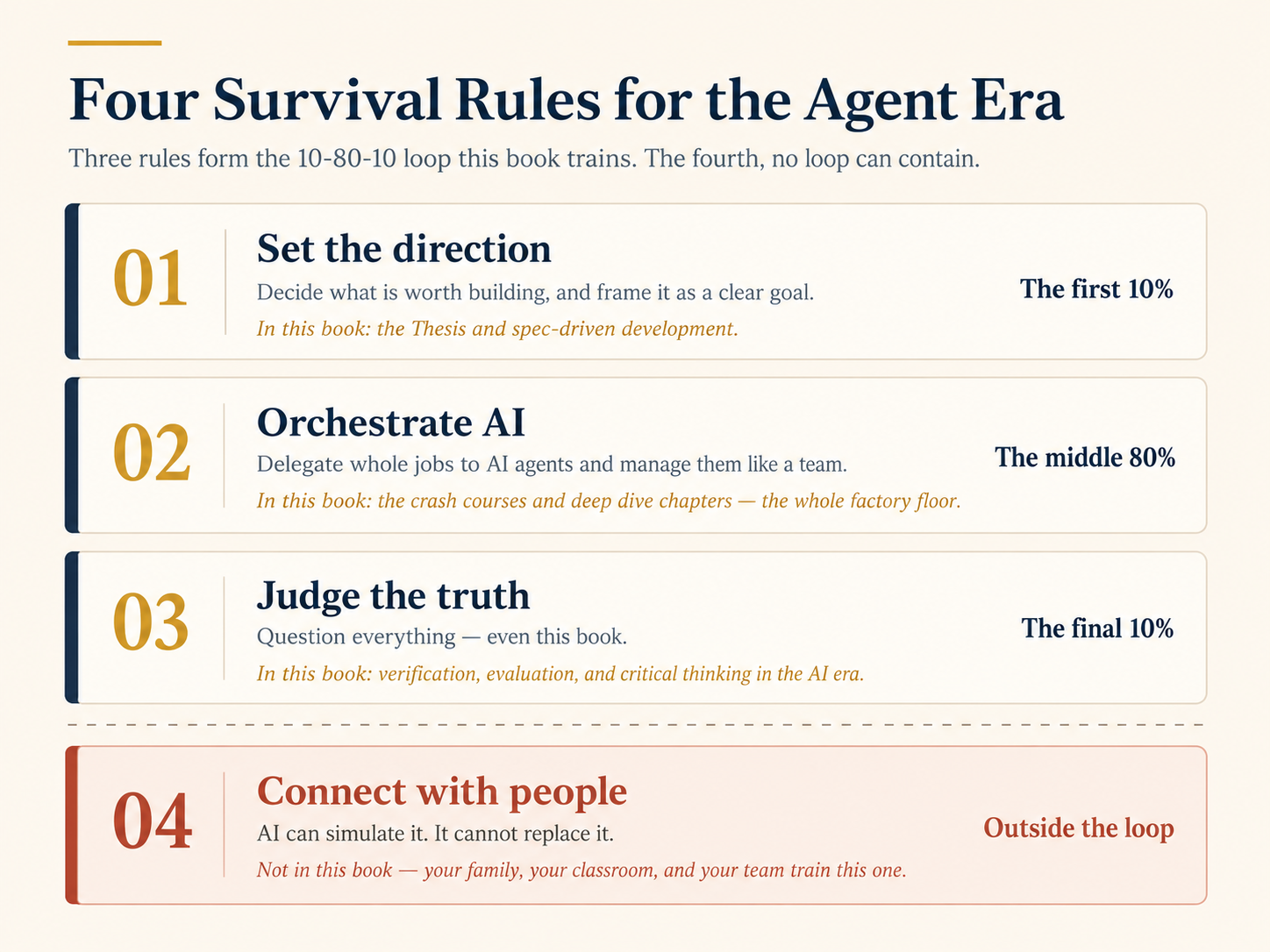
🎯 Direction set करें
🤖 AI orchestrate करें
⚖️ Truth judge करें
🤝 लोगों से connect करें
यह क्या है
सुबह 8:07 बजे हैं। एक project manager report में पीछे चल रहा है। Finance lead ऐसे systems के बीच numbers reconcile कर रही है जो आपस में बात नहीं करते। एक team उस answer का इंतज़ार कर रही है जो कल आ जाना चाहिए था। अब सोचिए कि इनमें से हर कोई वह काम बस एक tireless digital coworker को दे देता है: ऐसा coworker जो instructions follow करता है, वही tools use करता है जो वे करते हैं, अपना काम check करता है और ऐसा result लौटाता है जिस पर वे भरोसा कर सकें। इस coworker को build और direct करना ही इस book का विषय है।
पहले कुछ साफ़ शब्द, क्योंकि पूरी book इन्हीं पर टिकी है:
- AI Worker (जिसे Digital FTE भी कहा जाता है: "full-time equivalent," HR में एक employee के बराबर काम की term) वह AI है जो real job करता है, सिर्फ़ सवाल का जवाब नहीं देता। इसे ऐसे new hire की तरह सोचें जो कभी सोता नहीं: आप उसे बताते हैं क्या करना है, वह काम करता है और अंत में human sign off करता है।
- general agent: Claude Code, Claude Cowork या ChatGPT जैसे tools, वह all-purpose assistant है जिसे आप direct करते हैं। आप या तो उससे अपना काम करवाते हैं या उससे उन AI Workers में से एक को build करवाते हैं।
- AI-Native Company वह है जहाँ एक founder, बड़ी staff के बजाय, थोड़े लोगों और कई AI Workers के साथ real business चलाता है।
यही पूरी idea है। बाकी सब इसे अच्छे से करने का तरीका है।
यह book chatbot tricks, impressive demos या strategy की तरह सजाए गए short-lived prototypes के बारे में नहीं है। यह dependable AI workers बनाने के बारे में है जो real business operations में participate कर सकें। ये systems human judgment को replace नहीं करते। वे उसे extend करते हैं, scale करते हैं और repeatable बनाते हैं।
Terminology पर note। इस book में Digital FTE, Digital Worker और AI Worker terms interchangeably use होती हैं। ये सब एक ही चीज़ का नाम हैं: role-based AI agent जो human oversight के तहत organization के अंदर structured work करता है। Thesis AI Worker को technical term के रूप में use करती है; यह book Digital FTE को business-facing term के रूप में use करती है।
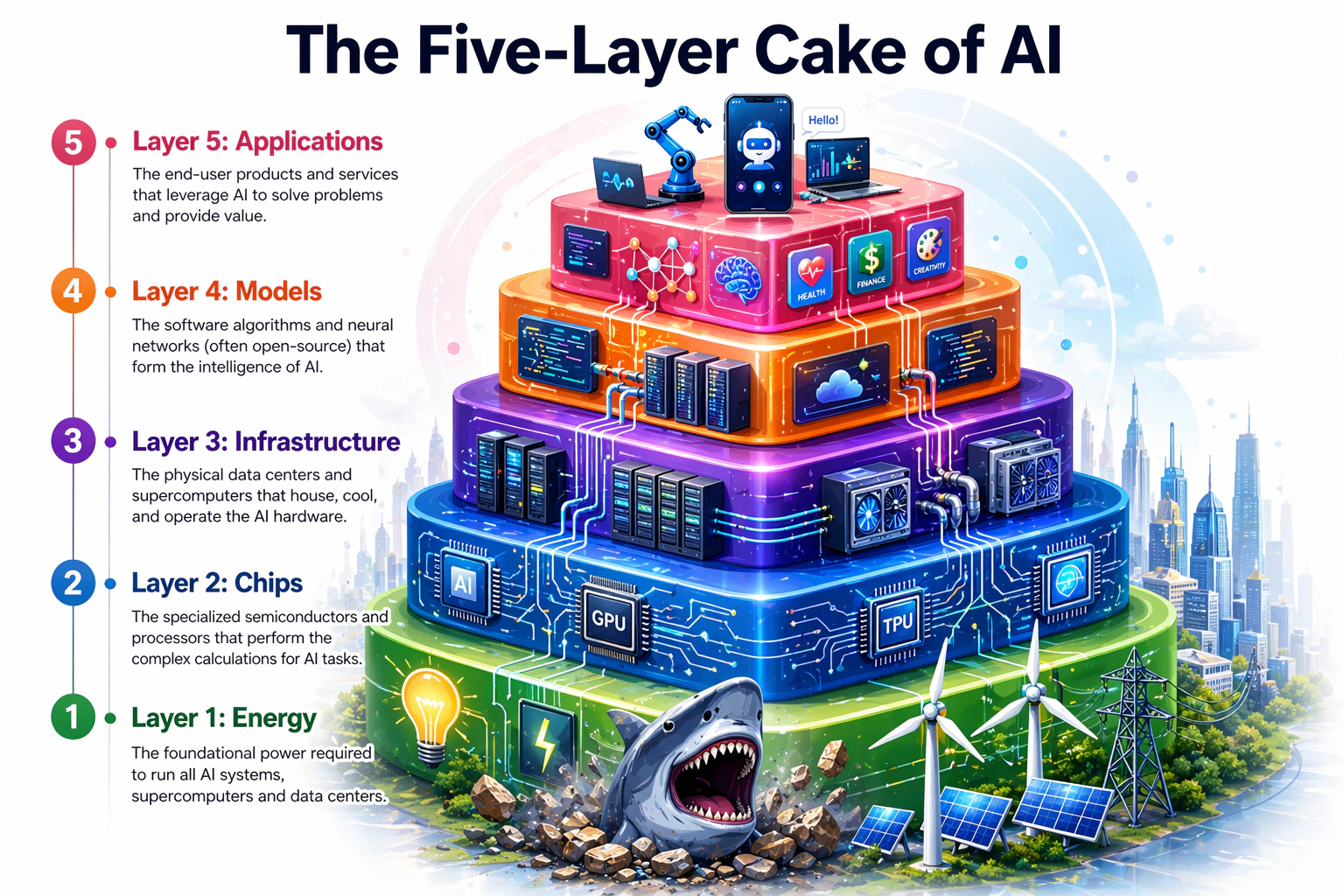
Modern AI एक ऊँचे five-layer cake की तरह बना है: यह metaphor Jensen Huang, NVIDIA के CEO, ने popularize किया। सबसे नीचे Energy है, जो दुनिया भर के विशाल data centers को power देती है। उसके ऊपर Chips हैं, यानी specialized processors जो हर second trillions of calculations करते हैं। उसके ऊपर Infrastructure आती है: supercomputers और cloud platforms का global network जो उन computations को scale करता है। Infrastructure के ऊपर Models हैं, neural networks जो learn करते हैं, reason करते हैं और intelligence generate करते हैं। और सबसे ऊपर fifth layer है: Applications, जहाँ AI technology रहना छोड़कर useful बनना शुरू करता है।
Lower four layers में billions of dollars invest किए जाते हैं ताकि यह fifth layer exist कर सके। यह book उसी fifth layer के बारे में है। यह आपको applications, agents और digital workers build करना सिखाती है, जो AI capability को उन products में बदलते हैं जिन्हें लोग use करते हैं, उन workflows में जिन पर organizations rely करती हैं और उस value में जिसे enterprises capture कर सकते हैं।
Lower layers इसलिए matter करती हैं क्योंकि वे top layer को possible बनाती हैं। Models, infrastructure और hardware essential हैं, लेकिन वे अपने आप business value create नहीं करते। Value तब दिखती है जब intelligence को workflows, products, services और operational systems में shape किया जाता है जिन्हें लोग सच में use कर सकें।
Organizations के बीच अगला competitive gap सिर्फ़ इस बात से नहीं आएगा कि किसके पास best model, सबसे बड़ा GPU cluster या सबसे चमकदार prototype है। यह इस बात से आएगा कि कौन intelligence को repeatable execution में बदल सकता है। जैसे software ने manual processes को digital systems में बदला, वैसे Digital FTEs structured knowledge work को scalable operational capability में बदलेंगे। जो organizations इन्हें अच्छे से build करना सीखेंगी, वे तेज़ move करेंगी, expertise को बेहतर preserve करेंगी और leverage के बिल्कुल नए forms create करेंगी।
The Agent Factory का mission आपको ये systems design और build करने में मदद करना है, ताकि AI सिर्फ़ powerful न रहे, बल्कि useful, governable और economically meaningful बने।
Core idea
इस book के center में एक simple idea है:
Digital FTEs, जिन्हें Digital Workers या AI Workers भी कहा जाता है, reliable AI agents हैं जिन्हें real organizational environments के अंदर structured knowledge work लगातार करने के लिए design किया जाता है।
Digital FTE सिर्फ़ prompt वाला model नहीं है। यह system है। यह domain expertise, explicit specifications, engineering architecture और human oversight को combine करता है, ताकि work consistently, auditably और scale पर हो सके।
AI Agent Factory इन workers को design और deploy करने का systematic approach देती है। साथ मिलकर वे AI-Native Company की workforce बनाते हैं।
सिर्फ़ large language models पर focus करने के बजाय, यह book समझाती है कि dependable agent systems चार critical elements के combination से कैसे emerge होते हैं:
- Structured Specifications: agents को क्या करना है इसकी clear definitions.
- Domain Expertise: वह "knowledge engine" जो reasoning और decision-making को guide करता है।
- Engineering Architecture: वह infrastructure जो reliability और scalability ensure करता है।
- Human Oversight: वे feedback loops जो accountability और governance बनाए रखते हैं।
साथ में, ये elements ऐसे agent systems बनाना possible करते हैं जिन पर organizations भरोसा कर सकें, जिन्हें deploy कर सकें और scale कर सकें।
Digital FTEs सिर्फ़ technical construct नहीं हैं; वे economic construct भी हैं। वे AI-Native organizations को expertise package करने, execution bottlenecks reduce करने, consistency improve करने और नए service models, internal capabilities और revenue streams create करने देते हैं। अच्छे से बने हों, तो वे सिर्फ़ tasks automate नहीं करते। वे scalable assets बन जाते हैं।
यह book क्यों exist करती है
आज दुनिया में ज़्यादातर organizations AI को isolated experiments से approach करती हैं: कहीं एक prototype, कहीं एक chatbot, कहीं एक promising workflow demo जो daily operations तक कभी ठीक से नहीं पहुँचता।
जो missing है वह excitement नहीं है। जो missing है वह method है।
बहुत कम organizations ने reliable AI agents build करने का repeatable तरीका develop किया है जो workforce के real हिस्से की तरह function कर सकें। उनके पास strong models, talented people और business demand हो सकती है, फिर भी उन ingredients को dependable digital workers में convert करने के लिए ज़रूरी design discipline नहीं होती।
यह book वही method introduce करती है।
यह समझाती है कि valuable AI employee opportunities कैसे identify करें, expert knowledge को structured specifications में कैसे बदलें, bounded agent workflows कैसे design करें, उन्हें reliable cloud-native infrastructure पर कैसे deploy करें और human oversight से कैसे govern करें। दूसरे शब्दों में, यह book आपको Agent Factory operate करना सिखाती है: spec-driven (पहले work की clear specification लिखना, फिर AI से उसी के अनुसार build करवाना), human-supervised, agent-tool-powered process जिससे Digital FTEs (जिन्हें AI Workers भी कहा जाता है) AI-Native Company के अंदर design, manufacture और deploy किए जाते हैं। हम यह process दो tools से demonstrate करते हैं जो इसे embody करते हैं: Claude Code, Anthropic का frontier coding agent, और OpenCode, open-source, model-agnostic alternative. Skills, specifications और architectural patterns जो एक के लिए लिखे जाते हैं, दूसरे में भी काम करते हैं। Method constant है। Tool variable है।
Table के दूसरी तरफ़ भी matching shortage है। Routine implementation हर quarter सस्ता होने के साथ, वे developers जो यह gap close कर सकते थे, काम ढूँढने में struggle कर रहे हैं। कई अभी यह बता नहीं पाते कि intelligence खुद commodity बनने के बाद उनका contribution क्या है।
एक book दोनों shortages का जवाब दे सकती है, क्योंकि वे opposite sides से देखा गया वही problem हैं। AI को real company के अंदर land कराने वाला method ही वह scarce skill है जो developer को hire करने लायक बनाती है। Business series इस thread को paid engagement तक ले जाती है।
इस book के अंत तक आप agentic AI को सिर्फ़ idea के रूप में नहीं समझेंगे। आप dependable Digital FTEs को organizational capability के रूप में manufacture करना समझेंगे। ये organizations default रूप से AI-Native होंगी।
अपना path चुनें
हर कोई वही छोटा ladder चढ़ता है, और आप किसी भी rung पर रुक सकते हैं।
1. Foundations: यहाँ से शुरू करें। कुछ short courses, सभी web browser में (ChatGPT, Claude या Gemini: कुछ install नहीं करना)। ये वे skills हैं जो पहले हर किसी को चाहिए। Doctor, accountant, student और engineer, सभी वही courses लेते हैं।
2. Mode 1: अपना काम तेज़ करने के लिए AI use करें। Basics हाथ में आने के बाद, आप AI को अपने real tasks पर लगाते हैं: writing, analysis, planning, code. काम आप ही करते हैं; AI आपका power tool है। ज़्यादातर लोगों को बहुत value मिलती है और वे यहीं रुक जाते हैं।
3. Mode 2: ऐसे AI Workers build करें जो आपके लिए काम करें। आगे बढ़कर, आप AI से opening में बताए tireless coworkers build करवाते हैं: ऐसे Workers जो laptop बंद करने के बाद भी job करते रहें। अब आप सिर्फ़ काम करने वाले नहीं, builder हैं।
4. Ladder के top का नाम है। AI Workers build करना सीखें, फिर उन्हें ऐसी company में combine करना सीखें जो उन्हीं पर चलती है, और आप वह person बन जाते हैं जिसे job market अब top salaries देकर ढूँढ रहा है: Forward Deployed Engineer (FDE), वह engineer जो organization में जाकर उसकी AI workforce end to end build करता है। इस book का पूरा arc एक line में यही है: आप AI Workers build करते हैं, और Workers मिलकर AI-Native Company बनाते हैं। यह person कौन है, market क्या pay करता है, और हमारी vendor-neutral version ही companies को वास्तव में क्यों चाहिए, पूरी story The Roles This Book Trains में है।
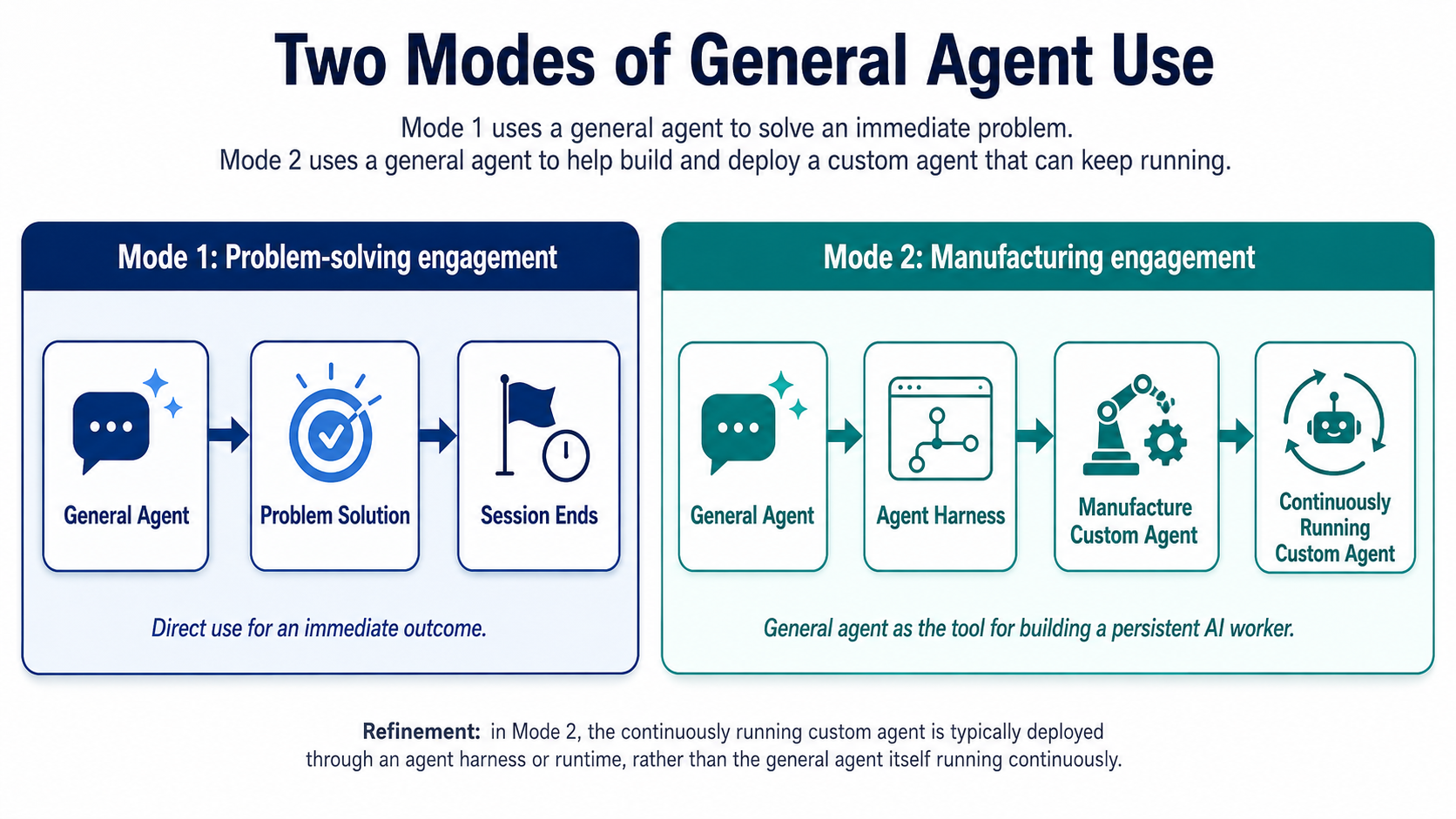
Mode 1 session के अंदर problem solve करने के लिए general agent use करता है। Mode 2 custom AI Worker manufacture करने में general agent की मदद लेता है, जो session खत्म होने के बाद भी चलता रह सकता है।
आपको पूरा ladder चढ़ना ज़रूरी नहीं है: Foundations plus Mode 1 अपने आप में serious skill set है। Getting Started आपको course by course ऊपर ले जाता है।
अगर यह सब आपके लिए नया है, तो पहले short परिचय देखें। यह कुछ ही minutes में core idea दे देता है, और एक बार वह click हो जाए तो आगे आने वाला हर chapter पढ़ना आसान हो जाता है।
पूरी प्रस्तुति देखें: The Agent Factory का परिचय
फिर Thesis पढ़ें, क्योंकि बाकी book उसी vocabulary पर बनी है: Digital FTE, AI-Native Company, Two-Layer Model, 10-80-10 Rule. वहाँ से Getting Started: Crash Courses पूरा path दिखाता है: पहले Foundations (अच्छा entry point है 2026 में AI Prompting), फिर आपका mode, फिर उससे match करने वाले courses. यह वही 10-80-10 rhythm है जो book सिखाती है, learning पर apply की गई: thesis intent set करती है, courses execution carry करते हैं और आपका professional judgment loop close करता है।
दूसरा आधा हिस्सा: इससे कमाई कैसे करें
इस समय दो बातें एक साथ सच हैं, लेकिन ज़्यादातर लोग उनमें से केवल एक को देखते हैं।
Developers को काम नहीं मिल रहा। Agents routine code का बढ़ता हिस्सा लिख रहे हैं, junior roles कम हो रहे हैं और freelance boards capable generalists से भरे हैं, जो एक-दूसरे के साथ-साथ model के विरुद्ध भी bid कर रहे हैं। इस चिंता के नीचे honest सवाल यह नहीं है, “मुझे job कैसे मिले?” असली सवाल है, “जब intelligence और code सस्ते हैं, तो मैं वास्तव में क्या contribute करता हूँ?”
Companies AI को काम नहीं करा पा रहीं। वे हर जगह AI projects शुरू कर रही हैं, लेकिन लगभग 95% custom enterprise pilots कोई measurable financial return नहीं दिखाते (MIT, 2025)। वजह weak models नहीं हैं। वजह यह है कि कोई उन्हें company के real data, real rules, real approvals और real people में fit नहीं करता। यही problem ऊपर यह book क्यों exist करती है section में बताई गई है। कमी excitement की नहीं, method की है।
इन दोनों statements को साथ रखें, क्योंकि यही इस book का purpose है। एक तरफ़ capable people हैं जिनके पास अंदर जाने का रास्ता नहीं। दूसरी तरफ़ real money है, लेकिन implementation का रास्ता नहीं। उनके बीच की दूरी talent shortage या technology shortage नहीं, बल्कि deployment gap है, और उसकी चौड़ाई ठीक एक job जितनी है।
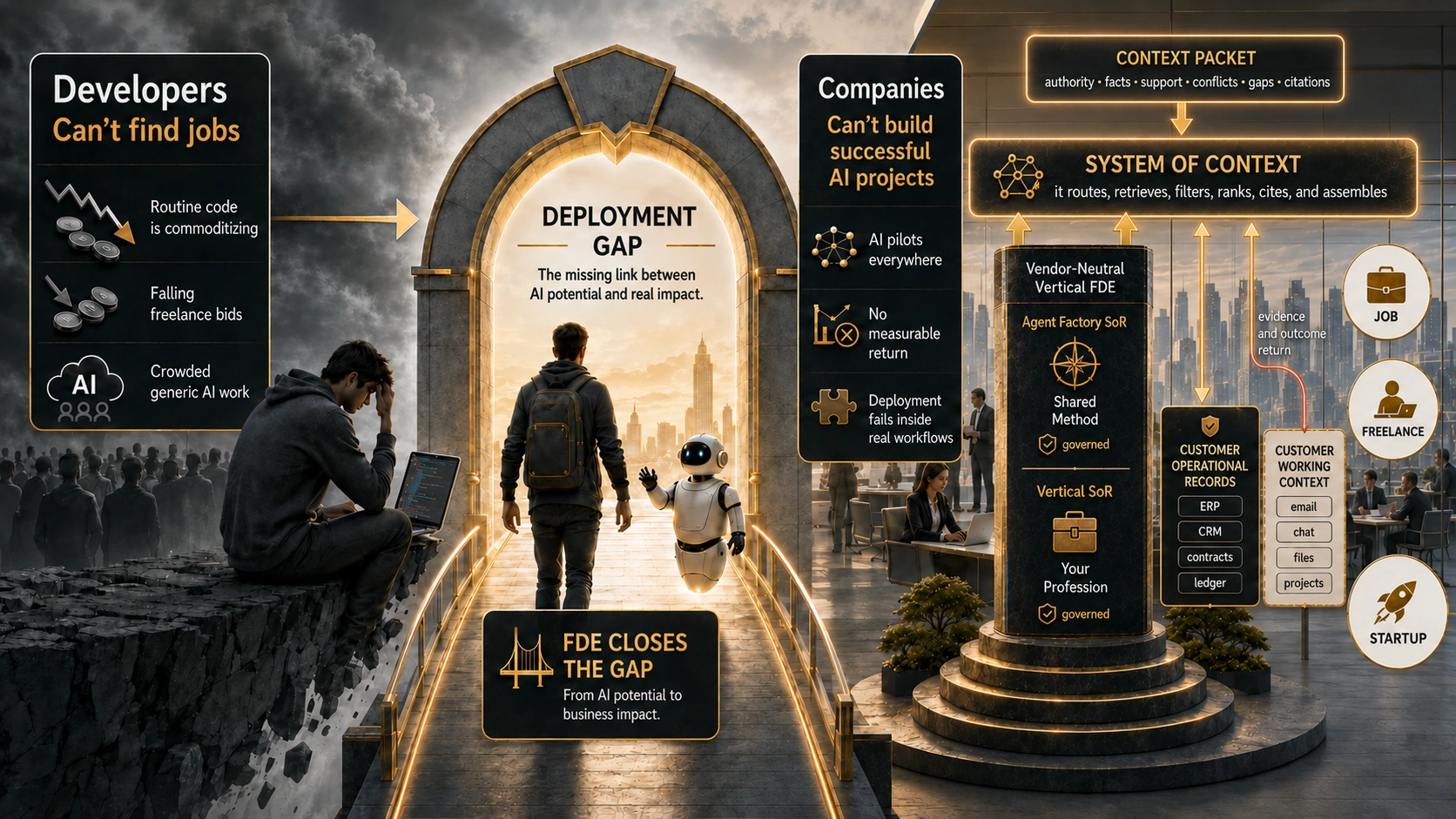
इस book का technical half आपको वह job करना सिखाता है। Business half उससे कमाई करना सिखाता है, क्योंकि जिस skill को कोई खरीदता नहीं वह hobby है। यह आधा हिस्सा एक क्रमबद्ध series है: market से शुरू होकर आपकी पहली invoice पर खत्म होती है, और “मैं इससे कैसे कमाऊँ?” को motivational नहीं बल्कि engineering question मानती है।
| Business series | वह कौन-सा सवाल हल करती है |
|---|---|
| यह book जिन roles को train करती है | Agent era ने कौन-सी jobs बनाई हैं, उनकी pay क्या है और कौन-सी seat मेरे लिए है? |
| Ecosystem | इन सबका working example वास्तव में कैसा दिखता है? |
| FDE AF Model | पाँच layers क्या हैं और graduate हर layer पर कैसे कमाता है? |
| आप क्या साथ लेकर जाते हैं: ownership argument | जिन चीज़ों को मैं value देता हूँ, उनमें वास्तव में क्या own करता हूँ? |
| अपना vertical चुनना | किस country में कौन-सा profession और कौन-सा expert चुनना चाहिए? |
| Vertical System of Record design करना | उस profession का System of Record first principles से कैसे design करूँ? |
| Vertical FDE के रूप में कमाई | Capstone: पूरी roadmap, हर route की pay, pricing और शुरुआत कहाँ से करें। |
Capstone एक argument पर पहुँचता है। यह ऊपर दी चार survival skills का commercial form है। Intelligence और code सस्ते होने पर market आपके काम की कम कीमत देता है, क्योंकि अधिक rivals वही कर सकते हैं। Market उस चीज़ के लिए pay करता है जो आपके पास है। इसलिए series आपको ऐसी asset बनाने में मदद करती है जिसे आप hold कर सकें: एक jurisdiction में real expert के साथ बनाया गया किसी एक profession का governed knowledge। यह asset किसी ऐसी company में ले जाएँ जिसे इसकी ज़रूरत है, और आप वह role बन जाते हैं जिसे market billions खर्च करके खोज रहा है लेकिन भर नहीं पा रहा: vendor-neutral vertical Forward Deployed Engineer।
यहाँ से तीन routes निकलते हैं, और वही asset तीनों के पीछे काम करती है।
Job
Open market
आपका अपना startup
Capstone एक बात साफ़ कहता है, और उसे यहाँ दोहराना ज़रूरी है: exciting version से honest version अधिक दूर तक जाता है। ज़्यादातर readers पहले clients के लिए governed knowledge systems और AI Workers बनाकर कमाएँगे, केवल उस चीज़ का उपयोग करके जो यह book सबको देती है। इस काम के लिए domain expert या अपना vertical नहीं चाहिए, और इससे सबसे जल्दी pay मिलता है।
आपका अपना vertical business बड़ा prize और कठिन gate है। वह gate कोई skill नहीं, बल्कि एक person है: आपके साथ build करने को तैयार senior professional। Series ऐसी design की गई है कि पहला route उस person की search fund कर सके। पहले route पर रुकना भी real outcome है, failure नहीं।
यह book किनके लिए है
यह book उन cross-functional teams के लिए लिखी गई है जो Agentic Enterprise बना रही हैं। ये groups अक्सर अलग professional languages बोलते हैं, अलग priorities chase करते हैं और success को अलग-अलग तरीकों से measure करते हैं: meeting-room comedy, बस laugh track नहीं। लेकिन Digital FTEs अच्छे से तभी build होते हैं जब ये साथ काम करते हैं, और यह book उन्हें shared framework देती है। ये सभी उसी बड़े project में participate कर रहे हैं। नीचे हर reader type Agent era के नए job market में एक named role से map होता है; पूरा map The Roles This Book Trains में है।
| Reader type | Agentic Enterprise में role | आपको क्या मिलेगा |
|---|---|---|
| AI developers और engineers | Infrastructure और systems बनाना | Architectural patterns, spec-driven development और cloud-native deployment. |
| Domain experts और professionals | Behavior guide करने के लिए knowledge देना | Expertise को reusable AI skills और AI-Native Companies को power करने वाले Digital FTEs में बदलने के methods. |
| Enterprise executives | Organizational adoption lead करना | Enterprise AI के लिए governance models, risk controls और deployment strategies. |
| Product managers और architects | Business needs को systems में translate करना | Workflows को skills और verifiable outputs में decompose करने के frameworks. |
| Department leaders और operators | Operational processes पर AI apply करना | Internal playbooks को scalable Digital FTE workflows में बदलने की techniques. |
AI developers, software engineers और platform architects
Builders
Developers और architects agentic AI के promise को production-grade systems में बदलने के लिए responsible हैं। जहाँ कई AI applications अभी भी fragile prototypes रह जाती हैं, यह book एक systematic engineering approach introduce करती है:
- Spec-driven development से agents design करना।
- Cloud-native architectures (Docker, Kubernetes, Dapr) से scalable systems build करना।
- Secure और auditable tool interfaces implement करना।
- Reusable skill libraries structure करना जो domain expertise encapsulate करती हैं।
Subject matter experts और domain professionals
Knowledge holders
सबसे valuable AI systems deep domain knowledge पर depend करते हैं। Accounting, law, finance और supply chain के professionals के पास वह judgment होता है जो AI behavior के लिए guiding structure बनता है। आप expertise को structured artifacts में encode करना सीखेंगे, specifically SKILL.md specifications (SKILL.md एक plain-text file है जो ऐसी skill package करती है जिसे AI load करके follow कर सके), ताकि यह ensure हो:
AI routine reasoning execute करता है, जबकि professionals judgment, oversight और accountability provide करते हैं।
Enterprise executives और technology leaders
Decision makers
Senior leaders को isolated experimentation से reliable enterprise deployment की ओर move करना होगा। यह book इनके लिए strategic roadmap देती है:
- Governance models और risk controls establish करना।
- Human-in-the-loop supervision implement करना।
- Pilot programs से enterprise-wide scale तक phased adoption execute करना।
AI product managers और solutions architects
Translators
Complex business processes को automated tasks में decompose करने में आप critical role play करते हैं। यह book practical guidance देती है:
- Workflows को agent skills में map करना।
- Automated reasoning और human decision-making के बीच boundaries define करना।
- Verifiable outputs और evaluation processes design करना।
Department leaders और operational teams
Operators
Department leaders अक्सर ऐसे workflows manage करते हैं जो highly structured लेकिन time-intensive होते हैं। यह book दिखाती है कि internal playbooks को repeatable agent workflows में कैसे transform किया जाए, ताकि:
- Repetitive analytical work कम हो और consistency improve हो।
- पूरी organization में expertise extend हो।
- ऐसी digital capabilities build हों जो continuously operate करें।
Delivery कैसे होती है: एक source, चार channels
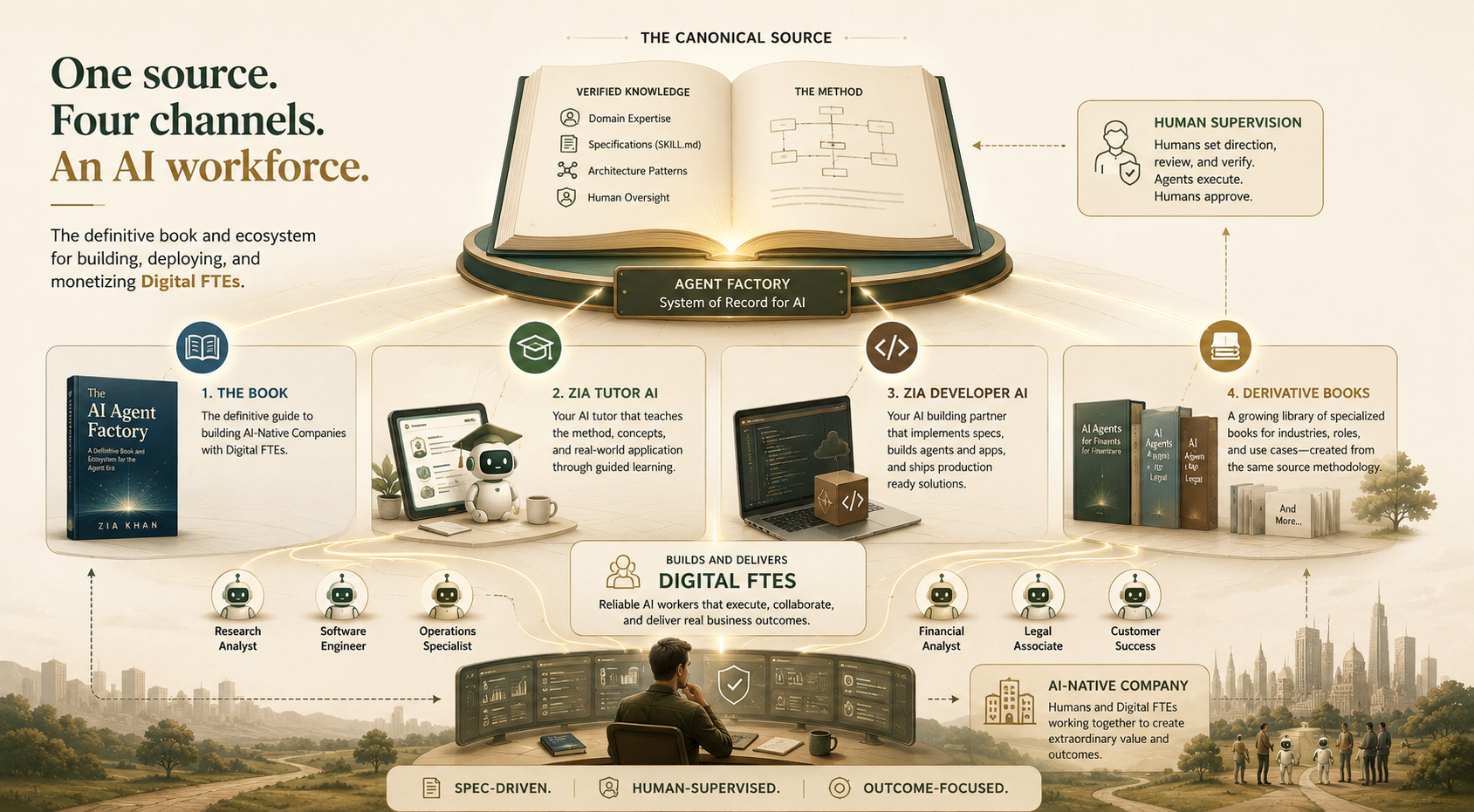
एक source चार channels को power करता है। जब source को नया escalation protocol, refined pattern या sharper definition मिलती है, हर channel update inherit करता है। Models, harnesses और languages बदल सकते हैं। Source बना रहता है।
📘 The Book
🎓 Zia Tutor AI
🛠️ Zia Developer AI
📚 Derivative Books
चारों channels लोगों तक वहीं पहुँचते हैं जहाँ learning और building होती है। Derivative books languages, age groups और professions के across travel करती हैं। Zia Developer AI, Claude Code और OpenCode के अंदर काम करता है, वे coding agents जो developers के पास पहले से हैं। Zia Tutor AI learners से chat tab में मिलता है और हर learner के अपने free Claude पर चलता है, इसलिए वह बिना service cost के कहीं भी, किसी तक scale कर सकता है।
Delivery के तीन modes
Readers उसी knowledge base को तीन तरीकों से use कर सकते हैं: उसे सीधे पढ़ें, AI tutor से सीखें या AI partner के साथ build करें।
Human reading
Zia Tutor AI
Zia Developer AI
Zia Tutor AI और Zia Developer AI अलग hosts के लिए वही architectural move करते हैं। Tutor learners के लिए claude.ai extend करती है। Developer builders के लिए Claude Code या OpenCode extend करता है। Ecosystem दोनों patterns सिखाता भी है और उन पर चलता भी है।
क्योंकि तीनों modes एक knowledge base से draw करते हैं, book में correction tutor की teaching और developer की guidance तक एक साथ पहुँचता है। Book static artifact नहीं है। यह learning और development ecosystem का source of truth है।
यह education पर apply किया गया 10-80-10 pattern है। Book पहले 10% में domain knowledge, frameworks और professional standards से intent set करती है। Zia Tutor AI और Zia Developer AI personalized teaching और step-by-step building guidance से middle 80% handle करते हैं। आप final 10% देते हैं: professional judgment जो confirm करती है कि agent correct है, deployment safe है और knowledge sound है।
दो tools, एक discipline
Claude Code और OpenCode इस book में competitors नहीं हैं। वे उसी discipline की दो expressions हैं।
दो tools क्यों, एक क्यों नहीं? क्योंकि यह book जो discipline सिखाती है, उसे किसी specific tool से ज़्यादा long-lived होना चाहिए। Agent Factory method: spec-driven design, skill-based architecture, human oversight, construction से ही portable है। इसे एक vendor के product से बाँधना method की basic premise के खिलाफ़ होगा। इससे ऐसे risks भी inherit होंगे जिन्हें readers control नहीं कर सकते: pricing changes, access restrictions, strategic shifts. और यह चुपचाप उन readers को exclude करेगा जिनकी constraints, चाहे economic, regulatory या architectural, dominant tool को inaccessible बनाती हैं।
Frontier-first
Open और model-agnostic
दोनों वही patterns implement करते हैं जो यह book सिखाती है। Skills, subagents, hooks, MCP servers (MCP वह standard तरीका है जिससे agent outside tools और data में plug करता है), और spec-driven workflow दोनों में identically काम करते हैं। Claude Code के लिए लिखा SKILL.md, .opencode/skills/ में drop होता है और unchanged run करता है। Discipline portable है।
Agent era के लिए system of record
NVIDIA के CEO Jensen Huang ने argue किया है कि AI agents systems of record की ज़रूरत खत्म नहीं करते: यानी वे single trusted sources of truth जिनसे business पढ़ता है, जिनमें लिखता है और जिनके against verify करता है। वे इसे reinforce करते हैं। Agents को ground truth चाहिए। उन्हें पढ़ने, लिखने और verify करने के लिए authoritative places चाहिए। उस foundation के बिना agents hallucinate करते हैं। उसके साथ, वे execute करते हैं।
Huang enterprise के लिए यह problem solve कर रहे हैं। Companies ने दशकों में जो databases, workflows और operational platforms build किए हैं, वे agent era में कम नहीं, और ज़्यादा essential हो जाते हैं। Agents SAP या ServiceNow को replace नहीं करते। वे उनका use करते हैं: machine scale पर।
लेकिन एक layer है जिसके लिए Huang solve नहीं कर रहे: human layer.
Millions of developers, architects और domain professionals AI agents build करने वाले हैं। उनमें से ज़्यादातर के पास सीखने के लिए canonical source नहीं है। ऐसा structured body of knowledge नहीं है जिसे सिर्फ़ consumption के लिए नहीं, verification के लिए design किया गया हो। वे scattered tutorials, outdated blog posts और model outputs से सीख रहे हैं, जो production agent systems सच में कैसे काम करते हैं इसे reflect कर भी सकते हैं और नहीं भी।
और जब वही developers learning से building पर जाते हैं, वे same problem को अलग form में face करते हैं। उनके AI coding partners वही draw करते हैं जो model surface कर देता है: ऐसे patterns जो शायद कभी verified, bounded या dependable Digital FTEs produce करने के लिए designed न रहे हों। Verified source के बिना, human learning और AI-assisted building दोनों same fragility inherit करते हैं।
The AI Agent Factory Book, agentic AI education और construction के लिए system of record है। इसे वैसे ही ship भी किया जाता है। Agent Factory System of Record book का content MCP पर serve करता है, ताकि Claude, ChatGPT, Claude Code, Cowork या कोई custom agent उससे connect होकर book पर ground हो सके।
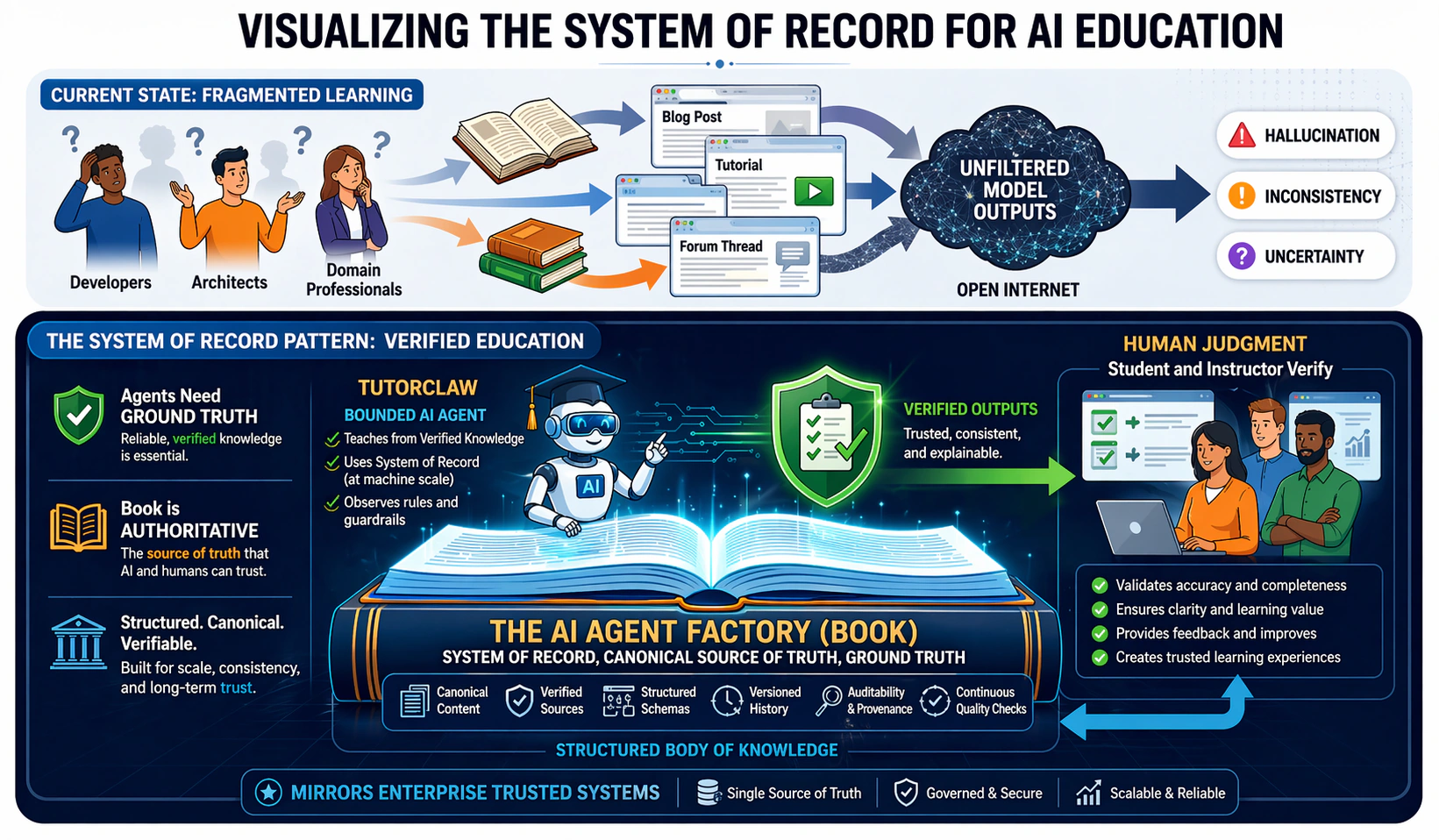
यह metaphor नहीं है। Book की architecture वही pattern follow करती है जिसका Huang enterprise systems के लिए वर्णन करते हैं:
- Book canonical source of truth है: यह define करती है कि agents क्या हैं, कैसे built होते हैं और कैसे governed होते हैं। Agent Factory System of Record यह knowledge हर connected agent को serve करता है।
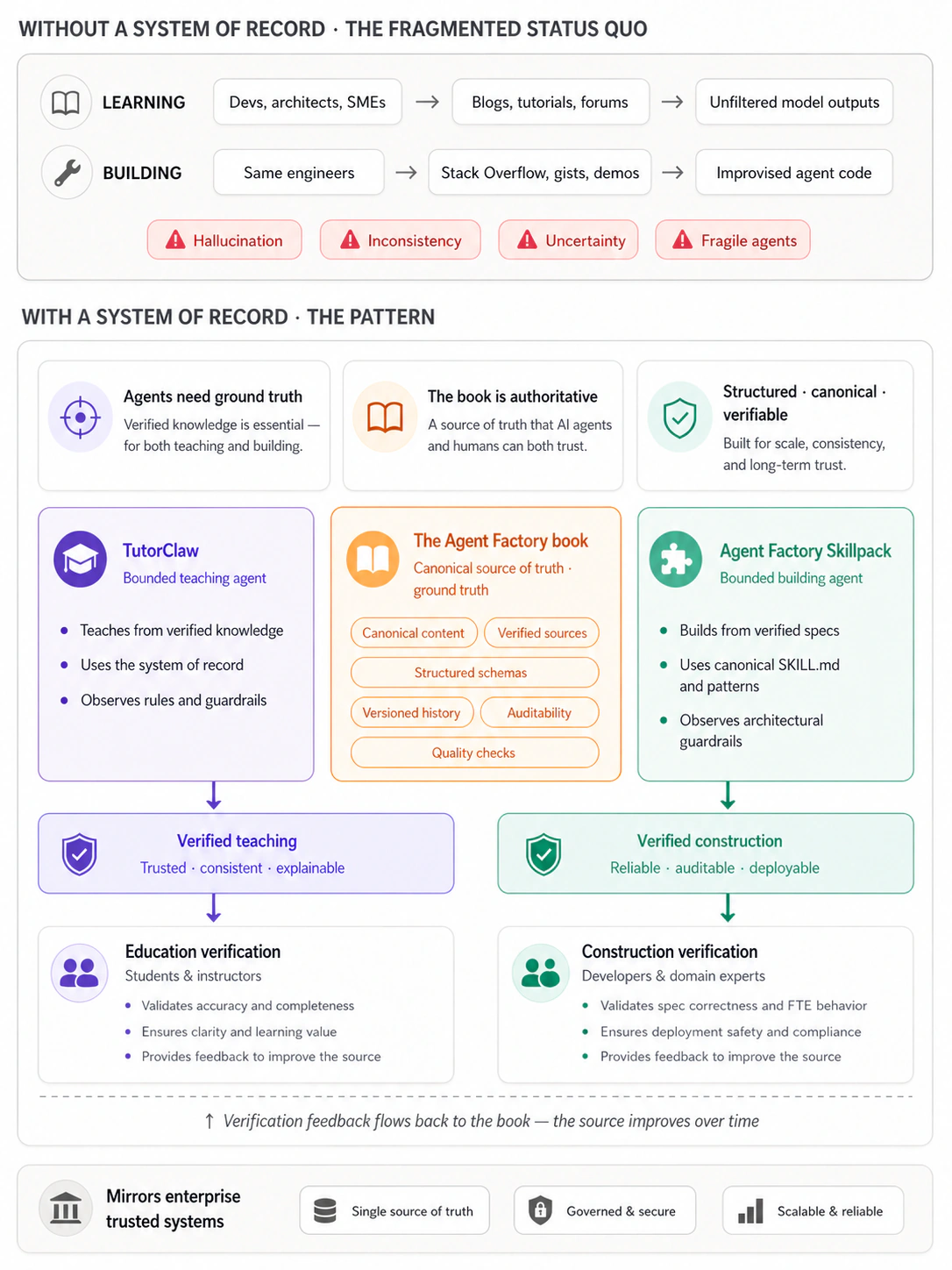
- Zia Tutor AI teaching agent है: यह open internet से नहीं, book से read करता है और probabilistic generation के बजाय verified knowledge से सिखाता है।
- Claude Code और OpenCode building agents हैं: Zia Developer AI से equipped होकर, वे Stack Overflow या scattered tutorials के बजाय book से read करते हैं और improvised code के बजाय verified specifications, SKILL.md templates और architectural patterns से Digital FTEs और AI-Native Companies construct करते हैं।
- Human judgment verification layer है: students, instructors, developers और domain experts confirm करते हैं कि teaching और construction book के intent से match करते हैं। यही 10-80-10 pattern का final 10% है।
लेकिन education कहानी का सिर्फ़ आधा हिस्सा था। वही pattern construction तक extend होता है, और जब आप दोनों pipelines को side by side draw करते हैं, symmetry खुद architecture बन जाती है।
लेकिन pattern education और construction पर रुकता नहीं। वही source तीसरी lane को feed करता है: derivative books का बढ़ता परिवार, जिनमें हर book दो axes में से किसी एक पर specialize करती है: topic या audience, फिर भी source से वही vocabulary, architecture और standards inherit करती है।
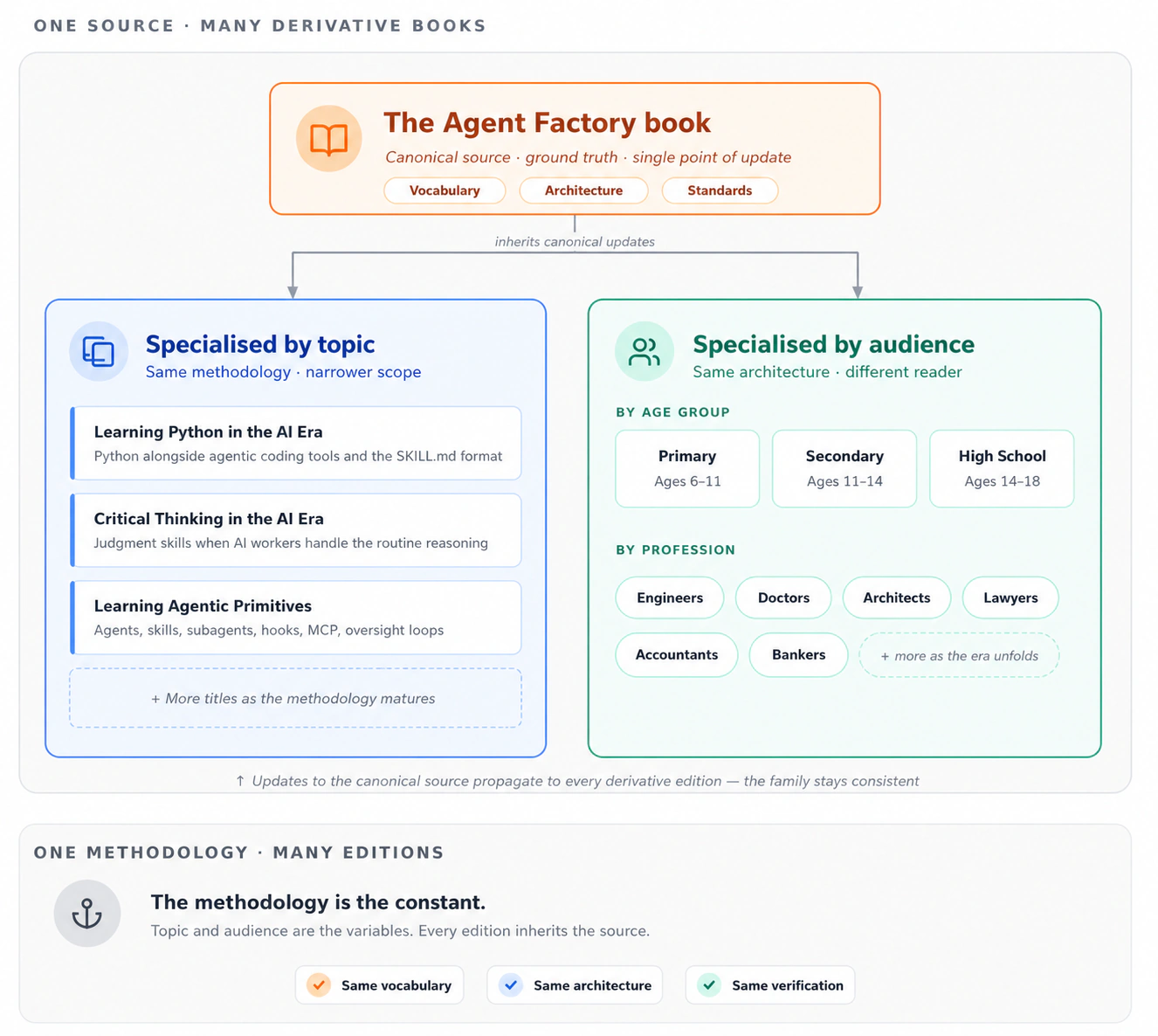
Topic axis। कुछ derivatives scope को एक single discipline तक narrow करते हैं जिसे Agent era reshape कर रहा है। Learning Python in the AI Era Python को उस तरह सिखाती है जैसे अब उसे सिखाने की ज़रूरत है: agentic coding tools, spec-driven workflows और Claude Code तथा OpenCode में run करने वाले SKILL.md format के साथ। Critical Thinking in the AI Era readers को वे judgment skills देती है जो तब required होती हैं जब AI workers routine reasoning संभालते हैं। Learning Agentic Primitives foundational concepts: agents, skills, subagents, hooks, MCP, oversight loops, को focused primer में compress करती है। Methodology mature होने पर और titles आएँगे।
Audience axis। दूसरे derivatives methodology constant रखते हैं लेकिन reader के लिए उसे rewrite करते हैं। Primary, secondary और high-school students के editions उन्हीं architectural ideas को age-appropriate framing में introduce करते हैं, ताकि high-school student अपना पहला SKILL.md उसी vocabulary से build कर सके जो उसका professional counterpart एक दशक बाद use करेगा। Profession-specific editions material को engineers, doctors, architects, lawyers, accountants, bankers और उन दूसरे domains के लिए adapt करते हैं जहाँ workforce Digital FTEs के around redraw हो रही है। Framework constant है। Examples, priors और depth reader के हिसाब से shift करते हैं।
जब canonical methodology update होती है, चाहे नया escalation protocol हो, refined architectural pattern हो या sharper definition, update पूरे परिवार में propagate होता है। हर derivative correction inherit करता है।
और यहाँ एक deeper symmetry काम कर रही है। यह book सिर्फ़ system of record use नहीं करती: यह आपको ऐसे agents build करना सिखाती है जो systems of record use करते हैं, और उन्हीं building agents (Claude Code और OpenCode, Zia Developer AI से equipped) को power करती है जो उन्हें construct करने में आपकी मदद करते हैं। Learning system की architecture, construction system की architecture और curriculum का content एक-दूसरे को mirror करते हैं। आप pattern को experience करके सीखते हैं। आप pattern को use करके build करते हैं।
यह section एक और सवाल उठाता है: अगर book System of Record है, तो उस पर build करने का plan क्या है? उस plan का नाम है The FDE AF Model। यह five-layer blueprint इस System of Record को vertical AI-native businesses में बदलता है, ऐसी layers में arranged जहाँ graduates build भी कर सकते हैं और earn भी।
यही principle एक layer नीचे infrastructure में भी चलता है: आप जो Digital FTEs बनाते हैं उन्हें भी literal system of record चाहिए, और वहाँ book की stance वही है: default रूप से consolidate करें, deliberate रूप से specialize करें, जहाँ एक Postgres relational data, documents, full-text search और AI vectors को साथ रखता है, बजाय उन्हें ऐसे systems में फैलाने के जो sync से drift कर जाते हैं। (Architecture के लिए Thesis देखें, और build के लिए Give Your AI Searchable Context।)
Agentic enterprise बनाना
Agentic AI feature नहीं है। यह workforce है। Companies की अगली generation इसके around बनेगी, जैसे पिछली generation software के around बनी थी, और जिस discipline से यह workforce design, manufacture, deploy और govern होगी वही तय करेगा कि अगला दशक कौन जीतता है।
वह contest definition से global है। यह उस व्यक्ति से नहीं जीता जाएगा जिसके पास सबसे बड़ा model या deepest GPU stack है; यह उससे जीता जाएगा जो AI capability को workforce layer पर reliable, governable, repeatable execution में बदल सके। जीतने वाली teams कुछ ही cities में नहीं बैठेंगी। वे कहीं भी बैठेंगी जहाँ ambitious लोगों के पास internet access और agentic engineering की working knowledge होगी और वे build करने का फैसला करेंगे।
AI tools कैसे evolve हुए हैं, उसमें एक pattern है, और वह बताता है कि lasting value कहाँ बैठती है। AI tools के पहले era ने model को product बनाया। दूसरे era ने harness को product बनाया: Claude Code, OpenCode, Cursor, वे agentic coding environments जहाँ models अपना काम करते हैं। अब कुछ लोग harness platform: SDKs, plugins, vendor-specific extension layers, को third era कह रहे हैं। हम उससे एक layer ऊपर बैठते हैं। हमारे लिए third era वह era है जिसमें harnesses और उनके platforms के across चलने वाली discipline product बनती है। Model commoditize होता है। Harness commoditize होता है। Harness platform commoditize होता है। इन तीनों के बाद जो बचता है वह canonical source है: methodology, vocabulary, verification standards और SKILL.md library जिसे format honor करने वाला कोई भी harness load और run कर सकता है।
वह discipline अचानक इतना matter क्यों करता है? क्योंकि economics जिस दिशा में जा रही है।
"हम बहुत जल्द ten-person billion-dollar companies देखेंगे: billion-dollar valuations. मेरे tech CEO friends वाले छोटे group chat में पहली one-person billion-dollar company के year को लेकर betting pool है, जो AI के बिना unimaginable होता, और अब यह होगा."
— Sam Altman, OpenAI, Alexis Ohanian के साथ conversation में, January 2024 (video · analysis)
Anthropic CEO Dario Amodei ने इसके बाद timeline narrow की है, और पहली single-person billion-dollar company के जल्द आने की strong majority chance बताई है: developer tools, automated customer service और proprietary trading को सबसे likely categories बताते हुए। कुछ ही months में पहला concrete example आया: solo founder ने rented infrastructure और employees की जगह AI agents use करके first-year revenue में hundreds of millions तक telehealth business build किया। हर quarter और examples आ रहे हैं।
वे जो architectural shape build करते हैं, वह वही है जिसे Altman और Amodei describe करते हैं: founder के पास अपना source, AI agents वह work execute करते हुए जिसके लिए historically teams चाहिए थीं, और rented infrastructure बाकी हिस्सा carry करते हुए। उस rented layer में harnesses, messaging platforms और model providers आते हैं।
Agent Factory ecosystem खुद इसी shape का example है। Book source of truth है। Zia Tutor AI सिखाती है और Zia Developer AI build करता है, वह work जो normally team माँगता। Chat apps, coding tools और AI models scratch से build करने के बजाय दूसरी companies से rent किए जाते हैं। Book readers को इसी shape की companies build करना सिखाती है, और जिस ecosystem से वे पढ़ रहे हैं वह खुद वैसा ही है। FDE AF Model पूरी blueprint layer by layer देता है, जिसमें यह भी शामिल है कि graduate हर layer पर कहाँ earn कर सकता है।
जो reader यह book पूरी करता है, वह agentic AI को idea से ज़्यादा समझता है। वह समझता है कि कौन सा work Digital FTE बनता है, उसे perform करने वाले agent को कैसे specify करना है, उसे run करने वाली architecture कैसे deploy करनी है और उससे emerge होने वाली workforce को कैसे govern करना है।
Goal simple है: AI curiosity से आगे बढ़कर AI execution में जाना। Expertise operational बनती है। Workflows repeatable बनते हैं। Capabilities products बनती हैं। Organizations को नई तरह की workforce मिलती है: digital, dependable और design से built. और जो लोग यह workforce build करना सीखते हैं, उन्हें ऐसा leverage मिलता है जो knowledge workers की किसी पिछली generation के पास नहीं था।
Agent Factory ecosystem वही leverage उनके हाथों में देने के लिए exist करता है।