销售目录:销售 AI Workers 的各种 Motion
这份文档放在哪里
这份文档属于 《AI-Native Company》系列。《Agent Factory 论纲》 定义 AI-native company 的架构。《AI Worker 目录》 定义在这套架构里会构建什么。销售目录定义的是:当这些 Workers 准备好交付后,一家 AI-native company 到底如何成交。
这份文档只回答一个问题:我们如何成交?它可以单独阅读。文中少量指向 Worker 目录的交叉引用,即使第一次跳过,也不会影响主线论证。
如何阅读这份文档
这份文档是一件工具,不是一个故事。不同读者会以不同方式使用它。
如果你刚接触 enterprise sales 或 revenue operations。 先从末尾的「附录 A:术语表」开始。快速浏览一遍,让词汇变得熟悉。然后慢慢读 Executive Summary。进入具体 motions 后,第一次只读每个 motion 开头的「白话解释」段落;更深的 Mechanism、Example 和 Risk 可以先跳过,需要深度时再回来。
如果你是正在设计 motion 的创始人、销售负责人或收入负责人。 用 Seller Diagnostic 和 Strategic Fit Matrix 找出哪些 motions 可能适合你的阶段、买方和产品。完整阅读那两三个 motions。其他部分等需要时再看。
如果你是投资人或有经验的 operator。 这份文档就是为你写的。请从头读到尾。motions 的顺序从 buyer-led(多数早期 AI 公司起步的地方)到 vendor-led、outcome-led,再到 partner-led(严肃收入扩张的地方)。
关于术语的一点说明。 这份文档会使用 B2B sales、RevOps 和 AI deployment 中的商业与技术词汇。专业术语第一次出现时,通常会在附近或括号中用普通语言解释。「附录 A:术语表」提供快速参考。你不需要先懂所有术语才能读懂本文。
初学者 10 分钟版本
如果你只有 10 分钟,就读这一节。它会给你理解 AI-native company 如何销售所需的全部核心信息,不包含后文的深度和细节。
什么是 sales motion?
sales motion 是一家公司销售产品的具体方式。它包括谁发起对话(买方还是卖方)、成交需要多久、产品如何定价,以及实际由谁来销售。不同产品需要不同 motion。每月 $20 的 productivity app,和 $1M 的 enterprise contract,销售方式完全不同。
为什么不同产品需要不同 motion?
四件事决定哪个 motion 合适:买方多快体验到价值(几分钟还是几个月)、买方支付多少(低于 $100 还是超过 $1M)、产品评估有多复杂、买方是一个人还是整个组织。一个 vending-machine product(注册、刷卡、几分钟获得价值)不能用 custom enterprise deployment(六个月 stakeholder navigation、签署合同、分阶段 rollout)的方式销售。motion 必须同时匹配产品和买方。
四类 motion,用白话讲
本文把 12 个 motions 分成四类:
- Buyer-led motions(1–4)。 买方找到你、评估你并付款,销售人员不直接参与。例子:AI app 的 free trial、app store 里的 listing、有付费版本的 open-source project。
- Vendor-led motions(5–8)。 你的团队主动联系、运行 sales process 并成交。例子:创始人亲自卖给早期客户、AI-powered cold outbound、大型组织中的 enterprise account executives。
- Outcome-led motions(9–10)。 只有当 AI 交付真实结果时,买方才付款,例如 resolved support ticket 或 processed insurance claim。定价追踪交付价值,而不是访问权限。
- Partner-led motions(11–12)。 第三方(咨询公司、云厂商)把你的产品作为他们更大 engagement 的一部分卖给自己的客户。
选择 motion 最简单的方法
先问两个问题:我的产品每个客户每年多少钱?从第一次接触到签合同,成交需要多久?
小价格 + 短周期 = buyer-led motion(先看 Self-Serve PLG 或 Marketplace-Led)。 小或中等价格 + 中等周期 = vendor-led founder 或 outbound motion。 大价格 + 长周期 = enterprise field、FDE 或 value-based engagement。 持续、可衡量的 outcome = pay-per-outcome(Motion 9)。
拿不准时,用下面的 Strategic Fit Matrix 和 Decision Flowchart 缩小候选范围。
12 个 motions,各用一句话概括
- Self-Serve PLG。 买方注册、刷卡、使用产品,从头到尾不和销售人员交谈。
- Marketplace-Led。 你在宿主平台的 app store 中销售,例如 Salesforce、Shopify、ChatGPT,由平台带来客户。
- Open-Source-Led。 核心产品免费开放,在上层 managed / enterprise version 收费。
- Community-Led。 先建立 audience(YouTube、Discord、Substack),再发布产品,audience 变成第一批客户。
- Founder-Led Sales。 创始人在雇佣销售团队前亲自成交前 5–50 个 deals。
- AI-Augmented Outbound。 小型 SDR 团队用 AI agents 大规模研究并触达 prospects。
- Enterprise Field Sales。 Account executives 背 quota,在数月周期内成交六位数 deals。
- Forward-Deployed Engineering(FDE)。 工程师嵌入客户组织构建定制方案,然后 productize。
- Pay-Per-Outcome。 客户按 resolved ticket、processed claim 或其他可衡量结果付费。
- Value-Based Engagement。 战略性 deals 按已衡量业务价值的一定比例定价。
- Channel & SI Partnership。 咨询公司(Accenture、Deloitte)把你的产品作为 implementation 的一部分销售。
- Hyperscaler Co-Sell。 云厂商(AWS、Azure、Google)帮助销售你的产品,因为它们赚到底层 compute revenue。
每个 motion 的初学难度
每个 motion 在后面的详细小节中都有难度评级。快速参考如下:
- 简单(概念直观,常见起点):Self-Serve PLG(1)、Marketplace-Led(2)、Community-Led(4)、Founder-Led Sales(5)
- 中等(需要一些运营理解):Open-Source-Led(3)、AI-Augmented Outbound(6)、Enterprise Field Sales(7)、Channel & SI Partnership(11)、Hyperscaler Co-Sell(12)
- 高级(需要深领域能力或大量资本):Forward-Deployed Engineering(8)、Pay-Per-Outcome(9)、Value-Based Engagement(10)
以上就是 10 分钟版本。其余部分会详细解释每一块,并给出选择、排序和运行这些 motions 的工具。
执行摘要
Sales Catalog 是 2026 年及以后,用 AI-native products 成交的 recipe book。销售 AI Worker 的方式有很多种;正确方式取决于你的阶段、买方、产品复杂度和 distribution 深度。本文命名 12 个 motions,把它们整理成四类,并说明哪一个适合你的情况。
四类 motion:每一类 motion 首先竞争的是什么。
Buyer-led motions(Motions 1–4)适用于买方自我发现、自我评估并自我购买的场景。卖方的工作是可被发现、低摩擦、可信。卖方不运行 sales cycle;买方运行。
Vendor-led motions(Motions 5–8)适用于卖方主动发起并编排 deal 的场景。卖方的工作是精准 targeting、清晰表达价值,以及穿越 procurement。卖方运行 sales cycle。
Outcome-led motions(Motions 9–10)适用于 deal 围绕结果而不是访问权限构造的场景。卖方的工作是 measurement、attribution 和稳定 delivery。买方只为创造的价值付款。
Partner-led motions(Motions 11–12)适用于第三方推动购买的场景。卖方的工作是 alliance management,让 partners 足够成功,从而持续替你销售。
五个 sales assets:每个 motion 都在争夺什么。
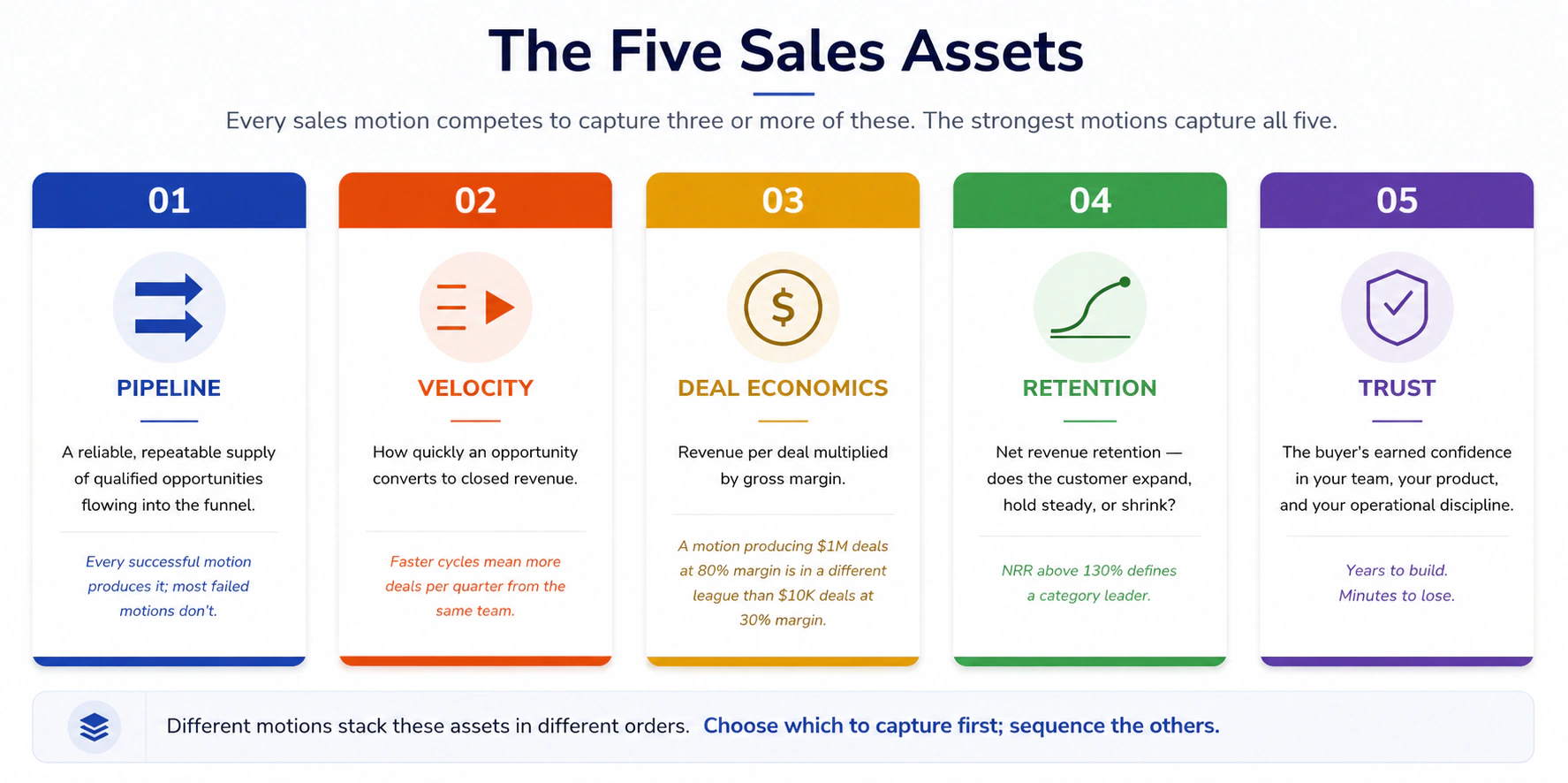
Pipeline 是稳定、可重复进入销售流程的 qualified opportunities。成功 motion 都能产生 pipeline;失败 motion 多数不能。
Velocity 是 opportunity 转化为 closed revenue 的速度。周期越快,同一团队每季度能成交越多。
Deal economics 是每个 deal 的收入乘以 gross margin。80% margin 的 $1M deals,和 30% margin 的 $10K deals,不在同一个收入级别。
Retention 是 net revenue retention:客户会扩大、保持还是缩小支出?SaaS 中 NRR 超过 130% 才称得上 category leader。在 AI 中,数学正在变化,因为 outcome-based revenue 会自然随使用量增长。
Trust 是买方对你的团队、产品和运营纪律获得的信心。信任需要几年建立,几分钟失去。
最强的 motions 会同时捕获三个或更多 assets。agent 时代 revenue strategy 的工作,是先选择要捕获哪个 asset,再按顺序捕获其他 assets。
范围说明。 本目录主要关注 B2B markets,也就是卖给其他企业的 AI Workers 和 AI-native software,而不是直接卖给个人消费者。面向消费者的 AI sales(mobile app store、advertising-led、subscription-led)遵循不同规则,不是本文主轴;不过 Self-Serve PLG、Marketplace-Led 和 Community-Led 也能干净地用于两种语境。
成熟度谱系。 本目录中的每个 motion 都标记为 Proven、Emerging 或 Speculative,依据是当前有多少 AI-native companies 成功运行它。
- Proven motions:已有多家 at-scale companies 正在运行,并有确认收入和记录下来的 playbook。
- Emerging motions:2026 年已有融资公司在运行,但多数结果仍未尘埃落定,规范赢家还没出现。
- Speculative motions:依赖尚未大规模存在的买方行为或 contracting structures,但这些行为或结构可能很快形成。
成熟度不等于质量。Proven motions 更安全;Emerging motions 上行空间更大;Speculative motions 给少数在市场到来前站好位置的团队最大上行空间。
本页用于什么
这份文档有三个用途。
第一,作为选择器。 正在设计 sales motion 的创始人或 revenue leader,可以用 Strategic Fit Matrix、Seller Diagnostic 和 Motion Summary Table 找到适合自身阶段、买方和产品复杂度的 motions。深度章节随后解释 shortlist 上 motions 的 mechanics、risks 和 first moves。
第二,作为参考。 正在运行某个 motion 的 revenue team,可以用深度章节审计自己的运营,把实际 conversion rates、cycle times 和 deal economics 与文中模式对照。
第三,作为规划工具。 创始人在规划公司扩张过程中要按什么顺序运行 motions 时,可以用 Common Hybrid Motions 作为 planning template,因为多数成功 AI-native companies 不是孤立地运行一个 motion,而是按顺序运行两三个。
如何选择 motion
最干净的预测变量是 deal size 和 cycle length 的交叉点。下面的矩阵把 12 个 motions 映射到这两个轴上。每个 motion 都有一个甜蜜点,也可以在相邻格子中运行,只是没那么理想。
| Cycle ↓ \ Deal $ → | Self-serve(<$10K) | Mid-market($10–100K) | Enterprise($100K–1M) | Strategic(>$1M) |
|---|---|---|---|---|
| Days | PLG(1)、Marketplace(2) | — | — | — |
| Weeks | Open-Source(3)、Community(4) | Founder-Led(5)、AI-Outbound(6) | — | — |
| Months | — | Channel(11) | Enterprise Field(7)、Channel(11)、Hyperscaler(12) | — |
| Quarters or longer | — | — | Pay-Per-Outcome(9)、Hyperscaler(12) | FDE(8)、Value-Based(10) |
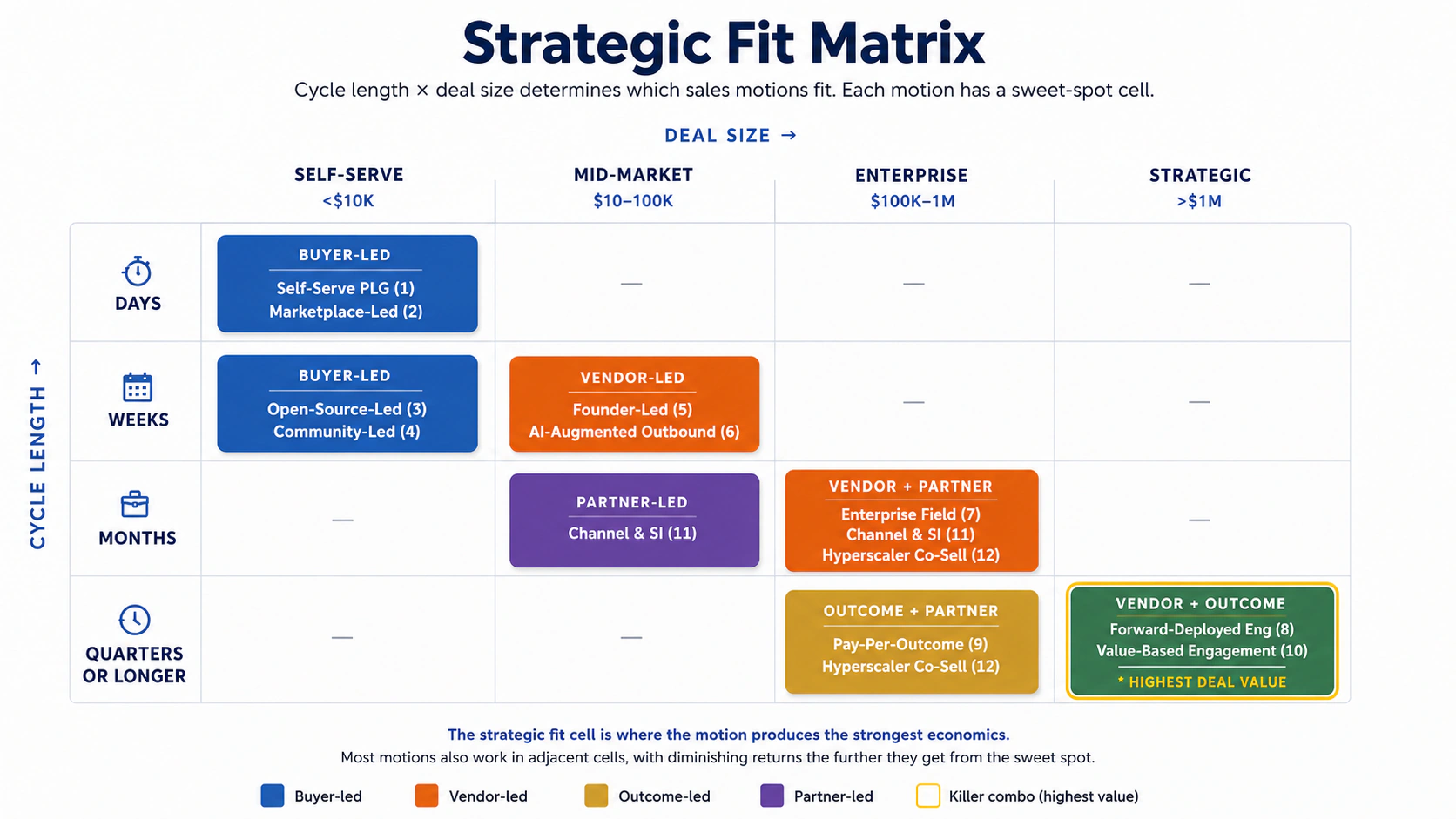
最重要的格子,往往是没人提前规划的格子:从 self-serve 起步的产品,进入 multi-month enterprise cycles。 这就是靠 PLG 增长的公司撞上大型企业 procurement 墙的地方,也是只会 self-serve motion 的 revenue team 突然要运行 enterprise field motion 时最容易卡住的地方。从「buyer-led」过渡到「vendor-led」是 AI-native companies 最常见的 motion failure,也是最可教学的一种。
销售诊断:八个问题
选择 motion 前,请诚实评估下面八个维度。每一行指向的 motions,是最符合该条件的 motions。团队在其中三四项上得分 High,通常会很快缩小到两三个候选 motion。
- 创始人销售能力。 创始人是否仍在亲自成交?是 → Founder-Led、FDE。否,已有销售团队 → Enterprise Field、AI-Outbound、Channel。
- 产品复杂度。 产品在被评估前是否需要买方教育?低 → PLG、Marketplace、Open-Source。中 → Founder-Led、AI-Outbound。高 → Enterprise Field、FDE、Value-Based。
- Time-to-value。 买方第一次交互后,多快体验到有意义的价值?几分钟 → PLG、Marketplace。几天到几周 → Open-Source、AI-Outbound、Pilot。几个月 → Enterprise Field、FDE、Value-Based。
- Outcome measurability。 买方成功是否能被干净衡量?高 → Pay-Per-Outcome、Value-Based。低 → PLG、Enterprise Field、Channel(按 access 定价)。
- 买方技术成熟度。 主要买方有多懂技术?Developer / engineer → Open-Source、PLG、Marketplace。Business / operator → Founder-Led、AI-Outbound、Enterprise Field。Executive / procurement-led → Enterprise Field、FDE、Value-Based、Hyperscaler。
- Procurement friction。 买方典型 procurement cycle 多长?几天到几周 → PLG、Marketplace、Open-Source。几个月 → Founder-Led、AI-Outbound、Enterprise Field(带 pilot phase)。几个季度 → Enterprise Field、FDE、Channel、Value-Based。
- Channel 和 partner ecosystem。 第三方是否已经以相邻方式服务你的目标买方?有且深入 → Channel、Hyperscaler、SI partnership。有但较浅 → Marketplace、Community。没有 → Founder-Led、AI-Outbound、Enterprise Field。
- 资本和耐心。 团队在需要显著收入前能运行多久?少于 6 个月 → PLG、Marketplace、Open-Source。6–18 个月 → Founder-Led、AI-Outbound。18 个月以上 → Enterprise Field、FDE、Value-Based。
diagnostic 不会告诉你哪个 motion 正确。它告诉你,基于起点,哪些 motions 对你是可用的。上面的矩阵和下面的深度章节,会告诉你在可用 motions 中,哪一个最锋利。
Motion 总览表
12 个 motions 的一页参考。用它快速浏览目录,但不要用它做最终决定;真正的差异在后面的深度章节。
| # | Motion | 成熟度 | 最适合 | 典型周期 | 典型 deal size | 主要风险 |
|---|---|---|---|---|---|---|
| 1 | Self-Serve PLG | Proven | 有即时价值的 developer-tool / productivity products | 几小时到几天 | 初始 <$10K;可扩张 | conversion-to-paid 停滞 |
| 2 | Marketplace-Led | Proven | 能自然嵌入宿主平台的 apps | 几天 | $10–50K | 平台竞争或下架 |
| 3 | Open-Source-Led | Proven | developer infrastructure 和 frameworks | 几周到几个月(open-to-paid) | $50K–500K commercial | open-to-commercial 转化失败 |
| 4 | Community-Led | Proven | 有强 identity / target persona 的产品 | 几周到几个月 | $10–100K | scale 后 community dilution |
| 5 | Founder-Led Sales | Proven | PMF 前;前 5–50 个 deals | 几周 | $25–250K | founder bottleneck;handoff 失败 |
| 6 | AI-Augmented Outbound | Emerging | mid-market vendor-led GTM | 几周到几个月 | $25–250K | 买方疲劳于 AI-generated outreach |
| 7 | Enterprise Field Sales | Proven | 面向大型组织的六位数 deals | 3–9 个月 | $100K–1M | 周期长;CAC 重 |
| 8 | Forward-Deployed Engineering | Proven | 需要定制工作的 strategic enterprise deals | 首单 6–12 个月 | $500K–5M | service-business gravity |
| 9 | Pay-Per-Outcome | Emerging | outcomes 可清晰归因的 workflows | 2–6 个月 | variable;usage-based | 早期负毛利 |
| 10 | Value-Based Engagement | Speculative | strategic transformation deals | 6–18 个月 | $1M–10M+ | attribution disputes |
| 11 | Channel & SI Partnership | Proven | 需要 implementation expertise 的产品 | 3–9 个月(通过 partner) | $100K–1M | partner economics misalignment |
| 12 | Hyperscaler Co-Sell | Proven | cloud-native 且 compute footprint 大的产品 | 2–6 个月 | $100K–1M+ | hyperscaler 降优先级 |
我应该运行哪个 motion?
下面的 flowchart 按顺序排列最重要的决策。自上而下回答问题,并在第一个 YES 处停止;那就是你的分支。叶子节点会给出一到四个候选 motions,供你完整阅读。
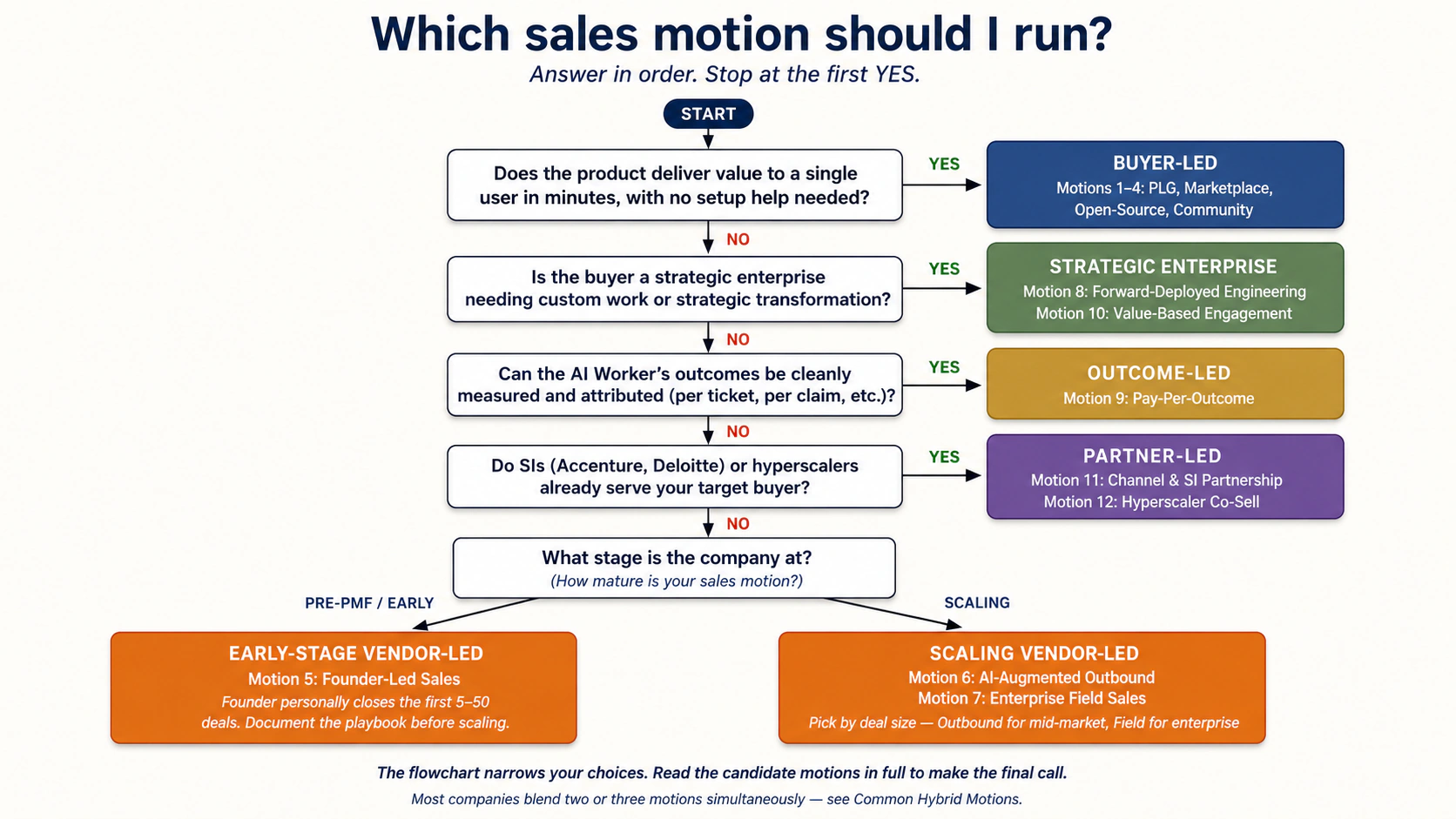
这个 flowchart 是有观点的。它把现实中的细微差异压缩成清晰的 YES/NO 分叉,目的是把 12 个选项缩小到两三个。缩小候选范围后,再用上面的 Seller Diagnostic 和 Strategic Fit Matrix 细化选择。多数公司最后会同时运行两三个 motions,而不是只运行一个;文末的 Common Hybrid Motions 列出了最常见组合。
买方成熟度和时机
本目录中每个 motion,在买方自己的 AI journey 中都有一个窗口。一个从未在生产环境部署 AI 的买方,和一个大规模运行 production AI 的买方,购买方式完全不同。适合 AI-native buyer 的 motion,在 AI-curious buyer 面前会显得陌生;反过来也一样。
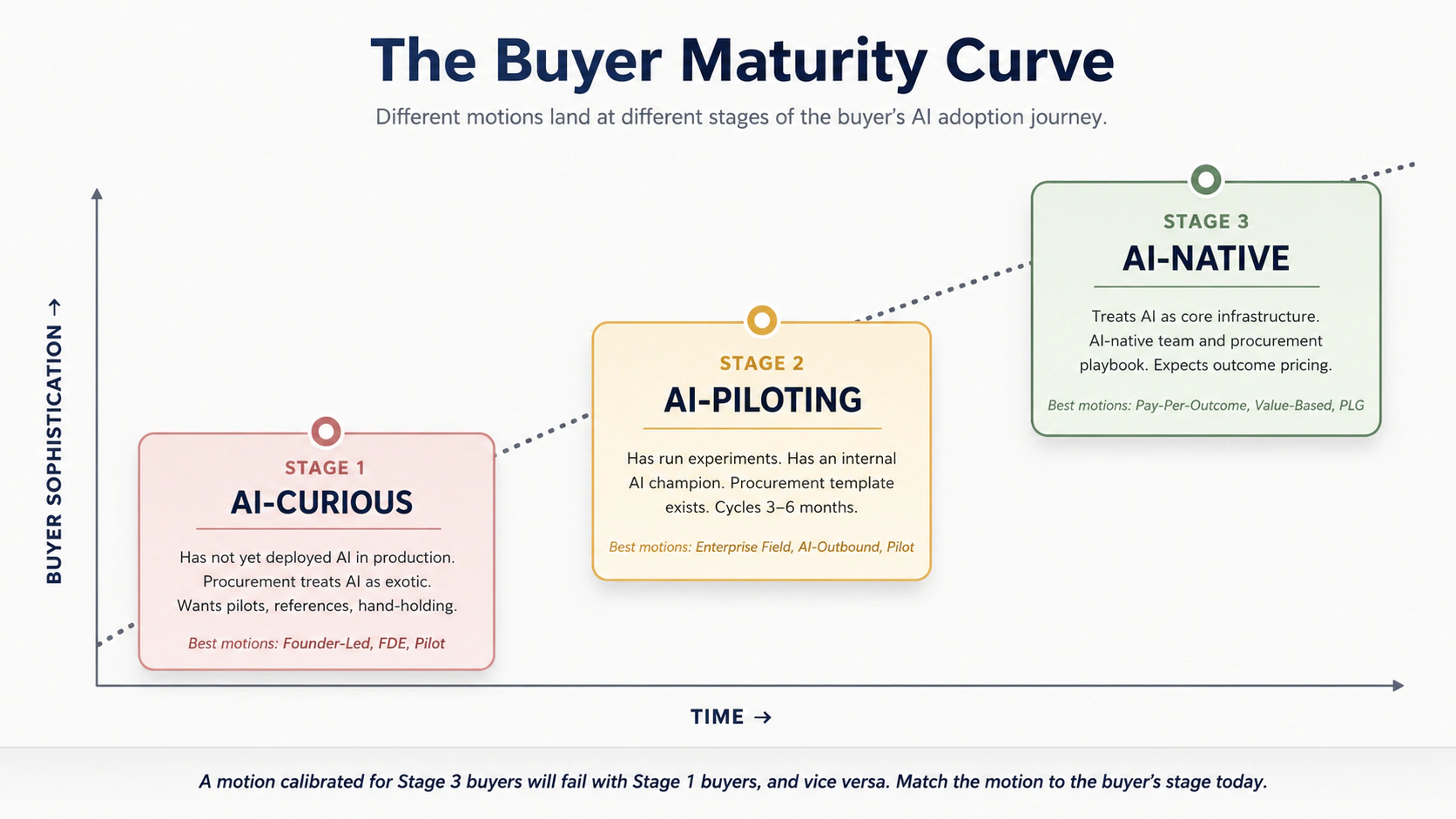
买方成熟度曲线有三个阶段。
Stage 1 — AI-Curious。 买方对 AI 感兴趣,但还没有在生产环境部署。procurement 把 AI 当作新奇事物;legal 需要从零起草 AI-specific language;security 没有 AI vendor template。买方需要 pilots、references,以及能在内部背书的 sponsor。销售周期慢,因为每个 objection 都是第一次被提出。最佳 motions:Founder-Led、FDE、带 paid pilot phase 的 Enterprise Field。
Stage 2 — AI-Piloting。 买方已经做过 experiments。内部有 AI champion(通常是 VP of Engineering、Chief Data Officer 或 AI-curious COO),至少把一个 model 推到生产环境。procurement 有基本 AI vendor template。销售周期更快(3–6 个月),因为买方知道该问什么。最佳 motions:Enterprise Field、AI-Augmented Outbound、Channel。
Stage 3 — AI-Native。 买方把 AI 当作核心基础设施。有 AI-native team、AI procurement playbook,并期待 outcome-based pricing options。明确适配的产品,销售周期可以很快(几周),但 procurement scrutiny 很强:security review 严格、competitive benchmarking 彻底,买方会围绕 outcomes 谈判,而不只是谈价格。最佳 motions:Pay-Per-Outcome、Value-Based、Hyperscaler Co-Sell、PLG(用于部门采用)。
地理位置会加速或延迟这条曲线。Silicon Valley、Seattle、Boston、New York、London、Toronto、Berlin、Bangalore 和 Singapore 在 2026 年主要是 Stage 2 或 Stage 3 市场。世界其他大部分地区落后两到三年:欧洲大陆、拉丁美洲、中东、非洲和东南亚许多 enterprise buyers 仍稳稳处在 Stage 1,正在向 Stage 2 过渡。
这对全球销售的创始人意味着:同一个产品在不同市场需要不同 motions。self-serve PLG product 在 San Francisco 和 São Paulo 可以同样销售;买方就是用户,用户的成熟度不完全取决于地理。但为 San Francisco 的 AI-native buyers 校准的 enterprise field motion,放到 Karachi、Lagos 或 Jakarta 会失败,不是因为当地买方不聪明,而是因为 AI procurement 还不成熟。卖方必须放慢 motion:更多教育、更多 references、更长 pilots、更多 procurement hand-holding。
相反的错配同样代价高昂。为 Stage 1 buyers 校准的 motion(重 hand-holding、长 pilots、创始人每通电话都在场)在 Stage 3 markets 中既贵又显弱。Stage 3 buyer 想要 outcome-based pricing 和四周 procurement cycle。对他们卖 Stage 1 motion,会传达卖方不成熟、缓慢,而且可能不值得 integration effort。全球销售的创始人需要知道买方今天处在哪个阶段,而不是 reference customers 处在哪个阶段。
成熟度图例
- Proven。 该 motion 今天已有多家 AI-native companies 大规模运行,收入确认,playbook 已记录,mechanics 已被理解。
- Emerging。 该 motion 在 2026 年正由融资后的 AI-native companies 运行,但多数结果仍待观察,规范赢家还未出现。
- Speculative。 该 motion 依赖尚未大规模存在、但正在合理形成的 buyer behaviors 或 contracting structures。
A. 买方主导的 motions
买方自我发现、自我评估、自我购买。卖方的工作是可被发现、低摩擦、可信。卖方不运行 sales cycle;买方运行。这类 motions 在 velocity 和 CAC efficiency 上很强,但初始 deal size 通常小于 vendor-led motions。
Motion 1 — Self-Serve PLG(Product-Led Growth)
Maturity: Proven. Beginner difficulty: Easy.
白话解释。 想象一台卖软件的 vending machine。买方走过去,刷信用卡,产品就出现。没有销售人员,没有合同谈判,也没有为了每月 $20 subscription 走 procurement review。Self-Serve PLG 正是如此:产品自己完成销售。买方注册,在几分钟内体验价值,并在使用量证明付费层合理时自行升级。¹
这只适用于产品能让单个用户无需组织协调就获得即时、明显价值的场景。Cursor(AI code editor)是干净例子:工程师注册,用 AI 辅助写代码,第一场 session 就看到价值,免费额度用完后升级。Linear、Notion AI、ElevenLabs 都运行这个 motion 的变体。
最适合作为具备即时单用户价值产品的 founding motion。公司扩张时常与 Enterprise Field 配套;PLG → Enterprise hybrid 是 2026 年最常见的 motion sequence 之一。
核心想法。 消除 curiosity 和 value 之间的摩擦。sign-up flow 中任何不能产生价值的步骤都应移除。产品本身就是 sales pitch、demo 和 close。
何时使用。 当 target buyer 就是 user(不是独立 procurement role)、价值即时出现(分钟,不是周)、价格低于 corporate-card thresholds(通常 <$200/seat/month,虽然随着 AI 产品证明 ROI,这个上限正在上升)。
Mechanism。 PLG 之所以有效,是因为它反转了传统 B2B funnel。不是把 sales-qualified leads 推给销售,再由销售推向产品;而是产品产生 qualified buyers,让他们自己拉动自己走向 paid conversion。CAC 主要来自 product investment(onboarding、activation、in-product upgrade prompts),不是 headcount。约束是 conversion-to-paid:多数 PLG 产品只有 2–5% 的 free users 转为 paid。
虚构 walkthrough。 想象 FocusFlow,一个每月 $20、帮用户整理 email 的 AI app。用户午餐时注册,连接 inbox,五分钟内开始有效使用。第一周就撞到每天 100 条 AI summaries 的 free-tier ceiling,于是升级付费,没有任何销售参与。FocusFlow 增长,是因为产品自己把 free users 转成 paying users。
Example。 已确认例子:Cursor 从 free-tier code editor 到 paid subscriptions 再到 enterprise contracts。Linear、Notion AI、Perplexity Pro、ElevenLabs 的 voice generation。
主要风险。 Conversion-to-paid 停滞。产品有 adoption,但用户不升级。Mitigation: 把 upgrade trigger 直接设计进产品。free tier 的 usage ceiling 要紧到真实 power users 第一周就撞到,而不是一年后才撞到。
次要风险。 self-serve plateau。motion 能支撑部门采用,但公司的 enterprise expansion(security review、multi-seat negotiation、custom contracts)需要团队尚未构建的 sales motion。Mitigation: 在 PLG 产生 enterprise-scale prospects 之前,而不是之后,雇佣第一位 enterprise seller。从 buyer-led 到 vendor-led 的过渡需要有意设计。
第一步。 构建一个 free tier,让用户注册后五分钟内产生真实价值。没有这个时刻,其他 PLG 机制都无关紧要。
Motion 2 — Marketplace-Led
Maturity: Proven. Beginner difficulty: Easy.
白话解释。 想象你在一个热闹 bazaar 里租了摊位。你不必自己吸引人群,bazaar 已经把人带来了。你的工作是成为 bazaar 里最好的摊位。Marketplace-Led selling 意味着把你的 AI product 放进成熟平台的 app store 中,例如 Salesforce AppExchange、Shopify App Store、Microsoft AppSource、ChatGPT Apps directory、Atlassian Marketplace。marketplace 负责 discovery、billing 和初始 trust signal。你负责产品。
这个 motion 对 AI products 特别强,因为买方决定需要 AI feature 时,往往已经身处平台里。需要 AI lead-scoring tool 的 Salesforce admin 会先搜 AppExchange,而不是先搜 Google。
最适合作为 founding distribution motion,或作为成熟产品的 complementary channel。很少成为公司 scale 后唯一 motion。
核心想法。 继承平台的 distribution、billing 和 trust apparatus。用 revenue share 或 listing fees 支付,而不是直接 customer acquisition costs。
何时使用。 当你的 AI product 能干净嵌入某个平台的现有用户群、平台客户与目标客户重合,且平台 revenue share 低于你直接获客成本时。
Mechanism。 marketplace 同时解决三个创始人问题:discovery(买方在平台里购物时找到你)、billing(平台处理信用卡、invoicing 和 tax)、trust(平台 vetting 本身就是 trust signal)。代价是平台 revenue share(通常 15–30%)和平台 policy risk(它们可以改条款或做 competing first-party feature)。
虚构 walkthrough。 想象 NoteSnap,一个 Salesforce 的 AI summarization app。它上架 Salesforce AppExchange。Salesforce admin 在 AppExchange 找 productivity tools,发现 NoteSnap、安装、在 free trial 中看到价值,并通过 Salesforce billing 转为 paid。NoteSnap 没跑 outbound campaign;平台完成了 customer acquisition。
Example。 已确认例子:Salesforce AppExchange 和 Shopify App Store 中大量成功公司。2026 年通过 Claude Apps 和 ChatGPT Apps 交付的 productivity agents。嵌入 Meta 和 TikTok ad platforms 的 AI-native ad-creative tools。
主要风险。 platform risk 不对称且可能致命。policy change、take-rate increase 或 first-party feature launch 都可能一夜抹掉 marketplace-led business。Mitigation: 在平台外保留 direct relationship layer:自己的 email list、community 或 data export pathway,让平台终止可以恢复,而不是致命。默认平台最终会和你竞争。
第一步。 先选择一个平台,并成为里面的一等公民(top-rated、deeply integrated、frequently updated),再考虑第二个平台。
Motion 3 — Open-Source-Led
Maturity: Proven. Beginner difficulty: Medium.
白话解释。 免费公开菜谱,为 catering 收费。Open-Source-Led selling 意味着把产品核心作为 open-source code 发布,任何 developer 都能阅读、修改和运行。随着更多 developers 使用,声誉增长,contributors 加入,代码变好,而你不必支付 marketing team。然后你销售上层 paid version:managed hosting、security features、audit logs、support contracts、regulated-environment certifications。
这个 motion 对 AI infrastructure 特别强:agent frameworks、evaluation tools、developer libraries 中,developer mindshare 是主要 moat。
最适合作为 infrastructure-shaped products 的 founding motion。commercial offering 成熟后,常与 Channel 或 Hyperscaler Co-Sell 配套。
核心想法。 把 open-source project 当成全球分布式 marketing function。community 帮你 evangelize;一小部分 users 在遇到运营、安全或 scale 需求时成为 paying customers。
何时使用。 target buyer 是技术人群(developers、ML engineers、infrastructure teams),公司有可信理由为 managed version 付费(hosting、compliance、support),且团队能在多年时间线上持续 open-source development、建立 community。
Mechanism。 open-source-led 有效,是因为 developer adoption 走在 enterprise adoption 前面:工程师先在自己的机器上试验 open project,等公司有相关需求时在内部倡导。pre-sales relationship 在任何销售入职前已经建立。约束是 open-to-commercial conversion:很多 open-source projects 失败不是技术不好,而是 founders 从未在免费版本之上构建清晰 paid product。
虚构 walkthrough。 想象 AgentCore,一个让 developers 构建 AI agents 的 open-source framework。数千 developers 免费下载、贡献、构建 apps。AgentCore 的商业版本 AgentCore Cloud 向 enterprises 收取 managed hosting、single sign-on、audit logs 和 compliance certifications 费用。free project 驱动 adoption;paid version 捕获需要 enterprise features 的客户。
Example。 已确认例子:LangChain、Continue、n8n、Cline,以及大量在 widely-adopted open core 上交付 commercial managed versions 的 agent frameworks。这是当前 agent ecosystem 中最显著的模式之一。
主要风险。 open-to-commercial conversion 失败。open project 非常流行,但商业收入很弱。Mitigation: 提前决定哪些永远不免费,通常是 managed hosting、single-sign-on、audit logs、advanced security 和 enterprise support,并公开承诺这条线。如果边界移动,volunteers 和 contributors 会失去信任。
次要风险。 hyperscaler appropriation。AWS、Azure 或 GCP 把你的 open project 包成自己的 managed service,并凭 distribution 击败你。Mitigation: 早期直接与 hyperscaler partner programs 合作,或使用限制 cloud-provider commercial use 的 license(BSL、SSPL),除非取得明确授权。
第一步。 先把 open project 交付到真正有用,再谈商业版本。community 能从很远闻到 bait-and-switch。
Motion 4 — Community-Led
Maturity: Proven. Beginner difficulty: Easy.
白话解释。 想象你还没卖任何东西,就已经有名。Community-Led 意味着在 paid product 交付很久以前,就建立 audience:Discord server、YouTube channel、Substack、tutorial library、public build-in-public X account。等你真正发布时,audience 已经在那里。他们一直等着你的产品,会购买、传播,并原谅早期版本缺陷,因为他们对你的成功有个人投入感。
这个 motion 与面向技术 audiences 的 Open-Source-Led、以及某些 AI tools 的 Marketplace-Led 有重叠,但它的独特特征是 founder(或团队)的 public identity 成为入口。
最适合作为具备强 creative identity 产品的 founding motion。如果不刻意把 community 转成结构化 brand asset,很难超越 founder 个人触达范围。
核心想法。 先构建 audience,再构建产品。把 distribution 当成长期 moat,而不是季度费用。
何时使用。 founder 或团队能在 target buyer 的 ecosystem 中可信地产出内容(dev tools 对应 developer-influencer,creator tools 对应 creator-influencer,vertical SaaS 对应 operator-influencer),没有成熟 marketplace 或 platform 可嵌入,且团队能在严肃收入前耐心投入 12+ 个月构建 audience。
Mechanism。 community-led 有效,因为 audience 会自我预筛选。一个关注 developer-influencer 两年、然后购买其产品的人,比 paid acquisition 带来的 cold lead 高 10–20 倍更可能转化。Trust 是最昂贵的 sales asset,而它在产品发布前就已建立。
虚构 walkthrough。 想象 VideoMaker,一个 AI video editing tool。创始人在 YouTube 和 TikTok 上发了两年教程,发布前已有 5 万 followers。launch day 时 audience 已经在等。前 1000 个 paying customers 直接来自现有 followers;launch-week revenue 超过多数 pre-launch products 第一年的收入。
Example。 已确认例子:Tiago Forte 的 Building a Second Brain franchise、Lenny Rachitsky 从 product-management Substack 到 software 的轨迹,以及向 audience 发布 tools 的 AI-creator personalities。这个模式更多由个人塑造,而不是公司。
主要风险。 scale 后 community dilution。早期 audience 重视亲密感和 founder 直接接触;公司扩张后,这种亲密感无法维持。Mitigation: 把 community 转为 brand asset(命名 programs、public events、tier rewards),而不是永远依赖 founder 个人 presence。
第一步。 在有产品可卖之前开始持续产出内容。至少 12 个月稳定内容、不带 commercial pitch,是入场价格。
B. 供应商主导的 motions
卖方发起并编排 deal。卖方的工作是精准 targeting、value articulation 和 procurement navigation。这类 motions 在 deal size 和 predictability 上强,但需要更大团队和 buyer-led motions 不需要的耐心。
Motion 5 — Founder-Led Sales
Maturity: Proven. Beginner difficulty: Easy.
白话解释。 早期餐馆里,做饭的 chef 也迎宾、点菜、结账。Founder-Led Sales 正是如此:创始人在雇佣销售团队前,亲自 hand-close 前 5–50 个 deals。没有别的方式能学到买方真正重视什么、真实 objections 是什么、真正 sales playbook 长什么样。跳过这一步、过早雇佣 VP of Sales 的创始人,会交付一个未验证的 sales motion 和一个无法临场发明它的团队。²
最适合作为任何复杂 B2B AI product 的 founding sales motion。请计划在 6–18 个月内过渡到 AI-Augmented Outbound、Enterprise Field 或另一个 vendor-led motion,因为 founder bandwidth 是硬约束。
核心想法。 创始人是团队中唯一同时拥有产品上下文和战略裁量权、能成交非标准 deals 的人。第一阶段用 founder,然后把 founder 学到的内容转成 repeatable playbook,再雇佣 sellers。
何时使用。 对 pre-Series A 或 sales motion 早期演化中的 B2B AI-native companies 来说,几乎总是应该使用。即使主要运行 PLG motion 的公司,也会从早期 enterprise deals 的 founder-led sales 中受益。
Mechanism。 Founder-Led 有效,是因为早期每个 deal 都部分定制。买方在冒险赌一家年轻公司;只有 founder 能权威地说「是,我们可以做到」,并让这句话成真。约束是 founder bandwidth:一个 founder 通常每季度能在同时做产品、融资、招聘的情况下成交 3–5 个 deals。超过这个数量,motion 会卡在 founder 身上。
虚构 walkthrough。 想象 LegalDraft,一个 AI legal-research tool。创始人曾是 corporate attorney,亲自给旧律所的 30 个朋友打电话,demo 产品、逐个谈价格,并在雇佣任何销售前亲自签下前 15 个客户。她也在这 15 次对话中发现,自己以为的 killer use case 并不重要,而差点砍掉的 boring feature 才是客户真正愿意付费的。
Example。 已确认模式:2025–2026 年多数成功 B2B AI-native startups,无论最终扩张到哪个 motion,都为前 5–50 个客户运行了 founder-led sales。Harvey、Sierra、Glean、Hebbia 都符合这个模式。
主要风险。 founder bottleneck。创始人参加太多销售会议,以至于无法构建产品或经营公司。Mitigation: 明确给这个 motion 设置 sunset。前 30–50 个 deals 之后,创始人应该写 sales playbook,而不是再亲自跑下 50 个 deals。
次要风险。 handoff 失败。第一位销售无法复制 founder 的销售方式,因为 founder 的销售包含未写下来的产品承诺、即兴 pricing 和 personal relationships。Mitigation: 每个 commitment、pricing exception 和 deal structure 都在发生时记录。handoff document 是在 founder-led sales 期间建出来的,而不是之后。
第一步。 创始人亲自成交下一个 deal。之后的一切,都建立在这一单学到的东西上。
Motion 6 — AI-Augmented Outbound
Maturity: Emerging. Beginner difficulty: Medium.
白话解释。 想象一支 50 人 sales development team 被压缩成 5 人。AI-Augmented Outbound 用 AI agents 完成过去需要大量 SDR 才能完成的 research、drafting 和 follow-up,把小型人类团队留给 AI 还做不好的 live conversations 和 demos。传统 SDR 每天发送 30 封 personalized emails;AI-augmented SDR 发送 3000 封。³
这是 AI 本身创造出来的 sales motion。两年前底层技术还不够。今天,调校良好的 AI-augmented outbound 能达到或超过最好 human SDR teams 的 personalization quality,并以小得多的 headcount 完成,人类 SDR 仍在关键 conversations 中保留在回路里。
最适合作为 mid-market vendor-led GTM 的 primary motion。也可作为任何 vendor-led motion 上的 augmentation layer。mechanics 会随底层 AI tooling 快速演化。
核心想法。 用 AI agents 执行 upper-funnel 的 research、drafting 和 follow-up。保留小型人类团队处理 bottom-funnel(live conversations、demo coordination、deal navigation),因为那里 AI 还不能替代人类判断。
何时使用。 target buyer 能通过 email 或 LinkedIn 触达(常见于 mid-market tech buyers,对 executive-level enterprise buyers 可靠性较低),产品能在 30 分钟 call 中演示,且团队有 RevOps maturity 来 instrument 和 tune AI prompts 与行为。
Mechanism。 AI-augmented outbound 有效,是因为传统 outbound 的限制一直是 scale 下的 personalization quality。人类每天能写 30 封 personalized emails;AI 能写 3000 封。约束从 outreach volume 转移到 deliverability、response quality 和 human SDR 处理更高 response rate 的能力。早期团队声称 pipeline efficiency 相比纯人类 outbound 有 2–4 倍提升,但独立 benchmarks 仍稀少,比较结果高度依赖如何定义 pipeline。
虚构 walkthrough。 想象 SalesScope,一个 B2B AI tool。它的 5 人 SDR team 用 AI agent 每周研究 1 万个 prospects、为每个 prospect 起草 personalized outreach,并自动 follow up。人类 SDR 只处理由此产生的 live conversations。这个团队每月 booked meetings 超过一个 comparable 50 人手工 outreach SDR team,而 headcount cost 只有十分之一。
Example。 emerging analogues:Apollo、Clay、Salesloft AI、Outreach AI,以及 2025–2026 年交付的大量 AI-native sales engagement platforms。许多 AI-native vendors 把这个 motion 作为 primary outbound engine。
主要风险。 买方疲劳于 AI-generated outreach。随着 AI-augmented outbound 扩散,买方会学会识别并忽略它。Mitigation: 用 AI 做 research 和 drafting,但让 human SDRs 负责真实 sending 和 follow-up。「AI-generated、AI-detected、ignored」这条路径真实存在且在增长。
次要风险。 compliance 和 deliverability。大规模 AI-augmented outbound 可能触发 ESP 惩罚或违反地区规则。Mitigation: 投入 deliverability infrastructure,并严格遵守区域法规。
第一步。 审计当前 SDR team 的真实时间分配。如果他们超过 40% 时间用于 research 和 drafting,AI-augmented outbound 就有明确 leverage opportunity。如果他们大部分时间在 live calls 和 meeting coordination,leverage 较小。
Motion 7 — Enterprise Field Sales
Maturity: Proven. Beginner difficulty: Medium.
白话解释。 像在 dealership 卖车,只是 dealership 在客户办公室里,而车价值 $1M。Enterprise Field Sales 是传统 B2B sales motion:account executives 背每年 $1–5M quota,穿越 3–9 个月 multi-stakeholder deals,其中 executive champions、technical evaluators、security reviewers、legal 和 procurement 都需要被导航。⁴
这是最常与 old-school enterprise software(Oracle、SAP、Salesforce)关联的 motion。它也是唯一能可靠、大规模产生数十万美元 AI deals 的 motion。
最适合作为面向六位数 deals 产品的 primary motion。常常是 PLG、Founder-Led 和 AI-Augmented Outbound 公司扩张后的 destination motion。
核心想法。 用 sales-team specialization 匹配买方 procurement complexity。买方有批准支出的 CFO、批准架构的 CIO、批准 vendor 的 security team、批准合同的 legal team;卖方就需要相应 specialists。
何时使用。 annual deal size 超过 $100K,买方是有正式 procurement 的大型组织,产品评估不止 30 分钟对话,团队有 18+ 个月资本支撑长 sales cycle。
Mechanism。 enterprise field sales 有效,是因为大型组织通过采购流程降低 bad-vendor risk。卖方的工作是在数月里穿越这个流程:内部建立 champions、提供 security documentation、谈 contracts。几乎每个 enterprise AI deal 都是 paid pilot 后接 production contract;pilot 不是独立 motion,而是这个 motion 的标准 entry phase(见 Cross-cutting concepts 中的 Pilot economics)。
约束是 sales-team CAC。一个 fully-loaded enterprise account executive(salary、commission、benefits、sales-engineering allocation、tooling)通常每年在 mid-six-figures,并需要 6–9 个月 ramp 到 full quota。ramp 完成前,每个 AE 都是没有对应收入的成本。playbook 尚未验证就过快雇佣太多 AEs 的公司,会比 deals 成交更快地烧掉资本。
虚构 walkthrough。 想象 HRSmart,一个面向 Fortune 500 HR teams 的 AI tool。成交一单需要 6 个月:AE 先见 VP of HR,再见 CIO,再过 security review(3 周)、legal(6 周)、procurement(4 周)。deal 以 $400,000 ACV 成交。AE fully loaded 每年成本 $400,000,需要 9 个月 ramp。数学能成立,是因为每个 AE 每年在这个规模上成交 3–5 单。
Example。 已确认例子:Glean、Harvey、Sierra、Writer、Cresta 中多数六位数以上 AI-native deals 都通过 enterprise field motions。它们都构建了带 specialized roles(AEs、SEs、customer success、sales engineering)的正式销售组织。
主要风险。 长 sales cycles 烧资本。fully-loaded mid-six-figure AE cost 加上 6–9 个月周期,意味着每个 AE 在任何 deal 成交前都会消耗显著资本。Mitigation: 集中在少数高价值 target accounts(account-based selling),而不是向数千 mid-market companies 广撒 outbound。
次要风险。 CAC ratios 过重。enterprise field motions 可能产生 18+ 个月 CAC payback periods,这对需要展示效率的 venture-backed companies 不可持续。Mitigation: 将 enterprise field 与能提供低成本初始进入的 PLG 或 pilot motion 结合,然后在 account 内扩张。
第一步。 先雇佣一位 enterprise seller,让其运行 playbook 6 个月,再雇第二位。第二位成功建立在第一位学到的东西上,而不是并行学习。
Motion 8 — Forward-Deployed Engineering(FDE)
Maturity: Proven. Beginner difficulty: Advanced.
白话解释。 不是菜单,而是嵌入式 chefs。把你的工程师送进客户厨房,现场做定制餐。随着时间推移,菜谱会变成可卖给其他客户的菜单。Forward-Deployed Engineering 意味着把一小支工程团队(现在也包括 AI Workers)嵌入一个客户组织数月,为他们精确构建定制方案。每次 engagement 都让团队学到客户行业的具体运作方式。到了第三或第四次 deployment,你就有足够 productized patterns,可以推出 self-serve vertical product。
Palantir 在 defense 和 intelligence 领域发明了这个模型。Anthropic 的 Applied AI team 和 OpenAI 的 Forward Deployed function 今天在 lab 层面运行它。Sierra 和若干 enterprise AI vendors 运行它的变体。
最适合作为 enterprise-scale strategic deals 的 founding motion,或作为需要特定行业 vertical depth 的 product company 的 mid-stage 路径。常过渡到 Vertical AI-Native Greenfield。
核心想法。 engagement 本身就是 product discovery。engagement 中获得的 patterns 变成让公司 scale 的 moat。
何时使用。 target customer 是 strategic enterprise(政府、大银行、大型医院系统、大型工业公司),买方问题复杂到 generic product 无法解决,团队有资本和耐心为每个早期 engagement 投入 6–12 个月。
Mechanism。 FDE 有效,是因为它解决 vertical products 的 cold-start problem。第一个客户付钱让公司学习行业;后续客户购买的是第一个 engagement 打磨出的产品。每个 engagement 都把一部分工作转成 reusable patterns;随着时间推移,reusable 与 custom work 的比例反转,公司从 services-margin economics 毕业到 software-margin economics。
虚构 walkthrough。 想象 MedAgent,一个面向 hospital systems 的 AI tool。第一位客户是一家大型 hospital network。MedAgent 的 3 位工程师进入医院办公室 6 个月,按该医院的 specific clinical workflows 定制 MedAgent。医院为 engagement 支付 $2M。工程师在工作中发现的 patterns——常见 documentation flows、integration points、clinical-language conventions——变成 productized version 中的 reusable features,后来卖给其他医院,单笔 margin 较低但 volume 更高。
Example。 已确认例子:Palantir 的 defense 和 commercial deployments;Anthropic Applied AI Team;OpenAI 面向 major enterprise accounts 的 Forward Deployed function;运行 paid pilots 并逐步 productize 的小型 AI-native consultancies。
主要风险。 service-business gravity。团队从第一天起靠 custom work 赚到真实收入,这很诱人,也容易上瘾。继续永远做 custom work、而不跳向真正产品,是很常见的诱惑。Mitigation: 要求每个 engagement 至少产出一个进入下个 engagement 的 reusable pattern。把 custom 与 productized work 的比例作为 top operating metric 追踪。
次要风险。 senior engineering bandwidth。FDE 会连续数月消耗公司最资深工程人才。Mitigation: 限制 concurrent FDE engagements 到公司能承受的数量。并行两个 FDE deployments 合理;五个通常意味着所有项目质量都在受损。
第一步。 以 full-margin pricing 签下一个 strategic customer 的 embedded engagement。公司的 product roadmap 应部分由该客户真实 workflow 塑造。
C. Outcome-led motions
deal 围绕结果而不是访问权限构造。卖方的工作是 measurement、attribution 和 consistent delivery。AI 时代独特地让这类 motions 成为可能,因为 AI Worker outputs 可以用传统 software-seat outputs 通常无法做到的方式衡量。
Motion 9 — Pay-Per-Outcome(Service-as-Software)
Maturity: Emerging. Beginner difficulty: Advanced.
白话解释。 想象一下:门修好了才付款,不是木匠上门就付款。Pay-Per-Outcome 指的是,只有当 AI Worker 真正交付结果时,买方才付款,例如解决一张客服工单、成交一次销售会议、处理一笔保险理赔,或起草一份法律文件。vendor 承担交付风险。
这是 AI 时代能在规模上成立的定价模型,因为 AI Worker 的输出可以被衡量,而传统 software seat 的输出通常不行。Sierra(客户支持)、Decagon(客服)、EvenUp(法律理赔),以及一批 AI-native vendors 都在 2026 年运行 outcome-based pricing。
最适合作为 outcome 可清晰衡量时的 founding motion,或作为从 seat-based 起步公司在中期切换的 pricing 模式。它与 Service-as-Software pattern 紧密绑定。
核心想法。 让 vendor revenue 与 customer value 对齐。只有客户获得价值,vendor 才赚钱;客户获得的价值越多,vendor 赚得越多。
何时使用。 当 AI Worker 的输出可以被清晰归因并衡量时使用:解决一张工单就是解决一张工单;起草一份合同就是起草一份合同。同时,priced outcome level 上的 unit economics 必须成立(compute cost + AI quality cost 低于每个 outcome 的收入),并且买方足够成熟,能够设计 outcome contracts(通常是 AI-native 或 AI-piloting buyers)。
Mechanism。 Outcome pricing 之所以成立,是因为它让 seller 去争夺客户的 labor budget,而不是 software budget。一家 mid-market company 花在客服 headcount 上的钱,可能是客服软件预算的 10 倍。通过 outcome pricing 捕获一部分 headcount budget 的 AI vendor,所在的收入类别完全不同于只捕获 software budget 一小部分的 vendor。
定价数学锚定在人力成本,而不是 SaaS comparable。如果一名客服代表解决一张工单的 fully loaded cost 约为 $5(薪酬、福利、管理开销、办公空间),那么每张 resolved ticket 的 outcome price ceiling 大约在 $1–3:要足够低于人工成本,让客户真正省钱;也要足够高于 vendor 的 compute cost,让 gross margin 为正。vendor 每个 outcome 的 compute cost(典型 agent tasks 目前约 $0.20–0.80,并会随着 model efficiency 提升快速下降)设定底线;客户的人力成本设定上限;价格落在二者之间。vendor 的战略问题是如何激进地压缩这个差距:差距越宽,单个 outcome 的 margin 越高,但客户采用越慢;差距越窄,采用越快,但在 compute prices 仍在下降的几年里会压缩 margin。
技术基础是 outcome attribution。vendor 必须生成 audit-grade telemetry:对每个计价 outcome,提供可验证记录,说明 AI 做了什么、处理了什么,以及结果如何被确认。没有它,客户争议就没有客观依据,收款会变成季度性谈判。运行这个 motion 运行得好的公司,会把 outcome-attribution infrastructure 当作产品的一部分,而不是会计开销,并让工程师负责,而不是 finance analysts。由此形成的纪律让这个 motion 变得耐久;缺少这种纪律,则是 motion 失败时杀死它的原因。
虚构 walkthrough。 想象 TicketBot,一个 AI customer-support agent。TicketBot 不按 seat 向客户收费,而是每自动解决一张 support ticket(不升级给人工)收 $0.50。一个客户每月有 50,000 张 tickets,就会收到 $25,000 的月度账单,但前提是 TicketBot 确实解决了这些 tickets。如果 TicketBot 只解决 30% 的 incoming tickets,账单就是三分之一。客户 CFO 会喜欢这一点;客户 procurement team 则需要学习如何设计这种合同。
Example。 已确认案例:Sierra 面向 AI customer service 的 per-resolution pricing;Decagon 的 outcome-based contracts;EvenUp 面向 personal-injury legal work 的 per-claim pricing。这是 2026 年扩张最活跃的 pricing structures 之一。
主要风险。 早期出现负 gross margin。如果 AI quality 还不够高,vendor 会为失败工作支付 compute 和 human-fallback costs,却拿不到收入。Mitigation: 设置 price-per-outcome 时,为早期质量问题预留 margin buffer;随着质量改善,再逐步转向更紧的定价。许多 vendors 在质量稳定前的 12–18 个月,会以接近零 gross margin 运行。
次要风险。 attribution disputes。买方声称结果不是 AI 产生的,或是买方自己的员工产生的。Mitigation: 从 day one 投入 outcome-attribution telemetry。vendor 需要无可争辩、audit-quality 的证据,证明哪些 outcomes 是 AI Worker 产生的。
第一步。 选择一个 outcome:最干净、最可衡量的那个,并为它定价。在第一个 outcome 的 economics 得到验证前,不要急着同时为多个 outcomes 定价。
Motion 10 — Value-Based Engagement
Maturity: Speculative. Beginner difficulty: Advanced.
白话解释。 如果你帮客户每年节省或创造 $40M,你不收每月每 seat $200,而是收这 $40M 中的一部分。Value-Based Engagement 把价格设为客户可衡量经济价值的一定比例。它是 outcome pricing 的战略级版本。
这个 motion 仍属 speculative,因为它依赖买方愿意正式承诺 value-based contracting,而多数 enterprise procurement organizations 尚未为此做好结构准备。2026 年它主要存在于 AI-native vendors 与 forward-leaning enterprise customers 之间的 bespoke deals 中。
只在 strategic-deal scale(>$1M ACV)且面向 AI-native buyers 时现实可行。不是早期公司可行 motion;通常叠加在 Enterprise Field 或 FDE 最大 deals 之上。
核心想法。 把 deal price 设计成客户可衡量经济 outcome 的函数。vendor 按客户收益比例获得 upside;有些结构中,如果收益低于 threshold,也承担 downside。
何时使用。 客户 executive sponsor 有权承诺 value-based contracting(通常只有 C-suite 有),创造的价值能清楚归因到 AI Worker,且 deal size 足够大,可以支撑 contracting complexity。
Mechanism。 Value-Based Engagement 只有在双方能同意「value」是什么以及如何测量时才成立。它比任何其他定价模型都更紧密地对齐 vendor incentives 与 customer outcomes:vendor revenue 随客户 measurable gain 增长,减少传统 vendor-buyer 对立,即 vendor 想卖 access、buyer 想买 results。
合同结构明显比 seat-based 或 outcome-based pricing 复杂。典型 agreement 包含四部分:baseline measurement period(部署前 30–90 天)建立没有 AI Worker 时客户 metrics;value-share formula 定义 vendor 捕获收益比例;ceiling and floor 同时限制 upside 和 downside;audit rights 允许 vendor 验证驱动 billing 的客户 metrics。没有 audit rights,客户 procurement 在第一次 true-up cycle 时就会低报 measured value。
制约因素是 contracting maturity。多数 enterprise procurement organizations 尚未具备大规模设计 value-based deals 的能力;legal、finance 和 operations 都需要懂这个模型、并有权承诺非标准合同条款的代表参与。这也是这些 deals 通常需要 C-suite 级 executive sponsor 的原因:只有这种 authority 才能覆盖 procurement organization 默认的「我们不这样构造 deal」。没有 sponsor,无论技术价值多强,proposal 都会无限期卡在组织中层。运行 Motion 10 的 sellers,早期大部分精力都花在识别并争取 executive sponsor;motion 的其余部分,是执行这个 sponsor 的 mandate。
虚构 walkthrough。 想象 CashFlow,一个面向 hedge funds 的 AI tool。一个 $50B fund 部署 CashFlow,并在 12 个月 measurement period 中,把每年 $40M 的 trading efficiency improvement 归因于部署。CashFlow 合同按 baseline 以上 measurable improvement 的 15% 计费:基金每年支付 $6M。这个 deal 谈了 9 个月,需要 CIO 和 CFO 亲自批准,且只有因为 executive sponsor 推动,才通过 procurement。
Example。 emerging analogues:Anthropic Applied AI 的某些 strategic enterprise engagements;围绕 mission outcomes 构造的部分 Palantir deployments;金融服务、医疗、咨询 firm 中 forward-leaning AI deployments。这个模式还太年轻,没有 canonical exemplar。
主要风险。 attribution disputes。客户声称 AI 没有产生价值,或是客户自己的 initiatives 产生了价值。Mitigation: engagement 开始前建立 baseline measurement period。把 deployment 后 metrics 与 deployment 前 baseline 比较,而不是与假设 counterfactual 比较。
次要风险。 contracting cycles 很长。value-based contracts 可能需要 6–12 个月谈判,期间团队投入关系但没有收入。Mitigation: 将 value-based engagement 与 paid pilot phase 结合,在 production contract 谈判时仍产生收入。
第一步。 在投入 proposal 前,先找到有权承诺 value-based contracting 的 executive sponsor。没有 sponsor,motion 会无限期卡在组织中层采购。
D. Partner-led motions
第三方推动购买。卖方的工作是 alliance management,让 partners 足够成功,以至于持续替你销售。这些 motions 起步慢,但 partner ecosystem 建立后,会产生持久、可重复收入。
Motion 11 — Channel & SI Partnership
Maturity: Proven. Beginner difficulty: Medium.
白话解释。 Apple 通过 Best Buy 销售,饮料通过 grocery stores 销售。很多 vendors 面对太多潜在客户、但销售代表不足,需要别人帮自己完成最后一公里销售和部署。Channel and Systems Integrator(SI)Partnership 意味着通过第三方销售 AI Workers:value-added resellers、consultancies(Accenture、Deloitte、Slalom、BCG、McKinsey)、regional systems integrators。它们把你的产品作为更大客户 engagements 的一部分部署。
这个 motion 对需要大量 implementation expertise 的产品至关重要。一个在大银行需要几周部署的 AI Worker,如果由 Accenture 来部署,会容易销售得多;它们已经拥有银行信任,了解银行 workflows,也已有覆盖 AI services 的 contract template。
最适合作为需要 implementation expertise 产品的 primary motion,或作为 Enterprise Field Sales 旁边的 complementary channel。
核心想法。 用 partners 承担 AI vendor 自己不想做的 implementation、customization 和 ongoing operations。通过 margins 或 referral fees 付费,并设计成激励 partner 长期成功。
何时使用。 target customer 是已有 SI relationships 的大型企业,产品需要显著 implementation work,公司有耐心投入 12–18 个月建立 partner relationships,等待 channel 产生 meaningful revenue。
Mechanism。 channel-led 有效,是因为 SIs 拥有 AI vendors 还没有的 enterprise buyer trust。SI 的推荐本身就是 sales argument。约束是 partner economics:SI 需要在 engagement 上赚 30–50% margin,这会压缩 AI vendor 的 pricing flexibility。运行得好的公司会与 SIs co-sell(joint sales calls、joint case studies、joint executive briefings),而不是把 SI 当 passive distributor。
虚构 walkthrough。 想象 DocAI,一个 AI document-processing tool。DocAI 不直接卖给大银行,而是通过 Accenture 销售。Accenture consultants 在已有 $50M budgets 的 digital transformation engagements 中为银行客户实施 DocAI。DocAI 获得 recurring software license revenue(每家银行通常 $500K–$2M);Accenture 获得 implementation fees(每个 engagement $5M–$20M)。DocAI 不必直接穿越银行 procurement;Accenture 的 existing relationships 做了这件事。
Example。 已确认例子:多数卖给 Fortune 500 accounts 的 enterprise AI vendors,会在 direct sales motion 旁运行 channel motion。Microsoft 的 Copilot partner ecosystem。Salesforce 的 Einstein / Agentforce SI ecosystem。多数 regional banks 部署 AI 时使用 SI-led engagements。
主要风险。 partner economics misalignment。partner 推替代 vendors 会赚更多。Mitigation: 投入 partner enablement(training、sales materials、technical support),让 partner 在运营上觉得卖你的产品比 alternatives 更容易。partner sales 是关系生意;最投入 partner success 的公司会赢。
次要风险。 partner 与 direct sales 冲突。direct sales team 和 channel partner 竞争同一 deals,侵蚀 margins。Mitigation: 从 day one 建立清晰 deal-registration rules。由 partner sourced 的 deal 归 partner;direct sales 处理 partners 无法触达的 deals。
第一步。 找出 target vertical 中最活跃的三个 SIs。先与其中两个建立深关系,再增加更多。
Motion 12 — Hyperscaler Co-Sell
Maturity: Proven. Beginner difficulty: Medium.
白话解释。 出现在云厂商菜单上。Hyperscaler Co-Sell 意味着把 AI product 上架 AWS Marketplace、Microsoft Azure Marketplace 或 Google Cloud Marketplace,并与 hyperscaler 的 sales organization 合作,把 deals 推进它们已有客户关系中。hyperscaler 的 account executives 会帮助销售你的产品,因为它们从你的 deployment 中赚底层 compute revenue。
这个 motion 对 AI products 特别强,因为底层 compute load 很大;每个 AI deployment 都会产生有意义的 cloud spend,而 hyperscaler sales team 有动力扩大这笔 spend。
最适合作为 compute-heavy、cloud footprint 显著 AI products 的 primary motion,或作为 Enterprise Field Sales 之上的 additional channel。
核心想法。 把你的 sales motion 与 hyperscaler 的 sales motion 对齐。hyperscaler AE 对底层 compute 拿 commission;因此有动力把你带进它们的 accounts。
何时使用。 产品部署在云上(通常 AWS、Azure 或 GCP),能为 hyperscaler 带来显著 compute revenue,团队有 partnership-management capacity 维护 hyperscaler relationships,且 target buyer 已是有意义 cloud customer。
Mechanism。 Hyperscaler Co-Sell 有效,是因为 hyperscaler AEs 拥有 AI vendors 难以复制的客户关系:多年信任、采购偏好知识、技术决策私有渠道。当 hyperscaler AE 把 AI vendor 介绍进自己的 account,AI vendor 就继承了一条 credibility shortcut。约束是 hyperscaler-program participation:AI vendor 必须投入 partner program(certifications、joint case studies、marketplace listings),才有资格 co-sell。
虚构 walkthrough。 想象 VoiceTalk,一个有显著云 compute 需求的 AI voice tool。VoiceTalk 上架 AWS Marketplace,并成为 top-tier AWS partner。某位 AWS account executive 向 Fortune 1000 telecom 销售扩展 cloud spend 时提到 VoiceTalk。客户把 VoiceTalk 加入现有 AWS contract,使用已分配 AWS budget,而不是新走 procurement。AWS 获得底层 compute revenue(voice AI 很吃 compute);VoiceTalk 用 direct deal 的一小部分 sales cycle 获得客户。
Example。 已确认例子:多数有显著 cloud workloads 的 enterprise AI-native vendors 都运行 hyperscaler co-sell motions。AWS Marketplace、Azure Marketplace 和 GCP Marketplace 在 2026 年都有增长中的 AI-vendor catalogs。Anthropic 的 Claude on Amazon Bedrock 本身就是这个 dynamic 的极端版本,即 hyperscaler 直接销售 AI capability。
主要风险。 hyperscaler de-prioritization。hyperscaler 战略优先级改变,你的产品不再 featured。Mitigation: 在 hyperscaler motion 之外保持有意义 direct sales motion,让降优先级只是 setback,而不是 existential event。
次要风险。 multi-hyperscaler complexity。同时在 AWS、Azure 和 GCP 销售,会把 partner-management 工作量变成三倍。Mitigation: 优先选择 customer base 与 target market 重合最高的 hyperscaler。团队有余力时再增加其他。
第一步。 选择一个 hyperscaler,并在其中成为 top-tier partner,再上架其他平台。
横向概念
有些概念会在多个 motions 中反复出现,值得集中定义一次。
Procurement navigation。 把 deal 推过买方正式采购流程的过程:security review、legal review、vendor approval、contract negotiation、integration approval、procurement signoff。它可以花几天(PLG),也可以花 18 个月(strategic enterprise)。它是 vendor-led sales cycles 中最大的 variance 来源。没有把 procurement navigation 建进 sales motion 的卖方,会反复遇到「stalled in legal」或「stuck in security review」;这些都是「卖方不了解买方流程」的暗号。
对 AI-native vendors 来说,几乎每个 enterprise deal 都会出现三个 procurement objections,应该在第一次 executive conversation 前就写进标准 sales kit:
Data privacy and model training。 AI deals 卡在 enterprise procurement 的最常见原因,是买方担心 proprietary data 被用于训练 vendor models,甚至以可识别形式分享给底层 foundation-model provider。卖方需要在 master service agreement 中给出清晰书面承诺:customer data 不用于 model training,不以可识别形式分享给 foundation-model providers,并在 contract termination 时删除。在 pre-sales documentation 中处理这个 objection 的 vendors,比让 legal counsel 从零提出和谈判的 vendors 快 30–60 天成交。
Hallucination liability。 AI 错了,谁负责?regulated industries(healthcare、legal、financial services)中的卖方,需要预先起草合同语言,说明 AI accuracy、warranty limitations,以及客户在 material decisions 上保持 human in the loop 的义务。没有这段语言,legal review 会拖 90 天以上,买方法务会从零起草,而且通常比卖方版本更保守。
Compute residency and model deployment。 对 regulated industries 或非美国 jurisdiction 的买方来说,AI 在哪里运行,和 data 存在哪里一样重要。AWS Bedrock in EU、Azure OpenAI in EU、on-premises deployments、dedicated-tenant model hosting 正越来越常见。没有这些 deployment story 的卖方,会在 technical due diligence 阶段输掉 deal,甚至到不了 legal review。
Trust Ladder。 Worker Catalog 中定义的 AI Worker 成熟曲线:co-pilot(AI 建议,人类批准每个行动)、supervised autonomous(AI 对某类任务行动,人类审查 aggregate output)、full autopilot(AI 无需逐任务监督即行动)。每一层都意味着不同 pricing model。忽略 Trust Ladder 的 sales motions,最终会用错误定价层匹配买方真实 deployment posture。
Pilot economics。 2026 年几乎每个六位数 AI deal 都从 paid pilot 开始:一个有时间边界、范围有限的初始部署,通常 30–90 天,让买方在自己的环境中验证产品,再承诺 production contract。pilot 不是单独的 sales motion;它是 Enterprise Field、FDE、AI-Augmented Outbound,以及越来越多 Pay-Per-Outcome motions 中的结构。pilots 是 paid(避免变成 free consulting),但小于 production contract,通常 pilot $25–100K,若成功,production deployment 为 $100K–1M。
单独看 pilot 的经济性通常不成立:scope 足够紧,团队往往会亏钱。它只有在能转成显著更高价格的 production contract 时才成立。没有 production-conversion mechanics(clear conversion clauses、deadline-based pricing tiers、expanded-scope upgrades)的公司,往往高 pilot-revenue、低 production-revenue,这是结构性问题,不是临时问题。强 pilot operators 与弱 pilot operators 的两个差异:在原始 agreement 中严格定义 pilot success metrics;合同中规定 pilot 结束后,买方要么 30 天内转 production,要么失去 preferred pricing。这个 clause 防止无限 pilot extensions,并迫使 buyer procurement 在确定时间线上决策。
RevOps stack。 让任何 vendor-led motion 能运行的 instrumentation:CRM(Salesforce、HubSpot)、sales engagement(Outreach、Salesloft)、product analytics(Mixpanel、Amplitude)、revenue intelligence(Gong、Chorus)、forecasting(Clari、Boostup)、customer success(Gainsight、Catalyst)。2026 年,每一层 stack 的 AI-native versions 都在出现;把它们集成起来本身就是有意义的竞争优势。低估 RevOps 的公司,会在黑暗中运行所有 motions,只从单个 deal 学习,而不是从跨 deals 的 patterns 学习。
Outcome attribution。 证明哪些 outcomes 是 AI Worker 产生的、哪些是人类、其他系统或偶然因素产生的技术基础设施。Outcome attribution 是 outcome-based pricing 和 value-based engagement 的基础要求。没有 outcome attribution 就交付 outcome pricing 的公司,会长期与客户陷入争议。
Outcome-led deals 中的 compensation。 outcome-based pricing(Motion 9)和 value-based engagement(Motion 10)会创造传统 SaaS commission plans 处理不了的结构性问题。seat-based deal 中,AE 签下 $100K ACV contract,当天就能按 bookable contract value 拿 commission。outcome-based deal 中,day one 没有 $100K bookable amount;客户会按每张 resolved ticket $0.50、每个 processed claim $5、每个 booked meeting $50 付款。收入在 contract term 内陆续到来,取决于 AI Worker performance。
2026 年正在出现三种方式,多数运行这些 motions 的公司会在其中试验:
Projected-usage commission。 AE 在签约时按 projected annual revenue 拿 commission,通常来自客户声明 volume(例如「每年 100,000 tickets × $0.50 = $50K projected ACV」)。风险是 AEs 夸大 projected volumes,部分客户实际收入远低于估计。运行此模型的公司通常在 actuals 明显低于 projection 时 claw back commission,这会在 deal 成交数月后产生痛苦对话。
Realized-revenue commission。 AE 按实际收款收入拿 commission,通常按季度、滞后 60–90 天支付。它对齐 AE incentives 与 delivery,但会带来 recruiting problem:做 outcome-based deals 的 AEs 在成交几个月后才拿钱。如果 elsewhere 有 seat-based options,除非 realized-revenue plan 以更高 rates 补偿,否则 sellers 会选择 seat-based path。
Hybrid。 多数运行 outcome-led motions 的公司使用混合方式:一部分 commission 在签约时按保守 volume projection 支付,其余随 actual revenue 到账支付。大约 30% upfront、70% trailing 是常见起点,比例随公司和 seller seniority 变化。
compensation 问题很少在 motion 交付前就解决。运行 Motion 9 或 Motion 10 的多数公司,在最初 6–12 个月中学习什么 commission structure 能产生正确 seller behavior,并边学边调整。正确方式是保守起步(重 realized-revenue),接受 recruiting 更难,然后随着 actual-versus-projected variance 变得可预测,再逐步迁向更多 upfront commission。
AI 如何改变每个 motion
本目录中的 motions 在 pre-AI sales literature 中都有祖先。Founder-Led Sales、Enterprise Field、Channel、PLG 都不是新东西。新的地方是 AI 在每个 motion 内部做了什么。AI 时代不是替换 sales motions,而是改变了每一个 motion 的 unit economics、role definitions 和 tool stack。
有五个变化值得命名。它们共同解释为什么 2026 年同名 motions 的经济性,与 2020 年明显不同。
卖方现在是 AI-augmented。 RevOps stack 的每一层都有 AI-augmented version:research and prospecting(Clay、Apollo、ZoomInfo with AI enrichment)、outbound drafting(Outreach、Salesloft、instantly.ai)、conversation intelligence(Gong、Chorus、Avoma)、forecasting(Clari、BoostUp with AI-driven deal scoring)、contract review(Ironclad、Spotdraft with AI redlining)。用 2026 tool stack 运行 2020 同样 motion 的销售团队,每个 rep 产生活动量会提高 2–4 倍。含义是:定义 SaaS sales 15 年的 SDR-heavy outbound function,正在被压缩成更小的 AI-augmented team。AI-Augmented Outbound(Motion 6)是最可见表达,但同一动态正在重塑每个 vendor-led motion。
Compute 现在是 COGS。 传统 SaaS gross margins 是 75–85%,因为主要 variable cost 是 customer support,而不是 infrastructure。AI-native products 的 variable costs 高得多,因为每次 query、generation、tool call 都会调用 vendor 付费的 frontier-model compute。早期 AI-native gross margins 通常 50–70%,随规模上升到 65–80%。这改变了哪些 motions 在经济上可行。Pay-Per-Outcome(Motion 9)结构上暴露于此:如果每个 resolved ticket 的 compute cost 是 $0.40、价格是 $0.50,unit economics 成立;如果 compute cost 升到 $0.60,公司就是在付钱让客户使用产品。按 access 定价的 motions(PLG、seat pricing 的 Enterprise Field)受 compute volatility 影响较小;按 outcome 定价的 motions 不是。
Outcome attribution 现在是一门独立学科。 SaaS 中卖方交付 access,买方衡量 value。AI 中卖方直接交付 value,而这个 value 必须由卖方衡量,因为买方不容易区分 AI-produced outcomes 和 human-produced outcomes。这创造了新的 sales-engineering function:instrument AI Worker,生成 audit-grade evidence,证明哪些 outcomes 是它产出的、哪些是它协助的、哪些由人类处理。没有 outcome attribution 就交付 outcome pricing(Motion 9)或 value-based engagements(Motion 10)的公司,会与客户长期争议。由此产生的新角色,有时称为 AI Outcome Engineer 或 AI Sales Engineer,位于传统 sales engineering 与 customer success 之间。
买方也被 AI 增强。 procurement organizations 开始部署 AI agents 来评估 vendor proposals、总结 security questionnaires、运行 pre-screen technical reviews。不预判 AI-augmented procurement 的销售团队,会输给预判它的团队:写出 AI agents 能清楚总结的 proposals、构造 AI agents 能抽取 specs 的 technical documentation、用 AI agents 能比较的格式定价。销售人员可以指望买方没时间读完一切的时代正在结束。买方的 AI 会读完一切。
motions 本身开始收敛。 PLG 产生 enterprise pipeline。Enterprise Field 打开 accounts 后,再通过 self-serve usage 扩张。AI-Augmented Outbound 为第一批 deals 供给 Founder-Led closing,然后过渡到 Field Sales。本目录把 motion taxonomy 呈现为离散类别,是因为 revenue teams 这样规划和配人。但在运营中,多数成功 AI-native companies 会同时混合三四个 motions,AI-augmentation 成为贯穿其间的 connective tissue。下一节 Common Hybrid Motions 就是这个动态。
这五个变化共同构成自 SaaS transition 以来 B2B sales economics 最重要的变化。用 2020 economics 运行 2026 motion 的公司,是 category mistake。用 2026 economics 运行 2026 motion 的公司,已在与 peers 不同的游戏中竞争。
常见 hybrid motions
上面的 12 个 motions 是离散 archetypes,但多数成功 AI-native companies 不会孤立运行单一 motion。它们运行的是一个序列:先用一个 motion 获得 foothold,再随公司成熟和 deal size 放大演化到另一个。transition 是有意的战略选择。
六个 hybrid sequences 足够常见,值得命名。
PLG → Enterprise Field。 创始人交付 self-serve product,产生 individual-developer 或 small-team adoption。随着用量在大型组织中增长,security review、multi-seat negotiation 和 centralized procurement 成为 bottleneck。团队雇佣 enterprise account executives,把 bottom-up usage 转成 top-down contracts,通常是 self-serve plan per-seat economics 的 5–20 倍。Cursor、Linear、Notion 都运行过这个 transition 的变体。
Founder-Led → AI-Augmented Outbound。 创始人亲自成交前 30–50 个 deals 来验证 playbook。playbook 记录后,团队构建 AI-augmented outbound,在不线性扩张 SDR headcount 的情况下扩大 outreach。transition 难在创始人要退出销售,并且团队要投入 RevOps infrastructure,但这是 2026 年 mid-market AI-native companies 最常见 scale path。
Enterprise Field → Pay-Per-Outcome。 团队先销售带 paid pilot phase 的 seat-based enterprise contracts。随着 AI Worker 质量稳定、outcome-attribution infrastructure 成熟,团队开始在 seat-based tier 旁提供 outcome-based tier。现有客户先转 outcome pricing(trust 已经存在);新客户从 day one 就被 pitch outcome pricing。Sierra、Decagon 和若干 customer-service AI vendors 正明显运行这一演化。
FDE → Productized Enterprise Field。 团队先嵌入同一行业两三个 large enterprise customers。每个 engagement 都教会团队具体模式。第三或第四次 deployment 后,团队有足够 productized patterns,能推出其他同业公司无需 embedded team 即可采用的 self-serve enterprise field motion。FDE phase 付钱让团队学习;field motion 让学习复利。transition 难,因为 services-business gravity 真实存在;但 FDE 中获得的 patterns,正是 generic field motion 花几年也想获得的东西。
Open-Source-Led → Channel & SI Partnership。 团队开源 AI infrastructure project,并赢得 developer mindshare。随着 enterprise customers 开始规模化部署 open project,SI partners(Accenture、Deloitte)开始替客户实施。团队正式化 partner program,加入 enterprise features(security、audit、support),并通过已经部署 open project 的 SIs 销售 commercial licenses。LangChain 和若干 agent-framework companies 正明显运行这一 play。
Marketplace-Led → Direct Enterprise。 团队先在宿主平台 marketplace 中起步(Salesforce AppExchange、Shopify App Store、Microsoft AppSource),继承 discovery、billing 和 trust。小客户以低 marketplace-fee economics 转化。随着 deal size 进入六位数或七位数,平台 revenue-share 变得惩罚性,最大客户也偏好 direct contracts。团队建立小型 enterprise sales motion,为顶级 accounts 绕过 marketplace,同时保留 marketplace 作为较小客户的 discovery 和 self-serve channel。marketplace 继续为 long tail 提供获客资金;direct sales 捕获 head。
一般原则是:本目录中多数 motions 作为 revenue strategy 的前半段比作为全部战略更好。提前命名后半段的 founders,会胜过把 entry motion 当作完整计划的 founders。
常见 motion 失败模式
本目录把 motions 写成可运行 recipes。每一个也有典型失败方式;不是 motion 错,而是团队运行错误。九种 failure patterns 足够常见,值得命名。能在自己运营中认出这些模式的 revenue leader 可以修复;认不出来就会反复以同样方式输掉。
PLG 没有 enterprise motion。 团队成功 scale self-serve adoption,individual usage 在大型组织中增长,随后在这些组织想 centralized purchasing 时撞墙。团队没有 enterprise sales function,无法足够快地构建;产品较弱但有真实 enterprise field motions 的 competitors 拿走 consolidated contracts。修复方法是在 PLG 产生 enterprise-scale prospects 之前,而不是之后,雇佣第一位 enterprise seller。
PLG-versus-Enterprise roadmap clash。 这是上一种失败的文化兄弟。团队成功构建 enterprise motion、雇佣第一批 enterprise sellers,几个月内 sellers 就把 product roadmap 拉向 enterprise features:SSO、audit logs、custom integrations、security certifications、role-based access controls。而原 PLG product team 想保留 individual-user UX、fast iteration 和 consumer-grade simplicity。双方都有合理理由。roadmap fights 会很痛苦,product velocity 下降,engineering org 失去最好的 designers。修复方法是提前承认公司正在共享 codebase 上构建两个产品:self-serve PLG product 和 enterprise-grade variant,并分别配备 engineering 和 design capacity。
Founder-led 永不 hand off。 创始人成交前 50 个 deals,并把 informal pricing、integration commitments 和 customer relationships 都留在脑子里。第一位 sales hire 失败,因为没有 documented playbook 可继承。创始人无限期回到销售会议,公司增长上限变成创始人日历。修复方法是在 founder-led phase 中实时记录每个 commitment、pricing exception 和 deal structure。
Enterprise field 过早雇 VP。 团队在 founder 亲自验证 playbook 前雇 VP of Sales。VP 以为要 scale 现有 motion,却不得不发明一个,通常从上家公司导入一个不适配的 motion。VP 12 个月内失败,烧掉 12–18 个月资本。修复方法是比感觉舒适更久地保持 founder-led:在 playbook 存在后雇 VP,而不是在发现 playbook 时。
AI-Augmented Outbound 没有 RevOps。 团队用 AI tooling 把 outbound volume 放大 10 倍,但不投入用于调 AI prompts、追踪 deliverability、衡量 response quality 的 analytics layer。结果是 high-volume、low-quality pipeline,压垮 SDR team,并损害公司在 email service providers 处的 domain reputation。修复方法是在扩大 outbound volume 之前,而不是之后,投入 RevOps stack。
Pay-Per-Outcome 没有 attribution infrastructure。 团队交付 outcome-based pricing,却没有 audit-grade telemetry 证明哪些 outcomes 由 AI Worker 产生。客户争议 outcomes;卖方无法赢得争议;收款变成季度性拉扯。修复方法是从 day one instrument outcome attribution,即使第一版 pricing 仍是 seat-based。infrastructure 就是产品,不是事后补丁。
FDE 变成永久 consultancy。 团队从一两个 strategic accounts 的 embedded engineering 开始。custom work 收入很好,团队增长,更多 accounts 请求同样 engagement。五年后团队盈利,但每个新客户仍需要显著 custom work,真正 productized version 从未交付。修复方法是要求每个 engagement 至少产出一个进入下个 engagement 的 reusable pattern,并把 custom/productized work ratio 作为 top-level operating metric。
Channel 没有 partner enablement investment。 团队宣布 partner program,与三个 SIs 签 MOUs,然后等 channel 产生收入。六个月后没有 deals,因为 SIs 不知道如何 position、demo 或 implement 产品。修复方法是以接近 direct sales enablement 的强度投入 partner enablement(formal training、certification、sales-engineering support、joint case studies)。partners 不卖产品;partners 卖对自己运营上最容易卖的东西。
Value-Based Engagement 没有 baseline measurement。 团队签下 value-based contract,按 productivity gain 或 cost reduction 的比例定价,却没有先测量 customer pre-deployment baseline。进入 measurement period 时,双方争议 baseline 是什么,value-share calculation 变成谈判而不是测量。修复方法是在 deployment 开始前建立 baseline measurement,最好把 paid baseline-measurement period 写进合同结构。
这些失败不是坏团队的症状。它们是 mechanics 尚未被广泛理解的 motions 的可预测失败模式。命名它们,是对抗它们的第一步。
如何使用本目录
给把这份文档当 planning tool 阅读的 founder 或 revenue leader 三条结尾指令。
第一,命名你的 motion。 上面哪个 motion 最能描述你今天真实成交方式,就把它写下来。如果你的真实 motion 是 hybrid,例如 Founder-Led 叠加 AI-Augmented Outbound、Enterprise Field 对某个 segment 叠加 Channel partnership、PLG 面向个人加 Enterprise Field 面向组织,请同时命名两半,并明确哪一半产生大部分 revenue,哪一半产生大部分 opportunities。无法用一句话命名 motion 的团队,通常没有 motion。
第二,提前命名 motion transitions。 多数成功 AI-native companies 会随着 scale 经过两三个 motions。PLG 公司毕业到 Enterprise Field。Founder-Led 过渡到 AI-Augmented Outbound。Enterprise Field deals 在爬上 Trust Ladder 后扩张到 Pay-Per-Outcome。每个 transition 都意味着团队必须做与昨天实质不同的事。提前规划 transition 的团队能活下来;惊讶地撞上 transition 的团队通常不能。
第三,警惕 motion-buyer mismatch。 AI-native companies 最常见 motion failure,是用错误 motion 把正确产品卖给正确买方:对 AI-curious mid-market buyers 跑 enterprise field(周期太慢),对 strategic enterprise buyers 跑 PLG(deal size 太小),对 AI-curious buyers 跑 outcome pricing(procurement 无法处理)。请让 motion 匹配买方,而不是匹配 founder 偏好。
论纲捍卫 agent 时代的架构。Worker Catalog 定义架构内构建什么。Sales、Marketing 和 Finance Catalogs 定义 AI-native company 如何真正成交、建立需求,并运行让这一切可持续的经济模型。合在一起,这些文档就是 AI-Native Company 的操作手册。
model 是 commodity。harness 是 product。strategy 是 company。motion 是 revenue。
附录 A:术语表
本术语表定义本文使用的所有技术、商业和 revenue-operations 术语。它按字母顺序组织。每个定义都使用普通语言,并至少给出一个具体例子。
ABM(Account-Based Marketing)。 一种 B2B sales-and-marketing motion:团队选择有限 target accounts,并围绕每个 account 编排 marketing、sales 和 customer success。常用于 $100K ACV 以上 deals。(见 Motion 7 中 enterprise-field 的用法。)
ACV(Annual Contract Value)。 客户合同按年计算的美元价值。总额 $300K 的三年合同,ACV 是 $100K。
AI-Augmented Outbound。 vendor-led sales motion,用 AI agents 大规模 research、draft 和 follow up outbound outreach。(见 Motion 6。)
AI-Curious / AI-Piloting / AI-Native。 AI procurement 中买方成熟度的三个阶段:AI-Curious 尚未部署 production AI;AI-Piloting 做过 experiments;AI-Native 把 AI 当 core infrastructure。(见 Buyer Maturity Curve。)
API(Application Programming Interface)。 两个软件系统相互通信的正式方式。AI Workers 通常通过 APIs 连接其他系统。
Attribution。 证明某个具体 outcome(resolved ticket、closed deal)是由特定 AI Worker,而不是人类或其他系统产生的技术过程。它是 outcome-based pricing 的基础。
B2B(Business-to-Business)。 卖给其他 businesses,而不是个人消费者的产品和服务。Salesforce 是 B2B;Netflix 是 B2C。
Buyer Maturity Curve。 AI-native solutions 购买方式的三阶段进程(AI-Curious、AI-Piloting、AI-Native)。不同 motions 落在曲线的不同阶段。(见上文「买方成熟度和时机」小节。)
CAC(Customer Acquisition Cost)。 公司赢得一个新付费客户所花的钱,包括 advertising、sales-team salaries、sales engineering、free-trial costs 等。
CAC Payback Period。 新客户产生的 gross margin 偿还获取该客户 CAC 所需月份。健康 SaaS businesses 通常低于 18 个月。
Channel。 向最终客户销售你产品的第三方,例如 value-added reseller、systems integrator、marketplace。(见 Motion 11。)
Cycle Length。 从买方第一次接触卖方,到第一单成交的时间。可以从几小时(PLG)到 18 个月(strategic enterprise)。
Deal Size。 单个 closed deal 的美元价值。self-serve deals 通常 <$10K;enterprise deals 通常 $100K–1M;strategic deals 通常 >$1M。
ESP(Email Service Provider)。 处理大规模 outbound email 的 email infrastructure,例如 SendGrid、AWS SES、Postmark。AI-augmented outbound 依赖健康 ESP relationships 和 deliverability infrastructure。
FDE(Forward-Deployed Engineering)。 engineers(以及 AI Workers)嵌入客户组织构建定制方案,再把有效模式 productize 的 sales motion。由 Palantir 开创。(见本目录 Motion 8。)
Founder-Led Sales。 founder 亲自 hand-close 前 5–50 个 deals,学习 playbook 后再雇销售团队的 motion。(见 Motion 5。)
Free Tier。 免费使用的产品版本,用于产生 activation、usage,并最终升级到 paid tiers。self-serve PLG 的核心机制。(见 Motion 1。)
Gross Margin。 revenue 减去交付产品的直接成本,以 revenue 百分比表示。SaaS gross margins 通常 70–85%。AI-native gross margins 早期通常 50–75%,随 scale economics 改善而上升。
Hyperscaler。 大型云厂商,例如 AWS、Microsoft Azure、Google Cloud,在全球运行超大规模 cloud infrastructure。hyperscaler co-sell motions 会与 hyperscaler 的销售组织合作。(见 Motion 12。)
Land-and-Expand。 先在 account 中赢得小型 initial deal,然后通过更多 users、products 或 business units 扩张的销售策略。
LTV(Lifetime Value)。 与客户关系期间预期获得的总收入。LTV / CAC ratio 是 SaaS health metric;健康 businesses 通常高于 3。
Marketplace。 平台运营的第三方软件目录,例如 Salesforce AppExchange、Shopify App Store、AWS Marketplace、ChatGPT Apps。(见 Motion 2。)
MEDDIC / MEDDPICC。 enterprise sales qualification frameworks:Metrics、Economic buyer、Decision criteria、Decision process、Identify pain、Champion,以及更长版本中的 Paper process、Competition。
Motion。 可重复、被命名的成交方式。Self-Serve PLG 是 motion;Enterprise Field Sales 也是 motion。
MRR / ARR(Monthly / Annual Recurring Revenue)。 按月或按年表达的可预测 recurring subscription revenue。
NRR(Net Revenue Retention)。 一段时间内来自 existing customers 的收入保留、扩张或收缩比例。NRR 高于 100% 表示现有客户支出增长;高于 130% 表示 category-leading business。
Outcome-Based Pricing。 客户为结果而不是软件访问权限付款的定价模型。(见 Motion 9。)
Pilot。 有时间和范围边界的初始部署,让买方在自身环境中验证产品,再承诺 production contract。它不是本目录中的独立 motion,而是 Enterprise Field、FDE、AI-Augmented Outbound 和 Pay-Per-Outcome motions 中典型的进入结构。(见横向概念中的「Pilot economics」。)
PLG(Product-Led Growth)。 产品本身成为 acquisition、conversion 和 expansion 主要机制的 go-to-market motion。seller 的角色是产品设计和无摩擦 onboarding,而不是 direct outreach。(见 Motion 1。)
Pipeline。 流经销售流程的 qualified opportunities 集合。pipeline coverage 是 vendor-led motions 的核心 operating metric。
Procurement。 买方组织正式批准 vendor services 购买的过程。可以花几天,也可以花 18 个月。
Production Contract。 successful pilot 后的长期商业合同,通常是前序 pilot 美元规模的 3–10 倍。
Quota。 分配给 sales rep 或团队的年度 revenue target。quota 是 vendor-led motions 的核心,不存在于 PLG 或 marketplace-led motions 中。
RevOps(Revenue Operations)。 负责支持 revenue motion 的 systems、processes 和 data 的内部职能:CRM administration、sales analytics、forecasting、compensation design、sales enablement。(见横向概念中的「The RevOps stack」。)
SaaS(Software as a Service)。 按月或按年租用,而不是一次性购买的软件。约 2005–2025 年 B2B software 的主导 pricing model;在 AI-native companies 中正部分被 outcome-based pricing 取代。
SDR(Sales Development Representative)。 专注 sales funnel 上端的专业销售人员,负责 qualifying inbound leads 或 outbound outreach。AI-augmented outbound 正在越来越多自动化 SDR work。
Seat-Based Pricing。 客户按每用户(seat)每周期付费的定价模型。SaaS 标准模式,在 AI-native companies 中正部分被 outcome-based pricing 取代。
Self-Serve。 买方无需直接 seller interaction 即可注册、评估和购买产品的 sales motion。在多数用法中与 PLG 同义。
SI(Systems Integrator)。 为 enterprise customers 实施技术的咨询公司,例如 Accenture、Deloitte、IBM Global Services、Slalom、Capgemini。SI partnerships 是 enterprise AI deployments 中 channel motions 的核心。(见 Motion 11。)
Service-as-Software。 卖方按 outcomes(resolved tickets、drafted documents、processed claims)而不是 software seats 收费的 pricing model。(见本目录 Motion 9。)
Trust Ladder。 AI Workers 的三阶段成熟曲线:co-pilot、supervised autonomous、full autopilot。pricing models 会随 ladder 变化。
Value-Based Pricing。 deal size 按客户可衡量经济 outcome 的一定比例确定的 pricing model。(见 Motion 10。)
Vendor-Led Motion。 卖方发起并编排 deal 的 sales motion,与 buyer-led motions 相对。(见 Section B:Vendor-led motions,Motions 5–8。)
注释
¹ Wes Bush, Product-Led Growth: How to Build a Product That Sells Itself, ProductLed Press, 2019。PLG motion 的标准文本。Bush 的框架,尤其是把「free trial」和「freemium」作为两种不同 PLG strategies 区分开来,是 Motion 1 的基础。
² Mark Roberge, The Sales Acceleration Formula: Using Data, Technology, and Inbound Selling to go from $0 to $100 Million, Wiley, 2015。Roberge 讲述了从 founder-led 到 repeatable motion 构建 HubSpot sales engine 的过程,是 founder-led-to-vendor-led transition 的标准参考。Motion 5 和 Common Hybrid Motions 的框架借鉴了他的阶段分析。
³ Aaron Ross and Marylou Tyler, Predictable Revenue: Turn Your Business into a Sales Machine with the $100 Million Best Practices of Salesforce.com, PebbleStorm, 2011。Ross 对 SDR-driven outbound motion 的阐述,写的是 Salesforce 2000 年代 playbook,定义了 Motion 6 所演进自的 pre-AI outbound motion。AI-augmented outbound 继承了 Ross 记录的 funnel structure 和 operating cadence,同时用 AI agents 替代 human-SDR research 和 drafting work。
⁴ Jacco van der Kooij, Blueprints for a SaaS Sales Organization: How to Design, Build and Scale a Customer-Centric Sales Organization, Winning by Design, 2018。Van der Kooij 关于 enterprise sales organization design 的框架,尤其是 AE、SE 和 customer success 之间的 role specialization,是 Motion 7 的 enterprise field motion 广泛采用模板。
⁵ Sangram Vajre and Eric Spett, ABM is B2B: Why B2B Marketing and Sales is Broken and How to Fix It, IdeaPress Publishing, 2019。Account-Based Marketing 作为 enterprise motion 的标准文本。Vajre 和 Spett 围绕有限 named accounts 编排 marketing、sales 和 customer success 的框架,影响了本目录中的 vendor-led motions,并明确支撑 Motion 7 中的 ABM 部分。
⁶ McKinsey Global Institute, "The Economic Potential of Generative AI: The Next Productivity Frontier", June 2023。McKinsey 的 bottom-up analysis 估计,generative AI 每年可能为 enterprise functions 带来数万亿美元 productivity gains,其中最大影响集中在 customer operations、sales、marketing、software engineering 和 R&D。outcome-based pricing(Motion 9)和 value-based engagement(Motion 10)背后的 labor-budget argument 借鉴了这些估计。
⁷ Tien Tzuo and Gabe Weisert, Subscribed: Why the Subscription Model Will Be Your Company's Future — And What to Do About It, Portfolio, 2018。Tzuo 关于 subscription business mechanics 的框架,尤其是把 net revenue retention 作为核心 operating metric,是 SaaS motions 的基础,并影响本目录对 NRR 的讨论。