营销目录:为 AI-native 产品建立需求的各种 Motion
如果你刚接触这一切,请从这里开始
这是一份很长的文档。你不需要读完整篇才能开始使用。如果你刚接触 marketing,或者正在经营一家早期 AI 公司,下面就是对「我该做什么?」这个问题最简单的答案。
本周。 选择一个平台:如果你的买方是 business operator,就选 LinkedIn;如果买方是开发者或技术人员,就选 X(Twitter)。在上面发布一条内容:对所在行业的一个观察、你注意到的一个问题,或者你在构建产品时学到的一课。不要追求完美,先发布出来。
下周。 在同一个平台再发布一条内容。换一个主题,投入同样的精力。
本月。 每周发布一条,每周都发。设置一个日历提醒。前 6 周会感觉没有意义,几乎没人互动。无论如何继续。
本季度。 再加一件事:围绕客户最常问的关键问题,写一篇长文(1,000–1,500 词)。发布在公司博客上(也可以是 Medium 或 LinkedIn)。再在你一直发布内容的平台上分发一次。
这就是前 90 天的完整处方。没有付费广告。没有 webinar。没有代理机构。没有 marketing-tech stack。没有 CMO。只有创始人持续发布,再加每月一篇文章。
为什么这么简单? 在最早期阶段,与 founder-led content 相比,没有其他 marketing motion 能产生真正有意义的结果。付费广告会浪费,因为你还不知道买方是谁。webinar 需要你还没有的基础设施。PR 会浪费,因为你还没有故事。account-based marketing 需要销售团队。第 1 个月真正有效的,是创始人持续发布内容。
如果你连续做 6 个月,你会比 80% 的 founder 更懂 marketing,并且能带着实践上下文阅读本文剩余部分。下面所有内容都是下一阶段的 playbook:当你已经有客户、雇佣第一位 marketer、开始花钱时再用。现在你还不需要。
如果你想先获得一个稍微宽一些的概览,再回到上面的处方,可以阅读下面的「初学者 10 分钟版本」。如果你想深入下去,请继续往下读。
初学者如何阅读这份文档
如果你是真正的初学者,不要线性阅读本文。这个 catalog 是为很多类读者写的:founder、CMO、investor、有经验的 operator;其中大部分内容暂时还不是给你的。请按下面顺序读这 5 个部分,在连续发布 90 天之前跳过其他所有内容:
- 如果你刚接触这一切,请从这里开始(上文):字面意义上的逐周处方。
- 初学者 10 分钟版本(下文):更大的地图:四类 motion、12 个 motion 各用一句话概括、每个 motion 的初学难度。
- Motion 3 — Founder Thought Leadership(Section A 中):前 90 天你真正会运行的那个 motion。
- Motion 1 — Content & SEO Marketing(Section A 中):第二个 motion,大约从第 90 天开始。
- Appendix A — Glossary(文末):遇到陌生术语时打开。
这就是完整的初学者阅读路径。5 个部分加起来大约 4,000 词。在你有这些部分刚好能回答的具体问题之前,可以跳过 executive summary、marketer diagnostic、strategic fit matrix、另外 10 个 motion、cross-cutting concepts、AI-era shifts、hybrid motions、common failures、anti-patterns 和 stage recommendations。
运行 Founder Thought Leadership 90 天并开始 Content & SEO 之后,再回到本文,按你感兴趣的顺序阅读其余内容。到那时,你会有足够的实践上下文,深度章节会变得有用,而不是压倒性。多数读者会发现,第一次读起来很密的内容,第二次读时会变得必不可少。
这份文档放在哪里
这份文档属于 《AI-Native Company》系列。《Agent Factory 论纲》 定义架构。《AI Worker 目录》 定义要构建什么。《销售目录》 定义这些产品如何被销售。营销目录定义的是:公司如何创造认知、需求和信任,让交易首先成为可能。
如果 Sales Catalog 告诉你买方已经进房间后该做什么,Marketing Catalog 告诉你如何把房间坐满。
你可以单独阅读这份文档。文中少量指向 Sales Catalog 的交叉引用(marketing 把线索交给 sales 的地方),第一次阅读时可以跳过,不会影响主线论证。
如何阅读这份文档
这份文档是一件工具,不是一个故事。不同读者会以不同方式使用它。
如果你刚接触 marketing 或 demand generation。 先从文末的「Appendix A:Glossary」开始。快速浏览一遍,让词汇变得熟悉。然后阅读紧随其后的「初学者 10 分钟版本」。之后进入各个 motion 时,第一次只读每个 motion 的「白话解释」段落和「虚构 walkthrough」;更深的 Mechanism、Example 和 Risk 小节可以先跳过。需要深度时再回来。
如果你是正在设计 motion 的 founder、head of marketing 或 CMO。 用 Marketer Diagnostic 和 Strategic Fit Matrix 找出哪些 motion 可能适合你的阶段和买方。完整阅读那两三个 motion。其他部分等需要时再看。
如果你是 investor 或有经验的 operator。 这份文档就是为你写的。请从头读到尾。motion 的顺序从 pull(多数早期 AI 公司从这里起步,因为 pull 便宜)到 push、earned,再到 community(moat 在这里复利)。
关于术语的一点说明。 本文会使用 B2B marketing、demand generation、content strategy、DevRel,以及新兴 AI-augmented marketing stack 中的商业与技术词汇。专业术语第一次出现时,通常会在附近或括号中用普通语言解释。Appendix A:Glossary 为任何卡住你的术语提供快速参考。
初学者 10 分钟版本
如果你只有 10 分钟,就读这一节。它会给你理解 AI-native company 如何做 marketing 所需的全部核心信息,不包含后文的深度。
什么是 marketing motion?
marketing motion 是公司为产品创造认知、建立信任并产生需求的具体方式。它包括谁发起关系(受众还是公司)、这个 motion 需要多久见效,以及使用哪些渠道和内容类型。不同产品需要不同 motion。self-serve developer tool 和 $1M enterprise contract 的销售方式完全不同,它们也需要完全不同的 marketing。
为什么不同产品需要不同 motion?
有 4 件事决定哪个 motion 合适:买方是谁(developer、line-of-business operator、executive)、典型 sales cycle 多长、产品多少钱,以及 category 有多成熟。新 category 需要偏教育的 motion(content、thought leadership),因为买方还不知道自己有这个问题。成熟 category 需要偏差异化的 motion(case studies、analyst rankings、performance ads),因为买方正在比较替代方案。
四类 motion,用白话讲
本文把 12 个 motion 分成 4 类:
- Pull motions(1–4)。 受众找到你,因为你让自己可被发现。例子:能在搜索中排名的 blog posts、买方会听的 podcast、教育 prospect 的 course。
- Push motions(5–8)。 你走向受众。例子:Google 或 LinkedIn 上的 paid ads、webinar、account-based marketing campaign、email nurture sequence。
- Earned motions(9–10)。 第三方放大你。例子:press coverage、analyst placement(Forrester、Gartner)、influencer collaboration。
- Community motions(11–12)。 现有受众带来未来受众。例子:developer community、customer case study、advocacy program。
选择 motion 最简单的方法
先问两个问题:你的买方是谁?你愿意等多久才让这个 motion 见效?
如果买方是开发者或技术用户,优先使用 Pull motions,尤其是 Content + SEO 和 DevRel。如果买方是 line-of-business operator,优先使用 Push motions(Performance Marketing、Demand Gen),再加有针对性的 Pull(Founder Thought Leadership、Educational Content)。如果买方是 enterprise executive,你需要 Earned motions(PR + analyst)和 ABM(一个 Push motion)来触达他们,并用 Customer Advocacy(一个 Community motion)帮助成交。
从见效时间看:如果本季度就需要 pipeline,运行 Performance Marketing 和 Demand Gen。如果可以等 6 到 12 个月,构建 Content + SEO 和 Founder Thought Leadership。如果可以等 2 年以上来形成复利 moat,就投资 DevRel、PR 和 Educational Content。
12 个 motion,各用一句话概括
- Content & SEO Marketing。 产出能在搜索引擎中排名的文章、指南和资源,回答买方会问的问题。
- Answer-Engine Optimization(AEO)。 结构化内容,让 AI assistants(ChatGPT、Perplexity、Google AI Overviews)在买方提问时引用你。
- Founder Thought Leadership。 创始人发布 essay、参加 podcast,并建立个人受众,这些受众会成为产品受众。
- Educational Content & Certification。 构建 course、tutorial 和 certification,教育买方如何使用你的 category,并以你的产品作为基础。
- Performance Marketing。 在 Google、LinkedIn、Meta、TikTok 和 AI-search platform 上购买定向广告位。
- Demand Generation Programs。 产出 webinar、white paper 和 gated content,获取 contact information,并把它们送入 nurture sequence。
- Account-Based Marketing(ABM)。 对有限的高价值 target accounts 做个性化 marketing。
- AI-Augmented Email & Outreach。 用 AI agents 大规模起草并个性化 newsletter、drip campaign 和 cold outreach。
- PR & Analyst Relations。 获得 tier-1 press 的报道、analyst report(Forrester、Gartner、IDC)中的 placement,以及 conference speaking slot。
- Influencer & Creator Partnerships。 与已经拥有你目标受众的 creator 合作,例如 LinkedIn voices、YouTube channels、X personalities。
- Developer Relations(DevRel)。 通过 documentation、sample app、hackathon、ambassador 和 meetup 构建 developer community。
- Customer Advocacy & Case Studies。 通过 case study、testimonial、advocacy program 和 referral,把现有客户变成你的 sales force。
每个 motion 的初学难度
- Easy(直观,常见起点):Content & SEO Marketing(1)、Customer Advocacy(12)
- Medium(需要运营纪律):AEO(2)、Founder Thought Leadership(3)、Educational Content(4)、Performance Marketing(5)、Demand Gen(6)、ABM(7)、AI-Augmented Email(8)、Influencer(10)
- Advanced(需要深领域手艺或很长 lead time):PR & Analyst Relations(9)、DevRel(11)
这就是整份文档的 10 分钟版本。其余部分会详细解释每一块,并给出选择、排序和运行这些 motion 的工具。
执行摘要
Marketing Catalog 是一本 recipe book,用于在 2026 年及以后为 AI-native 产品建立需求。为 AI Worker 创造认知和 pipeline 的方式很多;正确方式取决于买方、category maturity、budget,以及你能等多久让复利效果落地。本文命名 12 个 motion,把它们整理成 4 类,并说明哪一个适合你的情况。
四类 motion:每一类 motion 首先竞争的是什么。
Pull motions(Motions 1–4)适用于受众主动发现的场景。marketer 的工作是在买方搜索的那一刻可被发现、有用、可信。寻找你的工作由受众完成。
Push motions(Motions 5–8)适用于 marketer 主动发起关系的场景。marketer 的工作是精准 targeting、message-channel fit 和 conversion-rate discipline。marketer 走向买方。
Earned motions(Motions 9–10)适用于第三方放大 marketer message 的场景。marketer 的工作是 relationship management:让 journalist、analyst、podcaster 和 creator 容易 feature 你,也容易把你 feature 得好。
Community motions(Motions 11–12)适用于现有受众增长未来受众的场景。marketer 的工作是移除 advocacy 的摩擦,并在多年时间线中投入 community-building 实践。
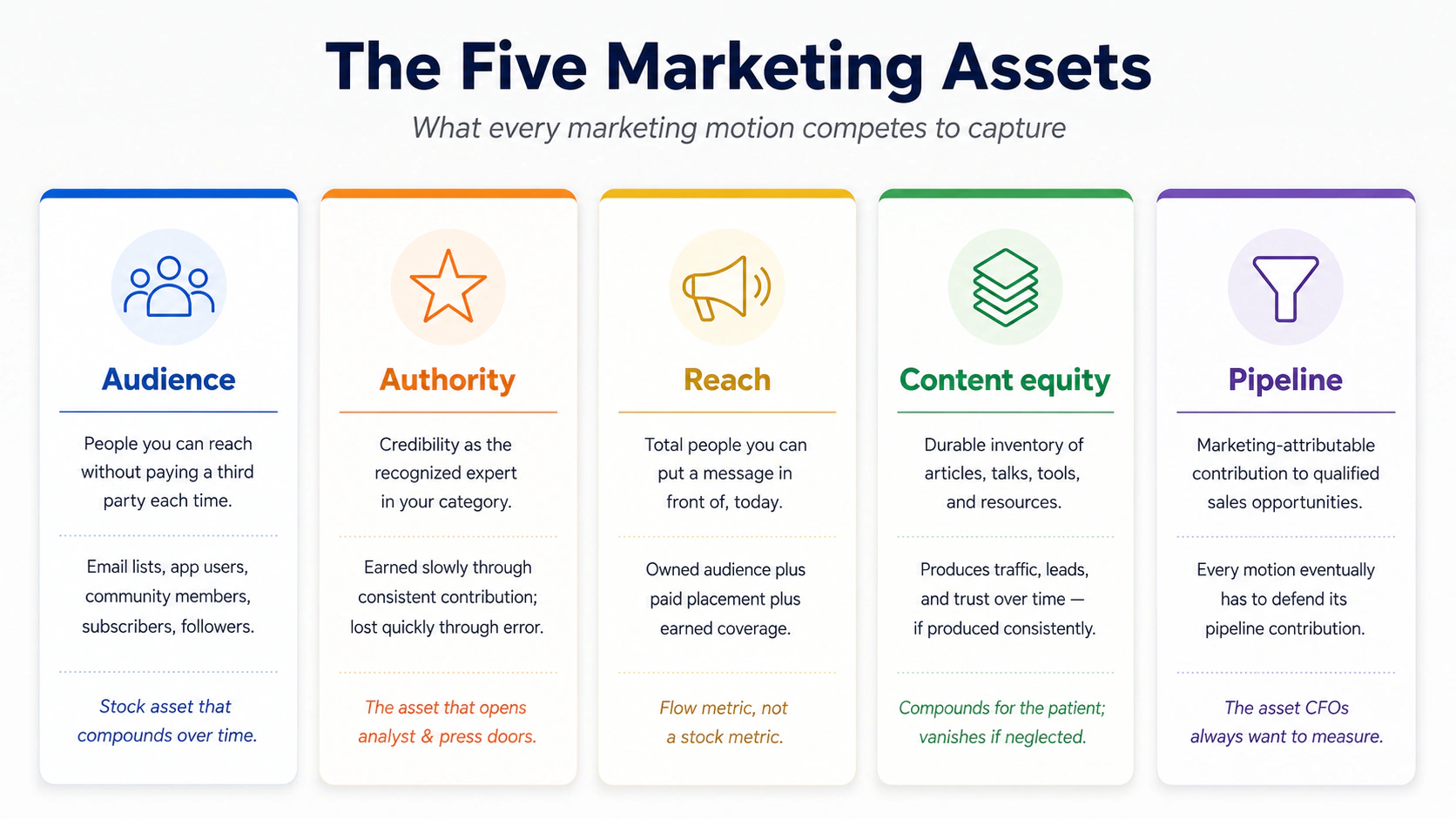
五个 marketing assets:每个 motion 都在争夺什么。
Audience 是你无需每次向第三方付费就能触达的人群。email list、app user、DevRel community member、podcast subscriber、social follower 都是 owned audience 的形式。
Authority 是你作为 category 中公认专家的可信度。authority 通过持续贡献缓慢获得,也会因为一次高曝光错误迅速失去。
Reach 是你能把 message 放到其面前的总人群,结合了 owned audience、paid placement 和 earned coverage。reach 是 flow metric;audience 是 stock metric。
Content equity 是文章、演讲、工具和资源的持久库存,会随时间产生 traffic、lead 或 trust。content equity 会为有耐心的人复利;对急躁的人,它永远积累不起来。
Pipeline 是 marketing 对 qualified sales opportunities 的归因贡献。每个 motion 最终都必须捍卫自己的 pipeline contribution,即使它主要构建的是另外 4 个 asset,因为 CFO 迟早会问。
最强的 motion 会同时捕获 3 个或更多 asset。最弱的 motion 只优化一个 asset(通常是 pipeline),却牺牲其他 asset,结果是短期胜利和长期崩塌。
范围说明。 本目录主要关注 B2B marketing:也就是为卖给其他企业的 AI-native software 和 services 产生 qualified sales pipeline 的 program。面向消费者的 AI marketing(mobile app stores、paid social acquisition、consumer apps 的 brand campaign)遵循不同规则,不是本文主轴;不过 Performance Marketing、Influencer Partnerships 和 Founder Thought Leadership 这 3 个 motion 也适用于两种语境。
成熟度谱系。 每个 motion 都按 Proven、Emerging 或 Speculative 标记,依据是今天 AI-native company 成功运行它的广泛程度。
- Proven motions 已有许多 at-scale company 正在运行,并且有成熟 playbook 和 benchmark。
- Emerging motions 正由 2026 年的 AI-native company 运行,但会随底层 tooling 快速演化。
- Speculative motions 依赖尚未大规模存在的 buyer behavior 或 platform dynamic。
本页用于什么
这份文档有 3 个用途。
第一,作为选择器。 正在设计 marketing motion 的 founder 或 marketing leader,可以用 Strategic Fit Matrix、Marketer Diagnostic 和 Motion Summary Table 找到适合其买方、阶段和 budget 的 motion。
第二,作为参考。 正在运行某个 existing motion 的 marketing team,可以用深度章节审计自己的运营,对照文中描述的模式,比较 funnel performance、channel mix 和 content velocity。
第三,作为排序指南。 多数成功的 AI-native company 会在扩张过程中运行一串 marketing motion。Common Hybrid Motions 小节会映射最常见的序列。
如何选择 motion
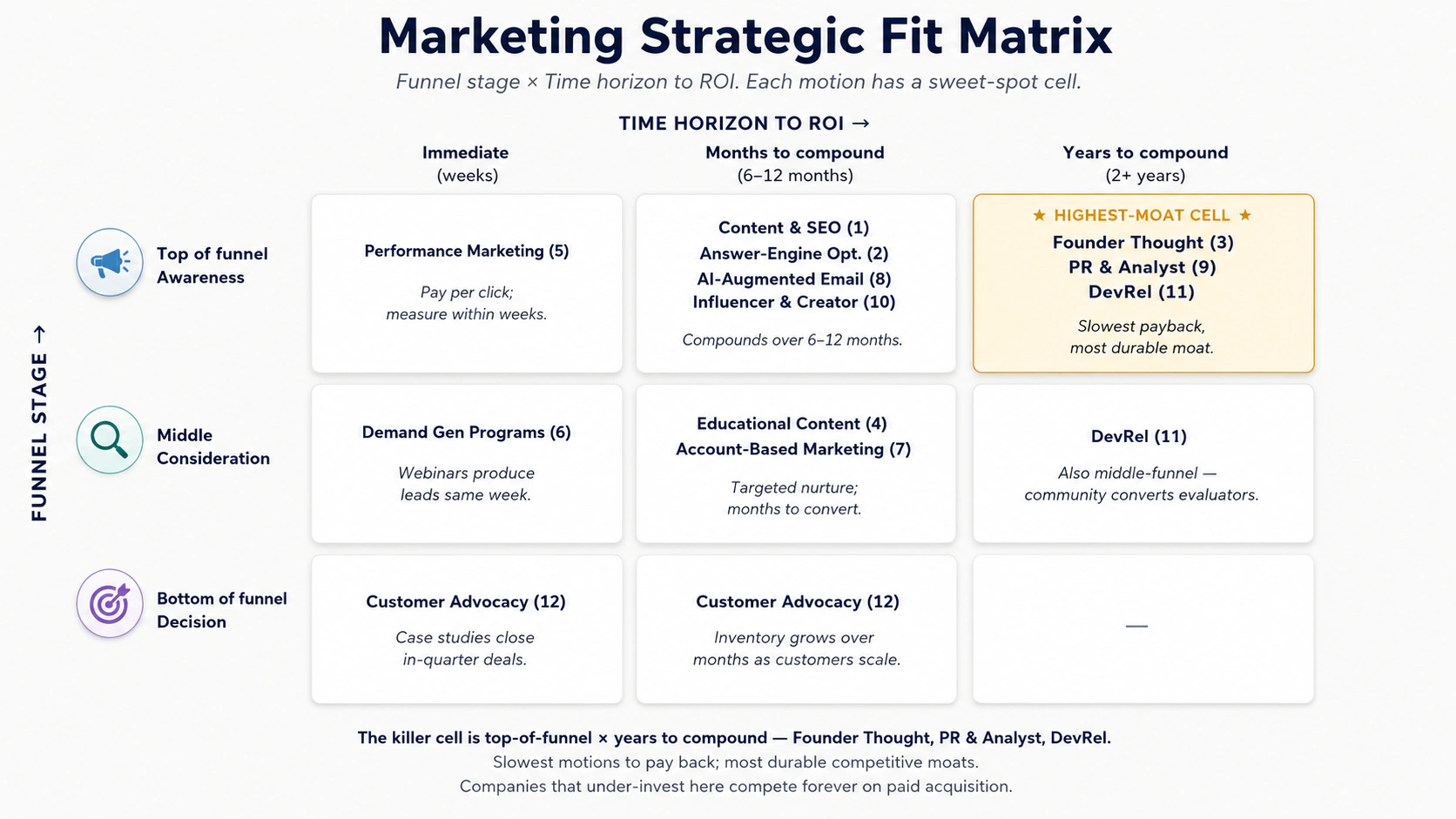
预测哪个 marketing motion 合适,最干净的变量是 funnel stage 与 time horizon to ROI 的交叉点。下面的矩阵把 12 个 motion 映射到这两个轴上。每个 motion 都有甜蜜点,也可以在相邻格子运行,只是没那么理想。
| Time → / Funnel ↓ | Immediate(weeks) | Months to compound | Years to compound |
|---|---|---|---|
| Top of funnel(awareness) | Performance Marketing(5) | Content & SEO(1)、AEO(2)、AI-Email(8)、Influencer(10) | Founder Thought(3)、PR & Analyst(9)、DevRel(11) |
| Middle(consideration) | Demand Gen(6) | Educational Content(4)、ABM(7) | DevRel(11) |
| Bottom(decision) | Customer Advocacy(12) | Customer Advocacy(12) | — |
最重要的格子是 top-of-funnel × years to compound:Founder Thought Leadership、PR & Analyst Relations 和 DevRel。这些 motion 会构建最持久的 competitive moat,但回报也最慢。低估这里的公司会永远在 paid acquisition 上竞争,永远不能拥有一个 category。
营销诊断:八个问题
选择 motion 前,请诚实评估下面 8 个维度。每一行指向的 motion,是最符合该条件的 motion。一个团队如果在其中三四项上得分 High,通常会很快缩小到两三个 candidate motion。
-
买方技术成熟度。 主要买方有多懂技术?Developer / engineer → DevRel、Content & SEO、AEO。Operator → Educational Content、Demand Gen、ABM。Executive → PR & Analyst、ABM、Customer Advocacy。
-
Category maturity。 你的 category 是广为人知,还是你正在定义它?Defining → Founder Thought Leadership、Content & SEO、PR & Analyst、Educational Content。Mature → Performance Marketing、ABM、Customer Advocacy。
-
Average deal size。 <$10K → Content & SEO、AEO、Performance Marketing。$10–100K → AI-Email、Demand Gen、Influencer。$100K+ → ABM、PR & Analyst、Customer Advocacy。
-
Time horizon to ROI。 Weeks → Performance Marketing、Demand Gen、Customer Advocacy。Months → Content & SEO、AEO、AI-Email、ABM。Years → Founder Thought Leadership、PR & Analyst、DevRel。
-
Founder availability for content。 founder 是否会定期产出内容(essay、podcast、video)?Yes → Founder Thought Leadership、Content & SEO。No → Performance Marketing、Demand Gen、ABM、Influencer。
-
Existing customer base。 你是否有愿意 advocate 的客户?Yes → Customer Advocacy、Educational Content。No → 先运行 Pull 和 Push motions,直到有值得 feature 的客户。
-
Budget shape。 你的 budget 更偏 people,还是更偏 media spend?People-heavy → Content & SEO、DevRel、PR & Analyst。Media-heavy → Performance Marketing、Demand Gen、Influencer。
-
Audience location。 买方是否能通过特定渠道触达?Developers(GitHub、Hacker News、X)→ DevRel、Content。Executives(LinkedIn、podcast、conference)→ Founder Thought Leadership、PR & Analyst。Mid-market operators(LinkedIn、search、email)→ Performance Marketing、ABM、AI-Email。
diagnostic 不会告诉你哪个 motion 正确。它告诉你,基于起点,哪些 motion 对你是可用的。上面的矩阵和下面的深度章节,会告诉你在可用 motion 中,哪一个对你要触达的买方最锋利。
Motion 总览表
12 个 motion 的一页参考。
| # | Motion | 成熟度 | 最适合 | Time to ROI | 主要 moat | 主要风险 |
|---|---|---|---|---|---|---|
| 1 | Content & SEO Marketing | Proven | education-heavy categories | Months | content equity、search authority | content velocity without distribution |
| 2 | Answer-Engine Optimization | Emerging | buyers 会向 AI assistants 提问的 categories | Months | AI-search citation rate | optimizing without content worth citing |
| 3 | Founder Thought Leadership | Proven | 需要教育的新 category | Years | founder authority + audience | sporadic posting kills momentum |
| 4 | Educational Content & Certification | Proven | 需要买方技能发展的 category | Months | curriculum + alumni network | content production without graduation funnel |
| 5 | Performance Marketing | Proven | LTV 清晰的成熟 category | Weeks | channel optimization expertise | paid acquisition without unit economics |
| 6 | Demand Generation Programs | Proven | 有可衡量 funnel 的 mid-market | Weeks–months | nurture sequence + lead scoring | webinars without follow-through |
| 7 | Account-Based Marketing | Proven | 六位数 deal 的 target | Months | account intelligence + personalization | ABM without sales alignment |
| 8 | AI-Augmented Email & Outreach | Emerging | broad mid-market reach | Months | AI tooling + deliverability | AI-generated content without distinction |
| 9 | PR & Analyst Relations | Proven | strategic enterprise categories | Years | press relationships + analyst placements | vanity coverage that doesn't move pipeline |
| 10 | Influencer & Creator Partnerships | Proven | 聚集在 creator 周围的 audience | Months | creator-of-record relationships | misalignment with creator's audience |
| 11 | Developer Relations(DevRel) | Proven | developer-buyer products | Years | community + ambassadors | DevRel as marketing budget rather than product |
| 12 | Customer Advocacy & Case Studies | Proven | 已有客户的公司 | Weeks–months | reference customers + advocacy ladder | case studies as one-offs, not a pipeline |
我应该运行哪个 motion?
一个 decision flowchart 会按顺序排列最重要的问题,帮助你缩小 motion 选择范围。(视觉图:见 marketing_decision_flowchart.png。)
4 个关键问题是:(1)买方是 developer 吗?(yes → DevRel + Content)。(2)category 是否成熟,并且有可比较的竞争对手?(no → Founder Thought + PR + Education;yes → Performance + ABM + Advocacy)。(3)你是否有值得 feature 的客户?(yes → 现在就启动 Customer Advocacy;no → 专注 Pull 和 Push 来获取客户)。(4)你的 ROI 时间线是什么?(weeks → Performance + Demand Gen;years → DevRel + PR + Founder Thought)。
多数公司会同时运行两三个 motion。最常见的组合见文末的 Common Hybrid Motions。
买方 awareness 和 timing
每个 marketing motion 在买方的 awareness journey 中都有自己的窗口。还不知道自己有问题的买方,与已经拿着 3 家 vendor 报价在比较的买方,对 marketing 的反应完全不同。Eugene Schwartz 在 1966 年的《Breakthrough Advertising》中定义了买方 awareness 的基础 5 阶段;下面的 3 阶段曲线,是面向 2026 年 product marketing team 的 B2B-AI 改编版,把 Schwartz 的框架压缩成 3 个可用阶段。⁴
3 个阶段定义了 Awareness Curve:
Stage 1 — Unaware / Problem-Aware。 买方要么还不知道自己有你产品解决的问题,要么知道但还没有主动开始寻找解决方案。这个阶段的 marketing 工作是教育和 frame-setting:帮助买方命名问题、看清它为什么重要,并学习有哪些 solution category。最佳 motion:Founder Thought Leadership、Content & SEO、PR & Analyst、Educational Content、DevRel。
Stage 2 — Solution-Aware。 买方正在主动研究 category。他们会读文章、比较 approach、听 podcast、参加 webinar。此时还没有 shortlist vendor。marketing 的工作是确保你的产品在他们搜索的渠道中反复、可信地出现。最佳 motion:Content & SEO、AEO、Educational Content、Demand Gen、Influencer Partnerships。
Stage 3 — Vendor-Aware。 买方已经 shortlist 了 vendor,并在比较它们。他们会读 case study、请求 demo、查 reference、评估 pricing。marketing 的工作是在比较过程中移除摩擦,并提供能赢得 bake-off 的 social proof 和 technical depth。最佳 motion:Customer Advocacy & Case Studies、ABM、PR & Analyst(尤其是 Gartner / Forrester 式 placement)、Demand Gen(用于 late-stage technical content)。
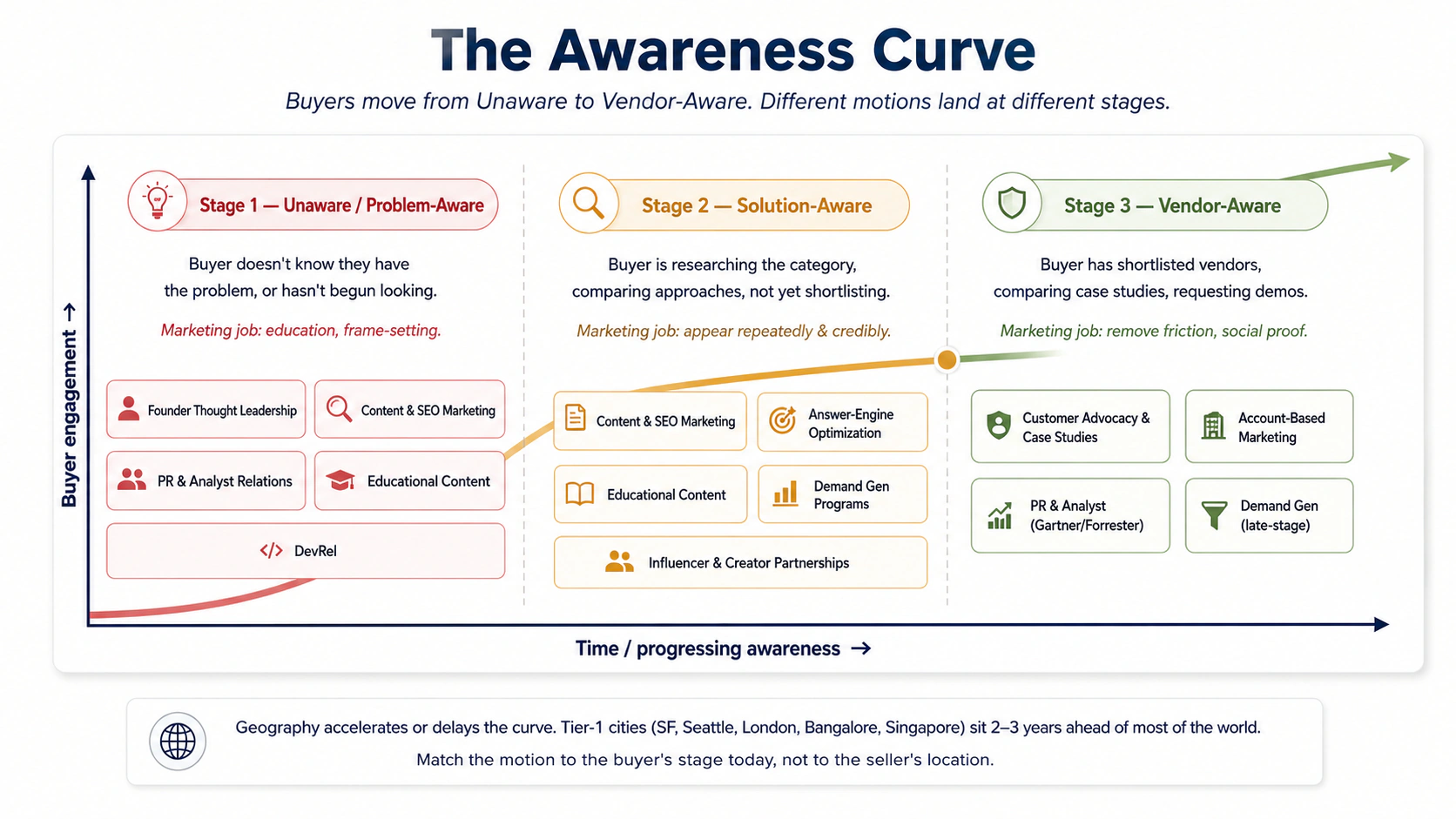
地理位置会加速或延迟这条曲线。San Francisco、Seattle、Boston、New York、London、Toronto、Berlin、Bangalore 和 Singapore 的 AI-native category,买方往往比多数其他市场提前 2 到 3 年:这些生态中的买方已经评估过 AI vendors,写过内部 AI procurement playbook,并形成了成熟的比较标准。这些市场中的买方,通常从听说你的 category 的那一刻起就已经处在 Stage 2 或 Stage 3。世界其他大多数地区,包括欧洲大陆、拉丁美洲、中东、非洲和东南亚的大多数 enterprise buyers,仍然稳稳处在 Stage 1,并正在向 Stage 2 过渡。
这对 global B2B marketing 的含义是,同一份内容不可能适用于每个市场。Stage 3 的 vendor-comparison page(带 feature-by-feature table 和 pricing-tier breakdown)正是 San Francisco 买方想要的,也正是 São Paulo 买方还没准备好评估的。Stage 1 的教育文章(定义 category、解释为什么重要、命名问题)正是 São Paulo 买方需要的,也正是 San Francisco 买方会觉得太基础而划过去的。为一个阶段校准、却投放到多个市场的 marketing program,会在另一个阶段的买方那里表现很差。
stage-mismatched marketing 的成本会复利。为 Stage 3 买方校准的 motion(大量 case study、comparison content、ROI calculator)落到 Stage 1 买方面前时会显得混乱:他们还没有解释这些比较所需的上下文,于是会跳出。为 Stage 1 买方校准的 motion(大量 category education 和 problem-naming)落到 Stage 3 买方面前时又显得太基础:他们已经过了教育阶段,会把这些内容解读为 vendor 不够成熟。global B2B marketer 的修复方式,是维护 stage-appropriate content libraries,并按市场路由流量:给 emerging markets 提供 Stage 1 educational paths,给 established AI markets 提供 Stage 3 comparison paths,而且 localization 必须超越翻译,真正回应本地买方正在研究什么。
成熟度图例
- Proven。 这个 motion 今天已有很多 AI-native(以及 pre-AI)company 在规模化运行,并有成熟 playbook 和 benchmark。
- Emerging。 这个 motion 正由 2026 年的 AI-native company 运行,但正在快速演化,canonical playbook 尚未稳定。
- Speculative。 这个 motion 依赖尚未大规模存在的 buyer behavior 或 platform dynamic。
A. Pull motions
受众主动发起 discovery。marketer 的工作是在买方搜索的那一刻可被发现、有用、可信。这些 motion 擅长复利回报和 CAC efficiency,但需要耐心:多数 pull motion 需要 6 到 12 个月才会产生有意义的 pipeline。
Motion 1 — Content & SEO Marketing
成熟度:Proven。初学难度:Easy。
白话解释。 想象你在建一座门口挂着招牌的公共图书馆。你把书放进图书馆:article、guide、comparison page、tutorial,这些内容回答买方正在问的问题。搜索引擎像路牌,把路人引到你的图书馆。买方搜索相关问题时,你的图书馆出现在结果里;他们走进来,找到需要的东西,久而久之会把你的品牌与答案联系起来。图书馆会复利:每多放进一本书,下一位路人找到你的概率就更高。
这是最古老的 pull motion,仍然是最可靠的 motion。系统性产出内容 12 到 24 个月的 AI-native company,经常会报告说 content 是其 inbound pipeline 的最大来源。¹
它最适合作为几乎所有 B2B AI-native company 的 founding motion。启动慢;规模化后很少是唯一 motion,但通常是其他 motion 建在其上的基础。
核心想法。 产出 evergreen content,回答买方问题,在搜索中排名,并随时间持续复利。
何时使用。 总是要用,适用于任何 B2B AI-native company。category-defining article、comparison page、「what is X」guide,都是每个成功 marketing program 最终都会产出的 mechanics。
Mechanism。 Content marketing 有效,是因为 B2B 买方在联系任何 vendor 之前,会自行完成大部分研究。Marcus Sheridan 10 年前在《They Ask, You Answer》中记录了这门 discipline;HubSpot 年度《State of Marketing》report 和 Content Marketing Institute benchmark studies 等行业调查,仍持续确认一个底层事实:买方在与 sales 接触前,会通过 self-directed research 完成大部分评估。¹ content layer 就是这些研究发生的地方。一家公司如果拥有 category 中 high-intent search results,就会获得源源不断的 pre-qualified buyers;这些买方来到你这里时,已经理解了问题。
这个 motion 的经济性让它非常耐用。一篇制作良好的 1,500 词文章,在 2026 年大约花费 $300–$1,500(有 AI assistance 会更快更便宜;委托可信领域专家时更贵)。一篇在 high-intent category 中排名的文章,可以多年产生 qualified leads。B2B SaaS 中典型的复利模式是,content marketing CAC 大致比同一买方的 paid acquisition CAC 低一个数量级,尽管具体数字会因 category 和 channel 大幅变化。Joe Pulizzi 的《Content Inc.》记录了以 owned content 作为 primary acquisition channel 构建整个 business 的更广泛模式。⁵ 文章每多保持排名一个月,数学都会变得更好。
执行需要 3 门 discipline。keyword research 映射买方真实问题,把 high-intent commercial queries(买方正在比较 vendor)与 informational queries(买方正在学习 category)区分开。production depth 在 2026 年比 production volume 更重要:浅内容正被 AI commoditize,平均水平的排名内容会被大量平均水平的 AI-generated competition 埋没。能赢的文章,必须带有 original research、original data、customer quotes,或者 competitor 不容易复制的 argument。distribution 让内容不只依赖纯搜索而被看到:每篇发布的文章都需要 deliberate 执行 distribution checklist(LinkedIn post、X thread、email blast、partner inclusion、podcast mention)。只生产高质量内容却忽视 distribution 的公司,是在对着空地发布。
约束是耐心。search rankings 需要 6 到 12 个月才会复利;公司必须在很长一段 metrics 看起来很弱的时期里,持续为稳定内容生产投入资金,直到趋势转向。founder 在第 4 个月关闭 program,因为「好像什么都没发生」,是这个 motion 中最常见的失败模式。
虚构 walkthrough。 想象 PromptForge,一个面向 prompt engineering 的 AI tool。团队承诺连续 18 个月每周发布两篇 long-form article:comparison guide、tutorial、case study。到第 9 个月,「best AI prompt engineering tools」把 PromptForge 排在第一。到第 18 个月,公司每月从搜索获得 2,000 个 qualified leads,CAC 低于 $50,比 paid acquisition 低几个数量级。
Example。 已确认的例子:HubSpot 依靠 content-led inbound playbook 建成了一家 multi-billion-dollar company。在 AI-native 领域,这套 playbook 正被重现:Anthropic 的 blog、OpenAI 的 research posts,以及长尾 AI-native company blogs 都在锚定 inbound funnels。
主要风险。 Content velocity without distribution。团队持续发布,但内容没有触达任何人。mitigation:以接近 production 的强度投资 distribution。每发布一篇文章,都建立并执行 distribution checklist(LinkedIn post、email blast、X thread、partner inclusion、search optimization)。
次要风险。 AI-generated content commoditization。随着 AI 把生产平均内容的成本降到接近零,平均内容会停止有效。门槛变高。mitigation:投资 original research、original data 和 original arguments,也就是 AI 不容易生成的东西。把 customer interviews、internal data analyses 和 founder hot takes 重新加工成带有 defensible point of view 的内容。
第一步。 选择买方下个月会输入的一个 search query,也就是你所在 category 中 intent 最高、频率最高的问题。为这个 query 写出互联网上最好的文章。强力分发。下周用第二高的 query 重复。
Motion 2 — Answer-Engine Optimization(AEO)
成熟度:Emerging。初学难度:Medium。
白话解释。 如果 SEO 是「我如何出现在 Google 里?」,Answer-Engine Optimization 就是「我如何出现在 ChatGPT、Claude、Perplexity 和 Google AI Overviews 里?」当买方问 AI assistant「法律研究最好的 AI tool 是什么?」时,你希望自己的产品在答案中被点名引用。AEO 是一种实践:组织你的内容、品牌存在和数据足迹,让 AI assistants 把你当作可信来源,并相应地引用你。
这个 motion 在 2024 年之前还没有成形。搜索结果点击向 AI-cited answers 的转移,是过去 10 年 B2B 买方行为中最大的变化,playbook 仍在被写出来。
它最适合作为 Content & SEO Marketing 的补充:AEO 的大部分工作都建立在 strong content 之下。它正在成为一门独立 discipline,但 2026 年的团队更多是在跑 pilot,而不是规模化 program。
核心想法。 让 AI assistants 在回答你所在 category 的问题时愿意引用你的 brand。
何时使用。 当 target buyer 会在购买决策前使用 AI assistants 做研究时使用。到 2026 年,这覆盖了大多数 B2B technical buyers,并正在覆盖越来越多的 operator buyers。AEO 对 AI-native company 尤其有价值,因为它们的买方已经 AI-fluent,并且原生使用 AI assistants。
Mechanism。 AEO 通过 3 个 vector 生效。citation worthiness:AI assistants 会引用它们认为可信的来源,也就是被广泛链接、结构清晰、包含 unique data,或拥有 domain authority 的来源。这些信号与传统 SEO authority 有重叠,但也有重要差异:AI assistants 比单纯 backlink count 更重视 original research 和 quotable claims。brand mention frequency:AI assistants 会受到 training data composition 的影响。经常出现在 news、review、podcast 和 analyst report 中的 brand,尤其是出现在 named context(例如「Anthropic's Claude」而不是「an AI assistant」)中的 brand,会更常被引用。这让 earned media(Motion 9)和 creator partnerships(Motion 10)成为 AEO 的上游输入。schema and structure:AI assistants 更偏好引用结构清晰、claim 明确、fact 可验证的内容。对 AI parser 友好的页面,包括清晰 hierarchy、named entities、structured FAQs、对 original sources 的 citations,会比相同内容但不易解析的页面更常被引用。
约束是 measurement。AEO 还没有 Google Search Console 的等价物:没有干净的方法追踪你的 brand 在 AI answers 中被引用的频率,也没有方法追踪哪些 query 触发引用。2026 年运行 AEO 的公司会使用 proxy metrics:brand-search lifts(用户先从 Claude 听说你,再去 Google 搜你)、self-reported attribution(「你怎么找到我们的?」),以及 dedicated AEO measurement tools(Profound、Athena,以及少数从零构建这个 category 的 competitors)。SparkToro 的 Rand Fishkin 是这门 discipline 早期的重要声音之一。²
战略含义是:AEO 是 authority 的下游。一个没有 original research、没有 analyst coverage、没有 podcast presence、没有 creator mention 的 brand,没有任何东西可供 AI assistants 引用;schema optimization 再多也无法修复。把 AEO 当成纯 technical-SEO discipline(markup、structured data、page hierarchy),却不在上游投资 citable content 的团队,会发现 optimization mechanics 回报有限。赢得 AEO 的团队,是那些投资 original research、named data points 和 analyst-coverage cycles 的团队,并把 optimization work 当成 last mile,而不是整个 motion。
虚构 walkthrough。 想象 LegalAgent,一个 AI legal-research tool。团队系统性更新 docs、blog posts 和 product pages,加入 structured FAQs、清晰的「what is」definition,以及指向 original legal sources 的 citations。6 个月后,团队开始看到 prospect signup 在「How did you find us?」里回答:「我问 Claude 做 M&A diligence 该用哪些工具,你们出现了。」这个 traffic source 对 Google Analytics 不可见,因为它是 conversational 而不是 click-through;但它真实存在并且在增长。
Example。 Emerging analogues:Profound 和 Athena 这样的公司正在构建 AEO measurement tools。多数大型 content-driven SaaS company 在 2026 年都在做 AEO 实验;很少有公司发布系统性 playbook。SparkToro 的 Rand Fishkin 是这门 discipline 早期的重要声音之一。²
主要风险。 Optimizing without content worth citing。AEO 是 authority 的下游;如果你的 brand 没有任何 AI assistants 会引用的东西,再多 optimization 也修不好。mitigation:先投资 original research、original data 和 original perspectives,再投资 AEO mechanics。
第一步。 分别向 Claude、ChatGPT 和 Perplexity 提出 10 个你所在 category 买方会问的问题。记录你出现在哪里、competitor 出现在哪里,以及 AI 没有引用任何具体 brand 的地方。第三类就是你的机会。
Motion 3 — Founder Thought Leadership
成熟度:Proven。初学难度:Medium。
白话解释。 想象一个小镇里,最受尊重的专家是一个人,而这个人刚好经营着一家能解决他们所谈问题的 business。整个小镇都认识这个人。当小镇需要解决这个问题时,他们默认会雇佣这位专家的 business。Founder Thought Leadership 就是有意培养这种动态。founder 写 essay、参加 podcast、每天在 LinkedIn 或 X 发帖,并成为 category 中被认可的声音。关注 founder 的 audience 会变成产品的 audience。
在 2026 年,这是最 cost-efficient 的 marketing motion 之一,但它要求 founder 既愿意、也能够多年持续产出内容。
它最适合作为任何新 category 的 founding motion。通常与 Content & SEO Marketing(founder essay 成为 SEO backbone)和 PR(founder authority 打开 analyst doors)结合。
核心想法。 把公司的 earned authority 集中在一个人身上,也就是 founder,并用这个人的 publishing cadence 构建持久 audience。
何时使用。 当 founder 是可信的 domain expert(或能成为一个),当 category 足够新、需要有人定义它,并且 founder 愿意承诺至少产出 24 个月内容后再判断结果时使用。
Mechanism。 Founder thought leadership 有效,是因为 B2B audience 更信任人,而不是 brand。相同内容由 founder account 发布,通常会比 company account 表现更好;engagement gap 因 industry 和 platform 而异,但方向一致,founder posts 往往比公司账号上相同内容获得显著更高的 reach 和 engagement。随着时间推移,founder 的 audience 会成为一个无需按 impression 付费的 captive marketing channel,而且 competitor 无法复制,因为他们没有你的 founder。
执行需要 3 门 discipline:稳定的 publishing cadence(通常在 primary platform 上每周至少两次;B2B operators 用 LinkedIn,technical audiences 用 X)、defensible point of view(足够有争议,能引发讨论;又足够真实,能被 defend),以及愿意公开 engagement(回复评论、主持 podcast、做 live conversations)。founder 如果外包 writing 或 engagement,内容会显得不真实,也无法构建持久 audience。
约束是 founder time。一个严肃的 thought-leadership program 每周会消耗 founder 5 到 10 小时。试图用零碎时间做这件事的 founder,会产出不稳定内容,也几乎构建不了 audience。
虚构 walkthrough。 想象 DataSpace,一家 founder-led AI analytics company。founder Maria 承诺每周在 LinkedIn 发布一篇 essay:关于 analytics market 的尖锐观点、customer war story、对 category 走向的预测。18 个月后,她的 LinkedIn following 达到 80,000。30 个月后,达到 200,000。DataSpace 发布新产品时,launch post 在 48 小时内带来 10,000 个 demo requests,CAC 实际上为零。
Example。 已确认的例子:Mathilde Collin(Front)、Andrew Wilkinson(Tiny)、Lenny Rachitsky(Lenny's Newsletter)、David Cancel(Drift)、Sahil Lavingia(Gumroad)。在 AI-native 领域,Sarah Tavel(Benchmark,关于 AI investing)以及几位 Anthropic 和 OpenAI researchers,也构建了为公司(或 fund)锚定 awareness 的 personal audiences。
主要风险。 Sporadic posting kills momentum。founder 第 1 周发 3 次,第 2 周发 2 次,第 3 周发 1 次,然后公司进入 fundraising sprint 时停一个月。audience growth 需要一致性;不一致比不开始更糟。mitigation:承诺一个最低 cadence(LinkedIn 每周一帖、每月一篇 essay),并把它当成 non-negotiable。必要时外包 scheduling 和 editing,但不要外包内容本身。
次要风险。 公司对 founder 产生依赖。如果 founder 离开,audience 也跟着离开。mitigation:在 founder brand 旁边一起构建 company brand。founder account 引用公司;company account 放大 founder。随着时间推移,brand 会吸收一部分 founder authority。
第一步。 选择一个平台(B2B operators 用 LinkedIn,technical audiences 用 X)。承诺连续 60 周每周发一条。前 6 个月会感觉什么都没发生;后 6 个月会开始复利。
Motion 4 — Educational Content & Certification
成熟度:Proven。初学难度:Medium。
白话解释。 想象你在运营一所大学,毕业生也是客户。你构建 course、tutorial 和 certification,教人们如何完成自己的工作,并以你的 category、tooling 和 worldview 作为基础。人们参加课程是为了学习技能。许多人会成为客户,因为他们被教会使用的正是你的产品。最热心的人会自己成为老师,带来下一批 cohort。
HubSpot 的 Inbound Marketing certification、Salesforce 的 Trailhead、Stripe 的 Atlas,都是这个 motion 的实例。educational content 会成为公司最大的 top-of-funnel channel。
它最适合作为 mid-stage motion:当公司已有 product-market fit,并且有资源投资 curriculum 时使用。在还没有明确定义要教授的 skill 之前很难启动。它通常叠在 Content & SEO Marketing 之上,因为 educational content 会吸引 search traffic。
核心想法。 为你的 category 构建 credentialing system,也就是 practitioner 学习这项技能的地方,并把它作为终身 customer acquisition channel。
何时使用。 当 category 需要 practitioner skill,而买方必须培养这种技能;当公司有资源投资 curriculum design(严肃 certification program 通常需要 6 到 12 个月构建);当 addressable practitioner population 足够大,值得这项投资(通常 100,000+ active practitioners)时使用。
Mechanism。 Educational content 通过 3 个复利效应工作。top-of-funnel acquisition:人们搜索「how to do X」并找到你的 course;course 会持续产出学习这项 skill、并接受你 worldview 的 practitioners。trust and dependency:毕业生会在职业生涯中持续使用你的 terminology、framework 和 tooling preferences,这意味着当他们拥有 hiring authority 时,会默认选择你的产品。network effects:毕业生会教下一批学生、在 meetup 上演讲、写 blog post、向 peers 推荐 certification,而且是免费的,因为他们对自己获得的 credential 有情感投入。
经济性成立,是因为 curriculum 可以复用。第一个 cohort 的制作成本最高:严肃 certification program 通常需要 $50K–$300K,覆盖 content development、video production、assessment design 和 platform infrastructure。后续 cohort 的边际成本接近零。每位 learner 定价 $200–$2,000 的 certification program,本身可以成为有意义的 revenue center(HubSpot Academy、Salesforce Trailhead 和 Snowflake University 都在 marketing-funnel value 之外产生 direct revenue);即使 free certification,也会随着 alumni base 年复一年增长而产生复利 marketing ROI。
约束是 curriculum quality。educational content 必须真正有用,否则不会产生值得拥有的 graduate;更糟的是,它会产生反向 advocacy 的 graduate,因为 certification 没有交付真实 skill development。发布薄 certification 的公司会得到短期 marketing bump 和长期 reputation hit;投资真正高质量 curriculum 的公司,会获得一个能让 brand 复利 10 年的 alumni base。正确的比较对象是 academic credentials,而不是 whitepaper:门槛是「hiring manager 会不会真的在 resume 上看重它?」
虚构 walkthrough。 想象 PromptCert,一家提供 AI Engineering Certification 的 AI-native company。团队构建一套免费的 12 小时 curriculum,覆盖 prompt engineering、evaluation design 和 agent architecture,并设置 $200 的 paid certification exam。第一年,50,000 名 practitioners 完成 free curriculum,8,000 人付费认证。第二年,认证 practitioners 在 LinkedIn profile 上写上「PromptCert Certified」,advocates 组织非官方 study groups,PromptCert 成为 AI engineering hire 的事实 credential。certification 不再只是 marketing,而成为 infrastructure。
Example。 已确认的例子:HubSpot Academy、Salesforce Trailhead、Google Skillshop、Snowflake University。AI-native 领域包括 DeepLearning.AI、Anthropic Academy(截至 2026 年正在开发),以及若干 Cohere / Mistral practitioner programs。
主要风险。 Content production without graduation funnel。公司构建了 course,但 course 没有连接到产品或 sales motion;graduate 离开后没有成为客户。mitigation:设计 curriculum 时把产品作为 practical exercises 的一部分。course 结束时,graduate 应该已经在使用产品(free tier 或 trial)。
第一步。 选择你所在 category 中 practitioner 真正需要学习的一项 skill。为这项 skill 构建最好的 free course。第一个 cohort 是证明 curriculum 值得继续构建的证据。
B. Push motions
marketer 主动发起关系。marketer 的工作是精准 targeting、message-channel fit 和 conversion-rate discipline。这些 motion 擅长可预测性和 immediate ROI,但需要持续 budget;它们不像 pull motions 那样复利。
Motion 5 — Performance Marketing
成熟度:Proven。初学难度:Medium。
白话解释。 想象按点击租用 attention。Performance marketing 是在 Google、LinkedIn、Meta、TikTok、YouTube,以及新兴 AI-search ad platforms 上投放 paid advertising。你为 placement 竞价,平台把广告展示给目标用户切片,你按 impression 或 click 付费。当 unit economics 清晰时,也就是你知道一个 click 对你值多少钱,并且能据此出价时,这个 motion 才有效。
2026 年,AI 正在剧烈重塑 performance marketing。generative ad creative 正在压低 ad variant 的生产成本。AI-augmented bid optimization 正在提高 spend efficiency。AI-driven targeting 正在让 LinkedIn、Meta 和 Google 的 audience tools 更精准。
它最适合作为成熟 category 的 primary motion,前提是 LTV 清晰、sales cycle 较短。对更新的 category,它更适合作为其他 motion 的补充。规模化时很少是唯一 motion。
核心想法。 规模化购买 targeted attention,并严格衡量 acquired customer cost 与 lifetime value 的关系。
何时使用。 当 category 已经成熟到买方会带着 high intent 搜索;当 unit economics 清晰(你知道 acquired customer 值多少钱);当团队有 analytics maturity 能准确衡量 attribution 时使用。
Mechanism。 Performance marketing 有效,是因为平台(Google、LinkedIn、Meta、TikTok)拥有世界上最有价值的 targeting data。Google 知道人们正在主动搜索什么。LinkedIn 知道他们在哪里工作、做什么、资历多高。Meta 知道他们的兴趣、行为和 life events。advertiser 租用这些 targeting,并把 targeted attention 转换成 traffic、leads 或 sales。unit economics 取决于 3 个变量:bid efficiency(cost per click 或 cost per impression)、conversion rate(click 中有多少成为 lead 或 customer)和 lifetime value。
这个 motion 要安全 scale,数学上必须跨过 3 个 threshold。LTV/CAC > 3:lifetime customer value 与 fully-loaded acquisition cost 的比值,这是 B2B SaaS 标准 benchmark;低于 3 时,把 payback period、retention 和 discount rate 纳入后,program 会亏钱。CAC payback under 18 months:避免 cash 被困在 pre-revenue cohorts 中。cohort LTV empirically validated:在 scale spend 前,LTV 必须被实际验证,而不是 modeled、projected。performance marketing 最常见的失败模式,是基于乐观 LTV projection 扩大 spend,而 cohort 最终没有交付。
执行 disciplines 是 creative iteration、attribution modeling 和 channel diversification。creative iteration 在 2026 年比过去容易得多:generative AI 已经把多数格式的 ad variant 生产成本降低 90%+,适应后的团队会在每个 channel 上运行几十个 creative variants,而不是过去可行的少数几个。约束已经从 production capacity 转到 creative judgment:知道哪些 variant 值得测试。attribution modeling 重要,是因为 channel 彼此依赖:买方可能先看到 Performance Marketing ad,再在 PR 中遇到 brand,最后读完 content piece 后 signup;single-touch attribution 会把 credit 给最后一个 channel。channel diversification 意味着至少有 3 个 unit economics 接近的 channel;依赖单一 channel 的公司会暴露在 platform policy changes、algorithm updates 和 CPC inflation 之下。过去 5 年,B2B SaaS 的 paid acquisition cost 在多数 channel 和 category 中明显上升;构建 paid-only acquisition strategy 的公司会长期承受这种复利式 margin pressure。
虚构 walkthrough。 想象 SyncFlow,一个 $50/month 的 AI productivity tool。团队在「AI scheduling assistant」和「calendar AI」这类 term 上运行 Google Ads。每次 click 成本 $4;2% 的 click 转成 free-trial signup;15% 的 free trial 转为 paid。CAC 是每位 customer $130,对应 $600 LTV。数学成立,团队在 12 个月内把 spend 从 $10K/month scale 到 $200K/month。第 18 个月,paid CAC 爬到 $180(更多 competitor 竞价),团队开始构建 Content & SEO 来降低 blended CAC。
Example。 已确认的模式:几乎每家 B2B SaaS company 都运行 Performance Marketing。AI-native 领域中,Performance Marketing 在 self-serve products(Cursor、Linear、Notion AI、Perplexity Pro)和 category leaders(OpenAI 的 brand campaigns、Microsoft Copilot)上最明显。多数 enterprise AI vendors 会运行较小规模的 performance programs,用于支持具体 demand-gen campaigns。
主要风险。 Paid acquisition without unit economics。团队在没有确认 acquired customers 真正产生模型假设的 LTV 前就扩大 spend。6 个月后发现 LTV calculation 过于乐观,unit economics 为负。mitigation:在 cohort LTV 得到实际确认前压住 spend。只有数学被验证,而不是被 projected 时,才 scale。
次要风险。 Channel concentration。依赖单一 channel(Google、LinkedIn)的公司会暴露在 platform policy changes、algorithm updates 和 CPC inflation 之下。mitigation:至少在 3 个 unit economics 接近的 channel 上做 diversification。
第一步。 在买方最可能出现的 channel 上跑一个 $5,000 test:high-intent search 用 Google,B2B targeting 用 LinkedIn。严格衡量 CAC 和 conversion rates。只有数学成立时才 scale。
Motion 6 — Demand Generation Programs
成熟度:Proven。初学难度:Medium。
白话解释。 想象为 prospective customers 举办一场 party,只是 admission price 是他们的 email address。Demand Generation programs 是 webinar、virtual conference、white paper、eBook、gated report,以及其他「留下 contact info 才能访问」的内容。交换很直接:用有用内容换取 contact,然后用 nurture sequence 把 contact 加热到 sales conversation。
这个 motion 已经是 B2B SaaS marketing 15 年来的 workhorse。mechanics 很成熟,playbook 也成熟。AI 正在改变 production economics:生产 gated content 比过去便宜很多,但底层 motion 没变。
它最适合作为 funnel 可衡量的 mid-market 的 primary motion。几乎总是与 Performance Marketing(付费推广 gated asset)和 ABM(用 lead pool 作为输入)结合。
核心想法。 用有用内容交换 contact information,再通过系统化 nurture 把 contact 转成 pipeline。
何时使用。 当买方 purchase cycle 是 multi-month(nurture 有时间发挥作用);当团队有 marketing automation infrastructure(HubSpot、Marketo、Pardot,或现代 AI-native equivalents);当团队愿意投资生产高质量 gated assets 时使用。
Mechanism。 Demand gen 通过一个 3 阶段 funnel 工作,建立在 Seth Godin 最初称为 permission dynamic 的机制上:买方自愿用 contact information 交换内容,这个 opt-in license 成为后续一切的基础。acquisition:paid ads 或 organic distribution 把 traffic 引到 landing page,用户用 contact info 换取内容。nurture:contact 进入 email、retargeting ads 和 personalized content 组成的 sequence,被设计为推动其穿越 awareness curve。sales handoff:当 contact 达到行为 threshold(多次 download、反复访问、calendar request)时,被作为 qualified lead 路由给 sales。
funnel economics 取决于每一阶段的 conversion rate。典型 mid-market B2B demand-gen program 中,1–5% 的 paid traffic 会转成 gated-content download;5–15% 的这些 lead 会与 nurture sequence 产生 meaningful engagement;5–10% 的 engaged lead 会转成 sales-qualified opportunity。乘起来看,整体 paid-traffic-to-pipeline conversion rate 通常是 0.05–0.5%,也就是说,推广 gated asset 的 paid promotion 需要产生数千次 impression 才能生成一个 qualified opportunity。有 disciplined lead scoring 和紧密 nurture sequence 的 program 位于这些区间的高端;没有这种 discipline 的 program 位于低端,并且会烧 budget 却没有 meaningful return。
另一个约束是 content quality 和 freshness。gated asset 必须真正有用,否则 lead 不是被 warmed,而是被激怒。并且 opt-in permission 会衰减:9 个月前下载过你的 white paper、之后再无互动的 lead,即使还在列表里,也不再是 warm lead。成功的 program 会把 leads 当作 perishable asset:每季度用 fresh content 重新 engagement 活跃列表,抑制 inactive segment 来保护 deliverability,每季度生产一两个 flagship asset,而不是许多浅资产。把 email list 当作 durable inventory 的 program(给两年前的 leads 发送同一套 nurture sequence),会看到 deliverability collapse、engagement decline 和 pipeline contribution erosion。
虚构 walkthrough。 想象 FinanceAI,一个面向 FP&A teams 的 AI tool。团队制作一份 40 页 report:「The State of FP&A Automation in 2026」,放在 email form 后面 gated。通过 Performance Marketing、partner emails 和 PR 推广。6 周内捕获 8,000 个 contact。其中 1,200 人进入 12 周 nurture sequence。80 人预约 sales meeting。25 人以平均 $30K ACV 成为 customers。这个 program 以约 $1,200 CAC 产生 $750K pipeline。
Example。 已确认的例子:Gartner annual reports、HubSpot State of Marketing report、Salesforce State of Sales report。AI-native 领域包括 Anthropic Economic Index reports、OpenAI research publications,以及 company-published industry reports 的长尾。
主要风险。 Webinars without follow-through。团队运行 webinar、捕获 leads,却没有系统 follow up。leads 变冷,永远不会成为 pipeline。mitigation:在生产 asset 前先设计 nurture sequence。asset 是 funnel 的起点;nurture 才是 funnel。
第一步。 找到 target buyer 风险最高的问题(通常关于 category benchmarks、ROI 或 implementation)。把这个问题最彻底的答案做成一份 30 页 report。gate 它,promote 它,nurture 这些 leads。
Motion 7 — Account-Based Marketing(ABM)
成熟度:Proven。初学难度:Medium。
白话解释。 想象 marketing 是 targeted hunting,而不是 broad fishing。你不撒一张大网,而是挑出 50 到 200 家最想要的具体公司作为 customer。然后对每家公司个性化每一块 marketing:带它们 logo 的 custom landing pages、提到其 industry 的 ads、写着其 CEO 名字的 direct mail、它们会听的 podcast sponsorship。目标是在正确方式上,让一个定义非常紧的 target list 无法忽视你。
ABM 是与 Enterprise Field Sales(Sales Catalog Motion 7)最对齐的 marketing motion。marketing 和 sales 一起围绕同一个 target list 工作:marketing 创造 awareness 和 warmth;sales close。³
它最适合作为 targeting six-figure-plus deals 且 target accounts 有限的公司的 primary motion。它总是与 Enterprise Field Sales 结合;没有 sales alignment 的 ABM 是浪费。
核心想法。 在有限 named accounts 上集中 marketing spend 和 personalization,并与 sales 紧密协作。
何时使用。 当 average deal size 足够大,能 justify per-account personalization(通常 $100K+ ACV);当 target buyer universe 较小(通常低于 1,000 个 named accounts);当团队有 marketing-sales coordination discipline,能按 named accounts 执行时使用。
Mechanism。 ABM 通过 3 条协调轨道工作。awareness:每个 target account 在任何 sales conversation 之前,会连续数月看到 branded ads(LinkedIn、IP-targeted display、podcast)。personalization:当 sales engage 时,买方已经遇到过 brand,messaging 适配其具体 industry / use case,sales 发送的 marketing assets 也已针对 account 预先定制。joint orchestration:marketing 和 sales 每周围绕 named accounts 开会、共享 intelligence,并协调 touches。
约束是 sales-marketing alignment。没有 aligned sales execution 的 ABM,只是昂贵的 marketing。运行 ABM 好的公司有单一 shared list、weekly account reviews 和 tight feedback loops;运行差的公司,marketing 会为 sales 并未积极追进的 accounts 做 personalization。
虚构 walkthrough。 想象 ClaimsAI,一个面向 insurance carriers 的 AI tool。marketing team 和 sales team 确定 75 家 target carriers。marketing 在 6 个月内花 $300K,运行 carrier-specific LinkedIn ads、给 executive teams 发送 direct mail、赞助 industry podcasts,并制作带 carrier-specific case studies 的 custom landing pages。sales 运行 ABM-aligned outbound。9 个月后,75 家 carriers 中有 22 家与 sales 互动;8 家进入 active evaluation;3 家以平均 $850K ACV close。这个 program 以约 $100K CAC 产生 $2.5M ARR;绝对值很高,但对于 deal size 来说非常优秀。
Example。 已确认的例子:Sangram Vajre 等人的书中记录了 ABM playbook。³ AI-native 领域中,多数 enterprise AI vendors(Glean、Harvey、Sierra、Writer)会针对最大 target accounts 运行 ABM motions。
主要风险。 ABM without sales alignment。marketing 为 200 个 accounts 做 personalization;sales 实际追进 50 个;另外 150 个正在接收昂贵 ad campaigns,却无人 follow-up。mitigation:named-account list 由双方共享,并每周 review。如果 sales 不追进某个 account,marketing 就撤 spend。
次要风险。 Personalization theater。团队制作的「personalized」landing page 只是把 account logo 换进通用 template。买方会看出来;这种 personalization 传达的是懒惰。mitigation:投资真正的 personalization,包括 custom case studies、account-specific use-case writing、executive-name direct mail。如果无法为真实 personalization 配资源,就减少 accounts。
第一步。 找出你最想要的 25 个 accounts。把这份 list brief 给 sales。运行 6 个月 coordinated awareness campaign,把 marketing touches 和 sales touches 一起 map 出来。
Motion 8 — AI-Augmented Email & Outreach
成熟度:Emerging。初学难度:Medium。
白话解释。 想象运营一座图书馆,每位 subscriber 收到的 newsletter 都稍有不同:它专门为他们写,基于他们以前读过什么、关心什么,以及处在 buying cycle 的哪个位置。AI-Augmented Email & Outreach 用 AI agents 大规模起草、个性化和安排 outbound communications。newsletter 变得个性化。drip campaign 变得自适应。cold outreach 变得高度 targeted。过去需要 email marketers 大军完成的工作,现在由小团队配合 AI augmentation 完成。
这是 Sales Catalog 中 AI-Augmented Outbound(Motion 6)的 marketing-side cousin。两者都用 AI scale personalized communication;marketing 版本瞄准 attention 和 engagement,sales 版本瞄准 meeting。
它最适合作为多数其他 motion 的补充。很少作为 stand-alone motion;几乎总是叠在 Content & SEO、Demand Gen、ABM 或 Performance Marketing 之上。
核心想法。 使用 AI agents,让 email、newsletter 和 digital outreach 的 personalization 与 scale 超过人类 marketing team 能独立完成的程度。
何时使用。 当团队拥有有意义的 email list(10,000+ contacts)或 active outbound program;当团队有 marketing-operations maturity,能 instrument 并 tune AI prompts 和 segmentation;当 brand 能承受 high-volume AI-generated communication 带来的 deliverability 和 quality risks 时使用。
Mechanism。 AI-augmented email 有效,是因为传统 email marketing 的限制一直是 personalization 与 scale 的取舍。人类每天可以给几十个 contact 写 deeply personalized emails;AI agents 可以给数千人写 personalized emails。约束从 production volume 转到 distinctiveness:当整个行业同时生成数百万封 personalized emails 时,「有价值」email 的门槛会急剧提高。被 AI-generated outreach 训练过的 recipients 会学会识别并忽略它;不补偿这种 signal-detection ability 上升的 sender,会让 channel 衰减。
执行需要 3 门 AI augmentation 之前不存在的 discipline。prompt design:AI draft quality 受 prompt 约束;把 prompt engineering 当作 marketing-operations function(testing、version-controlling、refining 驱动 agents 的 prompts)的团队,产出会显著好于把 AI 当成 black-box「generate this」function 的团队。segmentation depth:AI personalization 对定义清晰的 segment 最有效;「为所有人个性化这封 email」会产生泛泛输出,而「为下载过我们上一份 white paper、公司 200–500 人、fintech VP of engineering 个性化这封 email」会产生紧密、上下文化的 messaging。human-in-the-loop quality control:对更高 stakes 的 communications(给 named-account executives 的 ABM emails、给 reference accounts 的 customer-marketing outreach),发送前由人类 review 并注入 point-of-view、opinion 或 personal context,是 AI-augmented 与 AI-replaced 的区别。
另一个约束是 deliverability infrastructure。high-volume AI-augmented email 可能触发 ESP penalties、spam classification 和 domain reputation damage,而修复这些需要数月。scale AI-augmented email 的团队需要 proper authentication(SPF、DKIM、DMARC)、list hygiene(定期 suppress inactive contacts),以及 segmented sender domains(让某个 program 的 deliverability problem 不会污染公司整体 email infrastructure)。为了「scale faster」跳过 deliverability work,是 AI-augmented email program 在第 2 年崩塌的最常见原因。
虚构 walkthrough。 想象 GrowthCRM,一家拥有 50,000-contact email list 的 B2B sales-tools company。团队用 AI agents 生成面向 7 个不同 buyer segments 的 weekly newsletter content;不只是 subject-line personalization,而是 content-personalization。open rates 从 18% 升到 31%;click rates 从 1.4% 升到 3.9%。newsletter 成为公司单一最大 pipeline 来源,贡献 30% qualified inbound。
Example。 Emerging analogues:Lavender、Smartlead、Hyperbound 以及大量 AI-native sales-and-marketing tools,正在 productize AI-augmented email。多数拥有 substantial email lists 的 AI-native vendors,在 2026 年都会运行某种形式的 AI augmentation。
主要风险。 AI-generated content without distinction。每家公司都在用 AI 起草 email;recipient 学会识别并忽略 AI-generated outreach;channel 衰减。mitigation:用 AI 做 research 和 first-draft generation,但让人类注入 point-of-view、opinion 和 personal context。AI 做工作;人类加入火花。
次要风险。 Deliverability collapse。high-volume AI-augmented email 可能触发 ESP penalties、spam classification 和 domain reputation damage。mitigation:在 scale volume 前投资 deliverability infrastructure(proper authentication、list hygiene、segmented sender domains)。
第一步。 选择一个现有 email program(newsletter、drip campaign、nurture sequence),运行一个 AI-augmented variant,为期 30 天。与 baseline 对比 performance。只有当 augmentation 明显优于 baseline 时才 scale。
C. Earned motions
第三方放大 marketer message。marketer 的工作是 relationship management:让 journalist、analyst、podcaster 和 creator 容易 feature 你,也容易把你 feature 得好。这些 motion 构建缓慢,但会产生 paid motions 无法复制的 durable trust assets。
Motion 9 — PR & Analyst Relations
成熟度:Proven。初学难度:Advanced。
白话解释。 想象借用别人已经建立的信任。PR and Analyst Relations 是一门 discipline:从买方已经信任的来源那里赢得 third-party coverage,包括 tier-1 business and trade press(Wall Street Journal、Bloomberg、TechCrunch、industry trade publications)、analyst firms(Forrester、Gartner、IDC、451 Research),以及越来越重要的 podcast 和 conference circuit。当买方在每天早上都会读的 publication 中读到你时,这次 mention 所承载的 trust weight,是你自己的 marketing 无法匹配的。
这是最慢的 marketing motion,也是最容易被急于看季度数字的 founder 忽视的 motion。它也最可能产生改变公司 trajectory 的时刻:让你进入 Gartner Magic Quadrant 的 analyst report、触发 inbound flood 的 press placement、标志你已经到场的 conference keynote。
它最适合作为面向 strategic enterprise customers 的任何公司的长期投资。复利很慢;短期内很少产生可衡量 pipeline;长期极具价值。
核心想法。 在买方已经信任的 third-party media 中赢得 placement,并把这些 placement 转成复利 brand authority。
何时使用。 当买方是 enterprise(procurement 会在意 analyst reports 和 tier-1 press);当公司有可信 story 可讲;当团队有耐心等待 12 到 24 个月 investment cycle 后再衡量回报时使用。
Mechanism。 PR and analyst relations 通过 3 个 vector 工作。press relationships:journalists 会报道他们信任的 source;trust 通过多年持续、有用、准确的沟通建立。analyst placements:Forrester、Gartner 和 IDC 会产出 category reports(Magic Quadrants、Waves、MarketScapes),procurement organizations 会把它们作为 shortlist filters;进入这些 reports 需要有意义的 customer references、scale,以及与 analysts 多年关系。speaking and conference circuit:industry conferences(TechCrunch Disrupt、SaaStr Annual、AWS re:Invent、NeurIPS)会产生 keynote slots 和 panels,audience members 之后会记住这些信号;获得这些 slots 需要可信 story 和 conference organizers network。
约束是时间。analyst placements 通常需要 18 到 36 个月的 relationship-building。tier-1 publications 中的 press coverage 需要 journalists 对 source 形成 trust,这需要多年。conference slots 会通过 speaking circuit 逐步建立。founder 如果决定「下个月需要 PR」,通常会失望。
虚构 walkthrough。 想象 SecureAI,一家 AI security company。CMO 承诺投入 24 个月 PR and analyst program。团队每季度 brief Gartner 和 Forrester analysts,分享 customer references,并回应 research inquiries。他们与 8 位报道 enterprise security 的 tier-1 journalists 建立关系。他们让 founder 参加 30 场 podcast 和 6 次 conference keynotes。18 个月后,SecureAI 被 Gartner 评为「Cool Vendor」。24 个月后,出现在 Forrester Wave 中,成为「Strong Performer」。这些 placement 产生 200+ inbound enterprise inquiries,而其中 close 的 deals 是公司史上最大的 deals。
Example。 已确认的例子:几乎每家 major enterprise software company 都重度投资 analyst relations。AI-native 领域中,Anthropic、OpenAI、Cohere、Glean 等公司都有 substantial analyst-relations programs。tier-1 press coverage 并不均衡:一些 AI-native company(OpenAI、Anthropic)被持续报道;另一些必须非常努力才能获得 placements。
主要风险。 Vanity coverage that doesn't move pipeline。团队获得一篇 TechCrunch 文章,内部广泛转发,却没有产生可衡量 pipeline impact。mitigation:追踪哪些 press placements 产生 inbound inquiries(UTM-tracked links、brand-search lifts、sales conversations 中的 mentions)。优化真正推动 pipeline 的 placement,而不是 board decks 中看起来漂亮的 placement。
次要风险。 Negative coverage。PR 是双向的;同样写 favorable coverage 的 journalists,也可以写 unfavorable coverage。mitigation:投资真实 relationships 和真实 transparency。最能抵御 negative coverage 的公司,是长期通过诚实建立 trust 的公司。
第一步。 找出你所在 category 中最影响购买的 3 位 analysts。每季度 brief 他们。在判断结果之前,先把关系构建 2 年。
Motion 10 — Influencer & Creator Partnerships
成熟度:Proven。初学难度:Medium。
白话解释。 想象借用别人已经建立的 audience。Influencer and Creator Partnerships 是与已经掌握 target buyer attention 的人合作:B2B 中的 LinkedIn voices、technical categories 中的 YouTube creators、各细分领域的 X personalities。合作可以是 paid(sponsored posts、paid integrations),也可以是 organic(给 creators early access,换取 honest coverage)。无论哪种方式,你都跳过了多年 audience-building,并在 partnership 期间租用这份 audience。
过去 5 年,这个 motion 已经从 B2C marketing 迁移到 B2B。某个具体 niche 中拥有 30,000 LinkedIn followers 的 creator,现在已经是 AI-native company 在该 niche 中有意义的 marketing channel。
它最适合作为其他 motion 的补充。很少成为规模化后的 primary motion,但在填补特定 funnel gap、触达 paid channels 触达不到的 audience 时,一直有效。
核心想法。 付费或合作,让已经拥有买方 attention 的 creators 帮你触达;租用 audience,而不是自己从零建立。
何时使用。 当 target buyer 可以通过特定 creators 触达时使用(多数 technical categories 都符合:几乎总有一个 YouTube creator 或 LinkedIn voice 覆盖该 niche);当 deal economics 能支持 per-creator partnership costs(B2B 中通常每个 partnership $5K–$50K);当团队有纪律能正确衡量 attribution 时使用。
Mechanism。 Creator partnerships 有效,是因为 audience 更信任自己关注多年的 creator,而不是刚遇到的 brand。一个买方每周都看的 creator 在 tutorial video 中做 90 秒 integration,conversion 会远高于同样 message 的 paid ad。约束是 creator-audience fit:只有 creator audience 与你的买方重叠时,partnership 才有效。
执行需要 3 门 discipline:识别真正 audience-fit 的 creators(follower count 是 vanity metric;engagement 和 audience-quality 才重要);设计让 creator 与 brand incentives 对齐的 partnership(纯 paid sponsorship 往往产出不真实内容;revenue-share 或 affiliate models 更容易产生更好 outcome);尊重 creator autonomy(觉得被管理的 creator,会产出 audience 能看出来被管理的内容)。
虚构 walkthrough。 想象 DevAI,一个面向 software developers 的 AI tool。团队识别 developer-tools niche 中 20 位 YouTube creators,audience 在 50K 到 500K subscribers 之间。团队与其中 8 位达成 paid integration deals,每次 integration $10K–$25K。8 次 integration 中有 6 次成功,也就是 creator audience 以有意义的 rate 转成 free signups。团队 scale 与 6 位有效 creator 的关系,放弃 2 位无效合作,并在 6 个月内通过这个 channel 产生 $400K monthly self-serve revenue。
Example。 已确认的模式:在 2026 年的 B2B AI 中,creator partnerships 在 dev-tools(Cursor、Linear、Cline 赞助的 YouTube creators)、creator-economy AI tools(视频与图像 AI 的 TikTok 和 YouTube partnerships),以及 finance / analytics AI(finance categories 中的 LinkedIn voices 和 Substack writers)中都很明显。
主要风险。 Misalignment with creator's audience。partnership 产出的内容没有让 creator audience 互动:要么产品不符合他们兴趣,要么 integration 显得生硬。mitigation:先与一两位 creator 测试,再 scale。关注 integrated content 上的 engagement,而不是 total reach。
第一步。 找出你所在 category 中 5 位 audience 与买方重叠度最高的 creator。联系前先连续 2 周观看或阅读他们的内容。带着具体 integration idea 触达,而不是泛泛的 sponsorship pitch。
D. Community motions
现有 audience 增长未来 audience。marketer 的工作是移除 advocacy 的摩擦,并在多年时间线中投资 community-building。这些 motion 会产生最 defensible 的 moat,但需要其他 motion 不要求的耐心和真实性。
Motion 11 — Developer Relations(DevRel)
成熟度:Proven。初学难度:Advanced。
白话解释。 想象建立一个 developers 想待在里面的 clubhouse。DevRel 是通过 technical content、sample apps、hackathon、ambassador program、documentation、sandbox 和 community event 赢得 developer trust 的 discipline。目标是让你的 category,以及你的产品,成为 developers 在这个空间中构建时的自然起点。当 developer community 决定哪些工具重要时,你的工具获胜不是因为 marketing,而是因为 community 自己这么决定。
DevRel 是任何 targeting developer buyers 的 AI-native company 最重要的 marketing motion。AI infrastructure(model APIs、agent frameworks、eval tools、deployment platforms)由 developers 购买,并且购买决策深受 community signal 影响。赢得 DevRel 的公司通常会主导自己的 developer category;忽视 DevRel 的公司通常会输掉它。
它最适合作为任何 developer-buyer product 的 primary motion。应该早期配备人员,理想情况下在产品广泛可用之前就开始,因为 developer community 需要多年才能建立。
核心想法。 构建 practitioners 信任的 technical community,并让你的产品成为 community members 在该空间构建时的自然选择。
何时使用。 当买方是 developer 或 technical practitioner;当公司有 engineering depth 能发布真正有用的 technical content(sample apps、integrations、technical guides);当团队有耐心进行多年 community-building investment 时使用。
Mechanism。 DevRel 通过 3 个复利效应工作。trust through technical authenticity:developers 对 marketing fluff 的容忍度很低;DevRel content 必须技术准确且有用,否则会引发 backlash。community advocacy:使用你的产品并感到被团队尊重的 developers,会向 peers 推荐它,产生 paid acquisition 无法复制的增长。ambassador effects:少数 high-credibility developers(5–50 人)会驱动不成比例的 community signal;投资这些关系会产生 compound returns。
执行需要 3 门 discipline:雇佣具备 technical credibility 的 developer-relations engineers(former practitioners,而不是 pure marketers);投资真正有用的 technical content(sample apps、working code、deep guides,而不是 surface-level tutorials);把 community 当作 product(community 有自己的需求,必须被服务;服务好这些需求才会建立 trust)。
约束是把 DevRel 当作 marketing budget,而不是 product investment。从 marketing budget 里给 DevRel 配人,并把它当作 cost-per-lead optimization 的公司,会持续失败;从 product budget 里给 DevRel 配人,并把它当作 long-term moat 的公司,会持续获胜。
虚构 walkthrough。 想象 AgentKit,一个 AI agent framework。团队在公司第一年雇佣 3 位 DevRel engineers。18 个月内,他们产出 50+ sample apps、一个拥有 12,000 active members 的 public Discord、一个每月 50,000 listeners 的 podcast,以及一个每季度 3,000 attendees 的 developer conference。到第 3 年,AgentKit 成为 3 个具体 vertical 中 AI agents 的事实 framework。纸面上产品更好的 competitors 无法撼动它,因为 community mindshare 属于 AgentKit。
Example。 已确认的例子:Stripe 的 developer-relations 和 documentation 是 canonical exemplar。AI-native 领域包括 LangChain community、OpenAI developer ecosystem、Anthropic developer programs、Hugging Face community、Modal 的 developer-first marketing。
主要风险。 DevRel as marketing budget rather than product budget。这个职能由传统 marketers 负责,KPI 围绕 lead generation;developer community 会在几个月内发现不真实,并 disengage。mitigation:用 engineering-credible people 配备 DevRel(former practitioners,最好有 prior community-building experience),给他们 product-team-aligned KPIs(community growth、sample-app downloads、ambassador retention),而不是 marketing KPIs。
次要风险。 Community backlash。一次误判的 announcement、被视为 bait-and-switch 的动作,或处理不当的 outage,都会造成 backlash,并多年损害 community trust。mitigation:投资 community-management discipline。先听;诚实回应;犯错时公开承认。
第一步。 雇佣一位真正有 technical credibility 的 developer-relations engineer。让他们发布一个优秀 sample app,并主持一次 community event。你发送的信号是:community 很重要。
Motion 12 — Customer Advocacy & Case Studies
成熟度:Proven。初学难度:Easy。
白话解释。 想象把现有客户变成你的 sales force。Customer Advocacy & Case Studies 是一种系统实践:把 happy customers 转成 marketing assets,包括 case studies、testimonials、customer-led webinars、peer recommendations、advocacy programs、referral programs。late-stage buyers 更信任其他客户,而不是任何 vendor。运行良好的 advocacy program,是多数公司拥有的最高转化 marketing asset。
这个 motion 对 early-stage company 最不可用(你需要客户才能 advocate),对 mid-to-late-stage company 最强大。一旦你有 50+ happy customers,advocacy 就会成为你能运行的最便宜、最可信的 pipeline 来源。
它最适合作为拥有 50+ happy customers 后的 primary late-stage motion。相较多数其他 motion 容易执行;它需要的是稳定 operational discipline,而不是 specialized skills。
核心想法。 通过系统化 case-study production、testimonial 和 advocacy programs,把 customer success 转成 marketing inventory。
何时使用。 当公司至少有 25 位 happy customers 愿意被 reference;当团队有 operational capacity 系统性产出 case studies(不是 one-off);当 sales motion 需要 social proof(本质上任何 targeting cautious buyers 的 B2B motion)时使用。
Mechanism。 Customer advocacy 通过 3 个 vector 工作。case studies:系统性产出(理想情况下每月一个),填充能 close deals 的 bottom-of-funnel content library。reference customers:late-stage buyers 总会问「还有谁 implemented this?」;拥有一套 structured reference program 和愿意参与的客户,会显著缩短 sales cycles。advocacy programs:感到被重视的客户(通过 community access、advisory boards、advance product previews、named recognition)会成为 unpaid evangelists,介绍 peers、参加 events、在 LinkedIn 上写你的产品。
约束是 operational discipline。多数公司只在客户刚好自愿时产出 one-off case studies。赢得 advocacy 的公司把它当作一个 function:它们有 case-study production pipeline(目标每月一个)、reference-customer program(managed list、regular outreach),以及 advocacy ladder(先提出小 ask,再逐步提出更大 ask)。
虚构 walkthrough。 想象 RetailAI,一个面向 retail merchandisers 的 AI tool。团队雇佣一位 customer marketing manager,并承诺每月产出一个 case study。12 个月后,他们有 12 篇 case studies,覆盖不同行业、deal size 和 use case。他们还建立了一个有 30 位 willing customers 的 reference-customer program。sales cycles 缩短 20%(因为每个 prospect 在 evaluation 中都能看到相关 case studies)。advocacy-sourced referrals 产生 25% 的新 pipeline。advocacy-sourced deals 的 CAC 约为 paid acquisition 的十分之一。
Example。 已确认的模式:几乎每家 B2B SaaS company 都运行某种形式的 customer advocacy。AI-native 领域中,Glean、Harvey、Sierra 和 Writer 都有系统性产出 case studies 的 customer-marketing programs。Anthropic 的 Customer Stories 和 OpenAI 的 Case Studies 是公开例子。
主要风险。 Case studies as one-offs, not a pipeline。团队只在客户自愿时产出 case study,这意味着每年 3 篇,而不是 12 篇。mitigation:雇佣(或指定)一位 customer marketing 的单一 owner,其 KPI 是 case-study velocity。把 case-study production 当作 quarterly metric。
第一步。 找出最成功的 3 位客户。请每位客户做 30 分钟关于结果的访谈。在 60 天内产出 3 篇短 case studies(每篇 1–2 页,带硬 ROI numbers)。pipeline 从这里开始。
Cross-cutting concepts
有几个 concept 会跨 motion 反复出现,值得先统一定义,而不是每次重复解释。
Attribution and multi-touch journeys。 B2B 买方在成为 sales-qualified lead 前,通常会与 7–15 个 touchpoint 互动。一个买方可能读过 blog post(Motion 1)、看到 LinkedIn ad(Motion 5)、下载 webinar(Motion 6)、遇到 creator partnership(Motion 10),最后在 peer recommendation(Motion 12)后 signup。single-touch attribution(只计算最后一次 interaction)会系统性低估 pull 和 earned motions;multi-touch attribution(把 credit 分配到 journey 中多个 touchpoint)更准确,但更难 operationalize。低估 attribution 投资的公司,最终会过度资助最可衡量的 channel(Performance Marketing),并低估最能复利的 channel(Founder Thought Leadership、DevRel、PR)。
The owned/earned/paid framework。 这是 foundational marketing taxonomy。Owned media 是你控制的东西(website、email list、app、community)。Earned media 是别人给你的东西(press、analyst reports、organic mentions)。Paid media 是你租来的东西(advertising)。最健康的 marketing program 会混合三者;过度依赖 paid 的 program 有 margin problems;过度依赖 owned 的 program 有 reach problems;过度依赖 earned 的 program 有 predictability problems。
Brand vs. demand-gen tension。 Brand marketing 构建长期 recognition 和 trust;demand-gen marketing 产生近期 qualified leads。二者在每个 marketing org 中都会争 budget。pure-demand-gen program 会撞到天花板:一旦收割完 actively searching 的买方,growth 就会停滞,直到 brand investment 扩大 addressable audience。pure-brand program 又难以问责:它们制造 awareness,但没人能证明会转成 pipeline。最健康的 program 会大致按 60/40 在 demand-gen 和 brand 之间分配 budget,接受 brand 这一半只能被不精确衡量,并在多年时间线中收获 brand investment 的复利效果。让 brand work 复利的上游投资,是锋利的 positioning;April Dunford 的《Obviously Awesome》是正确建立 positioning,再打开依赖它的 marketing channels 的 canonical reference。⁷
The MarTech stack。 2026 年运行 marketing 的基础设施通常包括:CRM(Salesforce、HubSpot 或 AI-native equivalent)、marketing automation platform(HubSpot、Marketo、Pardot)、attribution / analytics stack(Google Analytics 4、Segment、AI-native attribution tool)、ad-platform aggregator(Google Ads、LinkedIn Ads、Meta Ads)、email-deliverability stack(SendGrid、Postmark、Mailgun)、content management system(公司 website),以及越来越重要的 AI-augmented content production stack(LLM tools、image generation、video generation)。MarTech 投资不足的公司会盲目运行 motion;MarTech 投资过度的公司会购买自己根本不会运营的软件。
Creative production economics in the AI era。 AI 之前,制作一条高质量 ad creative(30 秒 video、custom landing page、polished image set)要花数千美元,并需要外部 agency 或 staff designers。2026 年,generative AI 已经把许多格式的成本降低 90%+。结果是:ad-variant testing 从季度节奏变成每周节奏;landing-page personalization 可以做到 account level;video creative 不再只属于 high-budget campaigns。适应后的公司运行的 creative tests 远多于未适应的公司,因此学习更快。约束从 creative production capacity 转到 creative judgment:知道哪个 variant 值得测试。
Content velocity vs. content quality。 这是一个持续争论。velocity argument 认为:产出大量 content,以最大化 search 和 social surface area。quality argument 认为:产出更少、更深、难以 commoditize 的 pieces。2026 年,随着 AI 把平均内容的生产成本降到接近零,quality argument 正在决定性胜出。average content 不再有效,它会被 AI-generated competition 的数量埋没。original research、original data 和 original perspectives 仍然有效。含义是:多数团队应该降低 publishing volume,提高每篇内容的投入。
AI 改变每个 motion 的地方
Marketing 是 2024–2026 年 AI shift 重塑最剧烈的 discipline 之一。本 catalog 中每个 motion 都会反复出现 5 个变化,值得明确命名。
1. AI-generated content at infinite scale。 所有生产 content 的 motion(Motions 1、2、3、4、8、9、12)都会被 AI 能以接近零边际成本生成 articles、emails、posts 和 case studies 这一事实重塑。结果很悖论:content production 从未如此容易,content distinction 从未如此困难。有效内容的门槛急剧上升:AI-generated average content 会被埋没;original research、original data 和 original perspectives 仍然能穿透。2026 年的 marketing teams 正在做更少、更深的 pieces,并且积极拒绝「AI-generated middle of the road」。
2. AEO replacing SEO as the new search frontier。 10 年来第一次,主导 search interface 正在改变。买方越来越多地询问 AI assistants(ChatGPT、Claude、Perplexity、Google AI Overviews),而不是输入 search queries。每个 Pull motion 都必须适应。SEO 没有死,search engines 仍然驱动 traffic,但通过 AI assistants 发生的买方研究份额正在快速增长。只为 Google rankings 优化的 motion 会缓慢被侵蚀;为 AI assistants 中的 citation-worthiness 优化的 motion 会获益。
3. AI-augmented buyer evaluation。 买方现在会用 AI assistants 总结 website、比较 vendor,并在任何 human conversation 之前完成 shortlist。买方可以问 Claude「compare Sierra and Decagon for AI customer service」,并在数秒内得到结构化比较;这个比较来自你的 public content、competitors 的 public content,以及 analyst reports。忽视这一点的 motion 会处于结构性劣势。含义是:每个 public surface(website、docs、case studies、press releases)都需要写得能让 AI assistants 准确总结。如果你的网站没有清晰的「what we do」页面,AI assistants 会在 vendor comparisons 中跳过你。
4. Generative ads at near-zero creative cost。 Performance marketing(Motion 5)、demand gen(Motion 6)和 ABM(Motion 7)都会被 AI-generated ad creative 重塑。过去每月只能产出 5 个 ad variants 的团队,现在可以产出 50 个。适应后的团队运行更多 creative tests,学习更快,并胜过卡在 pre-AI production economics 的团队。稀缺性上升的 skill 是 creative judgment:知道哪些 variants 值得测试。
5. The new role: AI Marketing Engineer。 2026 年的 marketing team 有了一个新职能:由 engineer(而不是 pure marketer)构建并维护 AI-augmented marketing stack。他们为 content-production agents 写 prompts,构建 AI-personalized email 的 segmentation pipelines,为 AI-search citations instrument attribution measurement,并运营支撑 AI-augmented motions 的 agent infrastructure。这个角色与 Sales Catalog 中的 AI Outcome Engineer 平行。没有这个角色的 marketing org,是在盲目运行 AI-augmented motions;拥有这个角色的 org 会有明确 operational advantage。
Common hybrid motions
上面的 12 个 motion 被写成离散 archetypes,但多数成功 AI-native company 并不会孤立运行单个 motion。它们会协调组合运行两个、三个或四个 motion,并随着公司成熟有意排序。最常见的 5 个 hybrid combinations 如下:
Content & SEO(1)→ DevRel(11)。 一家公司卖给 developers。它先从 content marketing 和 SEO 开始,target developer queries:tutorial、comparison page、technical guide。随着 audience 增长,content motion 会播下 community 的种子:Discord channel、newsletter、sample apps。18–24 个月内,content motion 逐步演化成完整 DevRel motion,带有 ambassadors、hackathons 和 community events。这个 transition 是渐进的,两个 motion 会无限期相互强化。几乎每家成功的 developer-tooling company 都运行过这个 hybrid 的某个版本。
Founder Thought Leadership(3)→ PR & Analyst Relations(9)。 founder 通过持续 essay 和 podcast appearances,在 category 中建立 personal authority。earned reputation 会打开 institutional PR 打不开的门:analysts 会回电话,journalists 会跟进 briefs,conference organizers 会邀请 keynote。24–36 个月后,founder 的 personal brand 会转化为 category-defining institutional credibility。founder 仍是可见的声音,但 company brand 会吸收 authority。
Performance Marketing(5)→ Demand Gen(6)。 团队从 paid acquisition(Google Ads、LinkedIn Ads)开始,然后发现把 cold paid traffic 直接转成 paid customers 的 unit economics 很差。它们演化为用 paid media 把 traffic 引到 gated content,捕获 emails,再通过 email sequences nurture。Performance Marketing 变成 demand-gen funnel 的前端,而不是 stand-alone conversion motion。通过这个 transition,CAC 通常改善 30–50%。
ABM(7)→ Customer Advocacy(12)。 公司围绕紧密定义的 named-account list 运行 ABM。close 的 accounts 会成为 customer advocacy 的 cornerstone:case studies、reference customers、advocacy program members。marketing 随后在下一轮 ABM cycle 中使用这些 advocacy assets,用相似 accounts 成功的 proof 去 target 相似 accounts。两个 motion 相互喂养:ABM 产生 customers;customer advocacy 产生下一轮 ABM cycle 的 sales materials。
Educational Content(4)→ Customer Advocacy(12)。 公司运行 educational content / certification program。program 的 graduate 成为 customers;成为 customers 的 graduate 又成为 advocates。educational content 填充 funnel top;advocacy 填充 funnel bottom;公司位于中间,成为连接二者的 trusted infrastructure。Salesforce Trailhead 是 canonical exemplar:每年产出数万 certified practitioners,其中许多人会成为 customers 和 evangelists。
这些 hybrid 并非唯一配置。多数成功 AI-native company 会运行一个或多个可识别变体。错误不在于运行多个 motion;错误在于把它们作为彼此 disconnected functions 运行,而不是作为 coordinated system。
常见 motion 失败模式
本目录把 motion 写成可运行的 recipe。每个 motion 也有典型失败方式;不是 motion 错,而是团队运行错。11 种 failure patterns 足够常见,值得命名。能在自己的运营中识别这些模式的 marketing leader 可以修复;识别不了,就会反复以同样方式输掉。
Content velocity without distribution。 团队持续发布,但内容没有触达任何人。production 被当成工作本身;distribution 被当成事后补充。修复方式是以接近 production 的强度投资 distribution。每篇文章都建立 distribution checklist:LinkedIn post、email blast、X thread、partner inclusion、search optimization、podcast outreach,并执行。
Performance Marketing without unit economics。 团队在没有确认 acquired customers 真的会产生模型假设的 LTV 前,就 scale paid spend。6 个月后,发现 LTV calculation 过于乐观,unit economics 深度为负。修复方式是在 cohort LTV 得到实际确认前压住 spend。只有数学被验证,而不是被 projected 时,才 scale。
ABM without sales alignment。 marketing 为 200 个 named accounts 做个性化 campaigns;sales 只在积极追进 50 个;另外 150 个收到昂贵 ad campaigns,却没人 follow-up。修复方式是建立每周 review 的单一 shared list。如果 sales 不追进某个 account,marketing 就撤 spend。
DevRel as marketing budget rather than product investment。 这个职能从 marketing 中配人,KPI 围绕 lead generation;developer community 会在几个月内发现不真实并 disengage。修复方式是用 product budget 中 engineering-credible people 配备 DevRel,并设置奖励 community-building 的 KPIs(sample-app downloads、ambassador retention、Discord engagement),而不是 pure pipeline。
Founder Thought Leadership without consistency。 founder 第 1 周发 3 次,第 2 周发 2 次,第 3 周发 1 次,然后 fundraising 来临时停一个月。audience growth 需要一致性;不一致比不开始更糟。修复方式是把一个 non-negotiable minimum cadence(LinkedIn 每周一帖、每月一篇 essay)当成 permanent commitment,而不是 project。
AEO without a content moat。 团队为 AI-search citation 做 optimization,却没有值得引用的内容。AEO 是 authority 的下游:如果你的 brand 没有 AI assistants 会认为 authoritative 的东西,optimization mechanics 救不了它。修复方式是在投资 AEO mechanics 前,先投资 original research、original data 和 original perspectives。
Vanity PR coverage that doesn't move pipeline。 团队得到 TechCrunch 文章、Wired profile 或 Bloomberg mention。coverage 在内部被转发、截图放进 board deck,却没有产生可衡量 pipeline impact。修复方式是追踪哪些 placements 产生 inbound(UTM-tracked links、brand-search lifts、sales conversations 中的 mentions),并优化能真正 move the needle 的 placements,而不是 board deck 中好看的 placements。
Case studies as one-offs, not a pipeline。 团队只在客户碰巧自愿时才产出 case study,这意味着每年 3 篇,而不是 12 篇。修复方式是指定一位 customer marketing 的单一 owner,其 KPI 是 case-study velocity。把 case-study production 当作 quarterly target,而不是 ad-hoc activity。
The brand-vs-demand-gen budget war。 marketing organizations 会在 brand investments(长期、难衡量)和 demand-gen investments(短期、易衡量)之间分配 spend。当 budget pressure 出现,通常是在一个 slow quarter 或一次糟糕 board meeting 后,demand-gen camp 会赢,因为它能用 attribution numbers 捍卫自己;brand camp 会输,因为它无法做到。多个 cycle 后,brand budget 被砍到零,公司发现自己完全在 paid acquisition 上竞争,没有复利 awareness asset。修复方式是把 marketing budget 的固定百分比承诺给 brand investment,作为 non-negotiable,只用 long-term cohort data 和 executive sponsorship 来 defend,而不是 quarterly attribution。
Marketing-sales handoff failures。 marketing 按 funnel math 需要的 volume 产出 leads。sales 认为它们「unqualified」,要求不同 leads。marketing 收紧 qualification,lead volume 下滑,sales 抱怨 pipeline。循环重复。这个 operational symptom 底下,是双方对 qualified lead 的定义不一致:marketing 有自己的定义(通常是 behavior:下载 paper、参加 webinar),sales 有自己的定义(通常是 demographic 加 active need)。修复方式是由双方共同拥有一套 shared MQL/SQL definition,每季度 review,并让双方对同一个 conversion-rate target 负责,而不是各自 KPI。
Founder-vs-CMO authority conflict。 一个已经亲自运行 marketing 3 年以上的 founder(用 Founder Thought Leadership 和 Content & SEO motions)雇佣 CMO 来 scale marketing function。CMO 想 professionalize:加入 Performance Marketing、ABM、MarTech infrastructure、formal demand-gen programs。founder 抵触那些显得「corporate」或 off-brand 的 motion;CMO 无法执行自己被雇来运行的 playbook。12 个月内 CMO 离开,公司再雇一位,循环重演。修复方式是在 hire 前明确对话:哪些 motion founder 要继续拥有(通常是 Founder Thought Leadership 和 strategic narrative),哪些 CMO 拥有完整 authority(通常是 demand-gen、performance marketing、MarTech、customer marketing)。没有这个明确边界,冲突就是结构性的。
AI-native marketing anti-patterns
上面的 Common Motion Failures 描述的是 universal failure modes:击败任何 marketing team、任何 motion 的 operational 和 cultural traps。AI 时代引入了另一类 trap:专属于营销 AI products、使用 AI-augmented marketing tools,或在 AI-saturated channels 中运营的公司的失败。5 个 anti-pattern 足够常见,值得命名。
Generic AI content at scale。 团队把 AI generation 当成 content production capability,而不是 content distinction problem。它们大量发布 article、post 和 email,其中大部分听起来和行业里其他 AI 产出的内容一样。内容 technically fine,但也 invisible。修复方式是把 AI-generated content 当作 draft layer,需要人类投入才能变得 distinct:original research、original data、customer quotes、founder opinion、specific context。AI 做 structure;人类加入 distinguishing signal。不做这层人类投入就发布 AI-generated content 的团队,是在一个每个季度都更吵的 void 中批量发布。
AI-generated outreach without point-of-view。 recipients 已经学会识别 AI-generated outbound:安全的 vanilla phrasing、过度个性化的 opener 接一个 generic ask、可预测结构。缺失的 signal 不是 personalization,而是 opinion:一个具体 point of view、一个意外 observation,或者对 recipient 真正说过或做过某件事的真实反应。AI technically 可以产生这些;实践中,如果没有明确指令,prompts 会塌缩成 safe-vanilla,因为这是模型默认。修复方式是让人类在发送前向 AI drafts 注入 opinion,或者接受 AI-generated outreach 已经是低转化 channel,并减少 volume,而不是 scale。
Virality mistaken for demand。 founder 在 X 上发帖,帖子 viral(50,000 likes、5 million impressions),团队于是认为 marketing 有效。帖子带来 12 个 demo requests,0 个 closed deals。virality 在 B2B 中是 vanity metric:它与 brand awareness 松散相关,与 pipeline 几乎无关。修复方式是一路追踪 conversion:从 viral impression 到 demo request,到 qualified opportunity,到 closed deal。viral 但不能产生 measurable pipeline 的帖子是 entertainment,不是 marketing。它感觉重要,但并不重要。
Enterprise targeting before trust assets exist。 一家 pre-Series-A startup 没有 analyst coverage、没有 published case studies、没有 audited security report、没有 recognized executive presence,却试图运行 enterprise field motion。它们会听到某种版本的「有 references 再来」。修复方式是倒过来排序:先在 12–18 个月内构建 trust assets(来自前 10 位客户的 Customer Advocacy、服务 executive narrative 的 founder PR、basic security certifications),再在买方真的能验证你是可信 vendor 时激活 enterprise motion。跳过 trust-asset phase 来「go faster」,会产生通往 enterprise pipeline 的最慢路径。
Brand voice drift from AI generation。 公司发布的一切开始听起来像其他公司发布的一切:相同 paragraph structure、相同 hedging language、相同 predictable metaphors,因为每个人都用相似 instructions 提示相同 foundation models。12 个月后,brand 没有可识别 voice;拿掉 logo 后,读者分不清你的内容和 competitor 的内容。修复方式是投资一个单一 editorial voice(通常是 founder 或 head of content),由他或她在发布前 review 一切并重新注入 voice:brand 使用的具体 phrases、brand 持有的具体 positions、brand 讲述的具体 stories。没有这种 editorial discipline,AI-augmented content production 会变成 homogenization machine。
最小可行 marketing stack 与阶段建议
早期 founders 阅读这个 catalog 后,一个常见错误是认为自己需要运行全部 12 个 motion。并不需要。多数成功 AI-native company 从两三个 motion 开始,只在 stage 和 resources 支持时增加复杂度。下面给出按阶段的处方。
Minimum viable marketing stack(Pre-PMF 到 Early Traction)。
能为早期 AI-native B2B company 产生有意义需求的最小 motion 集合:
-
Founder Thought Leadership(Motion 3)— 第 1 个月开始。 founder 每周在 LinkedIn 或 X 发布 1 到 2 次。成本:每周 5 到 10 小时 founder time。这是最早期 leverage 最高的 motion,因为它免费,founder 是公司最可信的声音,而且建出的 audience 会复利多年。
-
Content & SEO Marketing(Motion 1)— 第 1 个月开始。 每周一篇 long-form article,由 founder 或 credible domain writer 撰写。成本:每月 $1,000–$3,000,包括 production 和 minimal distribution。预期第 6 到第 9 个月开始复利;在此之前,即使工作做对了,metrics 也会看起来很弱。
-
Customer Advocacy & Case Studies(Motion 12)— 有 5 个以上愿意配合的 customers 后开始。 每月一个 case study,带 explicit outcome metrics。成本:每个 case study $500–$1,500,包括 production。这个 motion 通常在运营第 6 到第 9 个月左右激活。
-
Answer-Engine Optimization(Motion 2)— 第 9 到第 12 个月开始。 叠加在 existing content 之上,而不是作为 standalone discipline。如果已经有 underlying content,边际成本很小;如果试图在没有 underlying authority 的情况下专门为 AEO 生产 content,成本会膨胀。
这就是 early-stage company 的完整 minimum viable stack。在有 product-market fit signals 之前,跳过其他 8 个 motion:ARR 超过 $1M、NRR 超过 110%、customers 愿意提供 references,这些 signals 会验证哪些 motion 真的能为你的具体产品和买方产生 demand。
按阶段建议。
| Company stage | Primary motions to run | Avoid for now |
|---|---|---|
| Pre-product-market fit(0–10 customers) | Founder Thought Leadership(3)、Content & SEO(1)、Educational Content(4) | heavy paid spend(5)、analyst relations(9)、full ABM(7)、DevRel team build-out(11) |
| Early traction($1M–$10M ARR,10–100 customers) | Content & SEO(1)、AEO(2)、Demand Gen(6)、Customer Advocacy(12) | over-built ABM、premature DevRel investment、expensive PR retainers |
| Enterprise scaling($10M+ ARR,six-figure deal sizes) | ABM(7)、PR & Analyst Relations(9)、Customer Advocacy(12)、面向 developer-buyer products 的 DevRel(11) | random creator partnerships、content velocity over depth、reactive Performance Marketing |
| Developer-platform company(任何阶段,targeting developers) | DevRel(11)、Content & SEO(1)、AEO(2)、Educational Content(4) | generic demand gen、broad ABM、non-technical creator partnerships |
| Global expansion(进入新市场) | localized Content & SEO(1)、market-specific Influencer partnerships(10)、regional PR(9) | 不本地化就直接导入 US-stage marketing motions |
最常见的 founder mistake,是超阶段运行 motion:在公司还没有 references 支撑时投资 ABM,在产品还不成熟、不值得 developer community 投入时构建 DevRel,或者在 unit economics 被验证前 scale Performance Marketing。这些错误每一个都会浪费 12–24 个月公司时间。上面的阶段表刻意保守:拿不准时,留在更简单的阶段,把省下的资本花在更好的产品和更好的 customer outcomes 上,后者无论如何都会喂给下一阶段。
如何使用本目录
给把这份文档当 planning tool 阅读的读者 3 条结尾指令。
第一,不需要运行每个 motion。 多数成功 AI-native company 会以协调组合运行 2 到 4 个 motion,而不是全部 12 个。用 Marketer Diagnostic 和 Strategic Fit Matrix 缩小候选范围。选择匹配买方、阶段和时间线的 motion。
第二,排序比选择更重要。 一家公司如果先把 Content & SEO 运行好 2 年再加入 Performance Marketing,通常比一开始就用 Performance Marketing 的公司拥有更好的 unit economics。一家公司如果先构建 DevRel 3 年再加入 ABM,会以 pure-paid competitors 无法做到的方式主导 developer category。投资顺序会复利;事后重建 sequence,比第一次就正确运行困难得多。
第三,AI 时代奖励深度而不是广度。 5 年前,breadth marketing,也就是许多 channel、许多 campaign、许多 content pieces,是一种 defensible strategy,因为 production 是约束。2026 年,AI 能以接近零成本生成 average content;没有深度的广度会被埋没。在这个时代获胜的公司,会投资更少 motion、运行得更深,并产出 AI 不容易复制的 original research、original data 和 original perspectives。少选几个;做得更好。
初学者常见问题
下面是一份非穷尽问题清单,都是初学者读完本 catalog 后常问的问题,并附简短回答。
「这和普通 marketing 有什么不同?」
大体上没什么不同。本 catalog 中多数 motion(Content & SEO、Performance Marketing、ABM、PR、Influencer Partnerships、Customer Advocacy)对 AI products 和任何 B2B software 的运作方式相同。不同之处在于:(a)「What AI changes about every motion」中命名的 AI-era shifts,尤其是 AI-generated content commoditization、AEO replacing SEO,以及 AI-augmented buyer evaluation;(b)会让 AI marketing teams 发生具体失败的 AI-native anti-patterns。如果你已经熟悉 B2B SaaS marketing,对你而言边际新增内容主要在这两节。
「marketing 和 sales 有什么区别?」
marketing 创造 awareness、demand 和 trust。sales 把 demand 转换成 deals。在典型 B2B AI company 中,marketing 产生 qualified leads(Marketing Qualified Leads,或 MQLs),并交给 sales;sales 把它们转成 Sales Qualified Leads(SQLs),最终转成 closed deals。本 catalog 讲 marketing;Sales Catalog 讲 lead 被 qualified 后发生什么。
「marketing 预算该多少?」
常见 B2B SaaS benchmark 会把 marketing spend 放在 revenue 的 10–20%,hyper-growth companies 会升到 30%+。对 pre-revenue 的 early-stage company 来说,这个问题无关:你花的不是钱,而是 founder time。按阶段的建议见「Minimum viable marketing stack and stage recommendations」。
「我应该找 marketing agency,还是 in-house?」
最早期都不要。founder 通过 Founder Thought Leadership 和 Content & SEO 自己做 marketing,直到规模足以 justify hiring。真正开始 hire 时,第一位 marketing hire 通常是 senior individual contributor(head of content、head of growth 或 generalist marketer),而不是 CMO。CMO 是 $10M+ ARR company 的角色。agency 适合具体 campaign needs(PR launch、video production、scale 阶段 paid-media optimization),不适合 primary marketing-motion ownership。
「我应该用 AI 写 marketing content 吗?」
可以,但要把它当 assistant,而不是替代人类 point-of-view。2026 年的成功模式是:AI 做 structural work(research、outlines、first drafts、distribution copy),人类注入 distinctive signal(opinion、original observations、voice、specific examples)。如果跳过人类这一步,「AI-native marketing anti-patterns」会解释失败模式。
「多久能看到结果?」
取决于 motion。Performance Marketing 几周内会产生 measurable signal。Content & SEO 需要 6 到 12 个月复利。PR & Analyst Relations 通常需要 18–24 个月,才会产生 meaningful affect pipeline 的 placement。Strategic Fit Matrix 展示了全部 12 个 motion 的 timing spectrum。
「如果我是没有预算的 solo founder 呢?」
你只有一个 motion:Founder Thought Leadership。就是它。连续发布 6 个月。其他 motion 需要钱、客户或 hires,而你还没有。做这个免费且会产生复利价值的 motion。其他一切都可以等。字面意义上的逐周处方,见文档顶部的「如果你刚接触这一切,请从这里开始」。
「如果我有 marketing team,但 strategy 不清楚,从哪里开始?」
运行 Marketer Diagnostic(8 个问题),识别适合你起点的 motion。选两三个。停止运行其他。多数 marketing team 表现不佳,不是因为选错 motion,而是因为同时铺得太多。
Appendix A:术语表
ABM(Account-Based Marketing)。 一种 B2B marketing motion:在与 sales 紧密协作下,对有限 named accounts 列表个性化 campaign。(见 Motion 7。)
Activation rate。 new signup、free-trial user 或 lead 中,完成某个已定义「activation」action(首次有意义产品使用、提交 contact form、预约 demo)的比例。
AEO(Answer-Engine Optimization)。 组织内容和 brand presence,让 AI assistants(ChatGPT、Claude、Perplexity、Google AI Overviews)在答案中引用你的 brand 的实践。(见 Motion 2。)
Audience。 你无需每次向第三方付费就能触达的人:email subscribers、app users、community members、social followers。它是核心 marketing asset,也是本 catalog 命名的 5 个 asset 之一。(见「Executive summary — five marketing assets」。)
Authority。 你作为某个 category 中公认专家的可信度。缓慢获得,迅速失去。它是 5 个 marketing assets 之一。(见「Executive summary」以及 Motions 3、9;Founder Thought Leadership 和 PR & Analyst Relations 是主要 authority-building motions。)
Brand marketing。 面向长期 recognition、trust 和 category association 的 marketing。与 demand-gen marketing 相对。(见「Cross-cutting concepts — Brand vs. demand-gen tension」。)
CAC(Customer Acquisition Cost)。 获得一个新客户的 fully-loaded cost,包括 marketing spend、sales spend、content production,以及任何其他参与 acquisition 的职能成本。(Motion 5 有 unit-economics math;「AI-native marketing anti-patterns」有 AI-era twist。)
Channel。 marketing 触达 audience 的媒介:search、email、paid social、organic social、podcast、conference 等。
Conversion rate。 用户采取某个已定义 desired action 的比例,例如点击广告、注册、预约 demo、成为客户。
CPC(Cost per click)。 advertiser 每次 paid ad 被用户点击时支付的价格。
CPM(Cost per thousand impressions)。 advertiser 为 1,000 次 ad impressions 支付的价格。
Creator partnership。 与 content creator(LinkedIn voice、YouTube creator、podcaster)达成的付费或 organic deal,用来 feature 你的 brand。(见 Motion 10。)
CRM(Customer Relationship Management)。 跟踪 customers 和 sales opportunities 的软件,例如 Salesforce、HubSpot、Pipedrive。
CTR(Click-through rate)。 ad impressions 或 email opens 中产生 click 的比例。
Demand generation。 旨在产生 qualified sales pipeline 的 marketing programs,通常通过 content offers、webinar、event 和 nurture sequence 完成。(见 Motion 6。)
DevRel(Developer Relations)。 通过 technical content、sample apps、ambassador programs 和 community events 构建 developer communities 的 discipline。(见 Motion 11。)
Distribution。 把 content 送到 intended audience 面前的 channels 和 methods。
Earned media。 你不付费获得的 coverage 和 mentions:press articles、analyst reports、organic social mentions、organic backlinks。(见「Cross-cutting concepts — owned/earned/paid framework」以及 Motions 9、10。)
Educational content。 公司生产的 course、tutorial、certification,教买方如何使用某个 category。(见 Motion 4。)
ESP(Email Service Provider)。 大规模投递 email 的 infrastructure,例如 SendGrid、Postmark、Mailgun、AWS SES。
Founder thought leadership。 founder 发布内容(essay、podcast、social post),并构建 personal audience,使之成为 company audience 的 marketing motion。(见 Motion 3。)
Funnel。 买方从 awareness 到 consideration 再到 decision 的进程模型。不同 motion 负责不同 funnel stages。
Gated content。 用户必须先提供 contact information 才能访问的内容,用于 demand-gen programs。(见 Motion 6。)
Influencer marketing。 在很多语境中与 creator partnerships 同义。(见 Motion 10。)
Inbound marketing。 买方主动发起关系的 marketing:通过 search、content 或 word of mouth 找到 brand。多数 pull motions 都是 inbound。(见「Section A — Pull motions」,Motions 1–4。)
Lead。 通过 signup content、request information 或其他 engagement 表达兴趣的 contact。leads 会被 scored、qualified,并通过 funnel nurture。
LTV(Lifetime Value)。 一个客户在其 customer lifetime 中预期产生的总 revenue。
LTV/CAC ratio。 customer lifetime value 与 customer acquisition cost 的比值。核心 unit-economics metric。健康 SaaS programs 通常目标是 LTV/CAC > 3。
MarTech。 用来运行 marketing 的 software stack:CRM、marketing automation、attribution、ad platforms、content management。
Marketing automation。 自动化 email sequences、lead scoring 和 nurture programs 的软件,例如 HubSpot、Marketo、Pardot。
MQL(Marketing Qualified Lead)。 符合从 marketing handoff 给 sales 的已定义标准(engagement level、fit、behavior)的 lead。(MQL/SQL 定义出问题时会发生什么,见「Common motion failures — Marketing-sales handoff failures」。)
Multi-touch attribution。 一种 measurement model:把 conversion credit 分配给多个 touchpoints,而不是只归给最后一次 interaction。(见「Cross-cutting concepts — Attribution and multi-touch journeys」。)
Nurture sequence。 一系列 emails 或其他 touchpoints,用来推动 lead 穿过 funnel,走向 sales conversation。
Outbound marketing。 brand 主动发起 contact 的 marketing:paid advertising、cold email、ABM。多数 push motions 都是 outbound。(见「Section B — Push motions」,Motions 5–8。)
Owned media。 你控制的 channels:website、email list、app、community、podcast。(见「Cross-cutting concepts — owned/earned/paid framework」。)
Paid media。 你租来的 channels:Google、LinkedIn、Meta、TikTok、YouTube 上的 paid ads。(见「Cross-cutting concepts — owned/earned/paid framework」和 Motion 5。)
Performance marketing。 为 measurable outcomes(clicks、signups、customers)优化的 paid advertising motions。(见 Motion 5。)
Pipeline。 marketing 对 qualified sales opportunities 的归因贡献。5 个 marketing assets 之一。(见「Executive summary — five marketing assets」和「Common motion failures — Marketing-sales handoff failures」。)
Pull motion。 由 audience 主动发起 discovery 的 marketing motion:content、SEO、AEO、founder thought leadership。(见 Motions 1–4。)
Push motion。 由 marketer 主动发起关系的 marketing motion:paid ads、demand gen、ABM、AI-augmented email。(见 Motions 5–8。)
Reach。 你能把 message 放到其面前的总人群,结合 owned audience、paid placement 和 earned coverage。
Retargeting。 向曾经访问过你的网站或与你的内容互动过的 users 投放 paid advertising。
ROAS(Return on Ad Spend)。 每一美元 ad spend 产生的 revenue。
SEO(Search Engine Optimization)。 优化 content,让它在 search engines(Google、Bing)中排名的实践。pull motions 的历史基础,正越来越多地被 AEO 补充。
SQL(Sales Qualified Lead)。 已由 sales 验证、值得追进的 lead。
Top-of-funnel(TOFU)。 buyer journey 的最早阶段:awareness、problem identification、category education。
UTM parameters。 附加到 URL 上的 tags,用于追踪哪些 marketing campaigns 驱动 traffic。
Notes
¹ Marcus Sheridan, They Ask, You Answer (revised edition, Wiley, 2019),content-led B2B marketing 的 canonical reference。包括 HubSpot 年度 State of Marketing reports 和 Content Marketing Institute 年度 benchmark studies 在内的行业调查,仍持续确认 content marketing 是 B2B company inbound 的主要驱动之一。具体百分比会因来源而异;方向性发现是一致的。
² Rand Fishkin(SparkToro founder)是 Answer-Engine Optimization 的早期重要声音之一,在 2024–2026 年持续发布关于 AI-search citation patterns 和 brand-mention frequency 的研究。
³ Sangram Vajre 以及 Terminus(后来被收购)和 6sense 团队大量写作 ABM mechanics。Vajre 的 ABM is B2B (IdeaPress, 2019) 和 MOVE (Wiley, 2022) 是 B2B account-based marketing teams 的 canonical references。
⁴ Eugene Schwartz, Breakthrough Advertising (Boardroom Books, 1966; reprinted 2017)。Schwartz 的五阶段 awareness framework:Unaware、Problem-Aware、Solution-Aware、Product-Aware、Most-Aware,是多数现代 buyer-journey thinking 的基础。本文中的三阶段改编,是为 B2B AI marketing teams 压缩 Schwartz 框架而来。
⁵ Joe Pulizzi, Content Inc. (second edition, McGraw-Hill, 2021)。Pulizzi 记录了以 owned content 作为 primary acquisition channel 构建整个 business 的模式,并通过他在 Content Marketing Institute 的工作,发展出现代 content-marketing vocabulary 的很大一部分。
⁶ Seth Godin, Permission Marketing (Simon & Schuster, 1999)。Godin 的基础论点是:最有价值的 marketing relationships 是 opt-in,而不是 interruption-based;这个论点仍是多数现代 demand-gen mechanics 的概念基础。
⁷ April Dunford, Obviously Awesome (Ambient Press, 2019)。Dunford 关于 B2B products positioning 的框架,也就是决定 marketing motions 能否复利的 upstream strategic work,是 product-marketing teams 建立 messaging foundation 时的 canonical reference,而其他 motions 都依赖这个 foundation。
影响本 catalog 的其他参考和来源包括:Andy Raskin 关于 strategic narrative 的写作;First Round Review 的 Founding Sales 系列;Drift 和 HubSpot 关于 conversational marketing 的研究;Latane Conant 在 6sense 关于 ABM 的工作;以及 2024–2026 年围绕 AI-augmented marketing 出现的更广泛写作语料。