选择 Agentic 架构:决策驱动速成课
一门关于模式选择的概念速成课:什么时候使用顺序工作流、单 agent + ReAct + 工具、规划 + ReAct 执行,或多 agent 专家系统(4 种核心模式),以及什么时候在任一核心模式上叠加 reflection。目标读者是已经交付过 agent、需要按原则选择架构而不是按「看起来高级」来选择的工程师。
22 个概念 • 5 个决策 • 4 条学习路径。Reader 路径:2-3 小时纯概念阅读(决策树、5 种模式、失败信号,不需要环境设置)。Beginner / Intermediate / Advanced 路径:约 1 天、2-3 天、4-5 天(概念阅读,再逐步深入真实任务分类、部署拓扑草图,以及每种模式专属的评测信号接线)。诚实估计:Reader 路径 2-3 小时;一个团队要把模式选择内化成工作纪律,需要 4-5 天。进入第 5 部分的决策实验室前,先选择你的路径。
锚点文章:Bala Priya C, "Choosing the Right Agentic Design Pattern: A Decision-Tree Approach," Machine Learning Mastery, May 15, 2026:machinelearningmastery.com/choosing-the-right-agentic-design-pattern-a-decision-tree-approach。本课程的决策树以她的文章为主轴。本课程额外加入的是组合层:每种模式对你的部署拓扑和评测套件意味着什么。
白话版(先读这里)
你已经构建过 agent。也许是 Digital FTE 课程里 Maya 构建的客户支持 Worker,也许是 eval-driven 课程里的 evaluation agent,也许是你在 cloud deployment 课程中一路推到生产环境的 Tier-1 Support agent。现在你已经会构建 agent。 但你还不一定能有原则地决定:下一次到底该构建哪一种 agent。
生产环境中的 AI 有一种真实失败模式:工程师会选择看起来最厉害的模式,通常是多 agent,即使任务其实只需要顺序工作流,甚至 5 个步骤里有 3 个根本不需要 LLM。一个单 agent 加 2 个工具一天就能处理的问题,结果花几周做编排。相反的失败模式同样真实:任务确实需要拆给不同专家时,工程师却把它硬塞进一个带超长系统提示词的单 agent,最后 agent 被不适合单一心智模型的上下文压垮。
模式选择是在构建前发生的设计工作。 它问的是:「这个 agent 系统到底应该是什么形状?」答案可以有原则地得到:对任务提出 5 个问题,答案会映射到 5 种起始模式之一。本课程会讲这 5 个问题、5 种模式、说明模式选错的失败信号,以及真正上线时最重要的部分:每种模式对部署拓扑和评测套件意味着什么。
这门纪律不是「永远选最简单的模式」。 它是「选择与任务真实需求匹配的最简单模式;只有当你能说清楚哪个具体任务属性需要复杂度时,才增加复杂度」。多 agent 系统只有在专业分工或规模造成真实瓶颈时才是正确答案,不是因为它在幻灯片上看起来更高级。
这门课故意比 eval-driven 课程和 cloud deployment 课程短。决策逻辑框架本来就很紧凑;如果用每种模式的历史综述来填充,只会稀释这门纪律。紧凑是特性,不是缺陷。
📖 如果你还没有学过 Agent Factory 路线中前面的课程
本课程会交叉引用 operational envelope (Inngest)、eval discipline 和一次云部署,并把前面课程中的「Maya 的 Tier-1 Support agent」作为贯穿示例。即使没有读过那些课程,你也完全可以使用本课程。 5 问决策树、5 种模式,以及失败信号纪律本身就是一个可迁移框架。
如果没有前置课程背景,第一遍可以按这个顺序聚焦阅读:
- 第 1 部分(模式选择问题):建立这门纪律
- 第 2 部分(5 问决策树):概念主轴
- 第 3 部分的模式,但第一遍略读 operational-envelope 边栏
- 第 4 部分(失败信号与修正)
- 第 5 部分(决策实验室):即使没有 Maya 的上下文,5 个 worked examples 也能落地
- 第 7 部分结语
第一遍可以当成预览或可选内容的部分:
- 概念 8.5(SDK 原语):如果你使用 OpenAI Agents SDK 很有用;如果你使用其他框架,可以略读,因为底层模式形状会迁移
- 概念 8.6(带 Inngest 的 operational envelope):如果你在交付生产级 agentic 系统很有用;如果你还处在只做设计的阶段,可以略读。「越复杂的模式需要越多运维机械结构」这个论点不依赖 Inngest
- 第 3 部分的部署组合边栏:如果你使用同一套云栈很有用;一般原则(哪些模式需要 sandbox、哪些不需要)会迁移到任何云部署
把这些交叉引用当成一般原则的具体例子,而不是准入门槛。这个框架不依赖它们也能工作。
平台映射表:每个 Agent Factory 选择对应什么
如果你使用不同技术栈,这张表会把每个 Agent Factory 引用映射到常见替代方案。决策树、5 种模式、失败信号和反模式图库在这些平台上完全相同;变化的只是原语名称。
打开平台映射表(如果你使用 Agent Factory stack,可以跳过)。
| Agent Factory reference(本文使用的技术栈) | 2026 年常见替代方案 | 这一层负责什么 |
|---|---|---|
| Inngest(operational envelope) | Temporal, Restate, Dapr Workflows, AWS Step Functions, Azure Durable Functions, LangGraph (partial; durable execution via checkpointers) | 触发器、持久执行、流量控制、HITL gate |
| OpenAI Agents SDK(agent engine) | LangGraph, AutoGen, CrewAI, AWS Strands, Pydantic AI, LlamaIndex Workflows | agent 循环、工具路由、多 agent 组合、结构化输出 |
| Phoenix / Arize(trace observability) | Langfuse, Helicone, LangSmith, Logfire, Honeycomb, Datadog APM | 单条 trace 的 agent 行为可观测性,以及 trace-to-eval 流水线 |
| Azure Container Apps(harness runtime) | AWS Fargate, Google Cloud Run, Fly.io, Railway, Render, Kubernetes (any cloud) | 长时间运行的 HTTP 服务宿主、自动扩缩、密钥、入口 |
| Neon Postgres(durable state) | Supabase, AWS RDS Postgres, PlanetScale, CockroachDB, Google Cloud SQL | 会话、运行、trace、审计日志:持久 agent 状态 |
| Cloudflare R2(file storage) | AWS S3, Google Cloud Storage, Azure Blob, Backblaze B2 | 输入、输出、知识产物;供 sandbox 使用的预签名 URL 访问 |
| Cloudflare Sandbox(code execution) | E2B, Modal, Daytona, Vercel Sandbox, Fly.io Machines, Cloudflare Containers | agent 生成代码的隔离工作区 |
@inngest_client.create_function(envelope primitive) | @workflow.defn (Temporal), state machine definition (Step Functions), StateGraph(...) (LangGraph) | 注册持久函数单元 |
ctx.step.run(name, fn)(envelope primitive) | workflow.execute_activity() (Temporal), Task state (Step Functions), node in StateGraph (LangGraph) | 重试时会 memoize 的持久 checkpoint |
ctx.step.wait_for_event(...)(envelope primitive) | workflow.wait_condition() (Temporal), waitForTaskToken (Step Functions), interrupt() (LangGraph) | 持久挂起,直到事件或超时;HITL 原语 |
| Fan-out trigger(envelope primitive) | workflow.execute_child_workflow() parallel (Temporal), Map state (Step Functions), parallel edges (LangGraph) | 一个 coordinator → N 个 specialist runs |
Agent(...) + Runner.run()(SDK primitive) | Agent.execute() (LangGraph), Agent + initiate_chat() (AutoGen), Crew + kickoff() (CrewAI) | 运行 agent 循环 |
@function_tool(SDK primitive) | @tool (LangGraph/LangChain), Tool(...) (AutoGen), Pydantic models in CrewAI | 把 Python 函数暴露为 agent 工具 |
handoff(target_agent)(SDK primitive) | Command(goto=...) (LangGraph), nested chats (AutoGen), task delegation (CrewAI) | specialist 接管 conversation |
Agent.as_tool()(SDK primitive) | Subgraph-as-node (LangGraph), nested agent calls (AutoGen), as_tool patterns in CrewAI | coordinator 把 specialist 当作工具使用 |
output_guardrail(SDK primitive) | Custom node + conditional edge (LangGraph), validator pattern (Pydantic AI), AWS Strands guardrails | 对 agent 输出做 critique / validation pass |
如何使用这张表。 当本课说「把 Runner.run() 包在 step.run 里」,而你使用 Temporal 加 LangGraph,就读作「把 Agent.execute() 包进 workflow.execute_activity()」。架构论点完全相同,语法不同。 需要避免的反模式是:不要为了读这门课而专门学习 Agent Factory 技术栈。映射原语,读取框架,然后应用到你的技术栈。
有一行不能干净映射:Agent.as_tool() 与 handoff()。 OpenAI Agents SDK 把「coordinator 保持控制」(as_tool) 和「specialist 接管」(handoff) 作为一等原语区分开。大多数其他框架要么合并这个区别,要么只实现其中一半。架构上重要的是这个区别本身;原语名称只是细节。 当你在自己的框架里选择 as_tool 风格还是 handoff 风格组合时,你做的就是本课命名的同一个架构选择;只是你的框架可能用不同方式暴露它。
术语表(读一次,需要时回来查)
点击展开完整术语表。
- Agentic design pattern。 AI agent 系统反复出现的一种架构形状:顺序工作流、ReAct + 工具、规划 + 执行、reflection、多 agent 专家。每种模式都对任务有特定假设;假设成立时,模式会产生价值;假设不成立时,模式会变成负担。
- Sequential workflow。 固定步骤流水线,每一步的输出进入下一步。solution path 事先已知;LLM 调用只用于解释或生成,不用于决定下一步做什么。示例:invoice intake → extract → validate → store → notify。
- ReAct (Reason + Act)。 一种 agentic 循环,agent 在推理当前状态和采取行动(通常是工具调用)之间交替,观察结果后继续重复。定义性特征:下一步行动在运行时决定,而不是提前指定。
- Planning agent。 在执行开始前产出显式计划(带依赖关系的阶段序列)的 agent。计划组织工作;单个步骤内部仍然可以使用 ReAct。示例:「research a market」→ 生成 5 步计划 → 用工具执行每一步。
- Reflection (self-critique)。 agent 生成输出后,根据明确标准进行 critique,并依据 critique 细化输出的模式。会增加延迟和成本;只有当标准可检查且错误代价高时才有价值。示例:带正确性检查的 SQL 生成。
- Multi-agent specialist system。 多个角色不同的 agent(researcher、writer、reviewer)协作完成任务,并由 routing agent 或 supervisor agent 协调的系统。它应由专业分工、上下文过载或并行执行需求来证明,而不是由审美来证明。
- Solution path。 解决任务的步骤序列。known path 表示这些步骤能在运行前指定;unknown path 表示步骤会从 agent 的调查中浮现。
- Task structure。 主要阶段及其依赖关系。articulable structure 表示执行前能描述这些阶段;emergent structure 表示阶段通过反馈才显现。
- Architectural fit。 一种模式的假设与任务真实属性之间的匹配。Pattern selection 是 fit-matching,不是 capability-matching:选择能力最强的模式是错误启发式。
- Coordination overhead。 在多个 agent 之间路由或协调 handoff 的成本,包括 token、延迟、调试复杂度和失败模式。多 agent 系统要支付这笔成本;它必须由 coordination 带来的收益来证明。
- Failure signal。 运行时症状,说明所选模式与任务不匹配。示例:ReAct 循环反复回到已解决工作(缺少结构)、planner 产出 execution 持续偏离的计划(过度结构化)、reflection 没有改善输出(标准含糊)。
- Pattern composition。 在一个更大系统的不同层使用不同模式。示例:顶层是 planning agent,每个计划步骤内部是 ReAct + 工具,最终综合上加 reflection。
Agent(OpenAI Agents SDK)。 SDK 核心类:由 LLM 驱动的实体,通过instructions=定义,可选tools=、可选用于结构化输出的output_type=,以及可选handoffs=。这是本课程所有模式的原子单元。Runner.run(agent, input)(OpenAI Agents SDK)。 运行Agent直到产生最终输出的 SDK 调用。SDK 在内部运行 reason-act-observe 循环:不需要手写循环。max_turns=参数就是步骤预算。@function_tool(OpenAI Agents SDK)。 把 Python 函数变成 agent 可调用工具的装饰器。类型提示和 docstring 会自动成为工具的 JSON schema。handoff()(OpenAI Agents SDK)。 用于多 agent 转换的一等 SDK 原语:一个 agent 明确把 conversation 交给另一个 agent,SDK 保留上下文。当 specialist 需要接管面向用户的交互时使用。Agent.as_tool()(OpenAI Agents SDK)。 SDK 方法,把一个Agent包装成另一个Agent可以调用的工具。当 coordinator 需要保持控制并组合 specialist 输出时使用。output_guardrail(OpenAI Agents SDK)。 SDK 装饰器,把 validation / critique agent 接入另一个 agent 的输出路径。它是 SDK 原生的「阻止坏输出」式 reflection 原语;触发时会抛出OutputGuardrailTripwireTriggered。- Operational envelope (Inngest)。 运行时层,负责唤醒 agent function(triggers)、在中途崩溃时存活(通过
step.run持久执行)、限制负载(concurrency、throttle、priority)并协调 HITL(step.wait_for_event)。它与你的云部署和 SDK engine 组合使用。在 operational-envelope 课程中讲解。 @inngest_client.create_function(Inngest)。 把 Python async function 注册为 Inngest 持久执行单元的装饰器。声明触发表面和流控策略。ctx.step.run(name, fn, args)(Inngest)。 持久性 checkpoint。已完成步骤在重试时返回 memoized 输出;失败步骤独立指数退避重试。ctx.step.wait_for_event(...)(Inngest)。 持久挂起,直到匹配事件到达或超时触发。挂起期间消耗 0 compute。 这是 HITL gate 背后的运行时原语。- Fan-out trigger pattern (Inngest)。 一个 coordinator function 发出 N 个事件;每个事件唤醒自己的 subscriber function。这是多 agent 系统中并行 specialist 执行背后的运行时原语。
- Replay (Inngest)。 失败运行带完整 trace 持久保存。发出修复,点击 replay;function 会用新代码从失败步骤恢复。成功步骤保持 memoized。
你准备好了吗?(前置要求)
- 你已经构建过第一个 agent,或有等价经验。 本课讲的模式假设你理解 agent 循环是什么、工具调用是什么样子,以及模型如何返回结构化输出。如果你还没有构建过 agent,先完成 agent-building 课程。
- 你至少构建过一个可工作的 agent。 无论它是 Maya 构建的客户支持 Worker、研究 agent、聊天机器人,还是 coding agent,你都需要有过一次架构选择(即使当时没意识到那是架构选择)并承受其后果的经验。
- 你能读伪代码。 这是一门概念课,所以可执行代码很少。你会看到用于说明模式的伪代码;如果你能读 Python 或 TypeScript,就能读懂它。
- (可选但强烈建议)你已经完成 eval 和 cloud deployment 课程。 本课程的主要贡献,是把模式选择与你的部署拓扑和评测套件组合起来。没有完成那些课程的读者仍然可以从框架中受益,但会错过集成层面的论证。
如果你缺第 4 项,仍然可以读这门课,把部署组合和评测组合边栏当成预览即可。框架本身不依赖它们。
先知道这些粗糙边界(诚实范围)
- 这是一门概念课,不是代码课。 它教你选择架构,而不是实现架构。实现纪律在前面的 Agent Factory 课程里。预计大约 30 页架构推理,加总约 5 页伪代码。
- 5 种模式并不穷尽现实。 现实中还有 graph-based agent systems、debate patterns、blackboard patterns、hierarchical task networks,以及本文未覆盖的其他形态。本课覆盖的是文章识别出的 5 种主导架构起点;截至 2026 年中,这 5 种覆盖了绝大多数生产级 agent 系统,但不是全部。
- 决策树是起点,不是最终答案。 真实 agent 架构会演化。一个以单 agent 加工具开始的系统,可能随着工作负载多样化成长为多 agent 系统;一个 planning-then-execution 系统,也可能随着路径更清晰而简化为顺序工作流。本课教的是起始决策,而不是演化全史。
- 成本和延迟是选择的一部分。 Reflection 增加延迟。多 agent 增加 token。Planning 增加额外 LLM 调用。本课程把这些成本当作真实约束;概念 18 会讲每种模式的开销什么时候合理。
- 文章是主轴;组合层是扩展。 Bala Priya C 的决策树是本课的结构骨架。本课增加文章没有覆盖的两层:(a)每种模式对部署拓扑意味着什么;(b)每种模式的失败模式在评测套件中是什么样子。如果你只读过那篇文章,本课程增加的是生产纪律层。
四条学习路径
| Track | 时间投入 | 你完成什么 | 适合谁 |
|---|---|---|---|
| Reader(纯概念) | 约 2-3 小时,无实验 | 完整概念弧线:第 1 部分(问题)、第 2 部分(决策树)、第 3 部分(5 种模式)、第 4 部分(失败信号)以及第 7 部分结语。没有分类练习,没有决策实验室。 | 工程负责人、平台架构师,或正在决定是否投入团队时间做系统化模式选择的好奇非工程读者。 |
| Beginner | 约 1 天 | Reader 路径 + 决策实验室中的决策 1-2。用决策树分类两个任务(Maya 的 Tier-1 Support 和 incident-response agent);在高层画出所选模式。 | 刚接触 agentic 架构、希望进行一轮有指导的模式选择练习的工程师。 |
| Intermediate | 约 2-3 天 | Beginner 路径 + 决策 3-4。加入 research agent 和 enterprise onboarding agent;在你的云栈上画出部署拓扑;识别能捕捉每种模式失败模式的评测信号。 | 正在交付 agentic 系统、希望把模式选择与部署和评测组合起来的工程师。 |
| Advanced | 约 4-5 天 | Intermediate 路径 + 决策 5 + 第 6、7 部分。加入 coding agent(最难案例);探索模式组合(不同层的多个模式);用完整纪律端到端架构一个假想 agent 系统。 | 希望把模式选择变成团队级纪律的高级工程师和技术负责人。 |
路径分叉建议。 工程负责人应从 Reader 路径开始。工程师默认选 Intermediate 路径;决策实验室才是框架真正内化的地方。不要因为第 2 部分读得快,就完全跳过第 5 部分。 框架只有应用到真实任务上才会留住。
🚀 最小可行路径:通往可用模式选择的最短路线。 读第 1 部分(问题)、第 2 部分(决策树),以及实验室中的决策 1(Maya 的 Tier-1 Support)。大约 90 分钟后,你就能用 5 个问题分类一个新任务并选择起始模式。其他内容会加深这门纪律;这是种子。
学完后你会得到什么(具体成果)
Reader 路径产出理解,不产出工件。你将能够解释为什么模式选择要在写代码前发生;描述 5 种模式及其典型任务假设;识别说明模式不匹配的 5 个常见失败信号。
Beginner / Intermediate / Advanced 路径会产出一套可工作的分类纪律:
- 能够对新任务走一遍 5 问决策树,并选择有原则的起始模式。
- 能够为每种模式在你的云栈上画出部署拓扑草图(顺序工作流需要哪些组件,多 agent 或 planning 系统需要哪些组件)。
- 能够把每种模式的常见失败模式映射到会捕捉它们的具体评测信号。
- 一个团队可共享的工件:一页「classify-this-task」模板,可用于设计评审。
TL;DR:本课程捍卫的四个主张
模式选择是架构适配,不是能力匹配。 每种模式都对任务有假设。正确模式是其假设与任务真实属性匹配的那个,不是能力最多、结构最炫的那个。多 agent 并不「优于」顺序工作流;它只在专业分工或规模造成瓶颈的特定情形下更好。
4 种核心模式 + 1 个叠加层。 决策树的 Q1-Q3 选择核心模式:顺序工作流、单 agent + ReAct + 工具、规划 + ReAct 执行,或多 agent 专家系统。Q4 决定是否把 reflection 作为叠加层加在所选核心之上。Reflection 不是第 5 个平级模式;它是包裹任一核心的质量控制层。 这个区别很重要:把 reflection 当作独立模式的学习者,会错过它必须与已有核心模式组合这一架构事实。
关于任务的 5 个问题决定架构。 Q1-Q3 选择核心模式:solution path 是否已知?workflow 是否固定?task structure 是否可表达?Q4 决定是否在上面叠加 reflection:质量是否比速度重要且标准可检查?Q5 决定是否升级为多 agent:是否存在专业分工、上下文或规模瓶颈?答案会确定性地映射到一个起始架构。 文章说得对:文献缺少的是决策逻辑,而不是模式本身。
模式选择会与部署拓扑和评测信号组合。 每种模式使用云栈的不同子集:顺序工作流不需要 sandbox 执行;多 agent 系统需要仔细的审计日志,因为 coordination failures 是最难处理的生产 bug。每种模式都有典型失败模式,你的评测套件要用不同方式捕捉。 很少有课程会教这个组合层,因为它需要部署和评测课程作为基础。
决策树给出起点,不给出终局。 真实系统会演化。这门纪律不是「永远锁定架构」,而是「让起始决策有原则,观察失败信号,并让运行时证据引导演化」。模式选择是第一步;模式修订是持续动作。
你要学习的形状(一张图,后面反复回来)
这里先给出一棵决策树,后面的 22 个概念(19 个主概念,加上 8.5、8.6、16.5 这 3 个桥接概念)和 5 个决策都会围绕它组合。
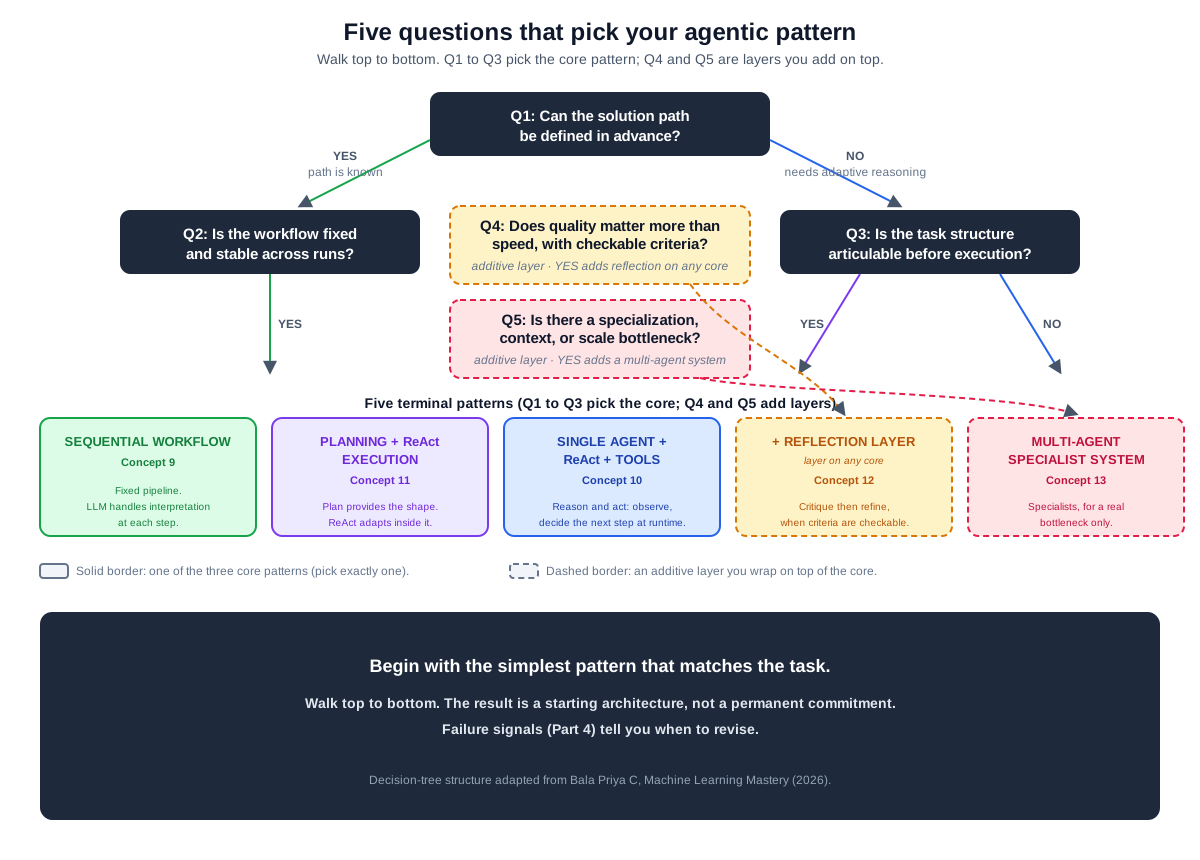
这棵树的形状是:先问你是否真的需要一个 LLM 驱动的 agent(Q1-Q2);如果需要,再问任务有多结构化(Q3);然后只有在质量(Q4)和规模(Q5)创造真实价值时,才把它们叠加上去。每当某个概念或决策显得抽象时,回来看这张图。
第 1 部分:模式选择问题
概念 1:Pattern selection 是构建前的设计工作
大多数 agentic 系统课程会教你如何构建每种模式。本课程关注的是另一个问题:给定一个任务,你应该构建哪种模式?这个问题发生在构建之前,也应该发生在构建之前,但通常没人教,原因有点尴尬:每种模式的实现都有充分文档;在它们之间做选择的决策逻辑却没有。
模式目录已经成熟。ReAct 来自 2022 年的论文。Planning-then-execution 模式可以追溯到经典 AI 中的 STRIPS,并在 2023 年被 LLM 场景重新发现。Reflection 自 2023 年起已经被形式化。每个主流框架都会讲多 agent 架构。任何模式,你都能在 5 分钟内找到教程。你不容易找到的是:面对这个有这些具体约束的具体任务,哪种模式匹配?
这会制造的失败模式。 工程师会默认选择最近接触过的模式,或者演讲里看起来最厉害的模式。多 agent demo 尤其诱人,因为它们看起来像「真正的 AI」:agent 彼此交谈、分工、协调。团队为了一个单 agent 加 2 个定义良好的工具一天就能解决的问题,花几周搭编排。结果是:交付更慢、调试更难、token 成本比任务需要的更多。
相反的失败模式也真实存在,而且讨论更少。工程师会在任务确实需要结构拆解时选择「就用一个带很长系统提示词的单 agent」。agent 会被不适合单一心智模型的上下文压垮。工具调用错误级联。Reflection 成为团队唯一知道的修复方式,于是到处添加,现在每个响应都要 30 秒。他们交付了一个脆弱系统,而一个架构选择本来可以避免这一点。
本课程教授的纪律: 模式选择是架构适配匹配,不是能力匹配。不要问「最好的模式是什么?」(没有)。要问「这个任务实际需要什么,能够提供它的最小模式是什么?」第 2 部分的 5 问决策树就是系统回答这个问题的方法。
为什么这比过去更重要。 2023 年,agentic 系统还处于实验阶段。选错模式最多浪费一个周末。到 2026 年,agentic 系统已经在生产环境中服务真实用户;你选择的模式会决定部署拓扑、评测纪律和规模化运维成本。错误的模式选择现在会以复利形式变贵:按错误假设搭建的基础设施、针对错误失败模式编写的评测、响应错误事故的 runbook。模式选择已经从「偏好」变成了「高风险设计决策」。
结论:模式本身已有充分文档;如何在它们之间选择才是本课程填补的空白。模式选择是架构适配匹配,不是能力匹配。错误模式会在生产环境中昂贵地复合:错误基础设施、错误评测、错误 runbook。本课程教授能避免最常见模式选择失败的 5 问纪律。
概念 2:每种模式都对任务做出不同假设
让模式选择变得可处理的深层想法是:每种 agentic 模式都是一次关于任务形状的押注。当押注与现实匹配时,模式会增加价值。当押注错误时,模式会变成开销;有时是看不见、只是消耗 token 的开销,有时是会让系统彻底坏掉的灾难性开销。
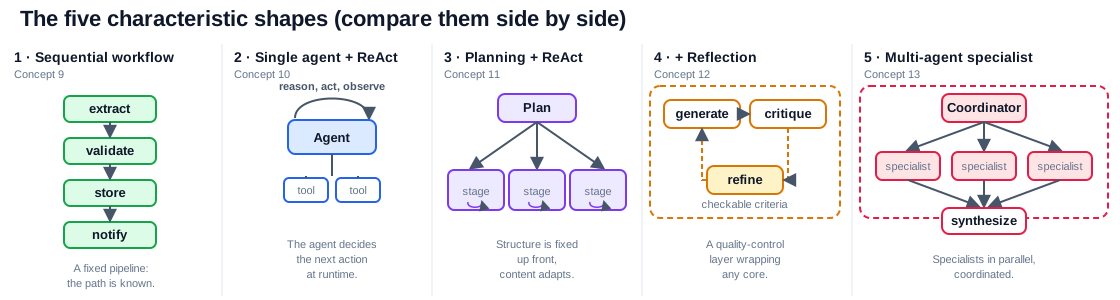
下面是 5 种模式各自押注的事情:
顺序工作流押注:我提前知道步骤,而且每次都一样。 它押注 solution path 在运行前固定且可表达。如果为真,你不需要 LLM 来决定下一步做什么:workflow 自己知道。你只把 LLM 调用保留给真正需要解释的步骤(从文本中抽取这个,生成那个摘要)。成本可预测;延迟有界;失败模式明显。如果为假:如果步骤实际上会随输入内容变化,workflow 会强迫系统走错误路径,或直接失败。
单 agent + ReAct + 工具押注:我提前不知道路径;agent 会自己找出来。 它押注任务足够开放,下一步必须根据目前观察结果来决定。如果为真,ReAct 的循环(reason → act → observe → repeat)就是唯一能处理它的方法,任何预先确定的计划到第 3 步都可能错。如果为假:如果路径其实很稳定、可以写下来,ReAct 就会增加延迟、成本,以及 agent 循环或反复回到已解决工作的风险,却没有带来顺序工作流做不到的东西。
规划 + ReAct 执行押注:我能提前表达主要阶段和依赖,但每个阶段仍需要 adaptive reasoning。 它押注工作的形状已知(research → analyze → synthesize → report),但每个阶段的内容需要调查。如果为真,计划提供脚手架,防止 agent 漫游;每个阶段内部的 ReAct 处理不确定性。如果为假:如果计划实际上无法表达(用纯 ReAct),或每个阶段不需要 adaptive reasoning(用顺序工作流),计划就会变成开销,而且执行最终仍会偏离它。
Reflection 押注:输出质量比速度重要,而且质量可检查。 它押注 critique pass 能识别 generator 漏掉的缺陷,并且「好输出」的标准明确到 critique 有意义。如果为真,reflection 能通过抓住第一轮产生的错误(错误 SQL、薄弱法律论证、报告中的事实错误)来提高可靠性。如果为假:如果标准含糊,或 critic 与 generator 共享同样盲点,reflection 只会增加延迟和成本而不改善输出。更糟的是:它会制造「critique 已经验证了质量」的虚假信心,但实际上并没有验证。
多 agent 专家系统押注:没有任何单个 agent 具备足够专业能力、上下文或容量把这件事做好。 它押注任务确实能划分成专家角色(researcher + writer + reviewer;coder + security + docs),而且跨专家协调比把一切塞进一个 agent 更便宜。如果为真,specialist 在自己的领域会产出比 generalist 更好的结果,并行执行会提升吞吐量。如果为假:如果这些「specialist」大多在做同一件事,或协调开销主导了工作,你就增加了买不到价值的复杂度,并引入了新失败模式(路由错误、集成错误、责任不清)。
模式就是押注;任务的真实属性决定押注是否正确。 这就是为什么模式选择是 fit-matching。你不是在问「哪种模式最强大?」你是在问「哪种模式的押注最匹配我对这个任务的真实了解?」
结论:每种 agentic 模式都是关于任务的押注:顺序工作流押注已知固定路径,ReAct 押注未知自适应路径,planning 押注可表达结构,reflection 押注可检查质量标准,多 agent 押注真实专业分工需求。正确模式是押注与现实匹配的那个;模式选择是 fit-matching,不是 capability matching。
概念 3:两种失败模式:overshooting 与 undershooting
概念 2 已经说明每种模式都是一次押注。概念 3 命名这次押注出错的两种方式;在真实生产系统中,它们出现的频率大致相当。
Overshooting:选择了比任务需要更复杂的模式。 这是更出名的失败模式,也是演讲和 demo 最容易诱导你掉进去的那种。示例:
- 为一个单条 LinkedIn 帖子生成任务搭建 3 agent 系统(researcher、writer、reviewer)。「researcher」agent 的输出只有两段,随后还得由「writer」总结。reviewer 因为一个 self-checking prompt 就能抓住的问题拒绝 5% 输出。3 个 agent,3 倍成本,没有可测量的质量提升。
- 给一个其实是固定工作流的任务加 planning。planner 每次都产出同样的计划(因为任务相同)。每次运行都为无价值的额外 LLM 调用付费。更糟的是:当输入稍微不寻常时,planner 产出一个略有不同的计划,团队现在还得调试「为什么 planner 在这个输入上走了不同路径?」
- 给没有可检查标准的任务加 reflection。critic 和 generator 共享同一个模型、同一批训练数据,以及常常相同的盲点。reflection pass 要么直接盖章通过,要么生成冗长但不可操作的 critique。延迟翻倍;质量不变。
Overshooting 的失败模式是:你为任务不需要的能力付了钱,而且现在不容易撤掉,因为编排已经变成承重结构。 移除一个已经在生产环境运行 6 个月的多 agent 系统不是重构,而是重写。
Undershooting:选择了比任务真实需求更简单的模式。 这种失败模式很少出现在演讲里,因为它没那么戏剧化,但至少同样常见。示例:
- 用一个带 4,000 token 系统提示词的单 agent 处理 billing、technical、account 和 refund 等客户支持问题。agent 会把 billing 规则与 technical 规则混淆。Reflection 略有帮助,但修不了根因。任务真的需要 specialist routing;一个 agent hold 不住上下文。
- 对一个本该固定流水线处理的 workflow 使用 ReAct + 工具。agent 偶尔跳过步骤,偶尔回看已完成工作,偶尔编造不存在的工具调用。团队在提示词里加「stop conditions」和「progress criteria」,治疗症状而不是底层错配。成本方差变成 runbook 问题。
- 对确实需要验证的输出跳过 reflection。带细微错误的 SQL 查询进入生产环境。带引用错误的法律草稿发给客户。团队事后增加测试,但自然的错误捕捉位置本来是在生成时的 reflection pass。
Undershooting 的失败模式是:你交付了一个靠人工盯着或靠运气活着的脆弱系统。 生产环境会暴露缺口;补救要么是添加一开始就该使用的模式,要么是接受失败率作为业务成本。
为什么两种失败模式同样重要。 关于模式选择的讨论常聚焦 overshooting(因为它更显眼,就是没人能调试的多 agent 系统)。但 undershooting 同样常见,而且可以说更危险:它会产出看起来能工作、直到突然不工作的系统,失败模式也更微妙。一个只学会避免 overshooting 却识别不了 undershooting 的团队,只学会了一半纪律。
第 2 部分的决策树旨在暴露这两种失败模式。每个问题都询问一个任务属性(路径是否已知?结构是否可表达?质量是否可检查?);如果答案不能证明更复杂的模式合理,树会路由到更简单的模式(防止 overshoot)。如果答案确实证明更复杂模式合理,树会明确路由到那里(通过让升级变得有意识来防止 undershoot)。
结论:模式选择有两种失败方式:overshooting(选择了比任务需要更复杂的模式,为没有帮助的能力付费)和 undershooting(选择了比任务需要更简单的模式,交付脆弱系统)。两者出现频率大致相当;演讲更常强调 overshooting,但 undershooting 至少同样危险,因为更隐蔽。第 2 部分的决策树通过询问任务属性而不是模式偏好来暴露这两种失败。
第 2 部分:5 问决策树
这一部分会逐题讲解决策树。每个概念覆盖 5 个问题中的一个:它测试什么、如何针对真实任务作答,以及答案会路由到哪种模式。读完第 2 部分,你就完整走过一遍决策树。
树的结构如下:
| # | 问题 | 它测试什么 | 路由到 |
|---|---|---|---|
| Q1 | solution path 能否提前定义? | 流程是否能在运行前指定 | 如果能 → Q2(固定 workflow 检查);如果不能 → 需要 adaptive reasoning,去 Q3 |
| Q2 | workflow 是否跨 runs 固定稳定? | 同一组步骤是否每次都适用 | 如果是 → Sequential Workflow;如果不是 → 重新考虑 adaptive patterns |
| Q3 | task structure 是否能在执行前表达? | 主要阶段和依赖是否清楚 | 如果是 → Planning + ReAct execution;如果不是 → Single agent + ReAct + tools |
| Q4 | quality 是否比 speed 更重要,且 criteria 可检查? | 额外 critique / refinement pass 是否值得延迟和成本 | 如果是 → 在所选模式上加 Reflection layer;如果不是 → 跳过 reflection |
| Q5 | 是否存在 specialization、context 或 scale bottleneck? | 一个 agent 是否缺少专业能力、上下文或并行容量 | 如果是 → Multi-Agent Specialist System;如果不是 → 保持 single agent |
问题 1-3 决定核心模式。问题 4-5 是叠加层;它们可以应用在任一核心模式上,但只有在自身假设成立时才应用。
概念 4:Q1:solution path 能否提前定义?
这是最重要的问题,因为它决定你是否根本需要一个 agentic 系统。
「solution path」是什么意思。 具体说:如果我告诉你输入,你能不能告诉我产出输出的精确步骤序列?不是答案本身,而是路径。对于 invoice intake:接收邮件 → 抽取结构化字段 → 与数据库校验 → 存储 → 通知请求者。5 个步骤,每次都是同样 5 个步骤。 这就是已知 solution path。
对比一下:客户问「我为什么在 11 月 12 日被扣了两次款?」路径取决于你发现什么。先查交易历史。找到它。如果两笔扣款来自不同商户,就转向「这是不是 fraud?」如果是同一商户但时间戳不同,就转向「第二笔是不是 retry?」如果客户账户有多个用户,就转向「是否其他人购买了?」每个分支都会导向不同的下一步。路径无法提前指定;它从调查结果中浮现。 这就是未知 solution path。
如何诚实测试。 按顺序做 3 个测试:
- 在看到输入前,你能否画出步骤流程图? 如果能,路径已知。如果你的流程图需要「现在由 agent 决定下一步」这样的框,路径未知。
- 这些步骤是否在多次运行中不变地重复? Invoice intake 会重复。客户支持调查不会。研究报告的大纲可能每次都同形(引言、3 个小节、结论),但内容发现不是一个步骤序列;它是 adaptive search。
- 输入变化时,步骤是否变化? 已知路径会对不同输入产生同样的步骤序列。未知路径会根据每一步揭示的内容产生不同步骤序列。
团队常错在哪里。 最常见错误是因为任务描述听起来结构化,就相信路径已知。「处理退款请求」听起来已知:收到请求、查订单、退款、通知客户。真实退款请求不是这样。 有些需要 dispute investigation(这是不是 chargeback?),有些需要查 policy(这个客户的 plan 是否允许退款?),有些需要 escalation(金额超过 agent 权限),有些涉及多笔扣款需要消歧。4 步流程图是错的;真实路径是 adaptive 的。
镜像错误是:因为任务描述听起来开放,就相信路径未知。「今晚帮我在城里找一家好餐厅」听起来很 adaptive,但如果实际实现是:解析请求 → 用筛选条件查询餐厅数据库 → 按评分返回前 5 个,路径已知,顺序工作流才是正确模式。「agentic」的包装误导了你。
路由。 如果路径已知(并且稳定,见下一题 Q2),你正走向顺序工作流。你甚至可能不需要 LLM 驱动的 agent;你可能需要的是一个在特定步骤嵌入 LLM 调用用于解释或生成的 workflow。 如果路径未知,你需要 agentic reasoning;问题变成结构是否可表达(Q3,planning)或不可表达(Q3,纯 ReAct)。
一个有用启发式。 问自己:「如果我必须把它写成一个没有 LLM 调用的 Python 函数,我知道该如何组织它吗?」如果知道,路径大概率已知;LLM 只在特定推理或生成时刻需要。如果不知道,路径大概率未知;LLM 在做结构性决策,而不只是生成文本。
结论:Q1 问的是 solution path 是否能在运行前指定。已知路径路由到顺序工作流(Q2);未知路径路由到 adaptive agentic reasoning(Q3)。最常见错误是任务描述听起来结构化、但实际实现是 adaptive 时误以为路径已知,例如退款处理、客户支持、调试。相反错误是实际是带 LLM 风味输入的 workflow,却误以为路径未知。用「没有 LLM 调用的 Python 函数」启发式测试。
概念 5:Q2:workflow 是否跨 runs 固定稳定?
你已经对 Q1 回答「是,路径已知」。Q2 是第二道检查:它在你真实预期的输入中是否固定且稳定?因为「已知」和「稳定」不是一回事。
区别。 一条路径可以原则上已知,但实践中会变化。考虑一个处理用户查询的「research assistant」agent。有时用户要快速答案(查一个事实并返回)。有时要多来源综合(搜索、比较、总结)。有时要分析上传的文档(读取、抽取 claims、评估)。你可以为每种情况写出路径,但路径会随输入类型变化。 这叫 known-but-variable,不是 known-and-stable。
相对地,invoice intake。每张发票都经过同样 5 个步骤。 路径稳定。每一步的内容会变化(不同 vendor、不同金额),但步骤结构不变。
为什么这重要。 顺序工作流假设稳定。如果你构建固定流水线,而路径会变化,那么流水线会为某些输入强迫错误路径:要么尝试应用不适用的步骤(quick-answer query 被完整 synthesis 流程处理),要么大声失败(document-analysis path 不适合 quick-answer step structure)。
测试。 看一组有代表性的真实输入(或仔细想象它们)。步骤序列在这些输入之间是否保持一致?
- 如果是,每个输入都经过同样步骤 → workflow 稳定;构建顺序工作流。
- 如果不是,不同输入需要不同步骤序列 → workflow 可变;你需要(a)显式分支 workflow 来处理每种变体,或(b)能根据输入自适应路径的 agentic 模式。
团队常错在哪里。 把「平均已知」当成「已知且稳定」。80% 情况是固定 workflow;20% 情况需要偏离。工程师为 80% 情况构建 workflow,再为 20% 添加 ad-hoc patch。最终 patch 支配了原始 workflow,你得到一个没人理解的未文档化混合体。 这种模式最常见于团队不愿承认任务比预期更 adaptive 时:顺序工作流感觉比 agentic 模式安全,于是他们过拟合。
路由。 如果 workflow 固定且稳定 → Sequential Workflow。到这条分支就停止。跳过问题 3,并且通常跳过问题 4。只有当规模迫使你跨 workflow instances 并行化时,才考虑 Q5。
如果 workflow 是 known-but-variable → 有两个选择:
- 带显式分支的顺序工作流:把每种变体写成一个分支,并确定性地路由过去(通常用一个小 LLM 调用只做输入类型分类,然后路由)。适合变体很少且稳定的情况。
- 把路径视作实际上未知:继续到 Q3,让 agentic reasoning 处理变化。适合变体很多或还在演化的情况。
务实启发式。 如果你用一只手就能列出所有变体,而且它们不常变化,就用分支 workflow。如果列不完,就用 agentic 模式。
结论:Q2 问的是已知路径是否也在预期输入中稳定。稳定路径路由到顺序工作流。Known-but-variable 路径要么路由到带显式分支的 workflow(少量稳定变体),要么路由到 agentic 模式(大量或演化中的变体)。陷阱是把「80% 情况固定」当成「固定」;20% 情况会长成支配原始设计的 patch。
概念 6:Q3:task structure 是否能在执行前表达?
你已经对 Q1 回答「路径未知」,需要 agentic reasoning。Q3 问下一件事:即使具体步骤未知,这项工作的高层结构是否能提前表达?
这里的「structure」是什么意思。 不是步骤本身;根据 Q1,步骤未知。这里指阶段及其依赖。示例:market research agent。你不能提前指定步骤(查哪些来源、研究哪些竞争对手、做哪些分析,取决于发现什么)。但你能表达结构:gather data → analyze → synthesize → report。4 个阶段,按这个顺序,依赖清楚。 这就是可表达结构。
对比一下:customer-support agent 处理「我遇到问题了」。agent 会调查。根据发现,工作可能需要 account lookup,然后 knowledge-base search,然后 policy check,然后 escalation;也可能这些都不需要,只是快速重定向。你无法表达阶段,因为这项工作不适合阶段结构;它是调查,完成时自然完成。这就是不可表达。
测试。 在看到任何具体输入前,试着把工作画成阶段图。你能否标出主要阶段及其依赖?
- 如果是,阶段清楚(gather → analyze → synthesize;或 design → implement → test;或 research → draft → review)→ 结构可表达;使用 planning。
- 如果不是,工作不适合阶段,它是调查、迭代或开放探索 → 结构不可表达;使用 ReAct。
团队常错在哪里。 发明不存在的结构。工程师会觉得计划总该可能,于是强行计划。planner 生成计划;执行马上偏离,因为任务其实没有那些阶段。团队随后要么(a)把偏离当成 planner 的 bug(「planner 产出了坏计划」;重写 planner;重复),要么(b)逐渐缩短计划,直到它变得平凡且毫无贡献。诚实答案本来是「这个任务不需要计划;用 ReAct」。
相反错误是:错过实际上存在的结构。工程师对确实有阶段的任务使用纯 ReAct。agent 会漫游、回看已解决工作,或失去整体进度感。把「记得做这些阶段」加进提示词只是 workaround;架构修复是在 ReAct 循环之上加 planning。
路由。 如果结构可表达 → Planning + ReAct execution。planning agent 产出阶段结构;ReAct 在每个阶段内部运行,以处理 Q1 识别出的未知步骤适应。
如果结构不可表达 → Single agent + ReAct + tools。agent 推理当前状态、采取下一步行动、观察结果并重复:除了 agent 自身维护的结构外,不再覆盖额外结构。
值得内化的启发式。 当工作的形状可预测但内容不可预测时,planning 有帮助。当连形状都取决于发现结果时,只用 ReAct 才正确。shape-vs-content 这个区别,是区分两者最干净的方法。
🔍 Q2 与 Q3 的混淆:用示例消歧
Q2(「workflow 是否固定稳定?」)和 Q3(「task structure 是否可表达?」)即使有经验的团队也会绊倒。两者都在问可预测性;区别在于问的是哪一种可预测性:
问题 它问什么 「yes」意味着什么 「yes」路由到 Q2 steps 本身是否跨 runs 固定 同一个 Python 函数调用序列每次都能产生正确答案。不需要 LLM 驱动的下一步决策。 Sequential workflow Q3 即使 step-level 工作变化,major stages 是否能提前表达 你能在看到具体输入前,在白板上描述阶段结构。LLM 仍然要在每个阶段内部决定做什么。 Planning + ReAct execution 最容易伤人的混淆是:工程师看到任务有结构(「这里显然有阶段:research、analyze、write」),于是对 Q2 回答 YES。但「存在结构」是 Q3 的问题,不是 Q2 的问题。 Q2 问的是你能否预测运行时的精确步骤序列;如果 agent 在每个阶段内部仍需要做决策(哪些来源、哪些分析、哪些 framing),Q2 的答案就是 NO,你应该来到 Q3。
区分 Q2 与 Q3 的 3 个边界示例:
示例 A,invoice intake(Q2 = YES → Sequential workflow):extract → validate → store → notify。每次都是同样 5 个步骤。 LLM 抽取字段并写通知,但不决定下一步做什么。step sequence 固定。
示例 B,market research report(Q2 = NO, Q3 = YES → Planning + ReAct):gather data → analyze → synthesize → draft → review。阶段可表达,但每个阶段内部由 agent 决定做什么(查哪些来源、关注哪些竞争对手、做哪些分析)。阶段固定;阶段内步骤自适应。
示例 C,customer-support investigation(Q2 = NO, Q3 = NO → Single agent + ReAct):agent 调查客户问题。没有预先确定的阶段结构:根据发现,工作可能是一次 lookup,也可能是 5 次 lookup 加一个 policy check 再加 escalation。阶段和步骤都不固定。
注意,示例 B 是第 5 部分的 Decisions 只部分练到的情形。如果你发现自己同时想说「这里有清晰阶段」以及「planner 产出计划但执行一直偏离」,你就在 Q2 / Q3 边界上,答案几乎总是 Planning + ReAct,而不是 Sequential workflow。
Q2 中 known-but-variable 子情况值得单独命名。 有时 Q1 = YES(路径已知),但 Q2 = NO(跨输入可变),例如 workflow 根据输入类型有 3-4 个稳定变体(quick lookup vs. multi-source synthesis vs. document analysis)。这既不是 Sequential workflow,也不是 Planning + ReAct;这是带显式输入类型路由的 branched workflow。概念 5 覆盖它;概念 16.5 的 anti-pattern gallery 中「给稳定 workflow 加 planning」那一行覆盖的是反向失败。
结论:Q3 问的是任务高层结构(阶段和依赖)是否能在执行前表达。可表达结构路由到 planning + ReAct execution(计划提供形状;ReAct 处理每个阶段内的未知内容)。不可表达结构路由到纯 ReAct + 工具(agent 自适应地发现形状和内容)。陷阱是发明不存在的结构(强行计划,执行偏离)以及错过实际存在的结构(对有阶段的工作使用纯 ReAct,导致漫游)。
概念 7:Q4:quality 是否比 speed 更重要,且 criteria 可检查?
Q4 是两个叠加层问题中的第一个。核心模式(顺序工作流、ReAct,或 planning + ReAct)已经由 Q1-Q3 选定。Q4 问的是是否在上面叠加 reflection。
Reflection 做什么。 agent 产出输出后,critique pass 根据明确标准评估它。如果 critique 识别出缺陷,agent 会细化或重新生成。这个模式的押注(来自概念 2)是:critique pass 能抓住 generator 漏掉的错误,而且「好输出」的标准明确到 critique 有意义。
Reflection 有价值必须同时满足两个条件。
- 质量比速度重要。 Reflection 至少增加 1 次额外 LLM 调用(critique),常常增加 2 次(critique + refinement)。对延迟敏感的交互场景(实时客户支持、conversational agents)来说,这笔成本通常太高。对输出会被人审阅或交给下游系统的 batch 场景(报告生成、代码生成、文档起草)来说,延迟通常可以接受。测试:如果响应慢 2-5×,但输出质量显著更高,是否可接受?
- 评估标准明确且可检查。 含糊标准会产生含糊 critique。「确保它很好」不是标准。「验证 SQL 可解析、只访问列出的表、且不使用 SELECT *」才是。没有明确标准,critique pass 就会变成不能改善输出的冗长闲聊,并且常常制造「AI 已经检查过了」的虚假信心。
两个条件同样重要。 给延迟敏感任务加 reflection 是浪费时间。给标准含糊任务加 reflection 是表演。两种失败都常见;两者都来自跳过 Q4、只是因为 reflection 听起来严谨就添加它。
测试。 问两个问题:
- 如果这个响应慢 3-5×,用户(或下游消费者)会因为质量显著提升而接受吗?如果不会,reflection 不符合延迟预算。
- 我能否用 5-10 条具体 bullet points 写清楚这个任务的「好输出」到底是什么,让另一个 LLM 能读这些条目并检查输出?如果不能,reflection 不符合标准清晰度。
如果两个答案都是 yes,reflection 有价值。如果任一个是 no,跳过 reflection。
团队常错在哪里。
因为 critic 听起来严谨而添加 reflection。「先生成,再 critique」听起来像好工程。很多时候确实是;有时只是展示。测试标准是 critique 是否以可测量方式改变了输出。如果你添加 reflection 后,post-reflection 输出 90% 时间都与 pre-reflection 相同,reflection 没在工作;它只是在增加成本。
对 generator 和 critic 使用同一个模型与提示词风格。critic 拥有相同训练数据、相同偏差、相同盲点。它倾向于 rubber-stamp。有效的 reflection 模式要么(a)为 critic 使用不同模型,要么(b)用根本不同视角来 framing critic(「你是严格审稿人,专门找问题」vs. generator 的 helpful framing),要么(c)给 critic 明确检查工具(运行 SQL、解析 JSON、按 schema 校验)。
对不可检查输出做 reflection。Reflection 适合「错误」可定义的任务:有错误的 SQL、不能编译的代码、遗漏源文关键事实的摘要。它不适合「好」很主观的任务:营销文案、创意写作、对话回复。主观领域从 human-in-the-loop review 中受益通常多于 LLM reflection。
路由。 如果两个条件都成立,就在 Q1-Q3 选出的核心模式之上添加 reflection 层。它不替代核心模式;它包裹核心模式。带 reflection 的顺序工作流先运行 workflow,再 critique 最终输出。带 reflection 的 ReAct agent 先完成自己的循环,再 critique 最终输出。Reflection 是事后质量控制,不是核心模式的替代品。
如果任一条件不成立,就跳过 reflection。如果你确实需要质量保证但标准不可检查,正确修复是 human review,而不是 LLM reflection。
结论:Q4 问的是 quality 是否比 speed 更重要,并且 evaluation criteria 是否明确可检查。两个条件都必须成立,reflection 才有价值。对延迟敏感任务做 reflection 是浪费时间;对标准含糊任务做 reflection 是表演。两个最常见失败模式是因为 reflection 听起来严谨就添加它(却不检查是否改变输出),以及用同一模型和提示词风格做 generator 与 critic(导致 rubber-stamping)。当 reflection 合理时,它叠加在核心模式之上,而不是替代核心模式。
概念 8:Q5:是否存在 specialization、context 或 scale bottleneck?
Q5 是第二个叠加层问题,也是后果最重的问题,因为多 agent 系统是最昂贵的构建模式;如果证明错误,也是最昂贵的移除模式。
多 agent 系统押注什么。 3 个经常被混在一起的不同主张:
- Specialization claim: 任务需要不同专业能力,而单个 agent 无法在一个提示词里很好持有。coder、security reviewer 和 documentation writer 各自有不同的最佳提示词、最佳工具和最佳评估标准。把三者塞进一个 agent 会让三者都平庸。
- Context claim: 任务需要的上下文超过单个 agent 能有效使用的范围。即使上下文窗口技术上足够大,随着上下文增长,检索和推理也会退化。把工作拆给多个 agent,每个 agent 使用自己的聚焦上下文,可以保持推理质量。
- Scale claim: 任务包含可并行运行的工作,多 agent 系统能比单个顺序 agent 更快执行。并行研究 10 个竞争对手,比一个一个研究更快。
每个主张都必须针对真实任务单独测试。
specialization claim 最常被未经证据地相信。工程师看到「构建一个功能」这样的任务,会按角色拆解(architect、coder、tester、reviewer),因为这感觉直观。这种直觉错的时候和对的时候一样多。 真实功能开发往往由一个有良好工具访问的 agent 做得更好;architect-coder-tester 分离引入的 handoff 成本可能超过专业分工收益。测试这个主张:如果某个领域专家只专注这一片,工作是否会有实质改善?
context claim 在规模上更常为真。一个 agent 跨 10 个知识库做 10 次检索,会累积削弱推理的上下文。拆成 10 个 retrieval-and-summary agent,每个产出聚焦 brief,再组合这些 brief,常常表现更好,因为每个 retrieval agent 的上下文都保持小而聚焦。但这是一个真实架构决策,不是默认选项。
scale claim 最容易测试:并行执行是否提供可测量的吞吐提升?任务是否真的能干净并行?如果工作有严格顺序依赖(每一步需要上一步输出),并行多 agent 执行只会增加协调成本,不会买到速度。
测试。 3 个子问题:
- 我能否说出证明 specialist 合理的具体专业能力?「这样更干净」不算。「reviewer 需要应用 OWASP 标准,而 coder 不该被要求全部学会」算。如果说不出具体专业能力,specialization claim 大概率是审美性的。
- 任务上下文是否会超过单个 agent 能有效使用的范围?如果任务需要多个不同知识库、跨许多来源的长时间调查,或每个阶段使用专门工具集,通常是 yes。如果上下文能放进一个管理良好的提示词,通常是 no。
- 工作是否真的能并行,并带来可测量吞吐提升?如果工作是顺序的(每一步依赖上一步),并行执行没有帮助。如果工作是真正独立的(研究 10 个竞争对手、评估 10 个候选人、总结 10 份文档),并行化有真实价值。
如果至少一个子问题得到强 yes,多 agent 就合理。如果 3 个问题都只是「maybe」或「为了组织原因,有独立 agent 会更好」,保持单 agent 模式。协调开销真实且很大。
团队常错在哪里。
为了组织原因构建多 agent 系统。「我们有 3 个团队做这件事,所以就做 3 个 agent。」这是让 agent 架构镜像组织结构。几乎总是错的。 多 agent 系统应该围绕任务属性设计,而不是团队边界。(3 个团队可以协作构建一个 agent;组织结构和 agent 结构不必匹配。)
低估协调成本。agent 之间的每次 handoff 都引入一个序列化点(一个 agent 的输出成为另一个 agent 的输入)、一个潜在失败点(handoff 格式可能不匹配)、一个调试难点(出错时到底哪个 agent 导致的?)。多 agent 系统的调试成本大约比单 agent 系统高一个数量级:判断成本是否合理时,要把这一点计入推理。
为了展示复杂度而构建多 agent。这是演讲和 demo 失败模式。多 agent 系统在架构图里很漂亮;它们展示「真正的 AI」。如果真实任务不能证明它们合理,你构建的是漂亮开销。
路由。 如果 specialization、context 或 scale 造成真实瓶颈 → Multi-Agent Specialist System。系统可能有一个 coordinator / routing agent 加 specialist,或带显式 handoff contract 的 specialist,或通过共享状态通信的 specialist。核心模式(顺序工作流、ReAct、planning + ReAct)仍然适用于每个 specialist 的领域;多 agent 是模式的组合,不是对它们的替代。
如果不存在真实瓶颈 → 保持单 agent 模式。如果 Q4 条件成立,可以加 reflection;但不要因为审美原因加多 agent。
Q5 的量化触发器:触发多 agent 决策的具体指标。 「specialization、context 或 scale bottleneck」默认依赖判断,而判断正是 pattern-overshoot 滋生的地方。尽可能用测量替代判断。 下面这些触发器是经验规则,能把 Q5 从主观的「感觉像 specialists」移动到可辩护的「我们测到了 X,而且 X 超过阈值」。
| Bottleneck claim | 能证明升级合理的量化触发器 | 指标测量什么 |
|---|---|---|
| Specialization | 单 agent trace 显示工具路由错误集中在特定知识领域(粗略工作阈值:受影响类别中大约三分之一 runs,需按你自己的 baseline 校准)。示例:统一 billing+technical agent 在大量 technical queries 上选错工具,因为 billing 术语主导了上下文。 | 按 query category 分段的 per-trace tool-correctness:来自评测套件的 Phoenix evaluator |
| Specialization(定性 fallback) | 无法测量?升级前必须写一份 specialist role 说明,用普通英文写清每个角色的职责、工具和验收标准。如果说明含糊,或角色职责重叠 >40%,specialization claim 就是审美性的,而不是架构性的。 | 文档评审,不是指标 |
| Context overflow | 随上下文增长,holdout set 上的准确率有实质下降(测你自己的曲线;粗略信号:15K → 45K token sweep 中下降约 10 个点值得调查)。示例:research agent 加载 25 份源文档后,15K context 准确率 78%,30K 为 71%,45K 为 62%。 | golden dataset 上的 context-vs-accuracy 曲线 |
| Scale(可并行) | 每次 run 有 >5 个独立子任务,并且单 agent 执行延迟超过面向用户延迟预算的 >2×。示例:研究 10 个竞争对手 → 单 agent 顺序执行需要 8 分钟,预算是 3 分钟 → 并行多 agent 执行是唯一适配路径。 | 端到端延迟 + 子任务独立性分析 |
| Scale(吞吐) | 运行量超过单 agent 设计 rate-limit ceiling 的 10×,且没有 per-tenant concurrency cap 能维持公平性。示例:每 tenant 每天 5K runs,而 OpenAI quota 是 500 RPM,需要跨多个 agent identity 或 specialist-style decomposition 做 fan-out。 | 生产负载 × API rate limits:在 operational envelope 的 flow-control dashboards 中可见 |
证据层级。 证明多 agent 的证据从强到弱:
- Production trace data 显示瓶颈(最好:你有证据说明单 agent 系统确实以这种方式失败)
- Holdout-set measurements 显示瓶颈(强:受控实验)
- Domain analysis 加书面 specialist-role specification(可接受:至少定义了你要构建什么)
- 「感觉像 specialists」(不足:pattern-overshoot 就住在这里)
一个有用自检。 「我们能先交付的最小单 agent 设计是什么?什么具体失败会迫使我们以后升级到多 agent?」如果答案是「我们会在生产 trace 中发现 X failure pattern」,就先交付单 agent,并让升级触发器在该触发时触发。多 agent 很少是错误终点;它几乎总是错误起点。
结论:Q5 问 specialization、context 或 scale 是否造成真实瓶颈,从而证明多 agent 架构合理。3 个主张(specialization、context、scale)必须分别测试,并在可能时对照量化触发器测试(阈值是示例,需按系统校准:大约三分之一 runs 出现工具路由错误、高上下文下准确率下降约 10 个点、延迟超过预算 2× 以上)。Specialization 最常被无证据相信;context 在规模上更常真实;scale 最容易测试。最大失败模式是为了组织或审美原因构建多 agent,而不是为了任务属性;协调开销真实且很大,移除已部署的多 agent 系统是重写,不是重构。先从单 agent 开始;让测量触发升级。
概念 8.5:OpenAI Agents SDK 原语:每种模式使用什么
在第 3 部分逐一讲 5 种模式前,先把模式选择连接回实现。前面的课程把 OpenAI Agents SDK 作为锚点框架来讲。 本课的模式不是要你从零重新实现的抽象架构形状;它们是用你已经见过的 SDK 原语组合出来的形状。本概念把每种模式映射到构建它的具体 SDK 原语。
对模式选择重要的 5 个原语。
| Primitive | 它是什么 | 哪些模式使用它 |
|---|---|---|
Agent | 核心类,一个由 LLM 驱动、带 instructions、tools 和可选结构化输出 schema 的实体。每种模式的原子单元。 | 全部 5 种模式 |
Runner.run(agent, input) | 运行 agent 循环,直到产出最终输出。SDK 为你运行循环:不需要手写 reason-act-observe cycle。 | 单 agent + ReAct(最突出)、Planning + ReAct、多 agent(每个 specialist) |
@function_tool | 把 Python 函数变成 agent 可调用工具的装饰器。Type signatures 和 docstrings 会自动成为工具 schema。 | 单 agent + ReAct、Planning + ReAct、多 agent(每个 specialist)、顺序工作流(当 LLM-step 需要工具时) |
handoff(target_agent) | 用于多 agent 转换的一等 SDK 原语:一个 agent 明确把控制权交给另一个,并保留 conversation context。比手写 coordinator 更干净。 | 多 agent(主要用途);Planning + ReAct(planner-to-executor) |
output_guardrail / input_guardrail | 在 agent 输入或输出上运行 validation / critique pass 的 SDK 原语。SDK 原生 reflection 模式。 | Reflection(主要用途);任何需要输入校验的模式 |
还有一个值得命名的原语:Agent.as_tool()。 它把一个 Agent 转换成另一个 Agent 可调用的工具。这是 SDK 用于分层多 agent 组合的机制(coordinator agent 像调用任何函数工具一样调用 specialist agent)。使用 Agent.as_tool() 的多 agent 系统比使用 handoff() 的多 agent 系统更简单,因为 coordinator 保持控制;handoff() 适合你确实希望 specialist 接管 conversation 的情形。
打开模式到 SDK 原语的映射(第一遍可略读;实现时再打开)。
模式 → 原语映射一览。
Sequential workflow:
    Agent(output_type=...) at the LLM-steps; plain Python everywhere else
    Runner.run() called once per LLM-step: no agentic loop (the agent has no tools)

Single agent + ReAct + tools:
    Agent(instructions=..., tools=[@function_tool, @function_tool, ...])
    Runner.run(agent, input): the SDK runs the reason-act-observe loop

Planning + ReAct execution:
    planner = Agent(output_type=PlanSchema)
    plan = await Runner.run(planner, task)
    for stage in plan.stages:
        result = await Runner.run(stage.agent, stage.input)

Single agent + reflection:
    Agent(..., output_guardrails=[critic_guardrail])
    OR: Agent(..., tools=[Agent.as_tool(critic_agent)])

Multi-agent specialist system:
    coordinator = Agent(handoffs=[researcher, writer, reviewer])
    OR: coordinator = Agent(tools=[researcher.as_tool(), writer.as_tool(), ...])
第 3 部分后面的代码块会用完整 SDK 细节展示这些形状。
为什么这个映射对模式选择重要。 SDK 原语不只是实现便利,它们编码了架构决策。选择 handoff() 还是 as_tool() 本身就是一个 pattern-composition 决策。 handoff() 意味着「specialist 接管 conversation」;as_tool() 意味着「coordinator 保持控制并把 specialist 当作函数使用」。前者适合 specialist 需要直接与用户互动;后者适合 coordinator 组合 specialist 输出。知道该用哪个,是本课程所教授的同一套模式选择纪律的下游结果。
与 worked example 的连接。 客户支持 Worker(Maya 的 Tier-1 Support agent)使用 Agent + @function_tool(用于 lookup、refund、escalation)+ Runner.run()(在 FastAPI handler 中)。它是单 agent + ReAct + 工具模式,正是概念 10 将用 SDK 细节讲解的模式。Maya 的实现就是本课程 5 种模式之一;另外 4 种是当任务属性变化时你会选择的变体。
概念 8.5 的结论:SDK 原语是全部 5 种模式的构建块。
Agent是原子单元;Runner.run()运行循环;@function_tool把 Python 函数暴露为工具;handoff()和as_tool()把 agent 组合成多 agent 系统;output_guardrail实现 reflection。模式 → 原语映射让本课的架构选择具体化:模式选择不是抽象的;它是在选择组合哪些 SDK 原语以及如何组合。
概念 8.6:每种模式的 operational envelope 考量(以 Inngest 为具体例子)
独立读者提示。本概念讲的是模式选择的运维后果,不是教 Inngest。 这个架构论点会泛化到任何 durable-execution 平台(Temporal、Restate、Dapr Agents、AWS Step Functions);Inngest 只是具体例子,因为 operational-envelope 课程讲的是它。如果你使用不同平台,或仍处在 operational platform 未定的设计阶段,请关注模式架构论点:模式越复杂,就越依赖 operational envelope。 把 Inngest 原语替换成你平台的原语即可。
概念 8.5 把模式映射到 engine 原语(OpenAI Agents SDK)。概念 8.6 把模式映射到 operational envelope 原语:让 agent 循环能在失败中存活、扩展到许多并发用户,并与向它发事件的外部世界集成的运行时机械结构。SDK 运行 agent 循环;envelope 让 agent 循环达到生产级。 每种模式使用不同 envelope 原语;模式越复杂,就越依赖 envelope。
在 Agent Factory 路线中,operational envelope 是 Inngest。下面的原语是 Inngest 的;底层模式架构论点是通用的。
对模式选择重要的 operational-envelope 原语。
| Primitive | 它是什么 | 哪些模式最常使用 |
|---|---|---|
@inngest_client.create_function | 把函数注册到 durable-execution runtime 的装饰器。被运维管理的工作单元。 | 全部 5 种模式 |
TriggerEvent, TriggerCron | 触发表面:外部世界发出的事件,以及唤醒 function 的 schedule。agent 不是在你调用它时运行;它是在外部世界触发 trigger 时运行。 | 全部 5 种模式;cron 与 incident response 和 batch workflow 最相关 |
ctx.step.run(name, fn, ...) | 每次调用都是持久 checkpoint;已完成步骤在重试时返回 memoized output;失败步骤独立重试。生产可靠性底层机制。 | 顺序工作流(最直接映射)、Planning + ReAct(每个 stage 一个 step.run)、Reflection(独立 generator / critic steps) |
ctx.step.wait_for_event(...) | function 持久挂起,消耗 0 compute,直到匹配事件到达或超时触发。HITL gate 背后的运行时原语。 | 任何需要 human approval 的模式;多 agent(specialist 之间);reflection(当 human judgment 是 critic 时) |
concurrency, throttle, priority | 每个 function 的 flow-control policy。Concurrency 限制 active runs;throttle 限制 starts/sec;priority 排队排序;per-key concurrency 提供 multi-tenant fairness。 | 多 agent(最关键,per-specialist limits 防止 rate-limit exhaustion);任何高流量单 agent 模式 |
| Fan-out triggers | 一个事件唤醒 N 个订阅函数;或一个 parent 触发 N 个 child events。并行 specialist 执行背后的运行时原语。 | 多 agent(并行拓扑);Planning + ReAct(当 stages 可并行时) |
| Replay + dead-letter | 失败 runs 持久保存;发出修复、点击 replay,function 用新代码从失败步骤恢复。失败前的步骤保持 memoized。 | 全部模式,但模式越复杂 replay 越重要,因为长 run 中途失败时风险更大 |
打开以 Inngest 为例的模式到 operational envelope 映射(第一遍可略读;实现时再打开)。
模式 → 原语映射一览。
Sequential workflow:
    @inngest_client.create_function(trigger=TriggerEvent(...))
    async def workflow(ctx):
        a = await ctx.step.run("extract", extractor_agent.run, ...)
        b = await ctx.step.run("validate", validate, a)
        c = await ctx.step.run("store", db.insert, b)
        await ctx.step.run("notify", notifier_agent.run, ...)
    # Each step independently checkpointed; failure → memoized resume

Single agent + ReAct + tools:
    @inngest_client.create_function(
        trigger=TriggerEvent(event="customer/email.received"),
        concurrency=[Concurrency(limit=10, key="event.data.customer_id")],
    )
    async def support(ctx):
        result = await ctx.step.run("agent-loop", Runner.run, support_agent, ctx.event.data["query"])
        # If agent needs HITL escalation, use step.wait_for_event inside the agent's tool
        return result.final_output

Planning + ReAct execution:
    @inngest_client.create_function(trigger=TriggerEvent(event="research/started"))
    async def planning(ctx):
        plan = await ctx.step.run("plan", Runner.run, planner, ctx.event.data["task"])
        results = {}
        for stage in plan.stages:
            # Each stage = one step.run. Crash mid-stage → only that stage retries.
            results[stage.id] = await ctx.step.run(f"stage-{stage.id}", Runner.run, stage.agent, ...)
        return await ctx.step.run("synthesize", Runner.run, synthesizer, results)

Single agent + reflection:
    @inngest_client.create_function(trigger=TriggerEvent(...))
    async def reflective(ctx):
        output = await ctx.step.run("generate", Runner.run, generator, ctx.event.data["task"])
        critique = await ctx.step.run("critique", Runner.run, critic, output)
        if not critique.final_output.is_safe:
            output = await ctx.step.run("refine", Runner.run, generator, refine_prompt(output, critique))
        return output

Multi-agent specialist system:
    # Coordinator triggers fan-out of specialist events
    @inngest_client.create_function(trigger=TriggerEvent(event="research/landscape.requested"))
    async def coordinator(ctx):
        plan = await ctx.step.run("plan", Runner.run, planner, ctx.event.data["topic"])
        await ctx.step.run("fan-out", fan_out_specialist_events, plan.competitors)
        # Each specialist runs independently as its own function:

    @inngest_client.create_function(
        trigger=TriggerEvent(event="research/competitor.research"),
        concurrency=[Concurrency(limit=5, key="event.data.tenant_id")],  # per-tenant cap
    )
    async def competitor_research(ctx):
        return await ctx.step.run("research", Runner.run, researcher, ctx.event.data["target"])
第 3 部分后面的边栏会按每种模式给出显式 operational-envelope section,展示这些映射。
为什么这个映射对模式选择重要。 有两个在架构图层面看不见、但会在生产中狠狠咬人的生产失败模式:
- 中途崩溃。 一个 6 步的 planning + ReAct execution 在第 4 步崩溃(没有 durable execution)时,会重新为前 3 步付费。operational-envelope 课程对此做了量化:按 GPT-5 级别定价,一个多阶段 agent flow 每次崩溃可能重新支付约 $0.10-$2.00。每天 1000 runs,仅崩溃造成的丢失工作量就大约是每月 $30-$600。顺序工作流便宜地从崩溃中恢复,因为重试很短;multi-agent + reflection 系统昂贵地从崩溃中恢复,因为重试很长。 模式越复杂,operational envelope 的
step.runmemoization 价值越能直接折算成钱。 - 规模化协调。 一个有 5 个 specialist、10 个 tenants,并且 bursts 为 100 events/minute 的多 agent 系统,如果没有 per-specialist concurrency caps,会耗尽 rate limits。operational envelope 把它变成一行:
concurrency=[Concurrency(limit=5, key="event.data.tenant_id")]。本课程的决策树选择模式;operational envelope 的 flow-control primitives 让所选模式在规模上保持健康。
部署组合。 operational envelope(Inngest)与你的云部署是组合关系,不是竞争关系。cloud deployment 课程讲云拓扑:ACA + Neon + R2 + Cloudflare Sandbox + Phoenix。operational-envelope 课程讲包裹这个拓扑中 SDK runner 的层。真实生产系统两者都会用: 部署在 ACA 上的 Inngest functions,调用 Runner.run() 并放在 step.run() 块内,Neon 存储 agent traces,sandbox 执行工具代码。第 3 部分的部署组合边栏会明确命名这两层。
评测组合。 Inngest 的结构化 trace(每个 step 的 input、output、retry count、latency)会像 SDK 的 agent trace 一样,通过 OpenTelemetry 流入 Phoenix。评测套件的失败检测模式(trace-length anomalies、plan-execution divergence、rubber-stamping)都适用于 Inngest-instrumented runs;加入 operational envelope 不会改变评测套件。
概念 8.6 的结论:operational envelope(Inngest)是全部 5 种模式的生产基底。Triggers 唤醒 function;
step.run让它持久;step.wait_for_event实现 HITL gates;concurrency、throttle 和 priority 在负载下塑形;fan-out 协调多 agent specialists;replay 处理 bug-fix recovery。模式越复杂,envelope 越有价值:顺序工作流没有它也能存活;multi-agent + reflection 系统需要它。Envelope 与你的云部署和评测套件组合使用,不是替代关系,而是生产架构中的平行层。
三层并排看。 概念 8.5 和 8.6 一起说明,任何生产级 agentic 模式都是 3 层的组合:operational envelope(Inngest)、engine(OpenAI Agents SDK)和 cloud deployment。外部世界从顶部发出 triggers(客户邮件、billing 或 Slack 或 CRM 的 webhooks、cron schedule、来自其他 Workers 的 fan-out events、human approvals);这些 triggers 向下流经 3 层。下图映射了每层中的原语及其作用。每当第 3 部分的 operational-envelope 边栏显得抽象时,回来参考这张图。

要点:3 层是堆叠关系。Inngest(envelope)包裹 SDK(engine),二者都运行在 cloud deployment 中。本课程选择模式;这 3 层把所选模式变成生产现实。 第 3 部分的全部 5 种模式都是这 3 层的组合;每种模式的差异在于每层使用哪些原语。模式越复杂(multi-agent with reflection),operational-envelope 层越关键,因为 coordination、durability 和 HITL 不再是可选项。
第 2 部分后,用 AI 试一次。 你已经有了 5 个问题。先在一个真实任务上用一次,再读深入模式。打开 Claude Code 或 OpenCode session,粘贴:
「我正在学习如何选择 agentic 架构。请从我真实工作中挑一个我可能为它构建 agent 的真实任务。先让我描述它,然后带我走完 5 个问题:Q1(solution path 是否已知?)、Q2(workflow 是否固定稳定?)、Q3(task structure 是否可表达?)、Q4(quality 是否超过 speed,且 criteria 可检查?)、Q5(是否有 specialization、context 或 scale bottleneck?)。当我的回答含糊,或我想选择比任务需要更复杂的模式时,请反驳我。最后告诉我这些答案指向哪种起始模式。」
你正在学习的东西:只有把 5 个问题用在你真正关心的任务上,它们才会变成反射。拿一个真实任务,大声走完一遍,并让某个东西反驳薄弱回答,比继续读后面 10 页更有价值。
第 3 部分:深入 5 种模式
第 2 部分按问题层面走完了决策树。第 3 部分按模式层面走它。对于 5 个终点模式中的每一种,我们都会讲:这个模式是什么、它的典型实现是什么、它对你的部署拓扑意味着什么,以及你的评测套件要观察什么,才能发现模式被误用。
部署与评测组合是本课程额外增加的层。很少有 agentic 模式课程会教这一层,因为它需要部署和评测课程作为基础。如果你没有学过那些课程,把边栏当成后续预览;如果你学过,组合层会让模式选择变成可运维的东西。
在逐一讲模式前,先看总结整个部分的矩阵。 每种模式使用云栈的不同子集;部署成本差异真实且显著。阅读概念 9-13 时可以回来参照。
矩阵把每种模式(列)映射到它需要的云部署组件(行)。对勾表示需要;叉表示不需要;波浪线表示有条件需要。

模式选择编码的成本纪律是:同样任务量下,一个在多 agent 系统上再叠加 reflection 的架构,成本可能是顺序工作流的很大倍数(示意比例,约数十倍,不是测量基准)。顺序工作流完全跳过 sandbox 和 bridge-Worker 层,因此避免了大块基础设施;在没有理由时选择 ReAct 或多 agent,就是为任务不需要的能力付费。
要点:顺序工作流有两个明确的「不需要」标记(sandbox 和 bridge Worker),这意味着它比 agentic 模式少很多基础设施。多 agent 有最多的扩展标记(per-specialist tracing、per-specialist bridge-Worker config)。这张矩阵把决策树的成本纪律可视化了。
概念 9:Sequential workflow:典型形状、部署、评测信号
它是什么。 一个固定步骤流水线,每一步的输出进入下一步。路径已知且稳定(Q1=yes,Q2=yes)。LLM 调用只保留给真正需要解释或生成、抽取、总结、分类的步骤,而不是用于决定下一步做什么。
OpenAI Agents SDK 中的典型实现:
from agents import Agent, Runner
from pydantic import BaseModel

class Invoice(BaseModel):
    vendor: str
    amount_cents: int
    due_date: str
    line_items: list[dict]

class NotificationMessage(BaseModel):
    subject: str
    body: str

# Two narrow agents: each does ONE LLM-step in the workflow.
# Notice: no tools, no agentic loop. Just structured-output extraction.
extractor = Agent(
    name="invoice_extractor",
    instructions="Extract structured invoice fields from the email body. Be strict about field types.",
    output_type=Invoice,
)

notifier = Agent(
    name="notification_writer",
    instructions="Write a brief notification message to the requester, referencing the invoice details.",
    output_type=NotificationMessage,
)

async def invoice_intake_workflow(email_content: str) -> ProcessingResult:
    # Step 1: extraction (SDK Agent with structured output)
    extraction = await Runner.run(extractor, email_content)
    invoice: Invoice = extraction.final_output

    # Step 2: validation (plain Python, no LLM)
    validation = validate_against_db(invoice)
    if not validation.ok:
        return ProcessingResult(status="rejected", reason=validation.reason)

    # Step 3: store (plain Python, no LLM)
    record_id = db.insert(invoice)

    # Step 4: notify (SDK Agent with structured output)
    notif = await Runner.run(notifier, f"Invoice {record_id} from {invoice.vendor} stored. Notify {invoice.requester}.")
    email.send(invoice.requester, notif.final_output.subject, notif.final_output.body)

    return ProcessingResult(status="completed", record_id=record_id)
注意 SDK 形状:两个很窄的 Agent 实例,每个只做一个 LLM-only 工作(抽取、通知写作)。每个 agent 都通过 output_type= 获得结构化输出,不做自由文本解析。 Runner.run() 调用两次,每个 LLM-step 一次。没有工具、没有 @function_tool decorators、没有 handoffs,因为 workflow 不需要 agentic reasoning,只需要嵌入普通 Python 的 LLM 调用。
值得内化的 SDK 洞察: 并非每次使用 Agent 都是「agentic」。一个 Agent 带 output_type= 且没有工具时,就是 SDK 惯用的「调用 LLM 并获得 typed response」方式,正好满足顺序工作流解释步骤的需求。你在使用 SDK,但没有使用 agent loop。
部署组合。 顺序工作流使用云栈的最小子集:
- 使用的 SDK 原语:
Agent(用output_type=做结构化抽取 / 生成)、每个 LLM-step 一次Runner.run()。没有@function_tool,没有handoff(),没有as_tool(),没有output_guardrail。agent loop 未使用;因为 agent 没有工具,Runner.run()在一次 LLM 调用后返回。 - Azure Container Apps 上的 FastAPI harness:需要,你仍然需要 HTTP 服务接收请求。
- 用于持久状态的 Neon Postgres:需要,用于 workflow 记录和幂等性。
- 用于 LLM 调用的 OpenAI API:需要,但只用于特定需要的步骤。
- 用于文件的 Cloudflare R2:可能需要,只在 workflow 处理文件产物时需要。
- 用于执行的 Cloudflare Sandbox:不需要。 顺序工作流不运行 agent 生成代码;它运行的是嵌入 LLM 调用的确定性代码。sandbox 层(以及 bridge Worker)不需要。
这是关于顺序工作流最容易被低估的发现:它们不需要 cloud-deployment 课程教授的大部分部署复杂度。 如果你的任务适合顺序工作流,你可以用 FastAPI + Postgres + OpenAI 技术栈交付,完全跳过 sandbox 基础设施。成本节省:明显少于完整 agentic deployment,因为你完全跳过 sandbox 和 bridge-worker 层。不要为模式不需要的能力付费。
评测信号。 顺序工作流专属的评测套件要观察:
| Failure mode | 评测会把它捕捉为什么 |
|---|---|
| Extraction step misreads the input | 输出 schema validation 失败;DeepEval 捕捉 structured-output mismatch |
| Validation logic has a gap | 生产 case 漏过;trace 显示 valid-but-wrong record 进入 storage |
| Notification message is off-tone or factually wrong | Phoenix inline evaluator 捕捉生成消息问题;提升到 golden dataset |
| Workflow handles a case it wasn't designed for | DeepEval test suite 包含 edge case inputs;失败暴露 workflow 的 assumption boundary |
关键洞察是:顺序工作流 evals 关注步骤级正确性,而不是 agent 推理质量。你独立测试每个使用 LLM 的步骤(抽取是否返回正确 schema?生成是否产生正确语气?)。你测试 workflow 的分支点(validation 是否捕捉应捕捉的 case?)。你不需要测试「agent 是否选择了正确路径」,因为路径固定。
团队在生产中常错在哪里。 把嵌入 LLM 的 workflows 当成 agentic。团队会为既没有工具调用、也没有推理步骤的 workflow 添加 agent loop 观测(tool-call tracing、reasoning-step inspection)。你只需要标准 request/response tracing 加每步 structured-output validation。 Phoenix 的 agent-reasoning dashboard 对这种情况过重;App Insights 的标准 request tracing 才是合适层级。
Operational envelope。 顺序工作流是 Inngest durable-execution 模型最直接的适配对象。模式本身就是固定步骤、每步可能失败、依赖确定,这正是 Inngest functions 的用途。
- 使用的 Inngest 原语: 用
@inngest_client.create_function注册 workflow;用TriggerEvent或TriggerCron作为唤醒信号;每个 workflow step 一个ctx.step.run("step-name", fn, args)。没有step.wait_for_event(常规 workflow 不需要 HITL)、没有 fan-out(workflow 是线性的)、没有复杂流控。 - 1:1 映射: 顺序工作流中的每个步骤都成为 Inngest function 中的一次
ctx.step.run调用。概念 9 代码里的 5 步 invoice intake(extract → validate → store → notify)会变成 5 个step.run调用。第 3 步崩溃 → 第 1-2 步返回 memoized output,第 3 步重试。 - 成本收益: 按每次 LLM 调用 $0.001-$0.05 计算,如果 workflow 在第 5 步崩溃且没有 memoization,会重新为第 1-4 步付费。有 memoization 时,只有第 5 步重试。operational-envelope 课程量化了这一点;workflow 越长,节省越会复合。
顺序工作流加 Inngest 是本课程中最简单的生产就绪 agentic deployment。许多被误认为「agentic systems」的真实 workflow,其实应该是带 step.run checkpoints 的 Inngest functions。 决策树的 Q1(「路径是否已知?」)本质上是在问你是否应该选择没有 agent loop 的 Inngest。
概念 9 的结论:当路径已知且稳定时,顺序工作流是正确模式。它使用云栈的最小子集(不需要 sandbox),把 LLM 调用保留给 interpretation-only steps,并在步骤级而不是 agent-reasoning 级评测。最常见的生产错误,是用不需要的 agent-grade observability 过度观测 workflow。
概念 10:Single agent + ReAct + tools:典型形状、部署、评测信号
它是什么。 一个 agent 在推理当前状态与采取行动(工具调用)之间交替,观察结果后重复。路径未知(Q1=no),结构不可表达(Q3=no)。定义性特征是:agent 根据刚刚观察到的内容决定下一步做什么。
OpenAI Agents SDK 中的典型实现:
from agents import Agent, Runner, function_tool

# Tools: plain async Python functions, exposed to the agent via the decorator.
# Type hints and docstrings become the tool's schema automatically.
@function_tool
async def lookup_account(account_id: str) -> dict:
    """Look up an account's current state including balance, plan, and billing status."""
    return await db.accounts.find_by_id(account_id)

@function_tool
async def lookup_transactions(account_id: str, since_days: int = 90) -> list[dict]:
    """Return recent transactions for an account; defaults to last 90 days."""
    return await db.transactions.find(account_id=account_id, since=since_days)

@function_tool
async def issue_refund(transaction_id: str, amount_cents: int, reason: str) -> dict:
    """Issue a refund. Fails if amount exceeds agent's authority ($500). Returns refund_id."""
    return await refund_service.create(transaction_id, amount_cents, reason)

@function_tool
async def escalate_to_human(reason: str, context: dict) -> str:
    """Hand the case to a human reviewer. Returns the escalation ticket id."""
    return await escalation_service.create_ticket(reason, context)

# One Agent with all the tools. The SDK runs the reason-act-observe loop.
support_agent = Agent(
    name="tier1_support",
    instructions=(
        "You are a Tier-1 customer support agent. Investigate the customer's issue "
        "using your tools. Issue refunds only when policy clearly allows and the "
        "amount is under $500. Escalate any ambiguous case. If you cannot determine "
        "the right action within 3 lookups, escalate. State when you are done."
    ),
    tools=[lookup_account, lookup_transactions, issue_refund, escalate_to_human],
)

# The FastAPI handler: exactly the customer-support Worker's shape.
async def handle_support_request(customer_id: str, query: str) -> str:
    result = await Runner.run(
        support_agent,
        input=f"Customer {customer_id} asks: {query}",
        max_turns=25,  # explicit step budget: non-optional in production
    )
    return result.final_output
注意 SDK 形状:一个带多个工具的 Agent,通过 Runner.run() 调用。SDK 在内部运行 reason-act-observe 循环:你不用写 for step in range(max_steps): response = llm.chat(...); for tool_call in response.tool_calls: ...。max_turns 参数是步骤预算;命中时 SDK 会抛出 MaxTurnsExceeded。
值得内化的 SDK 洞察: canonical ReAct loop 就是一次 Runner.run() 调用。复杂性在工具定义和 agent instructions 中;循环机械结构是 SDK 的责任。这正是 Maya 的 Tier-1 Support agent,即客户支持 Worker 背后的模式。
部署组合。 单 agent ReAct 使用云栈的大部分组件:
- 使用的 SDK 原语:
Agent(带tools=和instructions=)、暴露为工具的每个 Python 函数上的@function_tooldecorator、用于 agentic loop 的Runner.run(agent, input, max_turns=N)。这是 canonical SDK 形状,正是客户支持 Worker 部署的形状。没有handoff()或as_tool()(那是多 agent 原语);没有output_guardrail(那是 reflection)。 - Azure Container Apps 上的 FastAPI harness:需要,用于 HTTP 服务。
- 用于持久状态的 Neon Postgres:需要,用于 sessions、runs、traces。关键,因为 agent 的 reasoning trace 是主要调试工件。
- 用于文件的 Cloudflare R2:如果 agent 处理文件输入 / 输出,则需要。
- 用于执行的 Cloudflare Sandbox:如果 agent 有代码执行工具,需要。agent 运行
apply_patch、shell commands 或任意 Python;这些代码进入 sandbox。bridge Worker 必须存在。 - Background worker pattern:需要,因为 ReAct loops 可能超过 30 秒,不应阻塞 HTTP request。
评测信号。 ReAct 的失败模式是 reasoning-level,因此评测信号也是 reasoning-level:
| Failure mode | 评测会把它捕捉为什么 |
|---|---|
| Agent loops, revisiting solved work | Trace-length anomaly:同一工具被用相似参数反复调用。Phoenix flag |
| Agent invokes nonexistent tools (hallucinated tools) | SDK 中的 tool-call validation;structured trace 显示 invalid call;CI eval 通过 DeepEval 捕捉 |
| Agent gives up before solving (premature termination) | 将最终输出与 expected behavior 比较;trace 显示步骤很少;DeepEval 捕捉 |
| Agent's reasoning diverges from its actions | Phoenix tool-correctness evaluator:agent 陈述的理由是否匹配它调用的工具 |
| Tool call latency cascades (each step is slow) | OTel timing 显示总 runtime 超过 latency budget |
关键洞察是:ReAct evals 必须捕捉推理 trace,而不只是 input/output。trace 就是数据。 如果你只检查 agent 是否得到了正确答案,就会错过它靠运气工具调用得到正确答案的情况,也会错过它本该得出正确答案、却因为一个坏决策失败的情况。Phoenix 的 inline trace evaluators 是 ReAct 的承重可观测性层。
团队在生产中常错在哪里。 让步骤预算默认无限。没有 step cap 的 ReAct loop 迟早会遇到让它无限循环的输入,燃烧 token、阻塞 workers、耗尽 rate limits。一定要显式限制步骤(25 是合理默认;有些任务需要 50;极少需要 100)。命中上限是需要调查的信号,不是应该移除的 workaround。
Operational envelope。 单 agent + ReAct 可以干净包进 Inngest,但有一个结构决策要做对:把整个 agent loop 做成一个 step.run,还是拆成多个 steps?
- 使用的 Inngest 原语: 带 event trigger 的
@inngest_client.create_function(TriggerEvent(event="customer/email.received"),Maya 的精确设置);用ctx.step.run("agent-loop", Runner.run, agent, input)包裹 SDK 的Runner.run()调用;用concurrency和throttle保护下游系统;可选地,在 escalation tool 内部使用ctx.step.wait_for_event实现 HITL。 - 结构选择: 标准模式是让整个 agent loop 成为一个
step.run。SDK 在内部运行 reason-act-observe loop;从 Inngest 视角看,它是一个持久步骤。loop 中途崩溃 → 整个 loop 重试(SDK traces 会丢失,但 function 恢复)。另一种分解方式是把每个工具调用包进自己的step.run,获得更细粒度持久性,但需要把 SDK 的 loop 从Runner.run()中抬出来,这很脆弱。除非有具体理由,否则默认每个 agent loop 一个step.run。 - 通过 wait_for_event 做 HITL: 概念 10 代码中的 escalation tool 会变成 Inngest 模式。agent 调用
escalate_to_human时,该工具发出一个事件(refund/approval.requested),function 通过step.wait_for_event挂起,直到人类响应。agent 代码保持干净,它只是调用工具;持久性由 envelope 处理。 - Concurrency caps:
concurrency=[Concurrency(limit=10, key="event.data.customer_id")]防止单个客户的突发流量饿死其他人。这是 operational envelope 的 per-key concurrency 模式,直接应用到 Maya 的部署。
Maya 的 Tier-1 Support agent 隐式就是这种组合:SDK Agent + Runner.run() 作为 engine,ACA + Neon + R2 + sandbox 作为 deployment,再加 Inngest envelope(若存在)负责 triggers、durability 和 flow control。第 5 部分的决策 1 会把这种组合显式化。
概念 10 的结论:当路径未知且结构不可表达时,single-agent ReAct 是正确模式。它使用云栈大部分组件(如果 agent 运行代码,则需要 sandbox;Python harness 需要 bridge Worker)。评测纪律捕捉 reasoning trace,而不只是最终输出:Phoenix 是 ReAct 的承重可观测性,因为 trace-level signals 才能抓住典型失败(looping、hallucinated tools、premature termination、reasoning-action divergence)。
概念 11:Planning + ReAct execution:典型形状、部署、评测信号
它是什么。 两层模式:planning agent 在执行开始前产出显式计划(带依赖关系的 stages);ReAct + 工具处理每个 stage 内部的工作。step level 的路径未知(Q1=no),但 stage level 的结构可表达(Q3=yes)。
OpenAI Agents SDK 中的典型实现:
from agents import Agent, Runner, function_tool
from pydantic import BaseModel
from typing import Literal

class Stage(BaseModel):
    id: str
    description: str
    agent_role: Literal["researcher", "analyzer", "synthesizer"]
    depends_on: list[str]  # other stage ids
    step_budget: int

class Plan(BaseModel):
    task_summary: str
    stages: list[Stage]
    success_criteria: str

# Planner: an Agent that produces a structured plan, no tools.
planner = Agent(
    name="market_research_planner",
    instructions=(
        "Given a research task, produce a plan with 3-7 stages. Each stage has clear "
        "dependencies and a step budget. Prefer fewer broader stages over many narrow ones."
    ),
    output_type=Plan,
)

# Three execution specialists: each with its own tools and instructions.
researcher = Agent(
    name="researcher",
    instructions="Investigate the assigned topic using your tools. Return a structured brief.",
    tools=[web_search, fetch_url, read_document],
)
analyzer = Agent(
    name="analyzer",
    instructions="Analyze the briefs from researchers. Identify patterns, contradictions, gaps.",
    tools=[compute_metrics, compare_briefs],
)
synthesizer = Agent(
    name="synthesizer",
    instructions="Synthesize the analyzed findings into a coherent report.",
    tools=[draft_report, format_citations],
)

ROLE_TO_AGENT = {"researcher": researcher, "analyzer": analyzer, "synthesizer": synthesizer}

async def planning_then_react(task: str, session_id: str) -> str:
    # Stage 1: Generate the plan via the planner Agent
    plan_result = await Runner.run(planner, task)
    plan: Plan = plan_result.final_output
    await db.runs.persist_plan(session_id, plan)  # cloud deployment: plan persistence

    # Stage 2: Execute each stage via the matching specialist Agent
    stage_results: dict[str, str] = {}
    for stage in topological_order(plan.stages):
        agent = ROLE_TO_AGENT[stage.agent_role]
        stage_input = compose_stage_input(stage, stage_results, task)
        stage_run = await Runner.run(agent, stage_input, max_turns=stage.step_budget)
        stage_results[stage.id] = stage_run.final_output
        await db.runs.persist_stage(session_id, stage.id, stage_run.final_output)

    # Stage 3: Final synthesis via the synthesizer one more time
    final = await Runner.run(
        synthesizer,
        f"Compose the final report. Plan: {plan.model_dump_json()}. Results: {stage_results}",
    )
    return final.final_output
注意 SDK 形状:planner 是一个 Agent,带 output_type=Plan 且没有工具(只产出结构化输出)。每个执行 stage 使用与该 stage 角色匹配的 specialist Agent,通过 Runner.run() 调用。计划由 Pydantic 结构化,因此 SDK 在类型层校验它:不是解析 JSON 然后祈祷。Plan persistence 通过云部署中的 Neon-Postgres runs 表完成(客户支持 Worker 已经接好了)。
值得内化的 SDK 洞察: structured-output Agent + tool-using Agent 是 planning + ReAct execution 的两半。SDK 的 output_type= 让计划成为一等工件;其余只是围绕 Runner.run() 调用的普通编排代码。
部署组合。 Planning + ReAct 使用与单 agent ReAct 相同组件,并额外增加一种纪律:
- 使用的 SDK 原语: planner
Agent带output_type=PlanSchema(无工具,只做结构化输出);每个角色一个 executionAgent,带tools=[...]和@function_tooldecorators;Runner.run()对 planner 调用一次,并对每个 stage 调用一次。Plan persistence 位于 cloud deployment 的runs表中,不在 SDK 本身;SDK 在多次Runner.run()调用之间是无状态的。 - 概念 10 中所有 ReAct 部署要求:同样的 harness、sandbox、R2、background worker。
- Neon 中的 plan persistence。 计划本身是值得为审计和可恢复性存储的工件。一个新表或对
runs表的 schema 扩展会追踪plan_id、计划内容,以及逐阶段进度。 - 长时间 runs 更常见。 计划通常有 5-10 个 stages,每个可能运行 20-30 个 ReAct steps。端到端运行 5-10 分钟很正常。background worker pattern 是强制的,不是可选的。
评测信号。 Planning + ReAct 在纯 ReAct 之外增加新失败模式:
| Failure mode | 评测会把它捕捉为什么 |
|---|---|
| Planner produces a plan execution diverges from | 对比 plan 与实际 stage execution;当 stages 被跳过、重排或运行中被实质重定义时标记 |
| Plan has missing stages (an obvious step isn't in the plan) | 与类似任务的 golden-dataset plans 比较;DeepEval 标记 structural divergence |
| Stage handoffs lose context | 检查每个 stage 的输入;如果 stage N 不能引用 stage M 的关键输出,handoff 丢了信息 |
| Plan is over-detailed (each stage is a single tool call) | Plan-stage size analysis;如果每个 stage 只执行 1-2 个 ReAct steps,planning layer 没在工作 |
| Plan is under-detailed (one stage covers vast scope) | Plan-stage size analysis;如果一个 stage 运行 50+ ReAct steps,planning 实际没有分解 |
关键洞察是:planning + ReAct evals 必须把 plan quality 与 execution quality 分开测量。好计划坏执行,与坏计划好执行,看起来完全不同;把二者混在一起会产生错误诊断。「plan-execution divergence」这个评测信号最有信息量,它说明 planner 正在产出任务实际上没有的结构。
团队在生产中常错在哪里。 把计划当成合同来信任。计划是起始结构;stage 内执行可能合理地发现下一个 stage 需要与原计划不同的工作。把 divergence 一律当坏事会制造僵化;把它一律当正常会消除 planning 的价值。正确纪律是:记录每一次 divergence,定期复盘 divergence 是否有模式(反复出现的 divergence 意味着 planner 需要改进),并允许小的 stage 内适应自然发生。
Operational envelope。 Planning + ReAct execution 是 Inngest step.run 模型最清晰的适配对象;每个 stage 映射到一个 step.run,持久性收益会在多阶段 run 中复合。
- 使用的 Inngest 原语: parent function 使用
@inngest_client.create_function;每个 stage 一个ctx.step.run(step.run("plan", Runner.run, planner, task),然后每个 execution stage 一个step.run);如果某些 stages 有非瞬时失败模式,为每个 stage 配置retries=;用concurrency限制并行 runs。 - plan-then-execute 映射:
step.run("plan", ...)产出计划;function 遍历 plan.stages,对每个 stage 调用step.run(f"stage-{stage.id}", ...)。如果 function 在执行中途崩溃(比如 6 个 stages 中的第 4 个),Inngest 会从 memoization 恢复 plan 和 stages 1-3;只有 stage 4 重试。 Plan persistence 是免费的,Inngest 会把它存为 "plan" step 的输出。 - 成本影响: 这里的节省是所有模式中最大的。一个 planning + ReAct run 可能需要 5-10 分钟并涉及 20-30 次工具调用;第 8 分钟崩溃且没有 durability,会重新为所有内容付费。operational envelope 的 memoization 在 GPT-5 级别定价下,每次崩溃 run 可节省 $0.50-$2.00。对每天 1000 个此类 runs、且有 1-5% 因瞬时基础设施问题崩溃的系统来说,这直接节省每月 $150-$1000 的 LLM 成本。
- 并行 stage execution: 彼此没有依赖的 stages 可以通过 operational envelope 的 fan-out pattern 并行化(每个 stage 一个事件,各自触发自己的 function),同时保留 per-stage durability。
如果 envelope 中有 Inngest,概念 11 部署组合中「Neon 中的 plan persistence」要求会部分变得不必要,因为 Inngest 会把 plan 存为 "plan" step 的输出。Neon 仍然通过 OTel 跟踪 run,用于审计和可观测性,但 plan-recovery story 由 Inngest 而不是应用代码处理。
概念 11 的结论:当结构可表达但 step-level 工作需要适应时,planning + ReAct execution 是正确模式。它使用完整 ReAct 部署栈,再加 plan persistence 和 background-worker pattern。评测纪律把 plan quality 与 execution quality 分开;plan-execution divergence 是最有信息量的信号,说明 planner 正在产出任务实际上没有的结构。
概念 12:Single agent + reflection:典型形状、部署、评测信号
它是什么。 叠加在任一核心模式之上的层:agent 产出输出后,critique pass 根据明确标准评估它;如果识别出缺陷,agent 会细化或重新生成。Reflection 由 Q4 证明合理(quality > speed 且 criteria 可检查)。
OpenAI Agents SDK 中的典型实现。 SDK 为 reflection 提供两个不同原语;根据你想要 validation(阻止坏输出)还是 refinement(改善边界输出)来选。
风格 1,output_guardrail 用于 validation-style reflection(轻量 SDK 原生模式):
from agents import Agent, Runner, output_guardrail, GuardrailFunctionOutput, RunContextWrapper
from pydantic import BaseModel

class SQLReview(BaseModel):
    is_safe: bool
    issues: list[str]
    reasoning: str

# A critic Agent: uses a different model from the generator to avoid blind-spot overlap.
sql_critic = Agent(
    name="sql_critic",
    model="claude-opus-4-5",  # different model family from the generator
    instructions=(
        "Review the SQL query. Check that it parses, hits only allowed tables, "
        "does not use SELECT *, and has appropriate WHERE clauses. Flag any issues."
    ),
    output_type=SQLReview,
)

@output_guardrail
async def critic_guardrail(ctx: RunContextWrapper, agent: Agent, output: str) -> GuardrailFunctionOutput:
    review_result = await Runner.run(sql_critic, output)
    review: SQLReview = review_result.final_output
    return GuardrailFunctionOutput(
        output_info={"issues": review.issues, "reasoning": review.reasoning},
        tripwire_triggered=not review.is_safe,
    )

# The generator Agent: uses output_guardrails to invoke the critic.
sql_generator = Agent(
    name="sql_generator",
    model="gpt-5",  # different model family from the critic
    instructions="Generate a SQL query that answers the user's question.",
    tools=[fetch_schema, list_tables],
    output_guardrails=[critic_guardrail],
)

# When tripwire fires, Runner.run raises OutputGuardrailTripwireTriggered.
# Catch it and decide: retry with critique context, escalate, or fail loudly.
风格 2,单独 critic-and-refiner loop 用于 refinement-style reflection(当你想让 generator 修复输出,而不只是阻止坏输出时):
async def with_reflection(task: str, max_refinements: int = 2) -> str:
    output = (await Runner.run(sql_generator, task)).final_output
    for refinement in range(max_refinements):
        critique = (await Runner.run(sql_critic, output)).final_output
        if critique.is_safe and not critique.issues:
            return output
        # Refinement: feed the critique back to the generator
        refine_prompt = f"Original query:\n{output}\n\nCritic flagged: {critique.issues}\n\nRevise the query."
        output = (await Runner.run(sql_generator, refine_prompt)).final_output
    return output  # max refinements reached; output is best-effort
注意两种 SDK 形状:output_guardrail 是 SDK 原生的「阻止坏输出」模式:声明式、绑定到 agent 定义、在每次 Runner.run() 上自动运行。单独 critic-and-refiner loop 是 SDK 惯用的「改善边界输出」模式:更灵活,但你要自己写编排。两种模式都为 critic 和 generator 使用不同模型。 这就是概念 7 命名的纪律,通过每个 model= 参数(位于对应 Agent 上)在 SDK 中具体化。
值得内化的 SDK 洞察: reflection 在 SDK 里不是独立框架原语,而是 Agent + Agent 的组合。output_guardrail decorator 只是把第二个 agent 接入第一个 agent 输出路径的 SDK 约定。
部署组合。 Reflection 叠加在核心模式之上,因此部署组合取决于底下是什么:
- 使用的 SDK 原语:
output_guardrail(SDK 原生 validation 原语)用于 block-bad-outputs reflection;或两个Agent实例(generator + critic),并对每个 agent 调用Runner.run()实现 refinement-style reflection。关键点:critic 应该使用不同于 generator 的model=,同一个 SDK,不同模型家族。 - 如果 core 是顺序工作流,reflection 增加 1-2 次 LLM 调用;部署结构不变。
- 如果 core 是 ReAct + tools,reflection 在 agent loop 完成后增加 1-2 次 LLM 调用;部署结构不变。
- 如果 core 是 planning + ReAct,reflection 常常放在 stages 之间(在 stage N+1 开始前 critique stage N 的输出),也放在最终 synthesis 上;这会增加延迟。
新的部署考量:model variety。 如果 critic 使用不同于 generator 的模型(Claude critique GPT,或反过来),harness 需要支持多个 model providers。cloud deployment 课程教授的是 single-provider deployment;添加 reflection 常常会让 multi-provider 成为真实需求。相应地规划 secrets-management 和 routing。
评测信号。 Reflection 有自己的典型失败模式:
| Failure mode | 评测会把它捕捉为什么 |
|---|---|
| Reflection doesn't change the output (rubber-stamping) | 比较 pre-reflection 与 post-reflection outputs;如果它们 >80% 时间几乎相同,reflection 没在工作 |
| Reflection refines in the wrong direction (makes output worse) | 用 golden dataset 分别评分 pre- 和 post-reflection;净负面影响意味着 critic 误触 |
| Critic and generator share blind spots | A/B test:同一 generator,两个不同 critics(不同模型或提示词);如果 critique content 强相关,critics 还不够独立 |
| Criteria drift over time (the criteria list grows or shrinks ad-hoc) | 对 criteria list 做版本控制;当变更不对应 documented decisions 时标记 |
| Refinement loops exceed the budget | Refinement counter 超过阈值;调查为什么 critic 持续发现 generator 修不掉的缺陷 |
关键洞察是:reflection evals 必须衡量 reflection 是否净正向,而不只是它是否运行。一个运行但不改变输出的 reflection pass 是开销;一个让输出更差的 reflection pass 是有害的。「rubber-stamp」失败模式最难检测,因为表层指标看起来健康(延迟上升、错误持平),但没有赚回成本。
团队在生产中常错在哪里。 因为 reflection 听起来严谨就添加它。团队添加「generate, then critique」模式,却不衡量 critique 是否抓住 generator 漏掉的东西。几个月后,reflection pass 已经用额外 LLM 调用花了 $X,却提供了 $0 可测量质量提升。纪律是:部署第一个月内测量 reflection 的净贡献;如果贡献低于阈值,就移除它。
Operational envelope。 Reflection 与 Inngest 的 step model 组合得很好;每个 pass(generate、critique、refine)成为自己的 step.run,持久性收益与你在任何单次失败前已经完成的 pass 数量成正比。
- 使用的 Inngest 原语: 每次运行 3 或 4 个
ctx.step.run调用,step.run("generate", ...)、step.run("critique", ...),以及 0-2 个step.run("refine-N", ...)refinement attempts。可选:当 critic 是人类时使用ctx.step.wait_for_event(function 挂起,直到 human reviewer 发出 approval event,这是 operational envelope 提供的同一个 HITL-gate 原语)。 - durability win: 如果 generator step 成功完成(通常是最昂贵的步骤,因为它产出被 critique 的输出),而 critic step 出现瞬时失败(rate limit、network blip),只有 critic step 重试。generator 的输出会 memoized,不会重新生成。operational envelope 的
step.run纪律会防止 reflection 添加的延迟在崩溃时复合成双倍成本。 - HITL reflection。 当 evaluation criteria 不能由另一个 LLM 检查(概念 7 中「subjective domains」 caveat)时,正确答案常常是 human reflection。Inngest 的
step.wait_for_event让它很干净:step.run("generate", ...)→step.run("send-to-reviewer", ...)→step.wait_for_event("await-human-decision", timeout=timedelta(hours=4))→step.run("act-on-decision", ...)。function 在人类 review 期间挂起,消耗 0 compute。 operational-envelope 课程会详细讲 HITL 模式。 - reflection 的 cost-per-output 纪律: Inngest 的 run-level cost tracking(每个
step.run的 LLM 成本)让测量 reflection 净贡献变得很简单。Per-run cost comparison(with-reflection vs. without-reflection)只差一个 Phoenix dashboard query。
概念 12 中的两种 SDK reflection 风格(output_guardrail vs. 单独 critic-and-refiner loop)都能自然地与 Inngest envelope 组合。按 reflection style 选择 SDK 风格;envelope 纪律两者相同。
概念 12 的结论:当 quality 比 speed 更重要,并且 criteria 可检查时,reflection 是正确叠加层。它叠加在任何核心模式之上。评测纪律衡量 reflection 是否净正向;rubber-stamping 是最隐蔽失败模式,因为表层指标看起来健康。如果 reflection 部署一个月后没有可测量地改善输出,就移除它。
概念 13:Multi-agent specialist system:典型形状、部署、评测信号
它是什么。 多个角色不同的 agent 协作完成任务。Q5 证明它合理:specialization、context 或 scale 造成真实瓶颈。模式组合很重要:每个 specialist 的内部架构可以是顺序工作流、ReAct 或 planning + ReAct。多 agent 不是其他模式的替代品;它是它们的组合。
3 种 SDK 原生拓扑,每种使用不同 SDK 原语。
拓扑 1,coordinator 把 specialists 当作工具(SDK 的 Agent.as_tool() 模式)。 coordinator 保持控制;specialists 像函数工具一样被调用。
from agents import Agent, Runner, function_tool

# Three specialists, each with its own tools and instructions.
researcher = Agent(name="researcher", instructions="...", tools=[web_search, fetch_url])
writer = Agent(name="writer", instructions="...", tools=[draft_document])
reviewer = Agent(name="reviewer", instructions="...", tools=[lint_check, fact_check])

# The coordinator uses specialists as_tool(): calling them like functions.
coordinator = Agent(
    name="coordinator",
    instructions=(
        "Decompose the task into research, writing, and review phases. "
        "Use the specialist tools in order. Compose their outputs into a final report."
    ),
    tools=[
        researcher.as_tool(tool_name="research_topic", tool_description="Investigate a topic and return a brief"),
        writer.as_tool(tool_name="draft_document", tool_description="Draft a document from research notes"),
        reviewer.as_tool(tool_name="review_document", tool_description="Review a draft and return critique"),
    ],
)

async def coordinator_topology(task: str) -> str:
    result = await Runner.run(coordinator, task, max_turns=30)
    return result.final_output
拓扑 2:Sequential handoff(SDK 的 handoff() 模式)。 specialists 接管 conversation;SDK 在它们之间传递上下文。
from agents import Agent, Runner, handoff

# Define specialists; each one declares which agents it can hand off TO.
final_reviewer = Agent(name="reviewer", instructions="Review the draft and produce the final output.")
writer = Agent(
    name="writer",
    instructions="Draft from the research. When the draft is ready, hand off to the reviewer.",
    handoffs=[handoff(final_reviewer)],
)
researcher = Agent(
    name="researcher",
    instructions="Investigate the topic. When research is complete, hand off to the writer.",
    tools=[web_search, fetch_url],
    handoffs=[handoff(writer)],
)

async def handoff_topology(task: str) -> str:
    # Start with the researcher; the SDK threads control through handoffs.
    result = await Runner.run(researcher, task, max_turns=50)
    return result.final_output  # whoever ended up holding the conversation
拓扑 3,由 synthesizer 组合并行 specialists。 SDK 通过 Runner.run() 独立运行每个 specialist;synthesizer 组合它们的输出。
import asyncio
from agents import Agent, Runner

# Five domain specialists running in parallel: one per competitor to research.
competitor_specialist = Agent(
    name="competitor_research",
    instructions="Research one competitor in depth: pricing, product, positioning, recent news.",
    tools=[web_search, fetch_url, read_document],
)
synthesizer = Agent(
    name="synthesizer",
    instructions="Compose competitor briefs into a single comparative landscape report.",
)

async def parallel_topology(competitors: list[str]) -> str:
    # Each specialist runs independently: different Runner.run() calls.
    parallel_briefs = await asyncio.gather(*[
        Runner.run(competitor_specialist, f"Research: {c}", max_turns=15)
        for c in competitors
    ])
    briefs_text = "\n\n".join(r.final_output for r in parallel_briefs)
    final = await Runner.run(synthesizer, briefs_text)
    return final.final_output
注意这里用到的 3 个 SDK 原语:
Agent.as_tool()把 agent 包装为可调用工具,coordinator 保持控制,像调用函数一样调用 specialists。最适合 coordinator 需要组合输出并决定下一步的情况。handoff()把 conversation 传给另一个 agent,控制权转移,SDK 管理上下文。最适合 specialist 需要接管面向用户交互的情况。- 并行
Runner.run()+asyncio.gather()独立运行 specialists:没有共享 conversation,没有 handoff。最适合 specialists 独立工作、输出由 synthesizer 组合的情况。
值得内化的 SDK 洞察: SDK 为多 agent 组合提供原生原语。你不需要手写 routing logic。as_tool() 用于分层组合;handoff() 用于顺序接管;并行 Runner.run() 用于 fan-out。在它们之间选择,本身就是一个模式选择决策,并且是 Q5 暴露出的同一组任务属性的下游结果。
部署组合。 多 agent 系统使用完整云栈,并额外需要一条关键纪律:
- 使用的 SDK 原语:
Agent.as_tool()用于分层组合(coordinator 保持控制);handoff()用于顺序接管(specialist 接管 conversation);并行Runner.run()+asyncio.gather()用于 fan-out。每个 specialist 都是自己的Agent,有自己的tools=列表和instructions=。SDK 管理 handoff 中的上下文传递;你不手写 routing。 - 每个 specialist 都需要单 agent ReAct 的所有要求(harness、必要时 sandbox、R2、background worker)。
- Neon 中的 per-specialist runs / traces。 每个 specialist 的执行都是自己的 run;多 agent 系统是 parent run,引用 child runs。schema 需要
parent_run_id和agent_role列。 - Routing audit logs。 记录每个 routing decision(哪个 specialist?什么 handoff format?)。多 agent 失败通常表现为 wrong-routing-decision 或 lost-context-on-handoff;没有显式 routing logs,调试几乎不可能。
- Per-specialist cost tracking。 多 agent 系统很容易失去对哪个 specialist 正在烧 token 的追踪。per-specialist cost attribution 能防止 runaway cost 隐藏在 aggregate metrics 里。
Bridge Worker 加 specialists。 如果多个 specialists 都运行代码,你可能需要多个 bridge-Worker configurations(为不同 specialists 的 tooling needs 使用不同 Manifests),或一个能按 specialist identity 路由的单 bridge Worker。复杂度上升比多数人预期更快:这就是部署拓扑成本开始主导的地方。
评测信号。 多 agent 的失败最难评测,因为失败可能发生在 3 层:specialist 内部、routing / coordination 中,或 integration 中:
| Failure mode | 评测会把它捕捉为什么 |
|---|---|
| Specialist produces wrong output | 每个 specialist role 上的标准 per-agent eval(把每个 specialist 当作独立 agent 来评测) |
| Coordinator routes to the wrong specialist | Routing-accuracy eval:给定任务,是否去了正确 specialist?需要 golden dataset 中有标注 routing examples |
| Handoff loses information (specialist B can't use specialist A's output) | Handoff-completeness eval:specialist B 是否拿到了 specialist A 提供的必要信息?起初人工标注;模式清晰后可自动化 |
| Integration combines specialists' outputs incorrectly | 针对 golden dataset 的 end-to-end eval;如果 specialists 单独通过但集成输出失败,问题在 integration |
| Specialists disagree without resolution | Inconsistency detector:并行 specialists 产出冲突答案;aggregator 要么明确解决冲突,要么暴露冲突 |
| Coordination overhead exceeds work value | Cost-per-correct-output:如果多 agent 成本超过单 agent 3×,质量提升低于 20%,架构没有赚回开销 |
关键洞察是:多 agent evals 需要3 个独立 scoreboard:specialist quality、routing accuracy、integration quality。把它们混在一起会产生没有意义的 aggregate scores。 每个 specialist 的单独质量可能是 95%,routing accuracy 可能是 90%,integration quality 可能是 80%,端到端系统表现约 68%(乘积)。不分开,你就不知道该改哪一层。
团队在生产中常错在哪里。 把多 agent 系统当成一个整体。出错时,团队调试整个系统,而不是定位到某一层。解决方案:从第 1 天起强制 per-specialist tracing 和 per-handoff logging。没有这些,多 agent 调试会比单 agent 调试困难得多、慢得多,常常是大倍数差距;这也是该模式最大的隐藏成本之一。
打开以 Inngest 为例的 multi-agent operational-envelope 映射(第一遍可略读;实现时再打开)。
Operational envelope。 多 agent 是最依赖 Inngest operational envelope 的模式。几乎每个 envelope 原语都会发挥作用:fan-out 用于并行 specialists,per-key concurrency 用于 tenant fairness,priority 用于 tier-based queueing,HITL gates 用于 specialists 之间,replay 用于部分失败恢复。
-
使用的 Inngest 原语(本课程中最广泛的组合):
- Fan-out trigger pattern 用于并行 specialist execution:coordinator function 发出 N 个 specialist events;每个 specialist 是自己的
@inngest_client.create_function,有自己的TriggerEvent。一个 event 唤醒 N 个 functions;它们并行运行;Inngest 独立追踪每个。 - 每个 specialist run 一个
step.run,位于每个 specialist function 内,durability story 与单 agent ReAct(概念 10)相同,但乘以 N。 - Per-key concurrency caps 防止任一 tenant 独占 specialist capacity:
concurrency=[Concurrency(limit=5, key="event.data.tenant_id")]。per-key concurrency 是这里的承重模式。 - Priority expressions 用于 tier-based fairness:Enterprise tenant runs 在队列中排在 Free tier 前面。
- specialists 之间的
step.wait_for_event,当 handoffs 需要 human approval 时使用(例如 research → human-vetted research → analysis)。 - Replay 用于部分失败恢复:当 5 个 specialists 中 3 个失败、2 个成功时,修复 failing-specialist 的代码并 replay;2 个成功 specialists 的输出保持 memoized。
- Fan-out trigger pattern 用于并行 specialist execution:coordinator function 发出 N 个 specialist events;每个 specialist 是自己的
-
coordination-cost 洞察: 概念 13 指出 multi-agent 的 coordination overhead 是最大的隐藏成本。Inngest 原语吸收了大部分开销:routing logic 变成 events + triggers(没有手写 router);handoff contracts 变成 event schemas(由 SDK 校验的 Pydantic models);integration failures 变成 replay candidates(不是丢失工作);per-specialist cost tracking 变成 per-function dashboard metrics。
-
量化节省。 没有 Inngest 的多 agent 系统通常需要:
- 自定义 routing / dispatch layer(约 500-2000 行代码)
- 自定义 retry / dead-letter handler(约 200-1000 行)
- 带 timeouts 的自定义 HITL approval queue(约 500-1500 行)
- Per-tenant rate limiting(约 300-800 行)
- 自定义 replay / recovery tooling(约 500-2000 行)
合计:2,000-7,000 行 operational-envelope code,必须测试、调试、维护。有了 Inngest,这会变成约 50-200 行 trigger declarations 和
step.run调用。总成本差异会在生产级多 agent 系统生命周期中持续复合。 -
3 个 scoreboard 的可观测性仍然保留。 评测套件中的 per-specialist quality、routing accuracy 和 integration quality scoreboards(来自概念 13 的 eval signals)仍然适用;Inngest 的 structured traces 通过 OTel 流入 Phoenix,所以评测纪律不变。
cloud deployment 中「per-specialist tracing、routing audit logs、cost tracking per specialist」的要求会被 Inngest 部分吸收。你仍然需要 application-level traces(Phoenix),但 audit logs 和 cost tracking 会成为 Inngest dashboard 中 function-runs 的函数。组合关系是:Inngest 拥有 run-level operational data,Phoenix 拥有 trace-level evaluation data,Neon 拥有 application-level audit。三层各自负责最擅长的事情。
概念 13 的结论:多 agent 专家系统使用完整云栈,并加上 per-specialist tracing、routing audit logs 和 cost-per-specialist tracking。评测纪律要求 3 个独立 scoreboard(specialist quality、routing accuracy、integration quality),因为 aggregate scores 会掩盖哪一层失败。Coordination overhead 是最常被低估的成本;没有严格 per-specialist instrumentation,调试会比单 agent 难得多、慢得多。
第 3 部分后,用 AI 试一次。 你已经看到每种模式的部署成本,以及每种模式如何失败。选一个你真实可能使用的模式,让它具体化。打开 Claude Code 或 OpenCode session,粘贴:
「请挑出我下一步最可能构建的 agentic 模式(sequential workflow、single agent with ReAct and tools、planning with ReAct,或 multi-agent specialist system)。针对这个模式,带我走两件事。第一,部署拓扑:它需要哪些组件(HTTP service、durable state、file storage、sandboxed code execution、background workers、trace observability),哪些可以跳过?第二,我在生产中应该首先观察的单个 failure signal 是什么,以及在改架构前应该尝试的具体便宜修复是什么。请针对我的模式具体说明,不要泛泛而谈。」
你正在学习的东西:如果你不能说清楚一个模式的运行成本,以及你如何知道它坏了,那么模式选择还不是真实选择。这会把部署与评测组合从读过的内容,变成你能在白板上画出来的内容。
第 4 部分:失败信号与模式修订
你已经选择了一个起始模式。系统运行起来了。什么会告诉你模式错了?你该怎么办? 第 4 部分覆盖 Bala Priya C 文章中的 5 个典型失败信号,并把它们映射到评测套件中的具体 eval 与 observability signals,同时给出不需要放弃架构的 targeted fixes。

概念 14:5 个 failure signals(以及各自含义)
文章识别了 5 个运行时症状,说明模式与任务不匹配。每个症状都有典型形状;看过两次后就能马上认出。
信号 1:ReAct loops 或 revisits solved work。 agent 在一次 run 中多次用相似参数调用同一个工具。或者它产出部分输出后,又从零重新推导。这个模式缺少结构或停止条件。 agent 不知道什么时候完成。
可观测性中它会出现在哪里:trace-length anomalies(多数 runs 需要 15 步,这次用了 40 步);duplicate-tool-call patterns(同一个 customer_lookup 调用 5 次);reasoning-loop signals(模型 reasoning text 出现「let me try this again」或等价表达)。
按频率排序,可能含义是:
- agent 的 prompt 没有定义工作什么时候「done」
- tool contracts 太宽松(多个工具都似乎能做同一件事;agent 在它们之间摇摆)
- 任务确实需要 planning(Q3 本应是 yes)
信号 2,planner 创建了计划,但 execution 偏离。 计划说「stage 1:research;stage 2:draft;stage 3:review」。执行完成 stage 1 后跳到 stage 3,再回到 stage 2。或者执行添加了 planner 没有包含的 stages。任务比 planning 押注假设的更不可预测。
可观测性中它会出现在哪里:plan-execution divergence metric(计算 planned stages 和 executed stages 的 edit distance);reordering signals(stages 不按 dependency order 运行);inserted-stage signals(执行包含计划中没有的 stages)。
按频率排序,可能含义是:
- 任务结构部分可表达,而不是完全可表达;planner 正确识别 major phases,但遗漏 adaptive sub-phases(使用 lightweight planning)
- planner 的训练与这个任务领域不匹配(用领域示例改进 planning prompt)
- 任务确实没有可表达结构(Q3 本应是 no;降级为 pure ReAct)
信号 3,reflection 没有改善答案。 critique pass 运行、产出 critique,agent refine,但 refined output 与原始输出不可区分。或者 refined output 更糟。reflection 押注失败了:criteria 含糊,或 critic 与 generator 共享盲点,或两者都有。
可观测性中它会出现在哪里:pre/post-reflection comparison scores(如果统计上不可区分,reflection 没在工作);criterion-firing rates(哪些 criteria 触发 refinement?如果总是同一个,只有那个 criterion 有用);critic-generator agreement rate(如果 critic 几乎总是通过,它在 rubber-stamping)。
按频率排序,可能含义是:
- criteria 太含糊,无法推动 refinement(让它们更具体且可检查)
- critic 和 generator 是同一模型且提示词相似(使用不同模型,或根本不同的 critic framing)
- 任务其实不需要 reflection(Q4 本应是 no;质量可能重要,但 criteria 不可检查)
信号 4,多 agent routing fails。 coordinator 把任务发送给错误 specialist。或者两个 specialists 产出 aggregator 无法调和的冲突输出。或者 specialists 之间的 handoff 丢失关键信息。coordination overhead 正在主导工作。
可观测性中它会出现在哪里:routing accuracy metric(将 coordinator 的 routing decisions 与 golden-dataset labels 比较);handoff-completeness signals(specialist B 的输入没有引用 specialist A 输出中的关键内容);integration-failure rate(specialists 单独通过,end-to-end 失败)。
按频率排序,可能含义是:
- specialists 角色重叠(澄清边界;合并重叠 specialists)
- handoff contracts 是隐式的(让它们显式化;要求 structured handoff formats)
- 任务其实不需要多 agent(Q5 本应是 no;收敛为 single agent)
信号 5,system feels complex but not better。 最难诊断,因为没有单一 eval signal 能捕捉它。架构有多层(例如 planning + reflection + multi-agent),但输出质量并不比更简单 baseline 可测量地更好。架构在解决一个审美问题,而不是任务瓶颈。
可观测性中它会出现在哪里:没有单一 observability signal。检测需要 baseline comparison:实现同一任务的更简单版本(single agent + ReAct + tools,无 reflection、无 multi-agent),并在 golden dataset 上测量质量。如果简单版本表现与复杂版本相差约 10% 以内,复杂架构没有赚回成本。
几乎所有情况下,可能含义是:
- 团队没有测试每一层是否合理,就叠加模式;overshoot 在多个决策中累积
概念 14 的结论:5 个典型 failure signals 指向 pattern-task mismatch:ReAct loops / revisits(缺少结构)、plan-execution divergence(过度结构化)、reflection not improving(criteria 含糊)、multi-agent routing failures(过度拆分)、system-feels-complex-but-not-better(累积 overshoot)。每个信号都有典型 observability shape。识别信号是第一步;修复不总是架构性的,有时只是收紧 prompt 或澄清 contract。
概念 15:不放弃架构的 targeted fixes
识别 failure signal 并不总意味着重写架构。大多数修复在 prompt、contract 或 instrumentation 层,而不是 architecture 层。 本概念把每个 signal 映射到最便宜的 fix-first 选项。
| Signal | 最先尝试的最便宜修复 | 如果不奏效 | 需要的架构变化 |
|---|---|---|---|
| ReAct loops/revisits | 添加显式 stop conditions("you have completed the task when…")和 tool boundaries("use X for purpose Y; do not use X for Z") | 改进 tool contracts(更好的描述、更清晰返回类型) | 添加 planning layer(升级到概念 11 的模式) |
| Plan-execution divergence | 切换到 lightweight planning(更少、更宽的 stages) | 用领域特定示例改进 planner prompt | 降级到 pure ReAct(概念 10) |
| Reflection not improving | 让 criteria 更具体且可检查(数值阈值、schema validation、显式规则) | 使用不同模型做 critic;或使用显式检查工具(parser、validator) | 如果没有改善出现,完全移除 reflection |
| Multi-agent routing fails | 对已知 cases,把 coordinator 从 LLM-based routing 切换为 deterministic routing | 让 handoff contracts 显式且结构化(Pydantic models,不是 free-text) | 合并重叠 specialists;如果 Q5 实际不成立,收敛为 single agent |
| Complex-but-not-better | 移除最上层(最近添加的 pattern)并测量 | 再移除下一层;迭代 | 回到有强 baseline 的 single agent;只有有证据时才重建 |
原则: 在能工作的最小范围内修复。收紧 prompt 比改 tool contract 便宜。改 tool contract 比改架构便宜。改架构比重写便宜。大多数 failure signals 可以在 prompt 或 contract 层处理,不要先去拧 architecture knob。
例外: 如果某个 failure signal 在 prompt 和 contract 修复后仍反复出现,那就是架构确实错误的证据。区分「我可以继续 patch」和「我一直 patch,它又以新方式失败」。后者就是重新走模式选择的信号。
概念 15 的结论:failure signals 不总需要架构变化。大多数可以在 prompt 层(stop conditions、criteria specification、role boundaries)或 contract 层(tool descriptions、handoff structures、routing logic)修复。架构变化是最后手段,不是第一动作。例外是:prompt 和 contract 修复后仍反复失败,说明模式本身错了;这时重新走决策树。
概念 16:决策树什么时候会错
决策树很好。它不是不会错。下面是树的第一答案会错的 3 种情况,以及处理方法:
情况 1,任务属性在部署后变化。 原本稳定的 workflow 变成 adaptive(业务增加 20 个 edge cases)。原本需要专业能力的工作变成 commodity(LLM 变强,generalist 现在能处理过去需要 specialist 的工作)。真实示例:一个从顺序流水线开始的客户支持 workflow(extract → classify → route → respond),在团队增加 personalization、history-awareness 和 tone-matching 后变成 adaptive。原始模式现在错了,但系统已经在生产中。
修复:概念 14 的 failure-signal observability 应该捕捉这一点。当 workflow paths 开始失败,因为真实输入不再匹配 workflow 预期形状,那就是信号。用新的任务属性重新走决策树。不要因为原始选择已经部署,就假装它仍然正确。
情况 2,不同 sub-tasks 需要不同模式。 Maya 的 Tier-1 Support agent 处理 routing、lookups、refunds、escalations。有些是 workflow-shaped(lookup:deterministic)。有些是 ReAct-shaped(refund investigation:adaptive)。单 agent ReAct 模式可以处理全部,但只是够用,不是优秀。修复:识别这是一个多模式组合机会。顶层 coordinator 路由到 pattern-specific sub-systems:lookup 用顺序工作流,investigation 用 ReAct + tools,复杂多步骤 disputes 用 planning。这个组合是多 agent,但 specialists 不是按角色划分,而是按模式划分。
情况 3,约束改变答案。 决策树假设你可以选择任何适配模式。有时你不能。硬延迟预算排除 reflection。硬成本预算排除多 agent。硬简单性要求排除 planning。当约束排除决策树会选择的模式时,你要么改变约束、改变任务范围,要么接受更差适配。
修复:把 constraint-driven pattern choices 作为单独决策显式记录。记录:「决策树指向 multi-agent,但我们因为 cost ceiling 选择 single-agent。已知限制:specialization-driven failures 会更常见。」这样 constraint-driven choice 变得可见且可回访;约束变化时,你知道要重新考虑什么。
概念 16 的结论:决策树是起点,不是永久答案。3 种情况需要重新走树:任务属性在部署后变化(通过 failure-signal observability 捕捉)、不同 sub-tasks 需要不同模式(组合多个模式)、约束排除树的答案(显式记录 constraint-driven choice)。模式选择是迭代的,不是一次性的。
概念 16.5:Anti-pattern gallery:常见错误选择以及该怎么办
第 5 部分会走正确模式选择的 worked examples。在这之前,先看反面:常见错误选择和各自更好的替代方案。识别反模式本身就是一项技能:即使学生内化了决策树,在架构诱惑很强时仍可能掉进 pattern-overshoot 或 pattern-undershoot。

图中的不对称(5 个 overshoot anti-patterns 对 3 个 undershoot)反映了生产系统中的真实频率。Overshoot 更显眼,因为复杂模式更适合做 demo;undershoot 更危险,因为失败模式更微妙。两者都同样值得在设计评审时抓住。下面表格给出图库的完整文字:
| Bad choice | 为什么失败 | 更好的起始模式 |
|---|---|---|
| Multi-agent for simple content generation(例如,为单条 LinkedIn post 用 3 个 agents:researcher + writer + reviewer) | Coordination overhead 远超 specialization gain。「researcher」输出一段文字,再由「writer」总结。Routing failures、handoff format mismatches、3 倍 tokens,却没有可测量质量提升。 | Single agent + ReAct + tools(概念 10),或者如果内容形状固定,用 sequential workflow(概念 9)。只有当 Q5 真的触发时才使用 multi-agent。 |
| ReAct for fixed invoice processing(extract → validate → store → notify) | agent 偶尔跳过步骤,偶尔重新校验已完成工作,偶尔编造工具调用。5% runs 耗尽 step budget。团队给 prompt 加「stop conditions」,治疗症状而不是架构错配。 | Sequential workflow(概念 9)。路径已知且稳定;LLM-driven loop 是错误工具。 |
| Planner for open-ended debugging(planner 产出 5-stage plan;execution 马上偏离) | 任务结构无法提前表达。planner 产出的计划到 stage 2 就变错。Plan-execution divergence 主导 trace。团队要么无休止收紧 planner,要么把计划当装饰。 | Single agent + ReAct + tools(概念 10)。Pure ReAct 处理 shape 和 content 都未知的任务。 |
| Reflection on tasks with vague quality criteria(marketing copy、conversational responses、subjective content) | critic 和 generator 共享盲点。Critique 变成 rubber-stamping。延迟翻倍;质量不变。更糟:团队获得「AI 已检查」的虚假信心。 | 要么完全移除 reflection(最常见正确答案),要么用 human review 替代 LLM reflection(概念 12)。LLM reflection 只适用于可检查标准。 |
| One giant agent for many domains(billing + technical + account + refund + sales,全塞进一个带 4,000-token system prompt 的 agent) | Context overflow、role confusion、tool-routing errors 级联。Reflection 略有帮助,但修不了根因。agent 用 billing policy 回答 technical questions,反之亦然。 | Multi-agent specialist system(概念 13),按 domain 划分 specialists,coordinator 按 intent classification 路由。Q5 的 specialization claim 在这里确实触发。 |
| Adding planning to a stable workflow(planner 因为任务相同而每次产出同一计划) | 每次 run 都为没有贡献的额外 LLM 调用付费。当输入稍微不寻常时,planner 产出略不同计划,团队现在还得调试「为什么 planner 走了不同路径?」 | Sequential workflow(概念 9)。当路径固定时,不需要 planning,直接写下路径。 |
| Pure single-agent for tasks needing massive context(一个 agent 把 20 份源文档、3 个知识库和一个 database schema 全塞进 prompt) | Context window degradation。上下文越大,agent 推理越弱;模型会漏掉你以为它一定能看到的东西。 | 带 focused contexts 的 multi-agent specialist system(概念 13)。每个 specialist 只加载自己需要的上下文;synthesizer 组合输出。Q5 的 context claim 在这里确实触发。 |
| Skipping reflection on outputs that genuinely need verification(SQL queries to production、legal drafts to clients、code changes to repos) | 细微错误出货。团队事后加测试,但事后测试抓到的错误少于在生成时捕捉。 | 在核心模式上添加 reflection layer(概念 12)。当 criteria 确实可检查时,reflection 真有价值。Q4 触发;不要跳过。 |
反模式图库背后的规律: 大多数错误选择由审美吸引导致 pattern-overshoot(multi-agent 看起来厉害、planning 看起来严谨、reflection 看起来谨慎)。另一个更小但同样重要的子集由简单性偏好导致 pattern-undershoot(一个大 agent、对 workflow tasks 用 pure ReAct、对可检查输出不做 reflection)。决策树旨在暴露两种错误:通过询问任务属性,而不是模式偏好。
锁定模式选择前的有用自检: 「如果一位高级工程师 review 我的选择,最可能提出什么反对意见?」如果你无法预测并回应这个反对意见,你可能还没有做出有原则的选择。
概念 16.5 的结论:模式选择最常因 overshoot(比需要更复杂)失败,较少但同样有害地因 undershoot(比需要更简单)失败。anti-pattern gallery 命名了两类失败的常见形状。内化这些能加快决策树纪律;在构建前识别自己 draft architecture 中的反模式,正是框架产生的实践技能。见本课程末尾的一页 design-review template。 它包含一个显式 anti-pattern check(「如果高级工程师 review 这个选择,会反对什么?」),把这门纪律变成团队设计评审中的可操作动作。
第 5 部分:决策实验室
第 5 部分会对 5 个真实任务走决策树。每个 Decision 都是一个 worked classification:任务、5 个问题的回答、得出的模式、部署拓扑草图,以及要观察的评测信号。重点不是正确答案,而是看到这门纪律如何应用。
每个 Decision 都遵循同一形状:
- 任务(一段话)
- 走树(用任务特定推理回答 5 个问题)
- 模式选择与理由
- 部署拓扑草图(哪些云组件、Neon 中新增什么表、什么 bridge-Worker config)
- 要观察的评测信号(哪些 eval patterns、哪些 Phoenix evaluators)
- 模拟路径提示,给没有学过 deployment 和 eval 课程的读者
决策 1:Maya 的 Tier-1 Support agent
任务。 一个 customer-support agent 处理 incoming queries。agent 可以:查 account information、查 transaction history、查 policy rules、搜索 knowledge base、在权限范围内发起 refunds,并在权限超出或 case 含糊时 escalate 给 human review。agent 与客户保持对话式交互。
轮到你。 在继续读之前,先对这个任务走 5 个问题。先承诺一个模式,再对照 worked answer 检查自己。(或者把任务粘贴给你的 AI,让它用 Q1 到 Q5 考你,并在你的推理薄弱时反驳。)
先自己走一遍,再打开 worked answer。
走树。
Q1:solution path 能否提前定义?不能。客户 query 差异巨大:「where's my refund?」需要 lookup;「I was charged twice」需要 investigation;「I want to cancel」可能需要 account changes;「can you explain my bill」需要 policy lookup 和 explanation。路径未知。
Q2:N/A(Q1 是 no,所以跳过 Q2)。
Q3:task structure 是否能在执行前表达?不能。这里没有可表达的「stages」;只有调查,完成时自然完成。agent 可能做一次 lookup 后回复,也可能做 5 次 lookup 加 3 次 policy checks。没有清晰 stage structure。
Q4:quality 是否比 speed 更重要?混合。speed 很重要,因为客户在实时对话中等待;quality 也重要,因为错误 refund 决策会让业务损失钱。但「good response」的 evaluation criteria 无法实时检查。 它涉及对客户情况是否被妥善处理的细腻判断。Reflection 不适合这里。
Q5:是否存在 specialization、context 或 scale bottleneck?边界情况。agent 确实需要处理 billing、technical、account 和 refund issues,看起来像 specialization case。但: 大多数客户问题跨类别重叠,specialist routing 带来的 handoff friction 会超过 specialization benefit。single agent 是正确选择。
模式选择:Single agent + ReAct + tools。 概念 10 的模式。
部署拓扑草图。 这正是 customer-support Worker 的 cloud deployment 已经构建的东西。完整栈:ACA 上的 FastAPI,Neon 用于 sessions、runs 和 traces,R2 用于任何 attached documents,Cloudflare Sandbox 通过 bridge Worker 提供给 agent 偶尔生成 refund-documentation files 时使用的 apply_patch 工具,超过 30 秒的 runs 使用 background worker。与该部署已经交付的内容相比,不需要部署变化。
要观察的评测信号。 ReAct 的典型失败:
- Trace-length anomalies(Phoenix dashboard)
- Tool-call duplication(agent 3 次查询同一 account)
- Reasoning-action divergence(Phoenix tool-correctness evaluator)
- Premature termination(agent 太早说 "I can't help")
- Step-budget exhaustion(agent 循环超过 25 步仍未产出输出)
生产中最可能的失败模式: agent 会在含糊 refund cases 上循环。修复:添加显式 stop conditions(「如果你在 3 次 lookup 内无法确定正确 refund amount,就 escalate」),并澄清「继续调查」与「escalate to human」之间的边界。
Operational envelope。 Maya 的 setup 是 customer-support agent 的 canonical Inngest 组合:
- Trigger:
TriggerEvent(event="customer/email.received"),email-ingestion webhook 发出事件;function 为每封 customer email 唤醒。 - Durability: 把
Runner.run(support_agent, ...)包进单个step.run("agent-loop", ...)。中途崩溃 → 整个 agent run 重试;loop 内部 sub-steps 是 SDK-internal,不单独持久。 - Escalation 上的 HITL:
escalate_to_human工具发出refund/approval.requested,function 通过step.wait_for_event挂起最长 4 小时。等待期间消耗 0 compute。人类通过 Slack approve;function 带 verdict 恢复。 - Concurrency:
concurrency=[Concurrency(limit=10, key="event.data.customer_id"), Concurrency(limit=50)],每个客户最多 2-3 个并发 runs(愤怒客户不能饿死其他人),全局 50(保护 OpenAI rate limit 和 Neon connection pool)。
决策 1 的模拟路径提示。 即使没有 deployment 和 eval 课程,你也可以在纸面上完成这个练习:为 Maya 的任务走 5 个问题,证明模式选择合理,并画出 agent 需要哪些工具(account lookup、transaction lookup、policy search、refund issuance、escalation)。决策 1 教的是分类纪律;部署细节会加深它,但不是内化框架的必要条件。
决策 2:Incident response agent
任务。 一个 on-call agent 接收 alerts(来自 monitoring systems、customer reports 或 internal teams)并执行初始 incident response:检查 service health、关联最近 deploys、识别可能 root cause、在适用时运行 remediation runbook,并在情况 novel 或 severe 时 escalate 给 human on-call。agent 必须产出清晰 incident report。
轮到你。 在继续读之前,先对这个任务走 5 个问题。先承诺一个模式,再对照 worked answer 检查自己。(或者把任务粘贴给你的 AI,让它用 Q1 到 Q5 考你,并在你的推理薄弱时反驳。)
先自己走一遍,再打开 worked answer。
走树。
Q1:solution path 能否提前定义?部分可以。有一个标准结构:「check service health, correlate deploys, identify cause, attempt remediation, escalate if needed」。但具体路径取决于实际发生了什么。 service A 的 latency spike 可能导向「rollback recent deploy」;service B 的 500-error spike 可能导向「restart pod」;customer-reported issue 可能导向「investigate user-specific data flow」。路径在 step level 未知,但在 stage level 有结构。
Q2:N/A。
Q3:task structure 是否能在执行前表达?能。 阶段清楚:triage → diagnose → remediate → report。每个 incident 都经过这些阶段,即使每个阶段内部具体工作不同。结构可表达。
Q4:quality 是否比 speed 更重要?对 incident response 来说,speed 极其重要:incident 每多一分钟都会让业务付费。但 quality 也重要,因为错误 remediation 会让情况更糟。在执行前对 remediation steps 做 reflection 是合理的。 一个快速 critique pass 问「这个 remediation 安全吗?是否匹配 incident 的真实症状?」值得付出延迟。对 remediation decisions 添加 reflection。
Q5:是否存在 specialization、context 或 scale bottleneck?没有。一个 agent 访问 monitoring、deploy history、runbook library 和 remediation tools,就能处理它。不要多 agent。
模式选择:Planning + ReAct execution,并在 remediation steps 上加 reflection。 概念 11 + 12 叠加。
部署拓扑草图。 基于 ReAct 部署(概念 10),再加 plan persistence(概念 11)。具体新增:
- 新 Neon 表:
incidents(incident_id, severity, plan, current_stage, remediation_history) - plan 显式存储,并随着 stages 完成而更新
- remediation 上的 reflection 作为单独 agent 运行(建议使用不同模型,例如 Claude-instance critique GPT-instance,或反过来,避免盲点重叠)
- background worker pattern 强制需要(incident runs 可能需要 5-15 分钟)
要观察的评测信号。
- Plan-execution divergence(计划是否匹配实际发生的事情?)
- Remediation 上的 reflection effectiveness(critique 是否抓住过不安全 remediation?如果几个月都没有,reflection 可能在 rubber-stamping)
- Time-to-resolution metric(incident response 以速度评判;跟踪并对回归告警)
- Escalation accuracy(agent 该 escalate 时是否 escalate?该 remediate 时是否 remediate?)
生产中最可能的失败模式: planner 为简单 incidents 产出过度详细计划,增加延迟。修复:用合适 plan granularity 的示例训练 planner:清晰 incident 用短 plan,含糊 incident 用长 plan。计划的价值不在于全面,而在于与情况尺寸匹配。
Operational envelope。 Incident response 会用到几乎每个 Inngest primitive:cron、events、fan-out、durability、HITL、replay:
- Triggers: 双 trigger,
TriggerCron(cron="*/5 * * * *")用于 proactive health checks,TriggerEvent(event="incident/alert.fired")用于 reactive incidents。同一个 function shape 处理两者。 - 每阶段 durability: planning stage 和每个 remediation step 都用一个
step.run;如果 remediation 中途失败,前面 stages 保持 memoized。 - Remediation 上的 HITL: 在 planner 输出与执行之间,
step.wait_for_event("await-remediation-approval", timeout=timedelta(minutes=15))作为 human reviewer 的 gate。timeout 很紧,因为 incidents 对时间敏感。 - False-positive bug fixes 的 replay: 当某个 remediation script 有 bug,导致 incidents 以特定方式失败时,修复脚本并从 Inngest dashboard 批量 replay failed incidents。不需要手动重新 triage incident。
决策 2 的模拟路径提示。 这是第一个引入模式组合的 Decision(planning + reflection)。即使在纸面上,练习也很有价值:注意添加 reflection 的选择不是单独来自 Q4,而是来自 Q4 具体应用到 remediation step。Reflection 很少是 all-or-nothing;它常常叠加在特定 high-stakes outputs 上。
决策 3:Market research agent
任务。 给定一个 topic(「competitive landscape in agentic AI middleware」)和 research brief(关键问题、深度要求、deadline),agent 产出 research report。工作包括:识别相关来源、搜索多个数据库、阅读并抽取文档、跨来源比较 claims、起草 findings,并产出最终报告。
轮到你。 在继续读之前,先对这个任务走 5 个问题。先承诺一个模式,再对照 worked answer 检查自己。(或者把任务粘贴给你的 AI,让它用 Q1 到 Q5 考你,并在你的推理薄弱时反驳。)
先自己走一遍,再打开 worked answer。
走树。
Q1:solution path 能否提前定义?不能。查哪些来源、调查哪些竞争对手、运行哪些分析,都取决于过程中发现什么。路径未知。
Q2:N/A。
Q3:task structure 是否能在执行前表达?能。标准 research-report 形状:gather data → analyze → synthesize → draft → review。虽然具体来源和分析未知,major phases 清楚。结构可表达。
Q4:quality 是否比 speed 更重要?是,而且很强。research reports 会被决策者阅读;事实错误和薄弱分析有真实后果。质量标准部分可检查:「all claims are sourced」、「competitor analysis covers each major player」、「synthesis answers the brief's questions」。Reflection 合理,尤其适用于 synthesis 和 final draft。
Q5:是否存在 specialization、context 或 scale bottleneck?很可能有,主要是 context。深入研究需要加载大量 source material;把这些都放进一个 agent 的 context window,会有 reasoning degradation 风险。把工作拆成 per-source research-and-summarize agents,产出 focused briefs,再组合这些 briefs,是正确模式。因为 context-management 原因使用多 agent。
模式选择:Multi-agent specialist system,顶层带 planning,research specialists 内部用 ReAct,并在最终 synthesis 上用 reflection。 组合概念 11、13 和 12。
部署拓扑草图。 完整云栈加多 agent 新增项(概念 13):
- Neon 中的 parent-run + per-specialist run structure(
parent_run_id,agent_role) - 针对哪个 specialist 收到哪个 source 的 routing audit logs
- per-specialist cost tracking(research agents 阅读 50 页 PDF 时会快速烧 token)
- bridge Worker 处理 specialists 共享的 document-reading tools
- aggregator agent 从共享 Neon 表读取 specialists 存放的 summaries
要观察的评测信号。
- 3 个独立 scoreboards:per-specialist research quality、routing accuracy(正确 specialist 是否拿到正确 source?)、integration quality(final report 是否很好综合 specialists findings?)
- 顶层 plan 上的 plan-execution divergence
- final synthesis 上的 reflection effectiveness
- Cost-per-correct-output(multi-agent + reflection 很贵;需要跟踪并证明合理)
生产中最可能的失败模式: specialists 产出优秀 individual briefs,但 aggregator 无法干净 synthesize,因为 briefs 使用不一致格式或术语。修复:强制 structured handoff formats(brief structure 使用 Pydantic schemas),让 aggregator 收到形状统一的输入。
Operational envelope。 Market research 是本课程最核心的 fan-out 示例,正是 Inngest flow-control primitives 为之设计的模式:
- Fan-out trigger pattern: coordinator function 为每个 competitor 发出一个
research/competitor.research事件;每个事件触发独立 function run。N 个 competitors → N 个 parallel function runs,全部独立追踪,全部独立持久。 - Per-tenant concurrency cap: competitor-research function 上的
concurrency=[Concurrency(limit=5, key="event.data.tenant_id")],防止某个 tenant 的「research 50 competitors」请求独占系统。 - Per-specialist durability: 每个 competitor-research run 有自己的
step.run调用(web search、document fetch、brief generation);research 中途崩溃只重试失败 step,而不是整个 research run。 - Aggregation as a separate function: 当所有 specialist runs 完成(Inngest 发出 "all done" events)后,由
research/landscape.synthesize触发的 synthesizer function 读取 briefs 并组合最终报告。通过 events 解耦;没有 shared state。 - Cost-per-specialist visibility: Inngest 的 per-function dashboard 显示每个 competitor 的 token spend;异常值(competitor X 成本是其他的 5×)会立刻可见。
决策 3 的模拟路径提示。 这个 Decision 展示的是模式组合:multi-agent 不是对其他模式的替代;它是它们的组合。planning agent 使用 planning;research specialists 使用 ReAct;synthesis agent 使用 reflection。Multi-agent 是拓扑;拓扑内部的模式仍然是同一套 5 种模式。
决策 4:Enterprise onboarding agent
任务。 当新的 enterprise customer 注册后,agent 运行 onboarding workflow:provision tenant(创建 accounts、databases、configuration)、填充 seed data、邀请 administrators、安排 kickoff meetings、发送 welcome materials。工作涉及多个确定性 provisioning steps 和少量个性化沟通。
轮到你。 在继续读之前,先对这个任务走 5 个问题。先承诺一个模式,再对照 worked answer 检查自己。(或者把任务粘贴给你的 AI,让它用 Q1 到 Q5 考你,并在你的推理薄弱时反驳。)
先自己走一遍,再打开 worked answer。
走树。
Q1:solution path 能否提前定义?能。 Onboarding 有固定序列:provision → configure → seed → invite → schedule → send-welcome。每次 onboarding 都按这个顺序经过这些步骤。某些步骤内容会个性化(welcome message 引用客户名称和行业),但 step sequence 不变。路径已知。
Q2:workflow 是否跨 runs 固定稳定?是。 每个 enterprise customer 都遵循同一个 onboarding workflow。稳定。
Q3、Q4、Q5:N/A 或 no。因为 workflow 固定,决策树在 Q2 终止。
模式选择:Sequential workflow。 概念 9。
部署拓扑草图。 最小云栈:
- ACA 上的 FastAPI
- Neon 用于 onboarding state(哪个 customer 在哪个 step)
- R2 用于任何 documents(welcome PDFs、onboarding guides)
- 个性化步骤嵌入 LLM 调用(welcome message generation、如果客户请求则生成 account-name suggestions)
- 不需要 sandbox。 不需要 bridge Worker。 不需要面向长时间 agentic reasoning 的 background-worker pattern(不过 workflow 本身可能作为 background job 运行以应对规模)。
这是明显比完整云栈便宜的部署,因为任务不需要 cloud deployment 的大部分复杂度。
要观察的评测信号。
- Step-level correctness(每个 provisioning step 成功;extraction 返回 valid schemas)
- Workflow completion rate(多少比例 onboarding 成功完成?)
- Personalization quality(LLM-generated welcome messages;Phoenix 可以评估 tone、factual accuracy)
- Failure mode:workflow steps 被应用到错误输入(validation gaps)
生产中最可能的失败模式: edge-case enterprise(不寻常行业、特殊 compliance requirements)不适合标准 workflow。修复:要么(a)为 edge case 添加显式分支(如果 edge cases 很少),要么(b)承认 workflow 正在变成 variable,并考虑升级到 ReAct + tools(如果 edge cases 激增)。持续观察这个转变:workflows 常常从稳定开始,逐渐变成 adaptive。
Operational envelope。 Enterprise onboarding 是本课程中最干净的 Inngest 顺序工作流示例:每一步都是一个 step.run,没有 agentic 复杂度:
- Trigger:
TriggerEvent(event="customer/enterprise.signed_up"),当 deal 在 CRM 中 closed 时触发。 - 每个 onboarding step 一个 step.run:
step.run("provision-tenant", ...)、step.run("configure-defaults", ...)、step.run("seed-data", ...)、step.run("invite-admins", ...)、step.run("schedule-kickoff", ...)、step.run("send-welcome", ...)。每个 step 都持久;第 4 步崩溃 → 第 1-3 步 memoized。 - 不需要 HITL: 标准路径中 onboarding 完全自动化;没有
step.wait_for_event调用。 step.sleep用于延迟动作:step.sleep("wait-2-days-before-followup", timedelta(days=2))安排一个 onboarding 完成 2 天后的 follow-up,等待期间消耗 0 compute。- Cron pairing: 一个独立 cron-triggered function(
TriggerCron("0 9 * * *"))每天扫 customer database,找出 stalled onboarding(某一步失败且 retries 用尽);cron function 为 stuck cases 发出 recovery events。
这是明显比其他模式便宜的部署,Inngest 让成本纪律可见:function dashboard 展示逐步骤成功率和逐步骤成本,因此你能看到哪个 onboarding step 是瓶颈。
决策 4 的模拟路径提示。 这个 Decision 很重要,因为它是 agentic patterns 的反例。任务不需要 agentic reasoning。 带嵌入 LLM 调用的 workflow 更便宜、更可靠、更容易调试。workflow 能解决时,不要选择 ReAct。 这是决策树教授的最重要纪律。
决策 5:Coding agent(advanced track)
任务。 一个 coding agent 收到 feature request 并产出可工作的实现:阅读现有 codebase、设计变更、写代码、写测试、运行测试、修复失败,并产出一个可供人类 review 的 PR。codebase 很大,变更可能复杂,correctness 很重要。
轮到你。 在继续读之前,先对这个任务走 5 个问题。先承诺一个模式,再对照 worked answer 检查自己。(或者把任务粘贴给你的 AI,让它用 Q1 到 Q5 考你,并在你的推理薄弱时反驳。)
先自己走一遍,再打开 worked answer。
走树。
Q1:solution path 能否提前定义?不能。Coding work 包含持续发现:codebase 里有什么、现有代码如何组织、测试揭示哪些 edge cases。路径未知。
Q2:N/A。
Q3:task structure 是否能在执行前表达?部分可以。 高层形状清楚:理解需求 → 理解 codebase → 设计变更 → 实现 → 测试 → 修复 → 产出 PR。但: 对复杂变更,design phase 可能迭代(design → discover constraint → revise design → re-discover constraint)。可表达,但内部需要适应。
Q4:quality 是否比 speed 更重要?是,非常重要。进入生产环境的代码有真实后果。质量标准可检查:tests pass or fail、type checks pass or fail、linter passes or fails、code review 识别具体问题。Reflection 非常合理。
Q5:是否存在 specialization、context 或 scale bottleneck?specialization 和 context 都真正存在。 Coding 至少涉及 3 个不同技能集:code generation(写好代码)、security review(抓漏洞)、documentation(解释变更)。每个都能从聚焦 agent 受益。多 agent 合理。
模式选择:Multi-agent specialist system,顶层带 planning,specialists 内部用 ReAct + tools,并对 code outputs 做显式 reflection。 组合其他 4 种模式。
部署拓扑草图。 完整云栈加多 agent 扩展:
- Coordinator agent:接收 feature request,产出带 stages 的 plan(design → code → review → document)
- Coder specialist:ReAct + tools(读 codebase、写文件、运行测试)。重度使用 sandbox(运行测试、执行代码)。bridge Worker 强制需要。
- Reviewer specialist:ReAct + tools(读取 coder 输出、运行 security checks、运行 linters)。较轻 sandbox 使用。
- Documentation specialist:更简单,可能是 sequential(extract changes → generate docs)。
- coder 最终 PR 上的 reflection layer(是否通过全部 tests?是否匹配 requirement?)。
- Neon 中的 per-specialist runs;routing audit logs;per-specialist cost tracking(coder 将主导成本)。
要观察的评测信号。 全部多 agent 的 3 个 scoreboards,加上 reflection metrics。特别关注:
- Code-correctness eval(生成代码是否通过 tests?)
- Security-review effectiveness(reviewer 是否抓到 vulnerabilities?false-positive rate 也重要)
- Plan-execution divergence(coordinator 的 plan vs. 实际 shipped 内容)
- Cost-per-PR(这是昂贵模式;确保它赚回成本)
生产中最可能的失败模式: reviewer specialist 成为瓶颈,要么过严(因为小风格问题拒绝有效代码),要么过松(让有真实 bug 的代码通过)。修复:为 reviewer 的 decision 制定显式 criteria,并用单独 eval 将 reviewer judgments 与人类 reviewer 对同一代码的 judgments 对齐评分。
Operational envelope。 coding agent 使用每个 Inngest primitive;这是证明完整 operational envelope 合理的模式:
- Triggers:
TriggerEvent(event="github/issue.assigned_to_agent"),当 issue 被分配时触发;或者 Slack 中的 chat command 发出事件。 - Fan-out coordination: coordinator function 将 feature 拆成 stages,然后向 specialist functions 发事件(
coding/specialist.code、coding/specialist.review、coding/specialist.docs)。每个 specialist 都是自己的 function,有自己的 concurrency 和 durability。 - 每次 file edit 一个
step.run: coder specialist 把每次文件修改包进step.run("edit-{path}", ...),这样多文件编辑中途崩溃不会丢失已完成编辑。memoization 在这里尤其有价值:部分完成后重新运行 LLM 生成的代码变更成本很高,而且有偏离原计划的风险。 - PR merge 上的
step.wait_for_event: agent 产出 PR 后,function 通过step.wait_for_event("await-human-merge-approval", timeout=timedelta(days=2))挂起。人类在 GitHub review 并 approve;function 恢复执行 post-merge cleanup。 - Per-tenant concurrency: coder specialist 上的
concurrency=[Concurrency(limit=2, key="event.data.tenant_id")]防止一个 tenant 独占 coding capacity。(Coding 很贵;per-tenant caps 很关键。) - 用于 tier-based fairness 的 priority: Enterprise tenants 的 coding tasks 在队列中跳到 Free-tier 前面(
priority=Priority(run="100 - (event.data.tier_priority * 100)"))。 - 部分失败的 replay: reviewer specialist 因可修复原因拒绝代码时,coder 修复并重新触发 review event;function dashboard 显示每个 PR 的 iteration history。
- 用于 safety windows 的
step.sleep: merge 后用step.sleep("await-tests-stable", timedelta(hours=2))等待 2 小时 CI runs,确认变更没有破坏下游 tests 后,agent 再标记工作完成。
决策 5 的模拟路径提示。 这是最难的 Decision,因为任务确实需要每种模式组合在一起。这里的练习不是记住哪些模式适用,而是看到决策树如何系统地识别要组合哪些模式,以及在哪里组合。coding agent 不是因为复杂才「advanced」;它 advanced 是因为模式组合的纪律需要练习。
轮到你:第六个决策由你完成(没有答案)
上面的五个 Decisions 都有 worked answer 可以核对。这个没有。请从你自己的工作中取一个真实任务,也就是你真的可能为它构建 agent 的任务,然后自己完整走一遍。
你的任务。 用一句话写清楚:输入是什么,agent 产出什么,以及什么状态算 done。
走完五个问题,并在继续前提交每个答案: Q1 solution path、Q2 workflow stability、Q3 task structure、Q4 checkable quality、Q5 measurable bottleneck。然后预测 senior engineer 最可能提出的 objection,写下来,并 defend 或 simplify 你的选择。
第 6 部分:诚实前沿
概念 17:Cost 和 latency 是架构约束,不是 afterthoughts
到目前为止,本课程把模式选择讲得仿佛成本和延迟是次要因素。在生产环境中,它们常常是主要因素。概念 17 会明确命名每种模式的成本和延迟 profile,让你带着预算约束走决策树。
每种模式的成本 profile(粗略数量级,假设 GPT-5 级别定价):
| Pattern | 每个任务成本 | 成本驱动因素 |
|---|---|---|
| Sequential workflow | 1×(baseline) | LLM 调用次数(通常每个 workflow 1-3 次) |
| Single agent + ReAct | 3-10× | ReAct iterations 数量(每个 loop 调用一次模型) |
| Planning + ReAct execution | 5-15× | Planning 调用 + per-stage ReAct loops |
| Single agent + reflection | underlying pattern 的 2-3× | Critique + refinement passes |
| Multi-agent specialist | 5-20× | specialist runs 数量 + coordinator + integration |
这些数字是示意性的,不是精确值。重要的是比例:同样任务量下,一个叠加 reflection 的多 agent 系统,成本可能比顺序工作流高 30-60×。 如果这个倍数由质量证明,没问题。如果由审美证明,那就是等着发生的预算灾难。
每种模式的延迟 profile:
| Pattern | 延迟 | 驱动因素 |
|---|---|---|
| Sequential workflow | 最低(约 1-5s) | 确定性步骤 + 顺序 LLM 调用 |
| Single agent + ReAct | 中等(约 10-30s) | 每个 loop 一次模型调用;loops 可能拉长 |
| Planning + ReAct | 中高(约 30-90s) | Planning 调用 + 顺序 stage execution |
| Single agent + reflection | underlying pattern 的 2-3× | Critique + refinement 增加乘法延迟 |
| Multi-agent specialist | 可变 | 并行执行有帮助;coordination 增加开销 |
与决策树的集成。 Q4(quality vs. speed)隐含处理 latency。Q5(specialization / scale)隐含处理 cost。 但决策树不会显式说「因为你的延迟预算是硬约束,答案要比树建议的模式少一层复杂度」。这是树之上的 constraint-layer decision。
实践纪律: 走决策树前,先写下你的 latency 和 cost budgets。如果树选出的模式违反任一预算,你有 3 个选项:
- 改变约束。 获取更多预算、提高延迟容忍度,或接受更慢交付。
- 改变范围。 减少系统必须做的事,让较简单模式能够处理。
- 接受更差适配。 使用较简单模式,并接受更复杂模式本会捕捉的一些失败模式会发生。
记录你选择了哪一项以及为什么。当系统出现复杂模式本可防止的 failure modes 时,你会想记起当时做了什么取舍。
概念 17 的结论:cost 和 latency 是架构约束,不是 afterthoughts。每种模式都有典型成本和延迟 profile,模式组合时乘数会复合。同样任务量下,multi-agent with reflection 可能花费 sequential workflow 的 30-60×(示意比例)。决策树通过 Q4 和 Q5 隐含处理这些因素,但显式预算约束有时会覆盖树的答案;记录覆盖理由,并有意识地接受随之而来的 failure modes。
概念 18:Pattern composition:不同层上的多个模式
本课程大部分时间把模式讲成好像只能选一个。真实系统常常在不同层组合模式:顶层 planning agent,每个 plan stage 内部是 ReAct + tools,final output 上加 reflection。决策 3 和 5 已经展示过这一点;概念 18 将它命名为一等架构动作。
3 种值得识别的组合形状:
Hierarchical composition。 高层模式包裹低层模式。示例:
- Planning agent(顶层)+ ReAct + tools(每个 stage 内部)
- Multi-agent coordinator(顶层)+ sequential workflows(specialists 内部)
- ReAct(顶层)+ sequential workflow(作为 ReAct agent 需要 deterministic work 时调用的工具)
Sequential composition。 模式先后运行,前一个输出进入后一个。示例:
- Sequential workflow(抽取结构化数据)→ ReAct agent(调查结构化数据)
- ReAct agent(生成输出)→ reflection layer(critique 并 refine)
Conditional composition。 不同模式处理不同情况,由 router 选择模式。示例:
- 对 known-shape requests,路由到 sequential workflow;对 unknown-shape requests,路由到 ReAct
- 对 high-stakes outputs,应用 reflection;对 low-stakes outputs,跳过
组合的务实规则: 每一层的模式选择都必须用同样 5 个问题证明,并且要把问题应用在该层范围内。顶层模式通过对整体任务走树选择。每个子组件的模式通过对该子组件所做的事走树选择。不要因为 composition 听起来高级就组合模式;只有当每层任务属性要求它时,才组合。
最常见组合错误: 因为增加层看起来像好工程,所以增加层。一个 coding agent 如果对每个输出都 multi-agent + planning + reflection,并且外面再包 circuit breaker pattern,听起来很严谨;实际往往不必要。通过移除最上层来测试组合。 如果输出没有退化,那一层没有赚回成本。
概念 18 的结论:真实系统会在不同层组合模式:hierarchical(一种模式包裹另一种)、sequential(一种模式的输出进入另一种)、conditional(不同 case 用不同模式)。每层的模式选择都必须在该层 scope 上走决策树来证明。最常见组合错误是因为 layered architectures 听起来高级而添加层;测试方法是移除最上层,检查质量是否退化。
第 7 部分:结语
概念 19:Pattern selection 是 Agent Factory curriculum 的连接组织
本课程是 what an agent is(agent-building 课程,关于 agent loops 和 tools)与 what it takes to ship one(cloud deployment 课程中的生产部署、eval-driven 课程中的运维评估)之间的桥梁。
没有模式选择,中间的连接组织就缺失了。你能构建 agent,也能部署它,但二者之间的设计决策,即这个任务需要哪种 agent,仍然没有原则。 本课程填补这个空白。
5 个问题看起来很简单。路径是否已知?workflow 是否稳定?结构是否可表达?质量是否比速度重要?是否存在专业分工瓶颈?但它们编码了这个领域过去 5 年整理出的架构区别。模式目录(ReAct、planning、reflection、multi-agent)已经存在;缺失的是在它们之间选择的决策逻辑。 Bala Priya C 的文章填补这个空白;本课程用 Agent Factory 学生需要的部署与评测组合扩展它。
部署组合是让本课程与众不同的贡献。 很少有 agentic 模式课程会教每种模式对云栈意味着什么:
- 顺序工作流完全跳过 sandbox 层
- 单 agent ReAct 使用完整技术栈
- Planning + ReAct 增加 plan persistence 和更长 background workers
- Reflection 常常引入 multi-provider model routing
- 多 agent 需要 per-specialist tracing、routing audit logs 和 per-role cost attribution
这些不是抽象担忧。它们是小工作负载每月 $130 的部署,与因为模式过度复杂而同样工作负载每月 $400 的部署之间的差别。 模式选择既是架构纪律,也是成本纪律。
评测组合是第二项贡献。 每种模式都有典型失败模式,你的评测套件要用不同方式捕捉:
- 顺序工作流:通过 DeepEval 做 step-level correctness
- ReAct:通过 Phoenix 观察 reasoning traces
- Planning + ReAct:把 plan-execution divergence 作为 custom metric
- Reflection:pre/post comparison 与 rubber-stamp detection
- 多 agent:面向 specialist quality、routing、integration 的 3 个独立 scoreboards
没有 pattern-aware evaluation,评测套件就是泛化的,会错过每种模式产生的具体失败。 本课程逐一命名要看什么,让你的评测套件具备模式感知能力。
Agent Factory 路线的结尾 thesis sentence 现在会略有不同。 agent-building 课程开篇说:agent loop is the engine of an AI-native company。cloud deployment 课程结尾说:agent loop, deployed at production scale with the right architectural separation, observed across the right surfaces, and graded continuously against a living eval suite, is what an AI-native company actually runs on。本课程补上缺失前缀:the right agent loop for the task 才是 AI-native company 运行的东西。 选错形状,无论 overshooting 还是 undershooting,都会让系统交付更慢、成本更高、失败模式更多。模式选择是第一个设计决策;其余一切都在它下游。
本课程之后是什么。 cloud deployment 课程结尾命名了 3 个前沿:agent-to-agent commerce、identic-AI deployment specifics、multi-region active-active。这些仍然是未来课程。本课程再增加一个: pattern-specific testing harnesses。当前评测套件是泛化的;未来课程可以构建模式专属测试生成器(例如「sequential workflow tester」生成覆盖 workflow 分支的输入;「multi-agent routing tester」生成 probing coordinator routing logic 的输入)。这是一个真实前沿,而且依赖本课程的模式 taxonomy 作为前提。
用 AI 做最终练习。 打开 Claude Code 或 OpenCode session。粘贴:
「我刚完成一门关于 agentic pattern selection 的课程。请挑一个我下一季度在真实工作中可能想为它构建 agent 的真实任务,不要玩具例子。和我一起走 5 问决策树,让我回答每个问题,并在我的推理薄弱时反驳。然后告诉我你建议的模式、需要的 cloud deployment topology,以及我应该观察哪些 eval signals。请具体讨论 task properties,不要泛泛而谈。」
你正在学习的东西:决策树只有应用到你的任务,而不是课本例子上,才会真正留下。这个练习会把纪律压进一个你真的会做出的具体决策。 保存 AI 的回复;开始构建 agent 时再回来复看。
结论:本课程是 agent design(agent loops 和 tools)与 agent deployment(cloud deployment 和 eval 课程)之间的连接组织。5 问决策树编码了文献多年形成的架构区别;组合层把每种模式映射到具体部署与评测纪律。结尾 thesis 是:the right agent loop for the task 才是 AI-native company 运行的东西,而模式选择是第一个设计决策,后续一切都从它流出。关于本课程产出的可操作工件,请看 References 前最后一节的一页 design-review template:可打印、团队可共享,按同样 5 个问题,约 15-20 分钟走完每个架构提案。
快速参考
两位友人 review 都指出 cheat sheet 太密;下面按所属 Part 分组每一行,这样你可以按小节导航,而不是滚动 22 行。
第 1 部分:模式选择问题
每个 Concept 的一句话回顾
| # | Concept | 核心要点 |
|---|---|---|
| 1 | Pattern selection 是构建前的设计工作 | Patterns 已有充分文档;选择它们的 decision logic 没有。错误选择会在生产中昂贵复合。 |
| 2 | 每种 pattern 都是关于任务的押注 | Sequential workflow 押注已知路径;ReAct 押注未知路径;planning 押注可表达结构;reflection 押注可检查 criteria;multi-agent 押注真实 specialization needs。 |
| 3 | 两种失败模式,overshoot 和 undershoot | Overshoot(比需要更复杂)是出名模式;undershoot(比需要更简单)同样常见且更隐蔽。 |
第 2 部分:5 问决策树
| # | Concept | 核心要点 |
|---|---|---|
| 4 | Q1:solution path 能否提前定义? | 已知路径路由到 workflows;未知路径路由到 agentic reasoning。用「没有 LLM calls 的 Python function」启发式测试。 |
| 5 | Q2:workflow 是否固定稳定? | 稳定路径路由到 sequential workflow;known-but-variable 要么路由到 branched workflow,要么路由到 agentic patterns。 |
| 6 | Q3:task structure 是否可表达? | Articulable → planning + ReAct execution;not articulable → pure ReAct。Shape-vs-content 区别。Q2 / Q3 消歧边栏讲边界案例。 |
| 7 | Q4:Quality > speed 且 checkable criteria? | 两个条件都必须成立,reflection 才有价值。最常见失败:rubber-stamping、vague criteria、latency budget violations。 |
| 8 | Q5:Specialization、context 或 scale bottleneck? | 3 个主张分别测试,并尽可能对照量化触发器:>30% tool-routing errors(specialization)、高上下文下 >10% accuracy drop(overflow)、>2× latency budget overrun(scale)。 |
桥接概念:从模式选择到实现
| # | Concept | 核心要点 |
|---|---|---|
| 8.5 | SDK primitives:每种模式使用什么 | Agent 是原子单元。Runner.run() 运行循环。@function_tool 暴露工具。handoff() 用于 specialist takeover;as_tool() 用于 coordinator-in-charge。output_guardrail 用于 reflection。模式选择是在选择组合哪些 primitives。 |
| 8.6 | 每种模式的 operational envelope(以 Inngest 为具体例子) | Triggers 唤醒 function(TriggerEvent, TriggerCron);step.run 让它持久;step.wait_for_event 实现 HITL gates;concurrency / throttle / priority 塑造负载;fan-out 协调 multi-agent specialists;replay 处理 bug-fix recovery。模式越复杂,envelope 越关键。 |
第 3 部分:深入 5 种模式
| # | Concept | 核心要点 |
|---|---|---|
| 9 | Sequential workflow,pattern、deployment、evals、envelope | 使用云栈最小子集(不需要 sandbox)。step-level evals,不是 agent-reasoning evals。最直接映射到 Inngest functions。 |
| 10 | Single agent + ReAct,pattern、deployment、evals、envelope | 完整云栈,包括 bridge Worker。Phoenix trace evals 是承重层。整个 agent loop 一个 step.run。 |
| 11 | Planning + ReAct execution,pattern、deployment、evals、envelope | 增加 plan persistence;更长 background workers。Plan-execution divergence 是关键 eval signal。每个 stage 一个 step.run。 |
| 12 | Single agent + reflection(additive layer),pattern、deployment、evals、envelope | 叠加在任一 core pattern 之上。常引入 multi-provider model routing。Rubber-stamping 是最隐蔽失败。SDK output_guardrail 或独立 generator / critic。 |
| 13 | Multi-agent specialist system,pattern、deployment、evals、envelope | 完整云栈加 per-specialist tracing。需要 3 个独立 scoreboards。使用每个 Inngest primitive(fan-out、per-tenant concurrency、priority、HITL)。Coordination overhead 真实存在。 |
第 4 部分:Failure signals 与修订
| # | Concept | 核心要点 |
|---|---|---|
| 14 | 5 个 failure signals | ReAct loops(缺结构)、plan-execution divergence(过度结构化)、reflection no-improve(criteria 含糊)、multi-agent routing fail(过度拆分)、complex-but-not-better(累积 overshoot)。 |
| 15 | 先在最小 scope 修复 | prompt-level fixes(stop conditions、criteria specs)先于 contract-level(tool descriptions、handoff structures),再先于 architectural changes。 |
| 16 | 决策树什么时候会错 | task properties post-deploy 变化、不同 sub-tasks 需要不同 patterns、constraints 排除树的答案。重新走树。 |
| 16.5 | Anti-pattern gallery,常见错误选择 | 5 个 overshoot anti-patterns + 3 个 undershoot。Multi-agent for content(→ single agent);ReAct for invoice(→ workflow);planner for debugging(→ ReAct);reflection on vague criteria(→ remove);one giant agent(→ multi-agent);skipping reflection on checkable output(→ add)。 |
第 5 部分:决策实验室(5 个 Decisions,见下表)
第 6 部分:诚实前沿
| # | Concept | 核心要点 |
|---|---|---|
| 17 | Cost 和 latency as architectural constraints | Multi-agent + reflection 可能花费 sequential workflow 的 30-60×(示意比例)。显式记录 constraint-driven pattern choices。 |
| 18 | 不同层的 pattern composition | Hierarchical、sequential、conditional。每一层 pattern choice 都由该 scope 上的同样 5 个问题证明。 |
第 7 部分:结语
| # | Concept | 核心要点 |
|---|---|---|
| 19 | Pattern selection as connective tissue | 连接 agent design(agent loops 和 tools)与 deployment(cloud deployment 课程)。适合任务的正确 agent loop,才是 AI-native company 运行的东西。 |
5 个 Decisions(第 5 部分)
| # | Decision | Core pattern + additive layers |
|---|
五个 Decisions(Part 5)
| 1 | Maya's Tier-1 Support agent | Core: Single agent + ReAct + tools(概念 10)。无 additive layers。 | | 2 | Incident response agent | Core: Planning + ReAct execution(概念 11)。+ Reflection layer 用于 remediation steps(概念 12)。 | | 3 | Market research agent | Core: Multi-agent specialist system(概念 13),specialists 内部使用 planning + ReAct。+ Reflection layer 用于 synthesis。 | | 4 | Enterprise onboarding agent | Core: Sequential workflow(概念 9)。无 additive layers。agentic patterns 的反例。 | | 5 | Coding agent | Core: Multi-agent specialist system(概念 13),specialists 内部使用 planning + ReAct。+ Reflection layer 用于 coder output。advanced case:每个架构决策都被组合。 |
五个问题和五种模式
Q1: Can the solution path be defined in advance?
    Yes  → Q2
    No   → Q3 (need agentic reasoning)

Q2: Is the workflow fixed and stable across runs?
    Yes  → SEQUENTIAL WORKFLOW
    No   → Q3 (or branched workflow if few stable variants)

Q3: Is the task structure articulable before execution?
    Yes  → PLANNING + REACT EXECUTION
    No   → SINGLE AGENT + REACT + TOOLS

Q4: Quality > speed AND criteria are checkable?
    Yes  → Add REFLECTION on top of the chosen pattern
    No   → Skip reflection

Q5: Specialization, context, or scale bottleneck?
    Yes  → MULTI-AGENT SPECIALIST SYSTEM
    No   → Keep single-agent pattern
Design-review template(一页,可打印)
一份可在团队中共享的 worksheet,用于在 design review 中应用本课程框架。每个 architecture proposal 打印一份。模板走同样 5 个问题,并暴露同样的组合决策;价值不在于独自填完它,而在于让这些问题在讨论中可见。
═══════════════════════════════════════════════════════════════════════
  COURSE ELEVEN: Agentic Architecture Design Review
═══════════════════════════════════════════════════════════════════════

Task name: _______________________________________________________

Task description (1-3 sentences):
  ________________________________________________________________
  ________________________________________________________________
  ________________________________________________________________

Reviewer(s): __________________________  Date: ____________________

───────────────────────────────────────────────────────────────────────
  CORE PATTERN (Q1-Q3)
───────────────────────────────────────────────────────────────────────

Q1. Can the solution path be defined in advance?
    [ ] YES, known        → go to Q2
    [ ] NO, adaptive      → skip to Q3
  Evidence:
    ______________________________________________________________

Q2. Is the workflow fixed and stable across runs?
    [ ] YES, stable        → CORE = Sequential Workflow → skip to Q4
    [ ] NO, variable        → continue to Q3
  Evidence:
    ______________________________________________________________

Q3. Is the task's high-level structure articulable before execution?
    [ ] YES, articulable   → CORE = Planning + ReAct execution
    [ ] NO, emergent       → CORE = Single Agent + ReAct + tools
  Evidence:
    ______________________________________________________________

  → CORE PATTERN CHOSEN: ________________________________________

───────────────────────────────────────────────────────────────────────
  ADDITIVE LAYERS (Q4-Q5)
───────────────────────────────────────────────────────────────────────

Q4. Quality > speed AND criteria are checkable?
    [ ] YES: both          → ADD Reflection layer
    [ ] NO: vague criteria → DO NOT add reflection
    [ ] NO: latency budget → DO NOT add reflection (consider human review)
  Checkable criteria (if YES):
    ______________________________________________________________
    ______________________________________________________________

Q5. Specialization, context, or scale bottleneck?
    [ ] YES: specialization (name it): _______________________________
    [ ] YES: context overflow (describe): ____________________________
    [ ] YES: parallelizable scale (quantify): ________________________
    [ ] NO: keep single agent

  → If Q5 is YES → upgrade CORE to: Multi-Agent Specialist System
    Specialist roles: ____________________________________________

───────────────────────────────────────────────────────────────────────
  FINAL ARCHITECTURE
───────────────────────────────────────────────────────────────────────

Core pattern:         ________________________________________________
+ Reflection (Y/N):   ________________________________________________
+ Multi-agent (Y/N):  ________________________________________________

───────────────────────────────────────────────────────────────────────
  IMPLEMENTATION & DEPLOYMENT
───────────────────────────────────────────────────────────────────────

SDK primitives used (Concept 8.5):
  [ ] Agent (with output_type if structured)
  [ ] Runner.run(agent, input, max_turns=__)
  [ ] @function_tool decorators on N tools (N = __)
  [ ] handoff() between agents
  [ ] Agent.as_tool() for coordinator composition
  [ ] output_guardrail (if reflection layer)

Operational envelope primitives (Concept 8.6, if applicable):
  [ ] Trigger: ___________________________________________________
  [ ] step.run per: _____________________________________________
  [ ] step.wait_for_event for: __________________________________
  [ ] Concurrency cap: ______ per ______________________________
  [ ] Fan-out for: ______________________________________________
  [ ] Priority/fairness rule: ___________________________________

Cloud deployment subset needed (Concept 9-13 sidebars):
  [ ] FastAPI on ACA (always)
  [ ] Neon Postgres
  [ ] R2 (if files in/out)
  [ ] Sandbox + Bridge Worker (if agent runs code)
  [ ] Phoenix (if agentic: any pattern except pure sequential workflow)

───────────────────────────────────────────────────────────────────────
  RISK ANALYSIS
───────────────────────────────────────────────────────────────────────

Cost class (Concept 17):
  [ ] 1× baseline (Sequential workflow)
  [ ] 3-10× (Single agent + ReAct)
  [ ] 5-15× (Planning + ReAct)
  [ ] +2-3× core (with Reflection)
  [ ] 5-20× (Multi-agent)

Latency budget check:
  Expected latency: ___________________________________________
  User-facing budget: _________________________________________
  [ ] Fits           [ ] Tight           [ ] Will not fit

Most likely failure signal to watch (Concept 14):
  [ ] ReAct loops / revisits solved work
  [ ] Plan-execution divergence
  [ ] Reflection not improving output
  [ ] Multi-agent routing failures
  [ ] System feels complex but not better
  Mitigation if it appears:
    ______________________________________________________________

Eval signals to wire (Concept 9-13 sidebars):
  ______________________________________________________________
  ______________________________________________________________

───────────────────────────────────────────────────────────────────────
  ANTI-PATTERN CHECK (Concept 16.5)
───────────────────────────────────────────────────────────────────────

If a senior engineer reviewed this choice, what would they object to?
  ______________________________________________________________
  ______________________________________________________________

Counter-argument (why our choice is right despite the objection):
  ______________________________________________________________
  ______________________________________________________________

───────────────────────────────────────────────────────────────────────
  SIGN-OFF
───────────────────────────────────────────────────────────────────────

Architecture approved for: [ ] Prototype  [ ] Pilot  [ ] Production
Approved by:    ______________________________________________________
Re-review date: ______________________________________________________

═══════════════════════════════════════════════════════════════════════
模板故意设计成每个架构提案 15-20 分钟可以走完。填表本身就是纪律;价值在于让问题在团队对话中可见。每个重大架构决策打印一份;把填完的版本保存到团队的 design-decision archive。
References
- Bala Priya C, "Choosing the Right Agentic Design Pattern: A Decision-Tree Approach," 《Machine Learning Mastery》, May 15, 2026, machinelearningmastery.com/choosing-the-right-agentic-design-pattern-a-decision-tree-approach。本课程主轴上的决策树来自她。
- Yao et al., "ReAct: Synergizing Reasoning and Acting in Language Models" (2022),最初的 ReAct 论文。
- Wang et al., "Voyager: An Open-Ended Embodied Agent with Large Language Models" (2023),planning + execution 组合的早期示例。
- Shinn et al., "Reflexion: Language Agents with Verbal Reinforcement Learning" (2023),reflection 模式的形式化。
- OpenAI, "The next evolution of the Agents SDK" (April 2026),让这些模式可交付的 SDK update(model-native harness 加 native sandbox execution)。
- agent-building 课程(Panaversity Agent Factory):agent loops 和 AI-native company 的 engine。
- eval-driven 课程(Panaversity Agent Factory):eval-driven development 和 trace-to-eval 纪律。
- cloud deployment 课程(Panaversity Agent Factory):在云端部署 OpenAI Agents SDK harness。
Agent Factory 路线中的 pattern-selection 速成课:5 个问题、5 种模式、失败信号,以及与部署、评测套件和 operational envelope(Inngest)的组合。锚点文章:Bala Priya C,Machine Learning Mastery,2026 年 5 月 15 日。它补上 agent design(agent loops 和 tools)与 deployment / eval 课程的生产纪律之间的 pattern-selection 缺口,并贯穿组合 operational envelope;通过映射表可迁移到任何 agentic 技术栈。
Flashcards Study Aid
测试你的理解
这是一个带门槛的自测,用来检查你刚学过的决策树、五种模式、失败信号,以及过度设计与设计不足的判断纪律。